
This article contains advertisements
Zao Onsen is one of Japan’s most storied hot spring resorts, its pale, sulfur-scented water rising from some of the most acidic springs in the country.
Perched at 960 meters on a hillside overlooking the ski slopes, Zao Astraea Hotel pairs that same authentic, source-fed spring water with a genuinely convenient, ski-in setup — part of the Tobu Railway hotel group, and an easy match for travelers who want the ryokan bathing experience without giving up Western-style beds and straightforward hotel logistics.
Why Zao Astraea Hotel stands out:
- A genuine pH 1.8 acidic sulfur spring, 100% source-fed with no dilution or recirculation
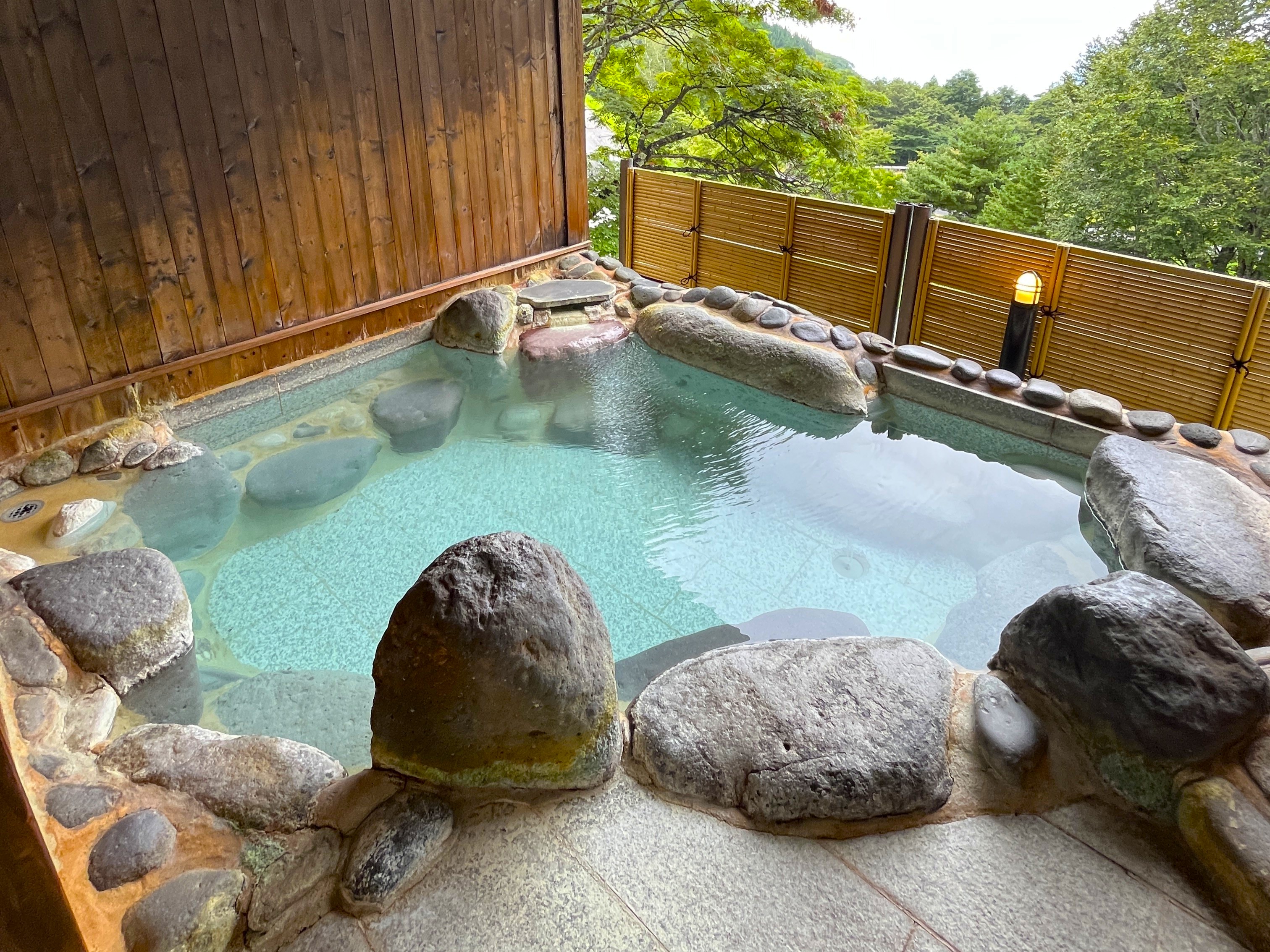
- An outdoor bath with sweeping views toward the Asahi mountain range on clear days
- Directly connected to the Zao Onsen ski slopes — ideal for a winter sports base
- All Western-style rooms with beds, a rarity among Zao’s more traditional ryokan
- A second, gentler “Helston” mineral bath for anyone whose skin needs a break from the acidic water
Zao Astraea Hotel, Zao Onsen
| Address | Yokokura-soto 5, Kokuyurin 236, Zao Onsen, Yamagata-shi, Yamagata 990-2301, Japan |
|---|---|
| Phone | +81-23-694-9603 (8:00–20:00) |
| Official Website | zaoastraea.com/english |
| Day-use Bathing | ¥700 · 11:00–14:00 |
| Check-in / Check-out | From 15:00 / By 10:00 |
| Overnight Rate | From approx. ¥14,850 per person (2 meals included, 2-person room, varies by season/plan) |
| Number of Rooms | 53, all Western-style with beds |
▼Book your stay▼
Getting There from Tokyo — Access Guide
Zao Onsen has no train station of its own; the gateway is JR Yamagata Station, from which the resort is reached by bus. It’s a straightforward trip by Japanese standards, well-served by the Yamagata Shinkansen.
🚄 By Train + Bus (Recommended)
Take the Yamagata Shinkansen “Tsubasa” directly from Tokyo Station to Yamagata Station (approx. 2 hours 40 minutes, no transfer). From Yamagata Station’s east exit, board a Yamako Bus bound for Zao Onsen (approx. 45 minutes) and ride to the last stop, “Zao Onsen Bus Terminal.” Call the hotel from the terminal (+81-23-694-9603, 8:00–17:00) and a free shuttle will pick you up — no reservation needed. Total travel time from Tokyo: approximately 4 hours.
🚗 By Car
Exit at Yamagata Zao IC on the Yamagata Expressway and follow the Nishi-Zao Kogen Line or Route 21 to Zao Onsen (approx. 30 minutes). The final approach includes a steep slope — winter visitors should bring studded tires or chains.
| Route | Tokyo Station → Yamagata Station → Zao Onsen → Zao Astraea Hotel |
|---|---|
| Train | Yamagata Shinkansen “Tsubasa” to Yamagata (~2 hrs 40 min, direct) |
| From Yamagata Station | Yamako Bus to Zao Onsen Bus Terminal (~45 min) |
| From the Bus Terminal | Free hotel shuttle by phone request (~5 min) |
| Total from Tokyo | Approx. 4 hours door to door |
| JR Pass | ✅ Shinkansen portion fully covered (local bus not included) |
A Hillside Location Built for Skiing and Views
At 960 meters elevation, Zao Astraea Hotel sits directly beside the Yokokura ski slopes, with the Zao Onsen ski area’s lift network essentially at the hotel’s doorstep. In winter this makes it a genuinely convenient base for skiing and snowboarding; the rest of the year it’s a good jumping-off point for hiking and for visiting Zao’s other well-known attractions.
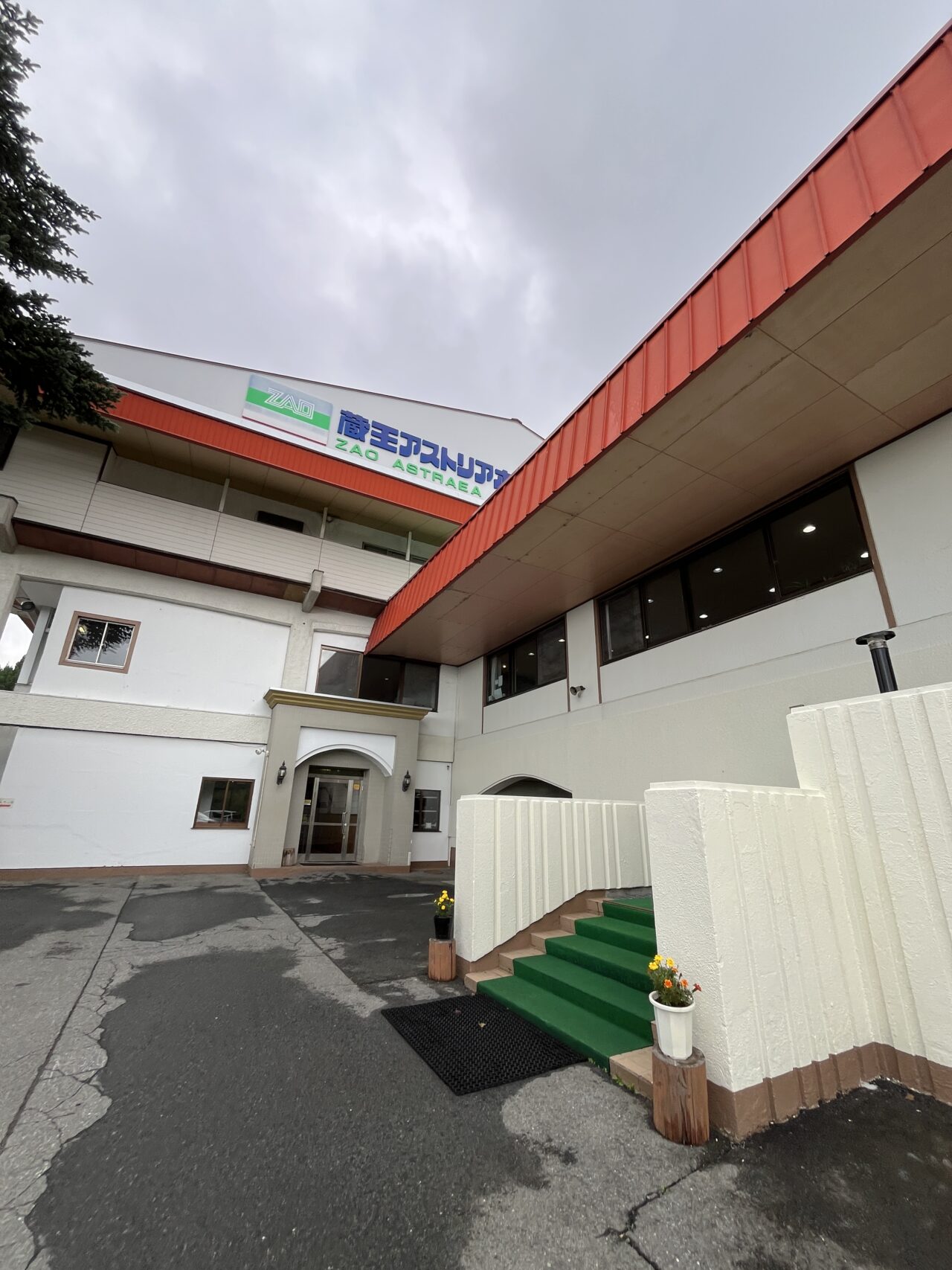
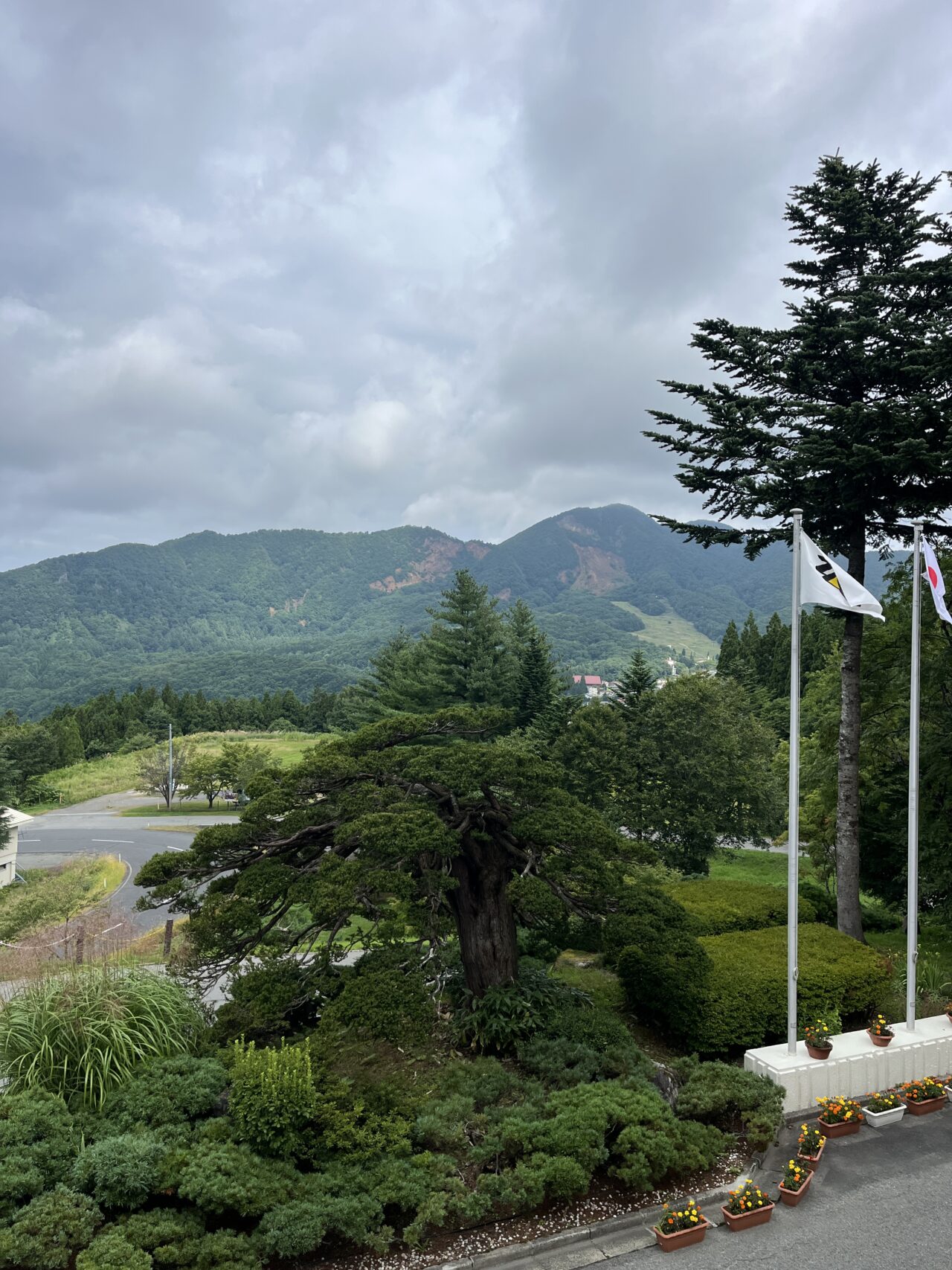
Left: The hotel building, with parking directly beside it. Right: The elevated position opens onto wide views of the surrounding mountains, with the ski slopes right next door.
Two nearby sights are worth building into a stay: the Zao Onsen Dairotenburo, a large rustic communal outdoor bath about a 10–18 minute walk from the bus terminal, and the Zao Ropeway, about 10 minutes on foot, which carries visitors up toward the “snow monsters” (frost-covered trees) in winter and expansive mountain views the rest of the year. Further afield, the emerald-colored crater lake Okama is roughly 40 minutes by car via the Zao Echo Line — though that road closes seasonally.
A Hotel That Feels More Business-Hotel Than Ryokan
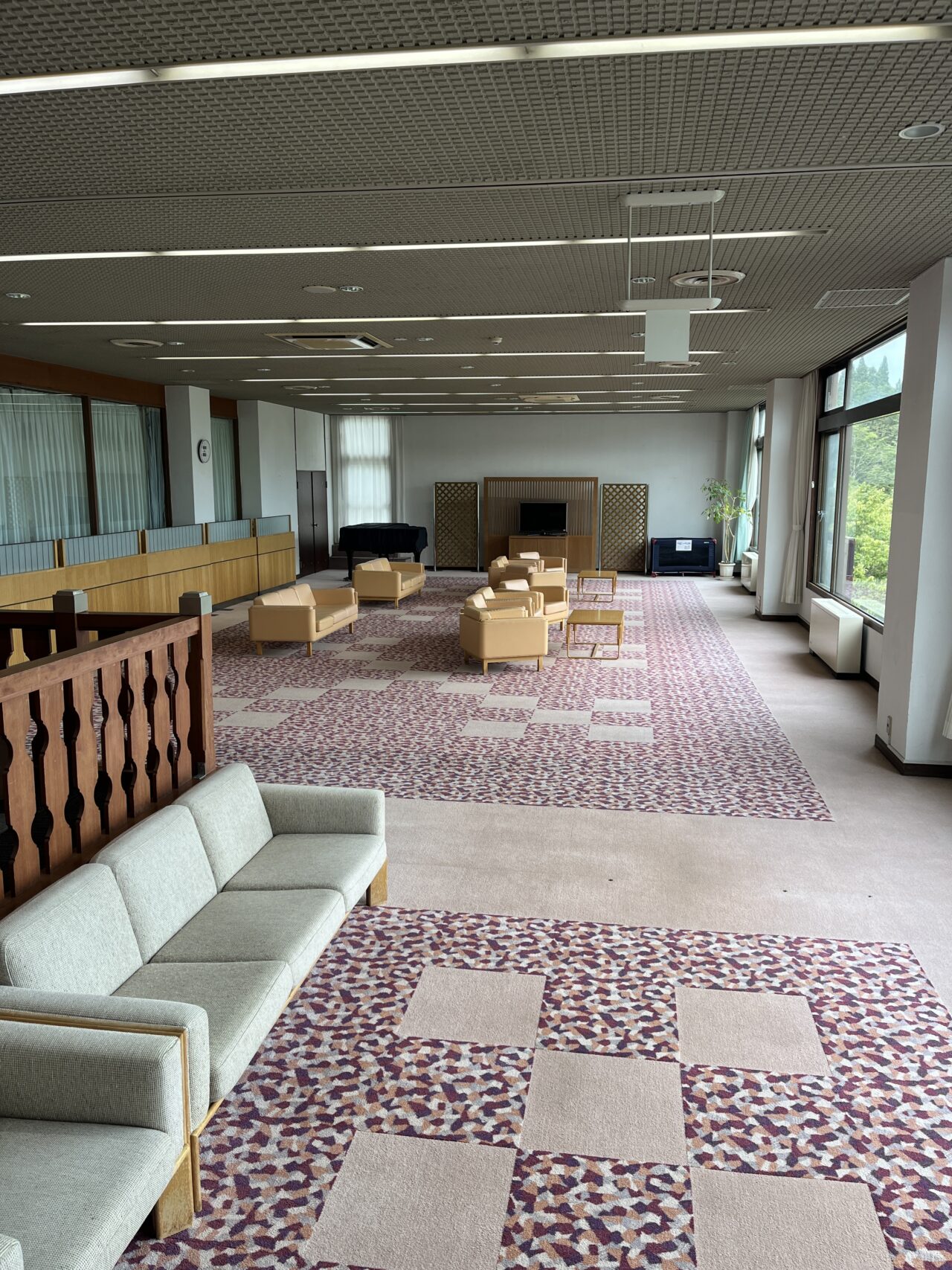
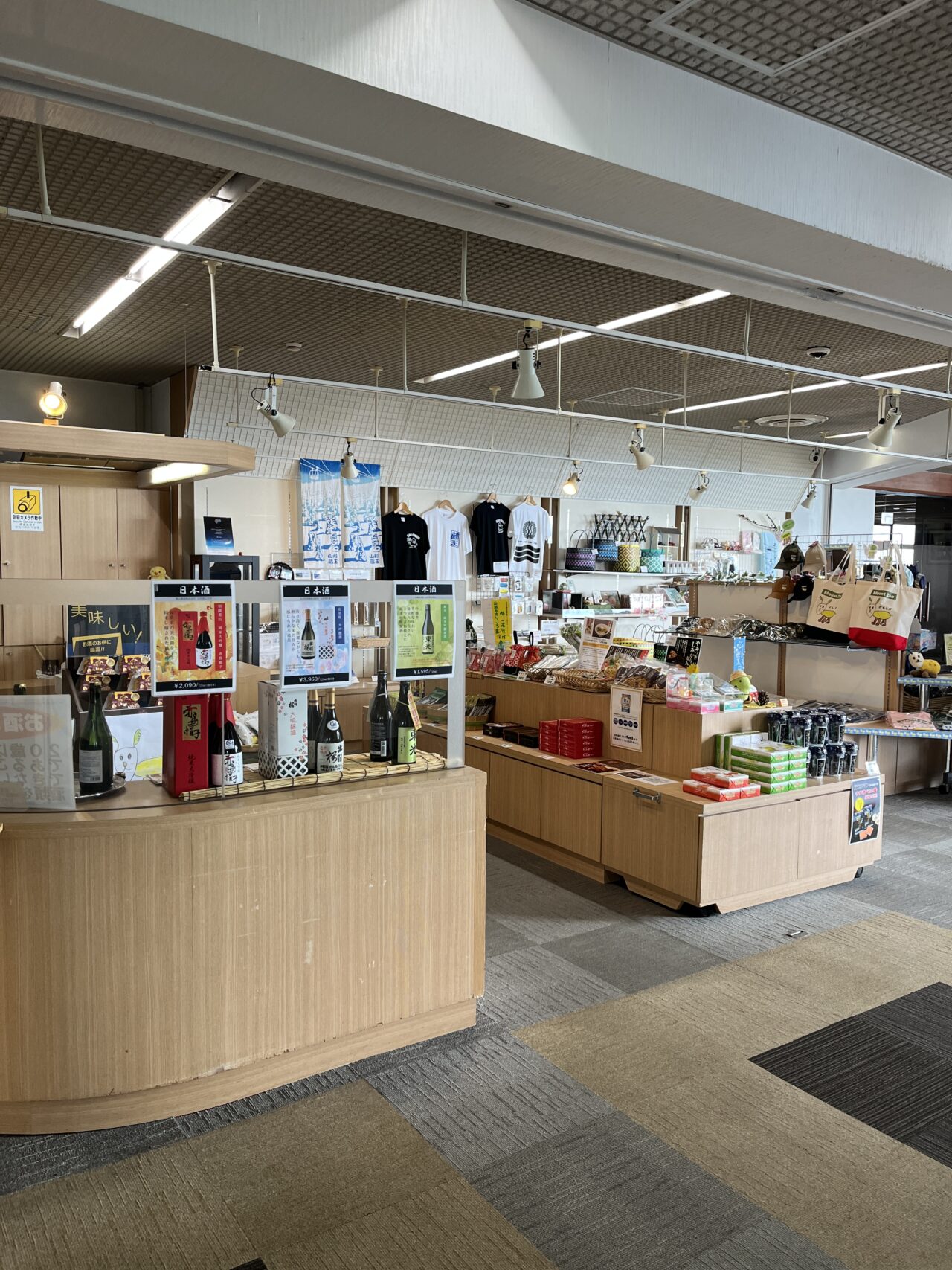
Left: The spacious second-floor reception and lobby area. Right: A well-stocked souvenir corner just off the lobby.
The lobby is spacious and functional rather than atmospheric — closer in feel to a well-run business hotel than a traditional ryokan, with a good souvenir shop and vending machines covering anything you might have forgotten. Guests can choose their own yukata design from a rack in the lobby before heading to their room.
The Rooms
| Toilet | En suite (in-room) |
|---|---|
| Refrigerator | Available |
| Air Conditioning | Available |
| Wi-Fi | Available |
| Television | Available |
| Towels & Yukata | Provided |
| Bed Type | Western-style beds in all rooms (no tatami floor seating) |
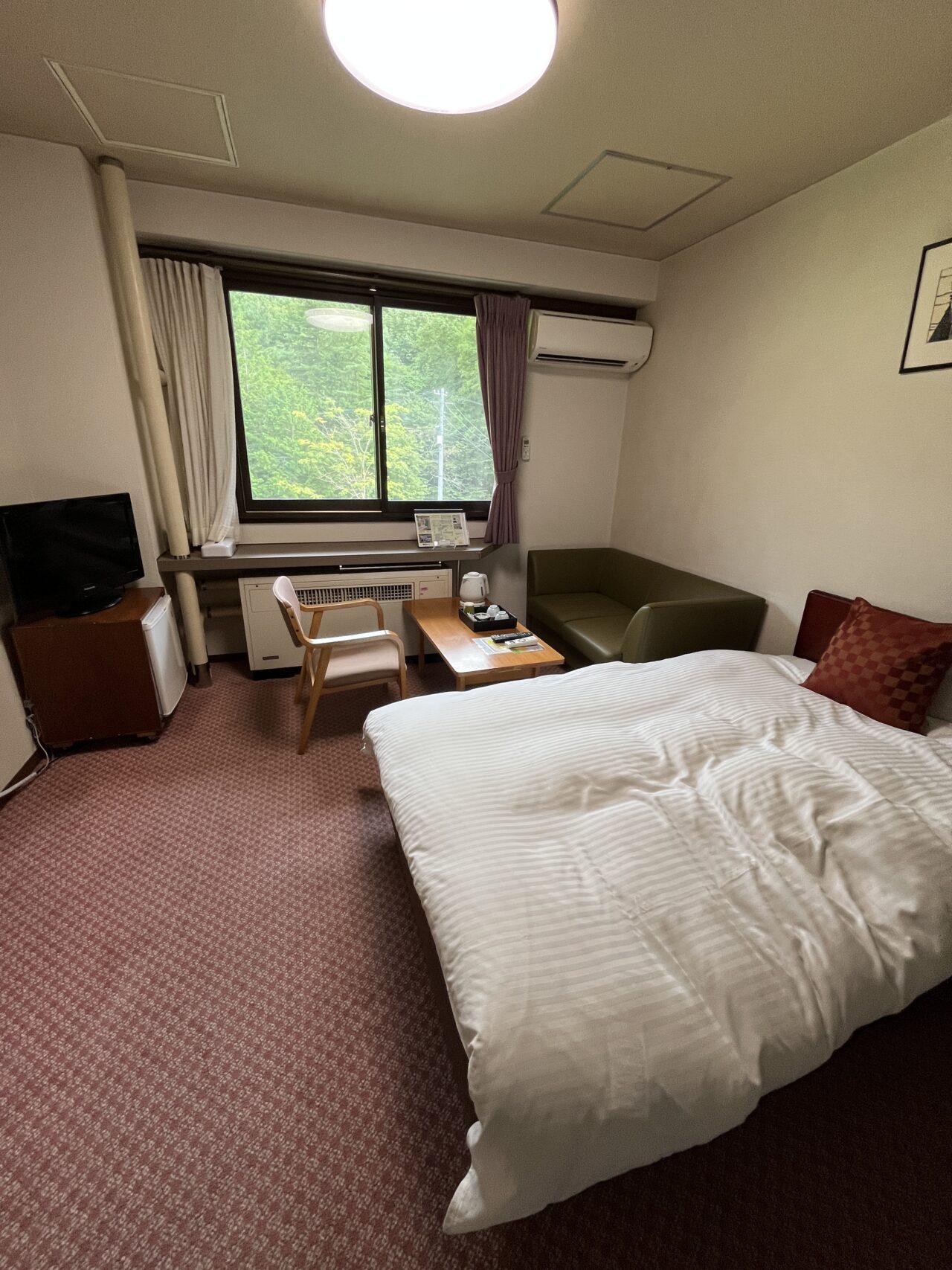
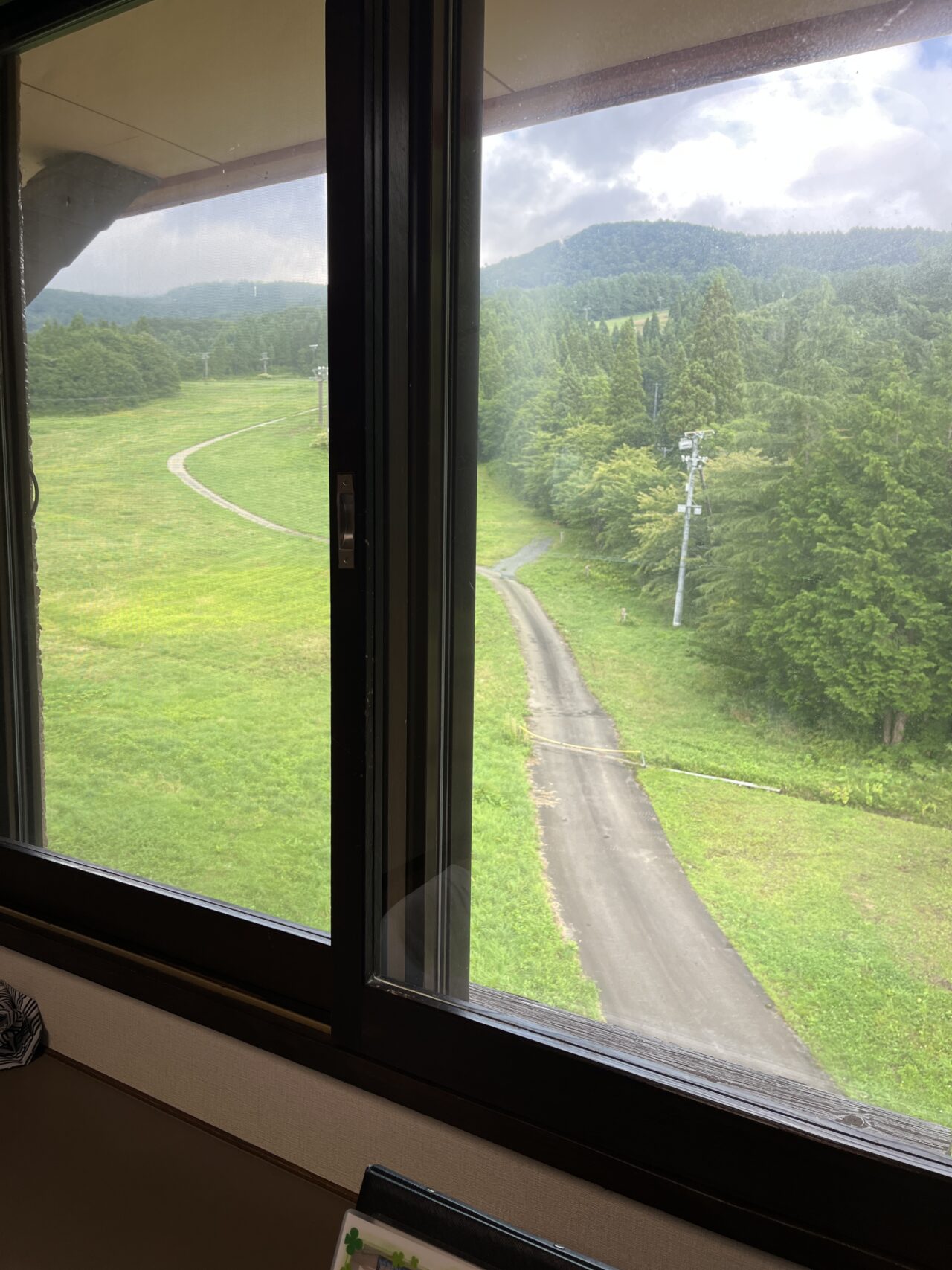
Left: A comfortable, business-hotel-style twin room. Right: The ski slopes and surrounding mountains, visible right from the window.
Every room here uses Western-style beds rather than tatami floor bedding — a genuinely useful detail for travelers who find sitting or sleeping on the floor uncomfortable, and unusual for a hot spring resort of this kind.
The bathroom and toilet share a single unit bath, in typical business-hotel fashion, and the room comes with all the essentials: television, refrigerator, and air conditioning. Rooms were clean and well kept throughout our stay.
The Hot Springs — pH 1.8, Straight from the Source
The hotel’s natural hot spring bath sits in a separate building from the main hotel, a short walk away, called Zekkeiroten-no-Yu (“Panoramic View Open-Air Bath”) — with gender-separated indoor and outdoor sections.
A second bath inside the main building, the “Helston Onsen,” uses a mineral-treated artificial water rather than the natural spring.
Zekkeiroten-no-Yu — Indoor & Outdoor Bath
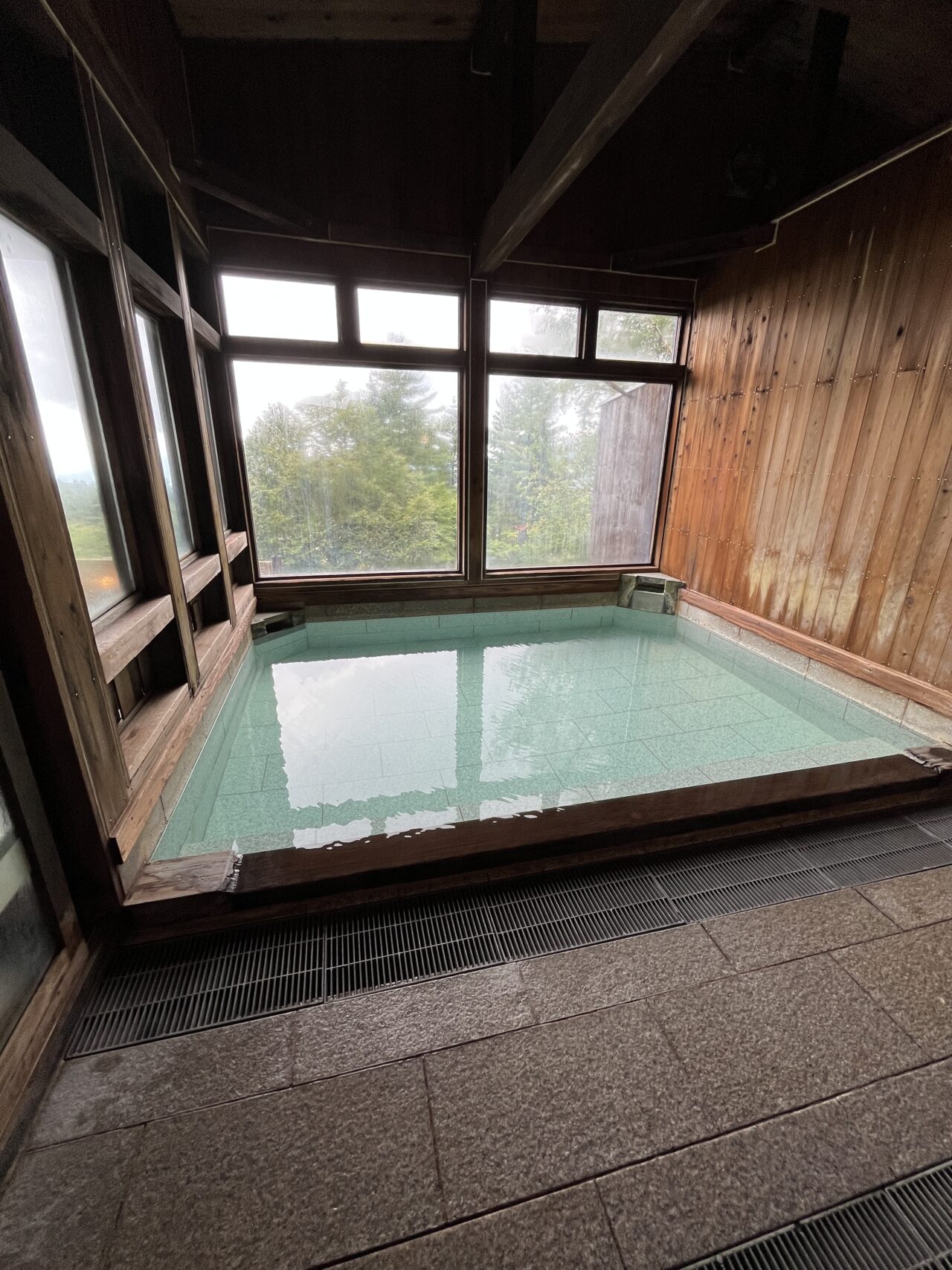
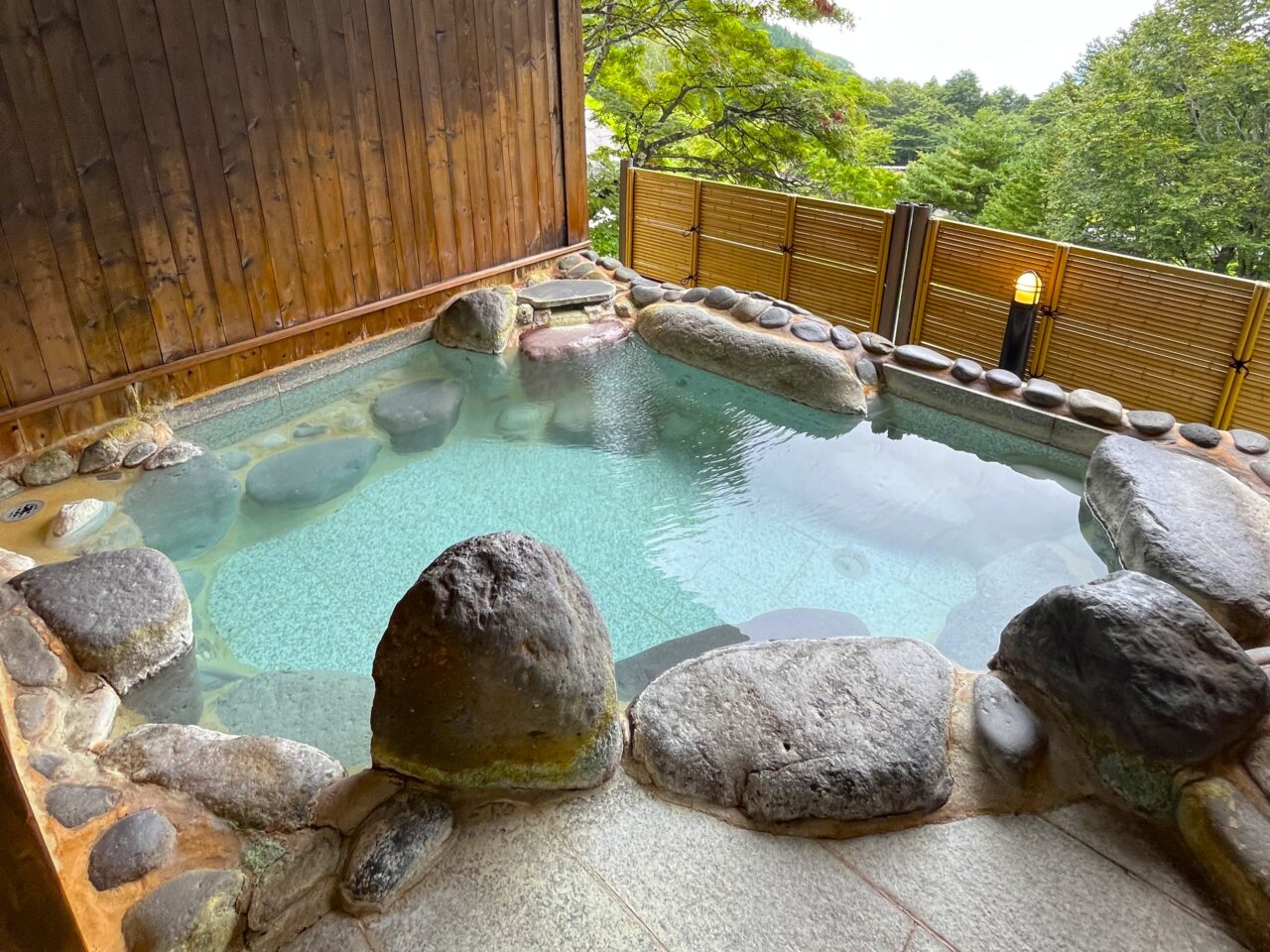
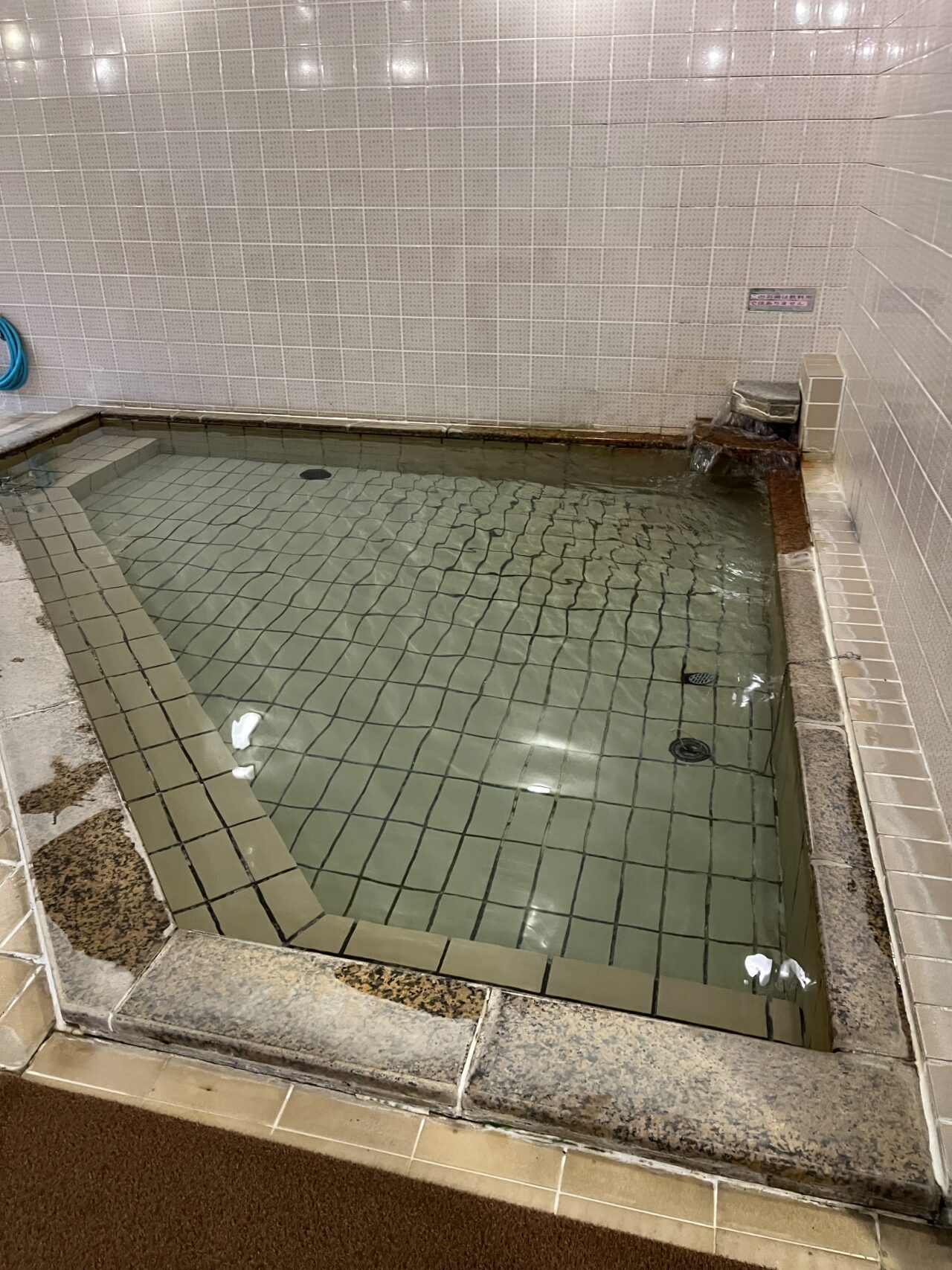
Left: The indoor bath, running remarkably clear on the day of our visit (other sources show it turning milky white at times, depending on conditions). Right: The outdoor bath, with views toward the Asahi mountain range on a clear day.
The indoor bath runs around 41°C, with a faint sulfur aroma and a distinctly sour taste — proof of the acidity at work.
Water clarity varies visit to visit: sometimes clear and transparent, sometimes taking on the classic milky-white sulfur look.
The outdoor bath, a touch cooler at around 40°C, looks out toward the Asahi mountains when the weather cooperates, and the gentler temperature makes for a more relaxed, unhurried soak than the indoor bath.
Note that the washing area here is fairly compact, so it can mean a short wait during busy periods.
Helston Onsen — A Gentler Mineral Bath Indoors
Inside the main hotel building, the Helston Onsen uses filtered, circulated water treated with natural mineral compounds rather than drawing on the acidic spring directly.
It’s odorless, without the sting of the natural water, and said to help with muscle and joint pain — a good option if the acidic spring feels too intense, or simply for washing up before or after using the main bath, since the washing facilities here are more generous.
Dining — Reliable, Well-Balanced Japanese Cuisine
Meals are served in a dedicated dining hall, with a solid, balanced Japanese menu built around Yamagata ingredients rather than anything experimental.
Dinner — Featuring Yamagata’s Signature Imoni Stew
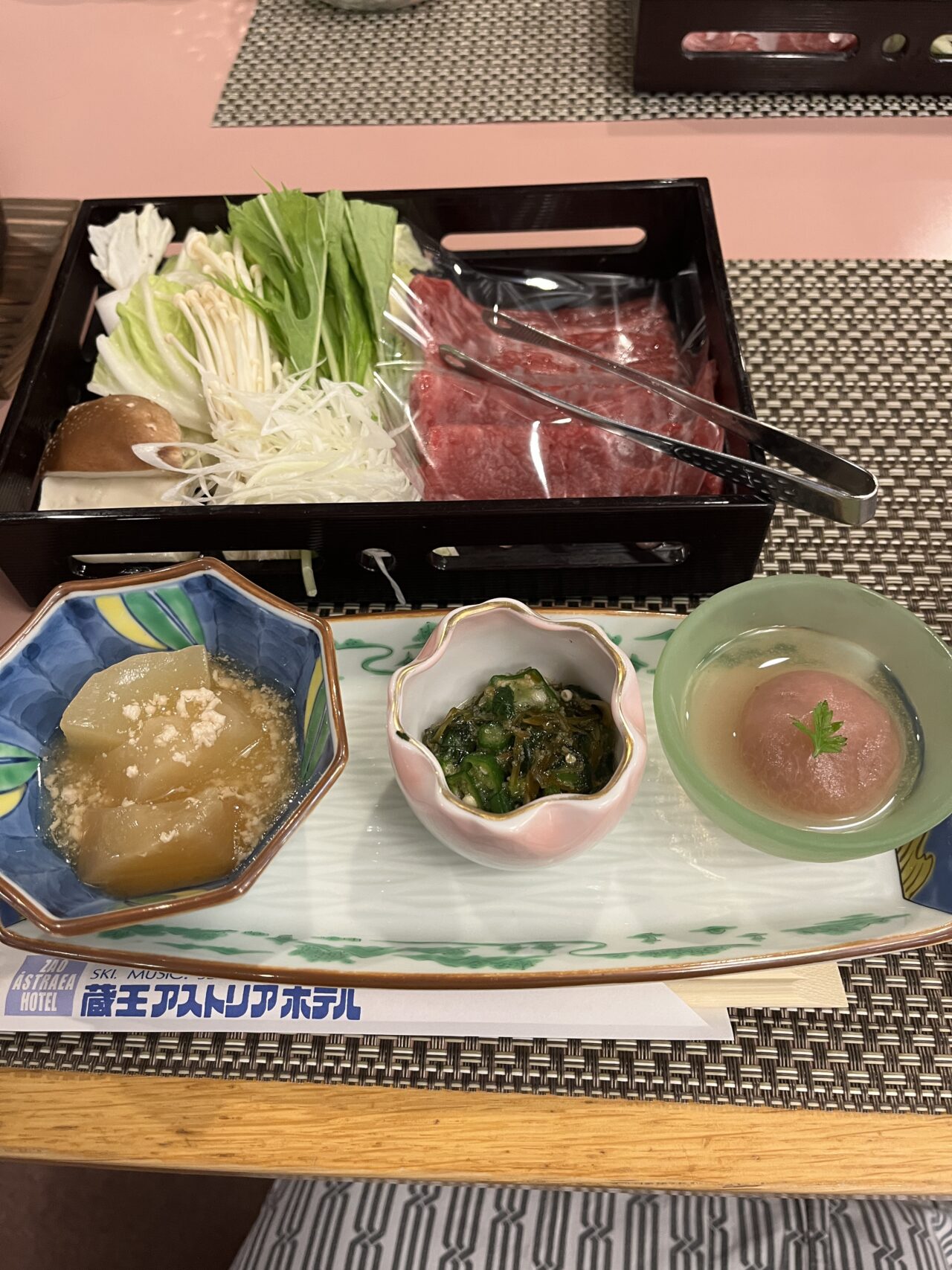
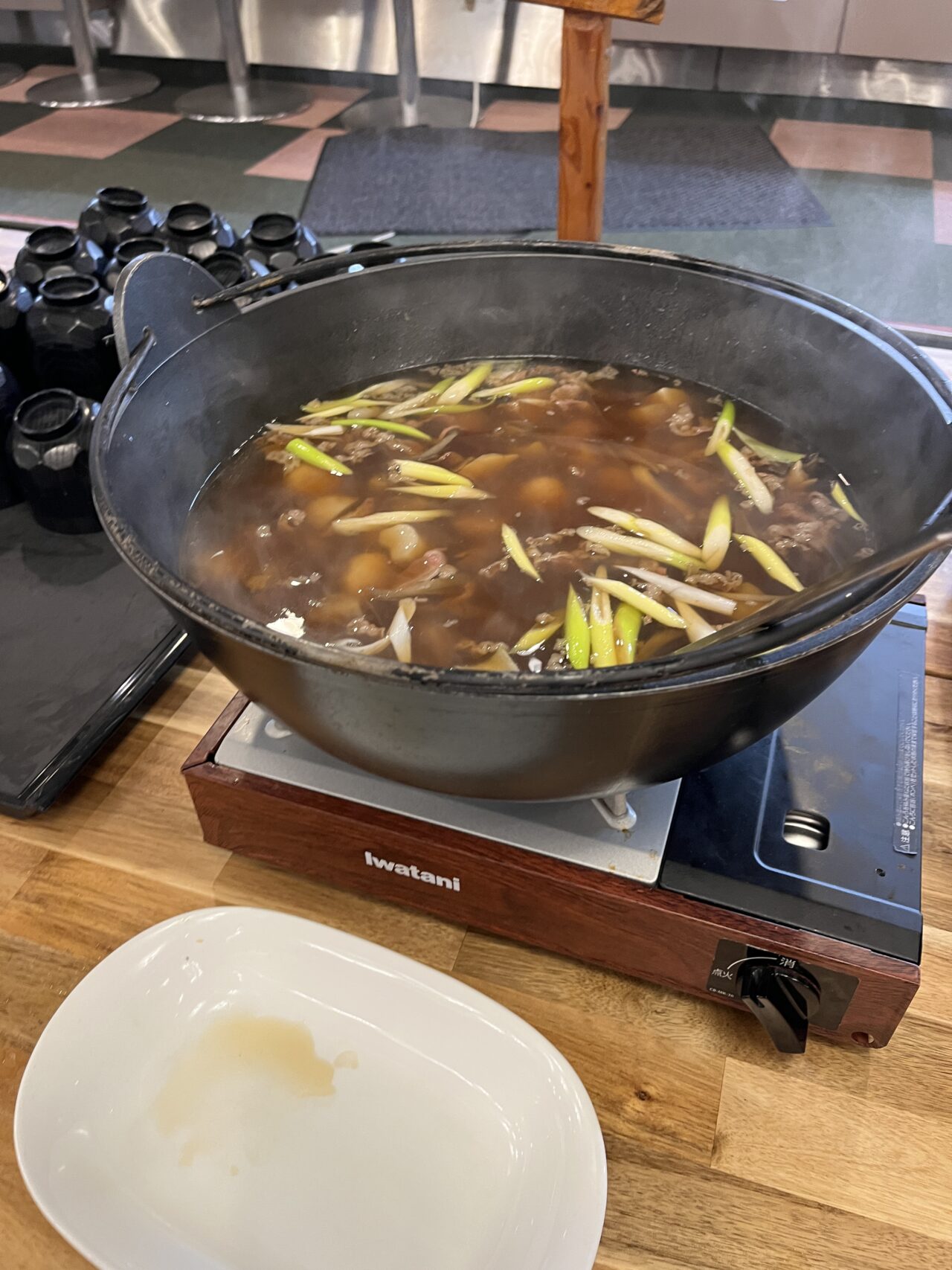
Left: Shabu-shabu with genuinely juicy, well-marbled meat. Right: Imoni, Yamagata’s beloved taro stew, served from a large communal pot.
Dinner opens with appetizers built to whet the appetite, followed by a shabu-shabu course with notably juicy meat, fresh sashimi, and a corn-bun steamed dish (morokoshi manju) lifted by a touch of wasabi.
Deep-fried items, including a lotus root stuffed with meat, held their seasoning well even after cooling slightly.
The highlight for many will be imoni, served buffet-style from a large pot — its broth carries a deep, comforting flavor that’s hard not to go back for seconds of.
Breakfast — A Well-Rounded Buffet
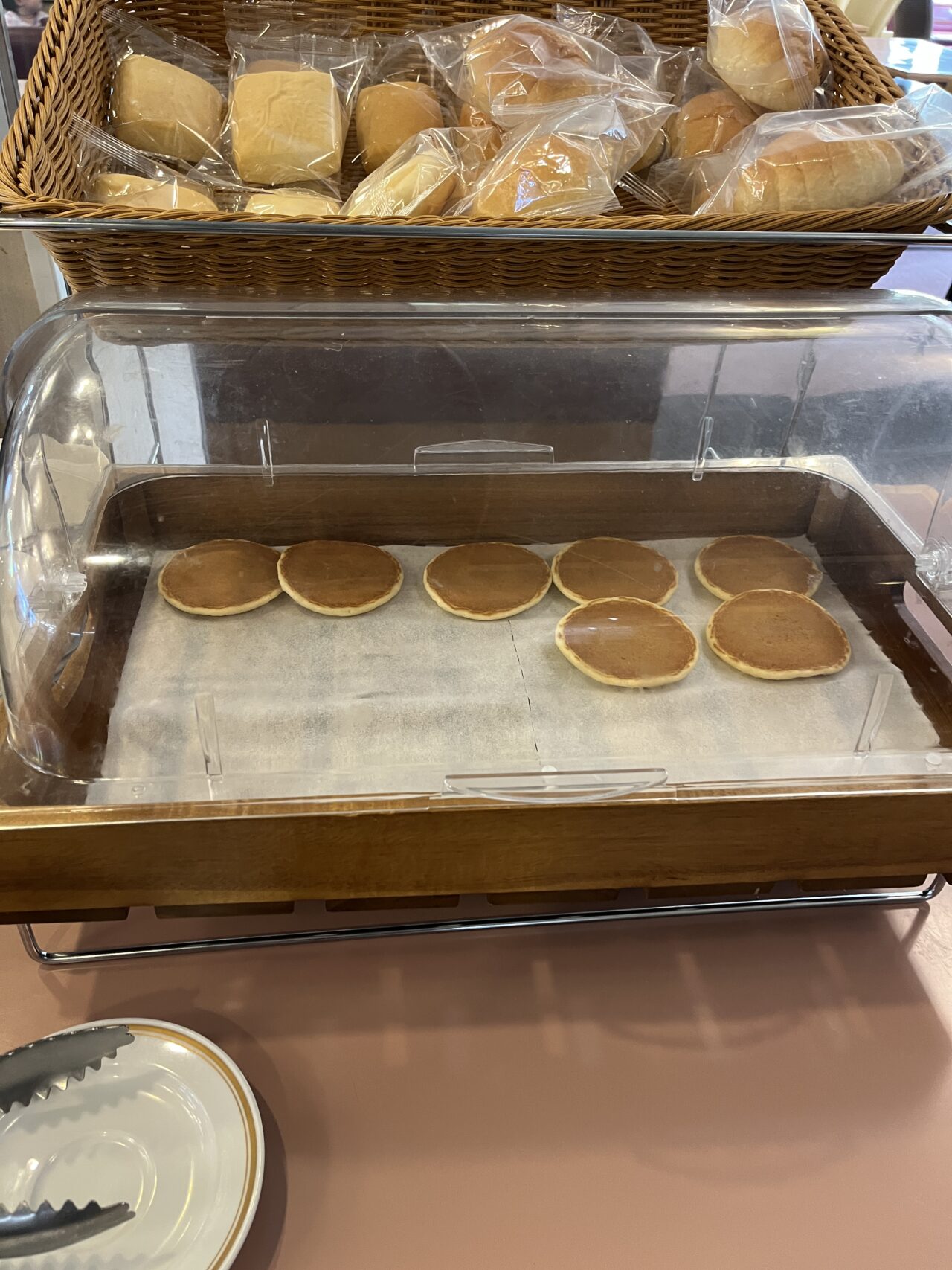
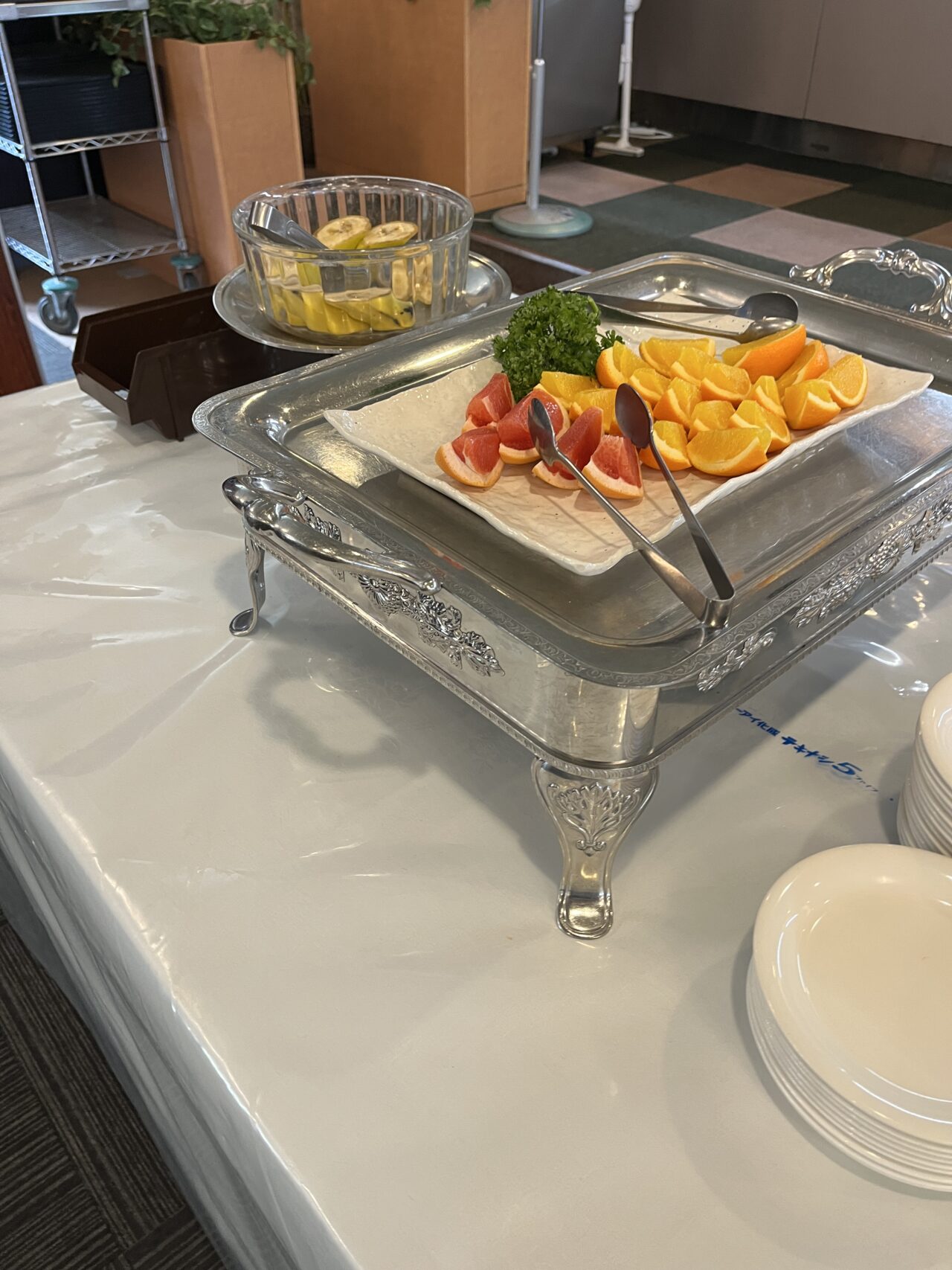
Left: A basket of soft bread rolls alongside a tray of freshly cooked pancakes. Right: Fresh oranges, grapefruit, and lemon slices served on a silver stand — a bright, fruit-forward addition to the spread.
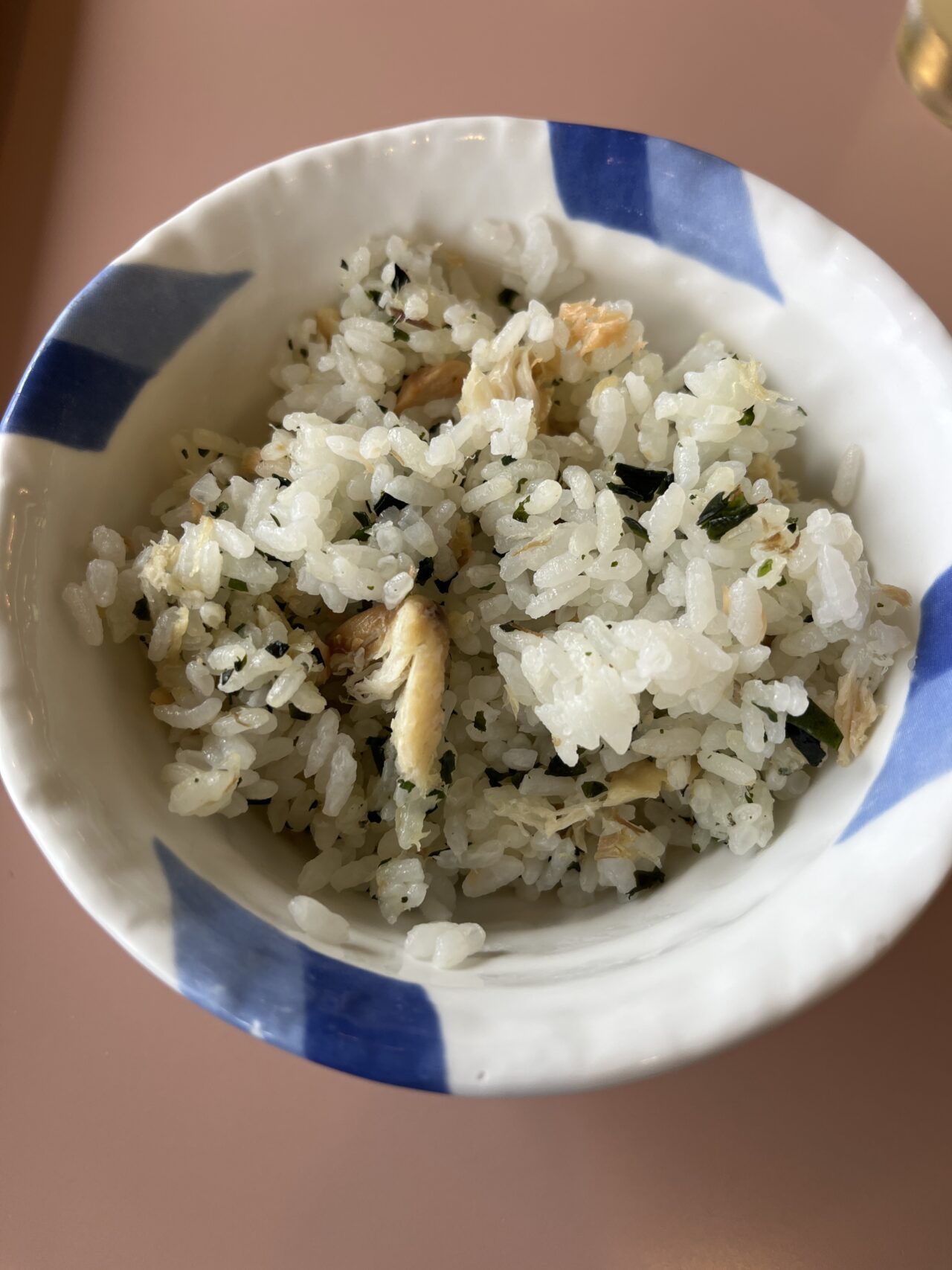
Breakfast is a generous buffet with both rice and bread options, salad, fruit, and a good spread of drinks including orange and apple juice alongside the usual milk.
The stand-out dish is a mixed rice preparation studded with mackerel and salmon — the fish flavor runs all the way through the rice, and it’s worth prioritizing if the buffet is busy.
Final Thoughts
Zao Astraea Hotel doesn’t try to be a rustic hidden ryokan, and it doesn’t need to — its strength is the combination of a genuinely potent, 100% source-fed acidic spring with the straightforward comfort of a Western-style hotel room and direct ski-slope access.
For travelers who want to experience one of Japan’s classic acidic onsen without navigating tatami rooms or futon bedding, and especially for anyone planning a ski trip to Zao, this is a practical, comfortable, and reasonably priced base.
Zao Astraea Hotel is ideal for visitors who:
- Want to soak in a real acidic sulfur spring while enjoying mountain views
- Prefer Western-style beds over traditional tatami rooms
- Are visiting Zao primarily for skiing or snowboarding
- Want a comfortable, no-fuss base at a reasonable price compared to nearby ryokan
- Are traveling with family, including elderly members who may find floor-seating rooms difficult
▼Book your stay▼