
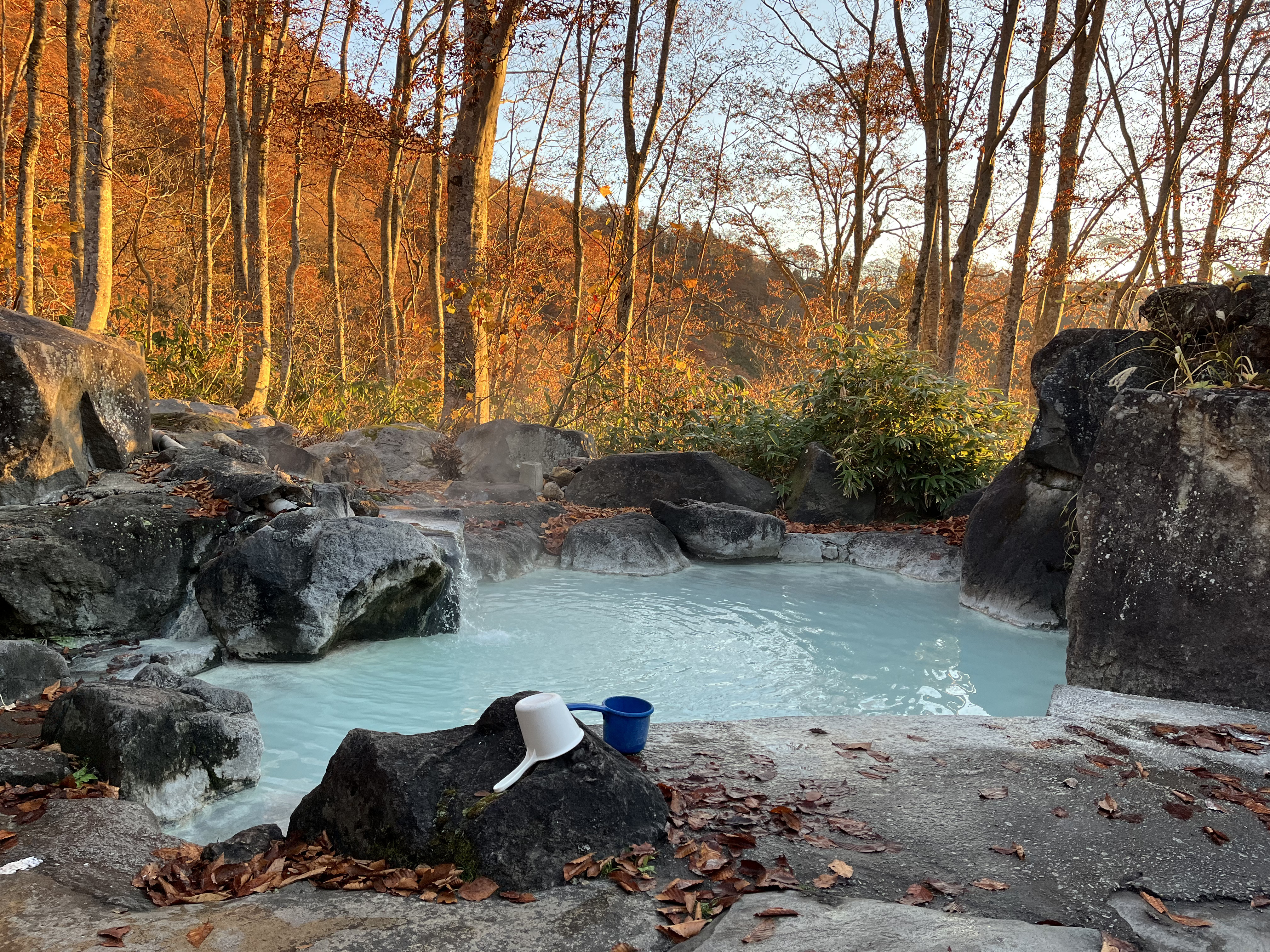
High on the slopes of Mt. Myoko, beyond the small village of Tsubame Onsen, a short mountain path leads to Ogon-no-yu (“Golden Bath”): a rustic outdoor bath ringed with boulders, with milky white water and nothing but forest around it. The name fits. I arrived at dawn in early November, just as the sun lit the red and yellow leaves, and the whole scene turned gold.
Why Ogon-no-yu stands out:
- A natural, milky white sulfur spring in a bath surrounded by large rocks
- Free to use, with a donation box to help maintain it
- Gender-separated, so it is easier for first-time visitors and solo women
- Stunning in autumn foliage and morning light
Ogon-no-yu, Tsubame Onsen
| Address | Tsubame Onsen, Sekiyama, Myoko-shi, Niigata 949-2235, Japan |
|---|---|
| Phone | +81-255-86-3911 (Myoko Kogen Tourist Information Center) |
| Official Information | Myoko Tourism Bureau (latest opening status) |
| Bathing Fee | Free (please leave a donation in the box) |
| Hours | Sunrise to sunset (no lighting) |
| Closures | Closed Monday and Friday mornings for cleaning · Closed in winter (usually late November to early April, depending on snow) |
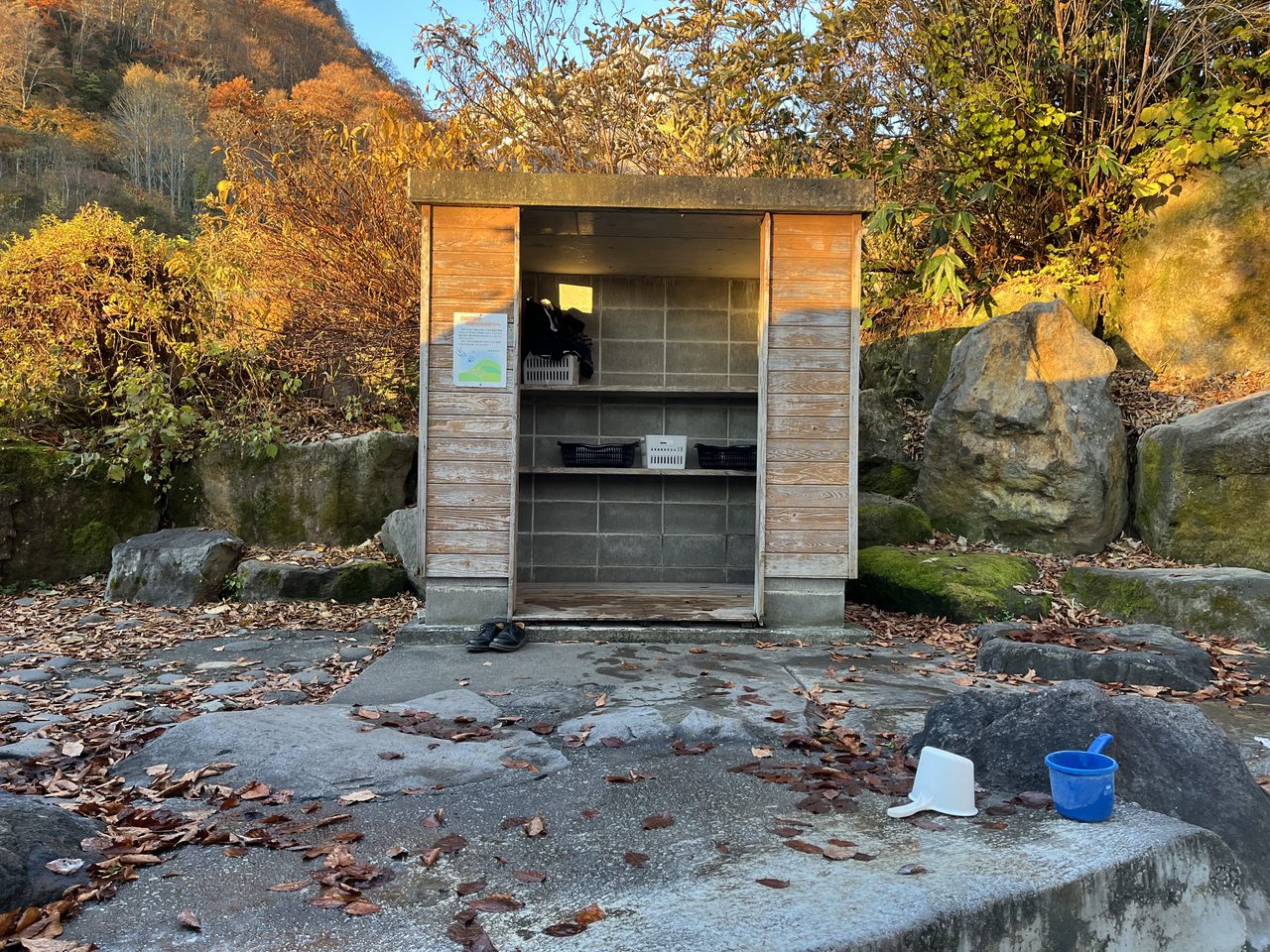
| Facilities | No washing area, no shower; soap and shampoo may not be used. Small changing hut only. |
Getting There from Tokyo — Access Guide
Tsubame Onsen is the last stop on a mountain bus line, and the bath is a short walk beyond the village.
🚄 By Train + Bus (Recommended)
Take the Hokuriku Shinkansen from Tokyo to Joetsu-Myoko Station (about 2 hours). Transfer to the Echigo Tokimeki Railway Myoko Haneuma Line and ride to Sekiyama Station, then take the Keinan Bus to the terminus at Tsubame Onsen. Check the Keinan Bus timetable before you go: services are limited, and some sources report reduced runs on weekends and school holidays.
🚗 By Car
Exit the Joshin-etsu Expressway at Myoko-Kogen IC, then drive about 30 minutes up the mountain road to Tsubame Onsen.
| Route | Tokyo → Joetsu-Myoko (Shinkansen) → Sekiyama (Echigo Tokimeki Railway) → Tsubame Onsen (Keinan Bus) → 10–15 min walk |
|---|---|
| JR Pass | ✅ Shinkansen portion covered. The Echigo Tokimeki Railway and the Keinan Bus are not covered. |
| Walk from Village | About 10–15 minutes on a sloping mountain path; wear sturdy shoes |
The Walk to the Bath
Tsubame Onsen is a quiet village of a few inns at about 1,100 m on the slope of Mt. Myoko. I set out at around 6:30 in the morning in early November, and hikers were already passing through. One inn had even set out a foot bath.
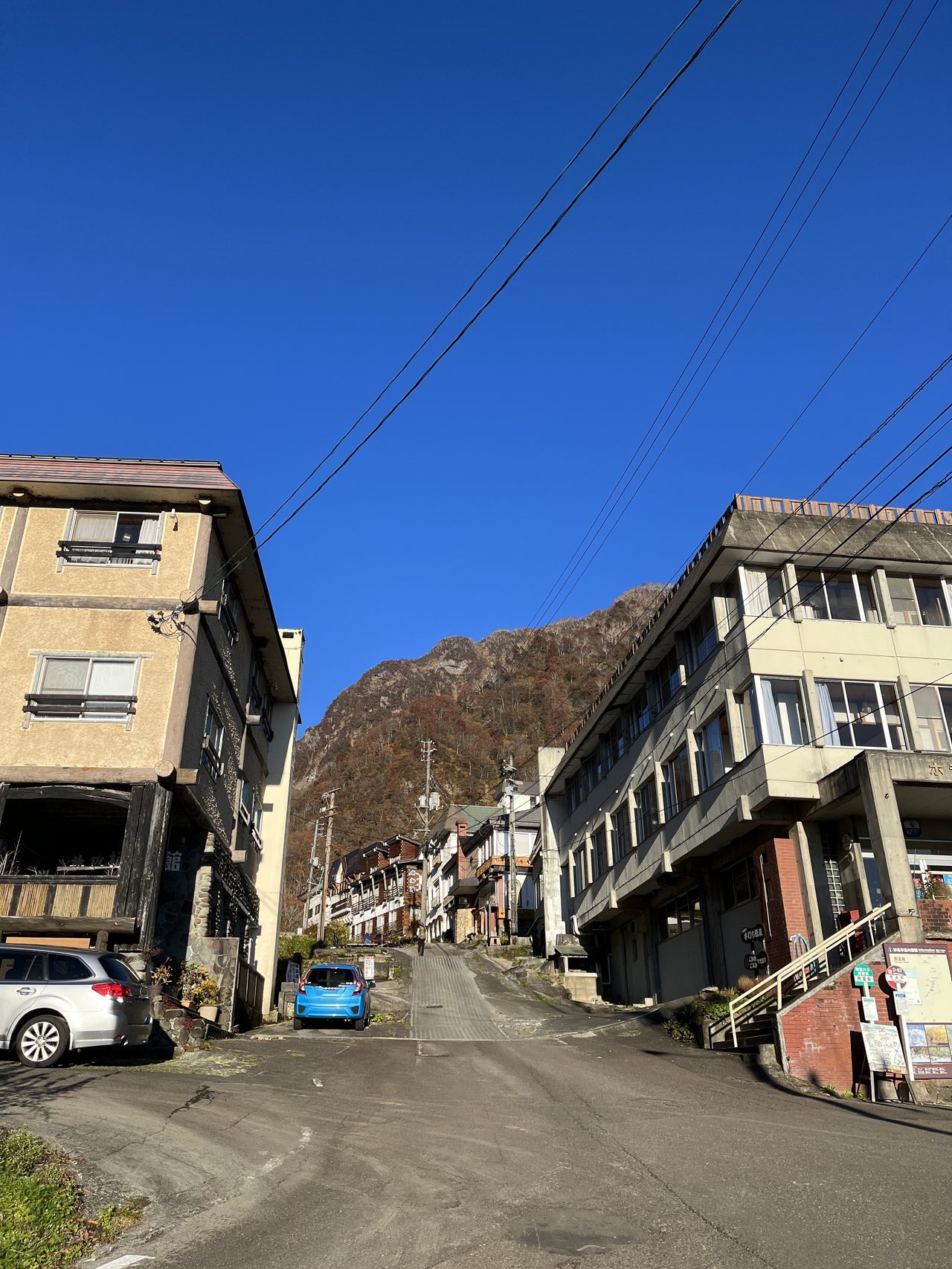
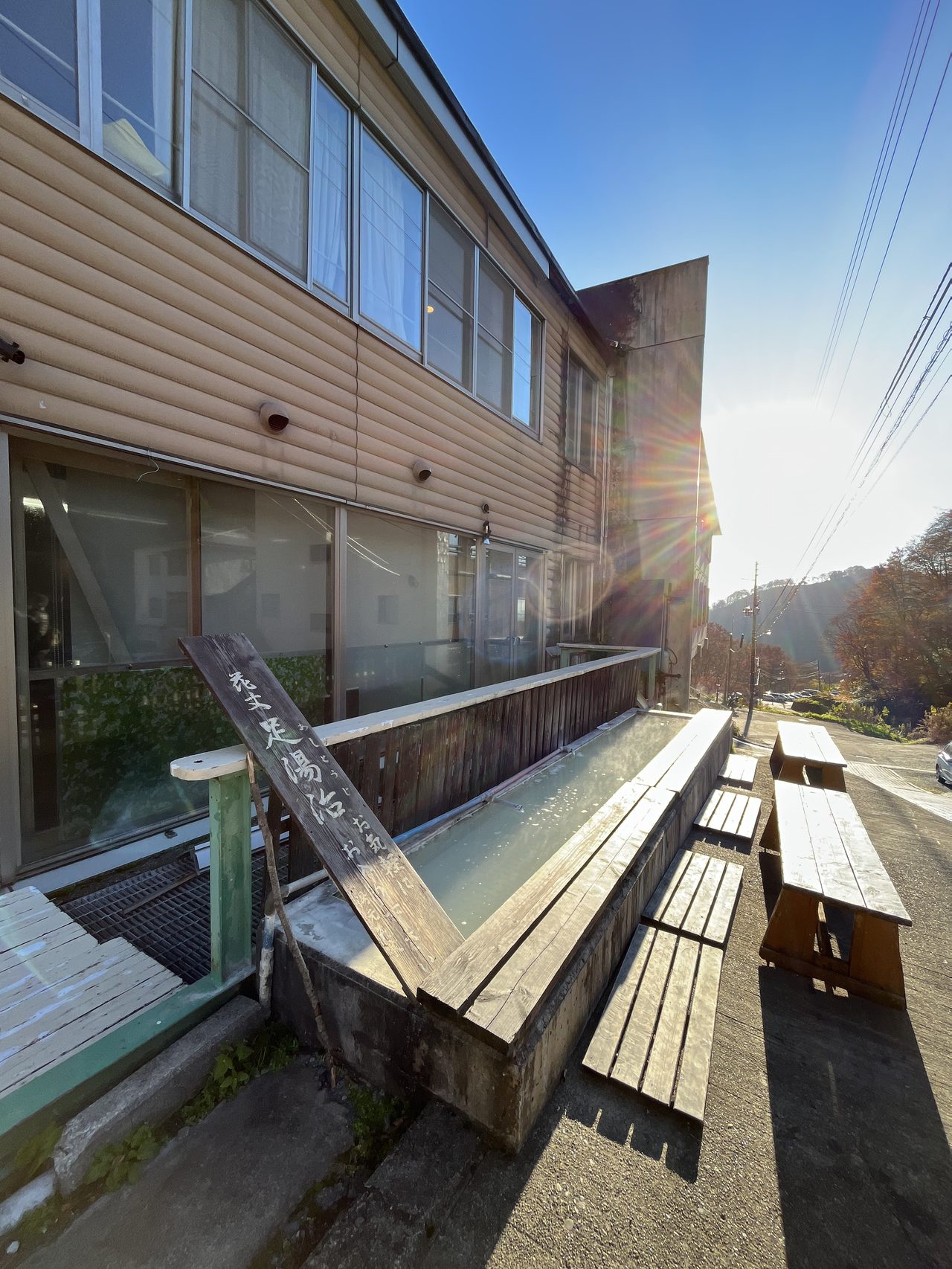
Left: The village at dawn. Right: A foot bath prepared by one of the inns.
Past the last buildings, a staircase climbs through the trees. The sunrise began as I walked, with orange sky against deep blue. A signpost marks both the Mt. Myoko trailhead and the way to Ogon-no-yu, and from there it’s just a few minutes more.
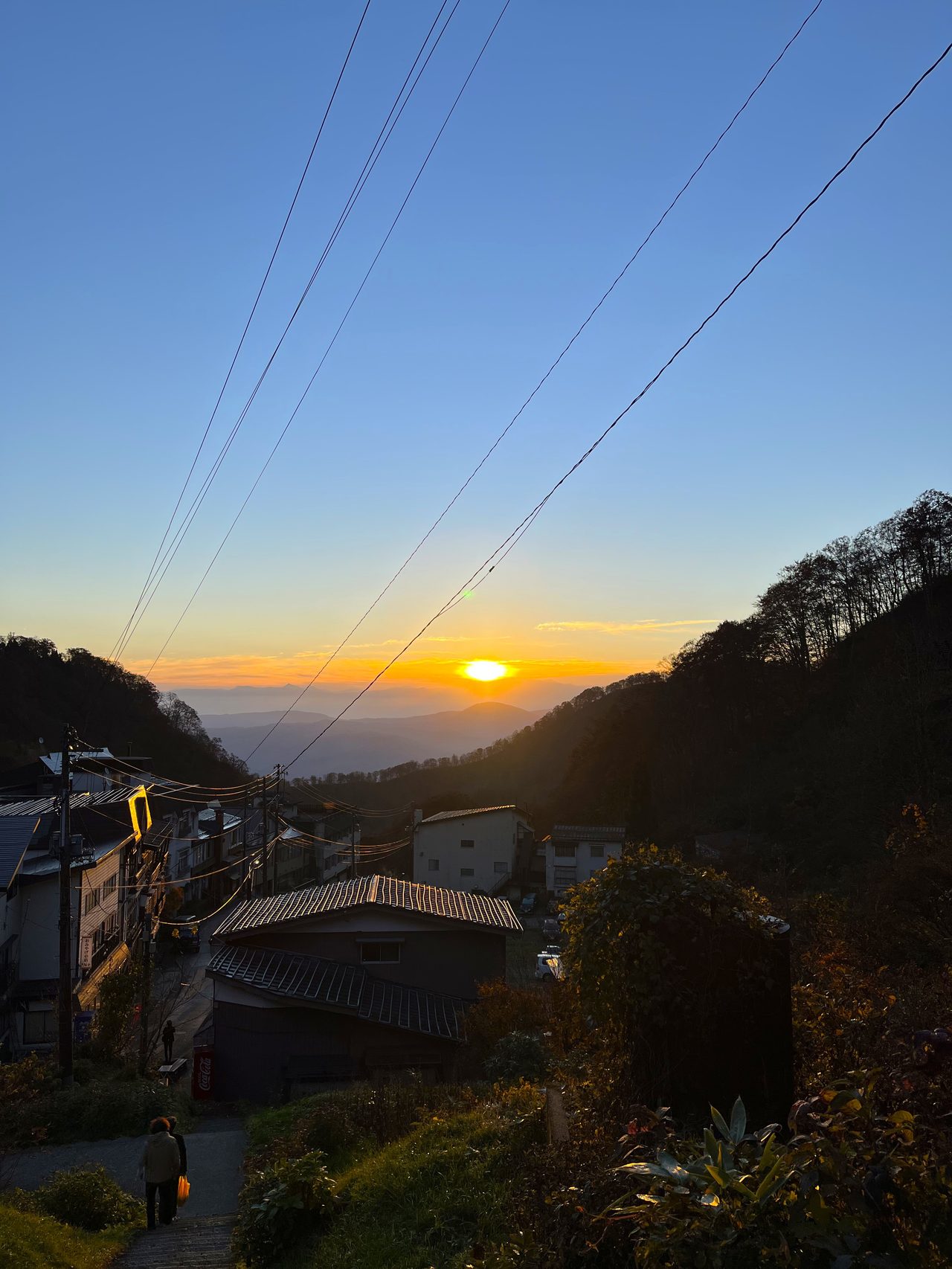
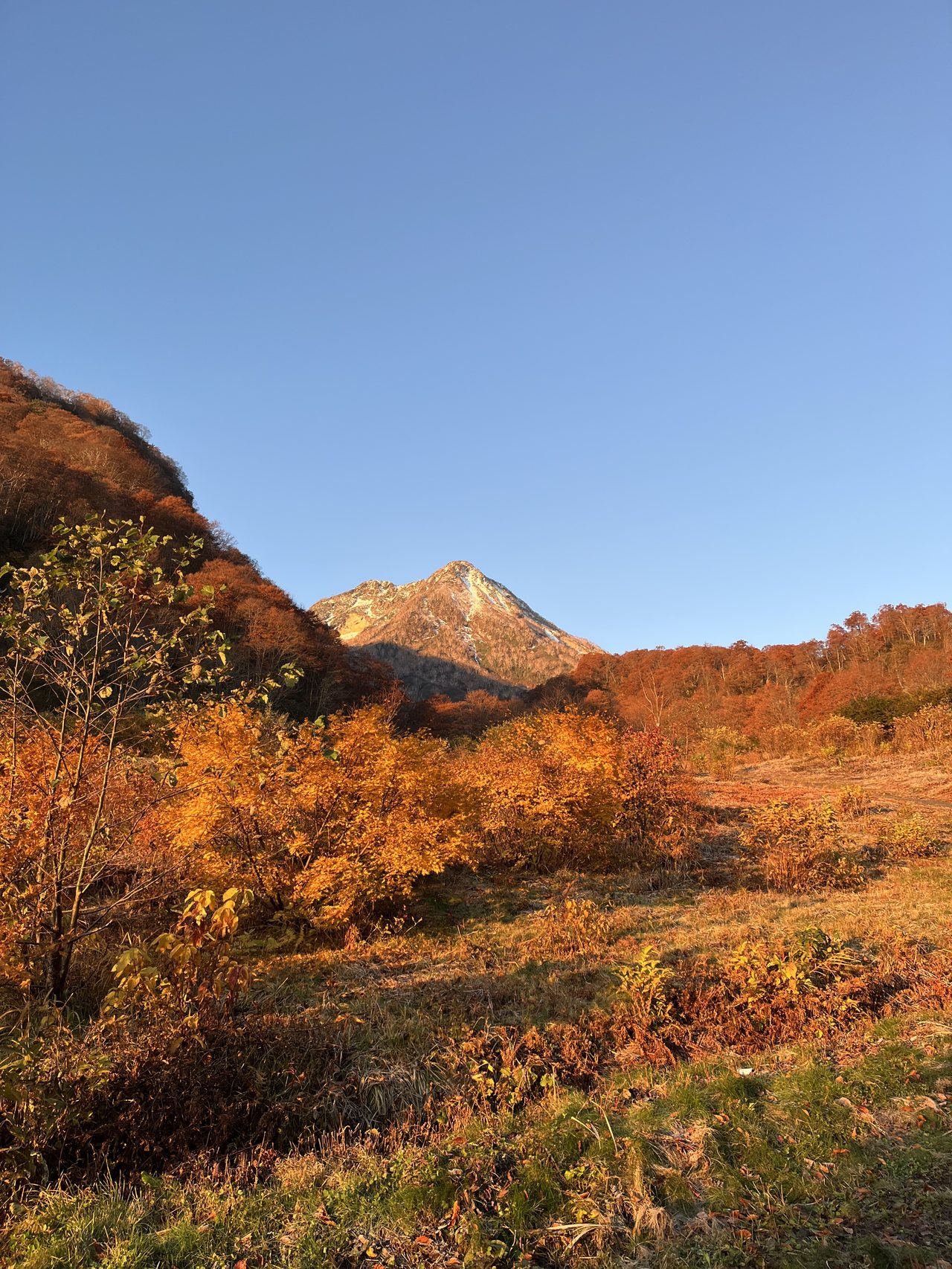
Left: Orange and blue light on the path. Right: Mt. Myoko glowing in the morning sun.
The Hot Spring — A Mountain Sulfur Spring
Ogon-no-yu is a gender-separated outdoor bath surrounded by large rocks. There is no indoor bath, no roof, and no washing area, just hot water and nature.
Ogon-no-yu — Golden Light, Milky Water ★
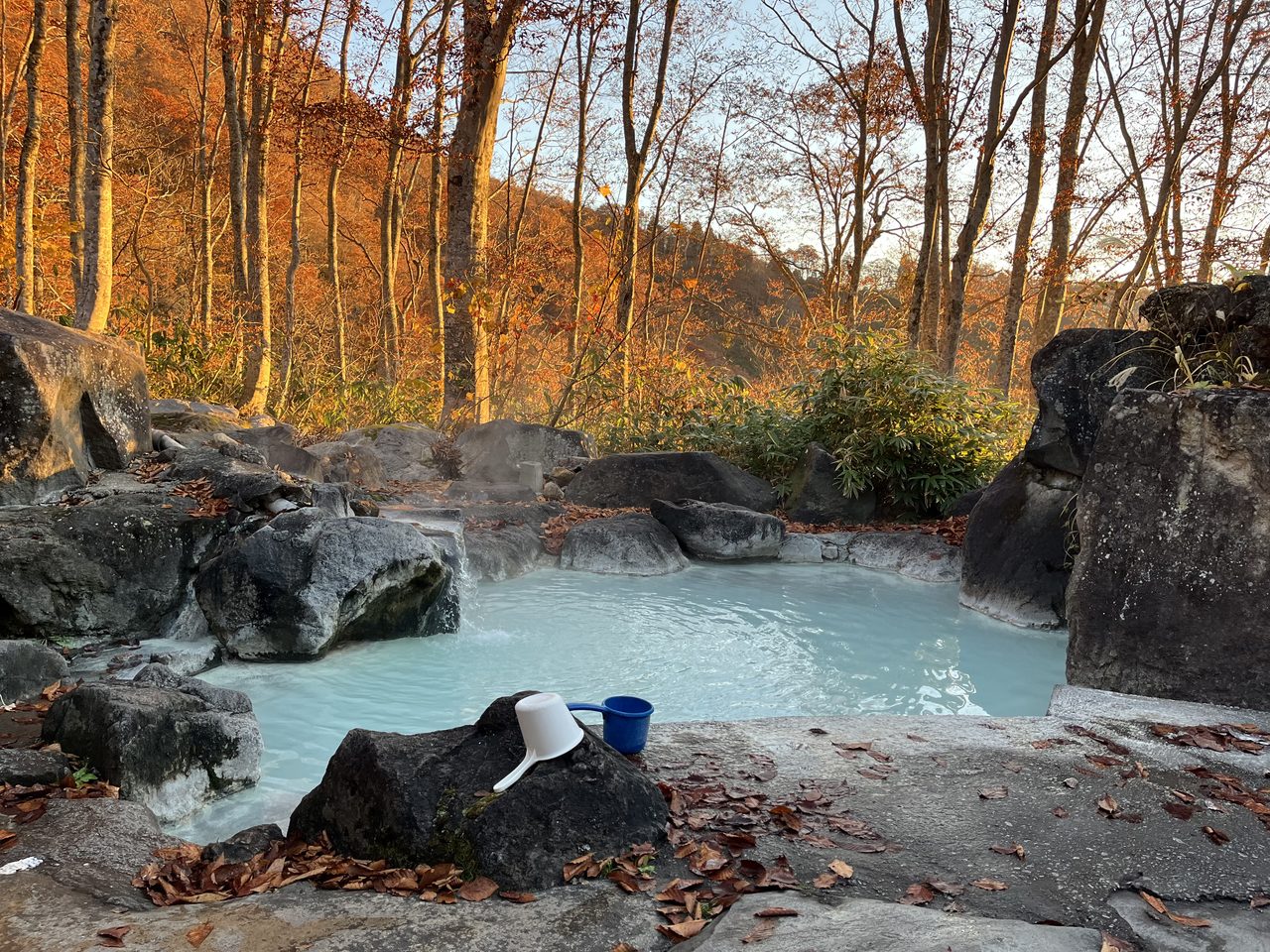
This is the view: leaves in red and yellow, lit from the side by the rising sun, and a bath of opaque white water below them. It can only be seen in this season and at this time of day, and it was one of the most beautiful sights I’ve had from a bath.
Left: Orange and blue light on the path. Right: Mt. Myoko glowing in the morning sun.
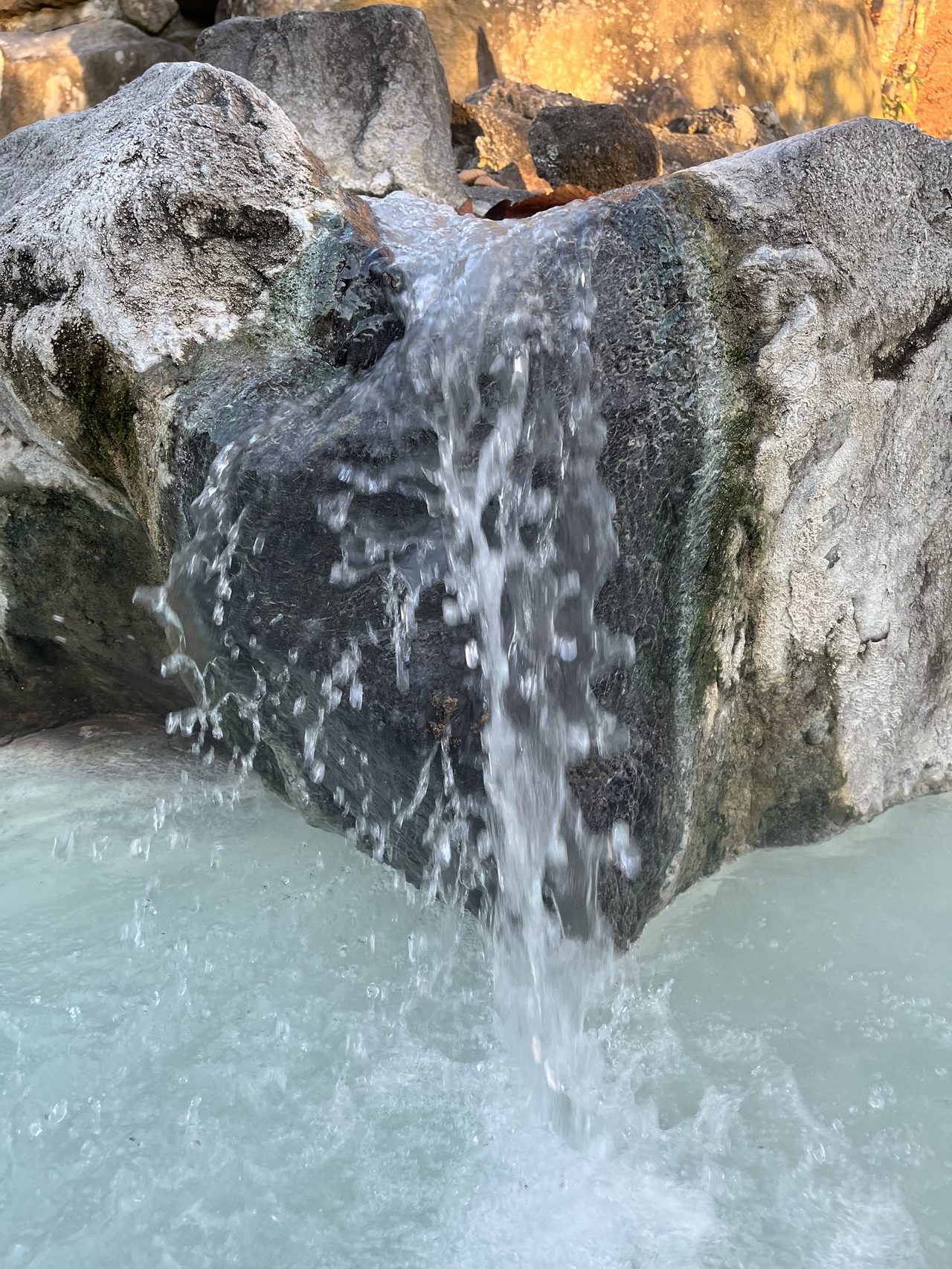
The flow is generous and the water tastes fresh — what you’d expect from a spring so close to the mountain. The sulfur aroma is rich, the most obvious sign that this is a spring straight from the mountain. The water is slightly hot, which felt wonderful in the cold morning air. Because the changing hut is small, expect a wait when it’s busy. Remember there are no showers, so soap and shampoo are not allowed.
Kawara-no-yu — The Mixed-Gender Bath Nearby
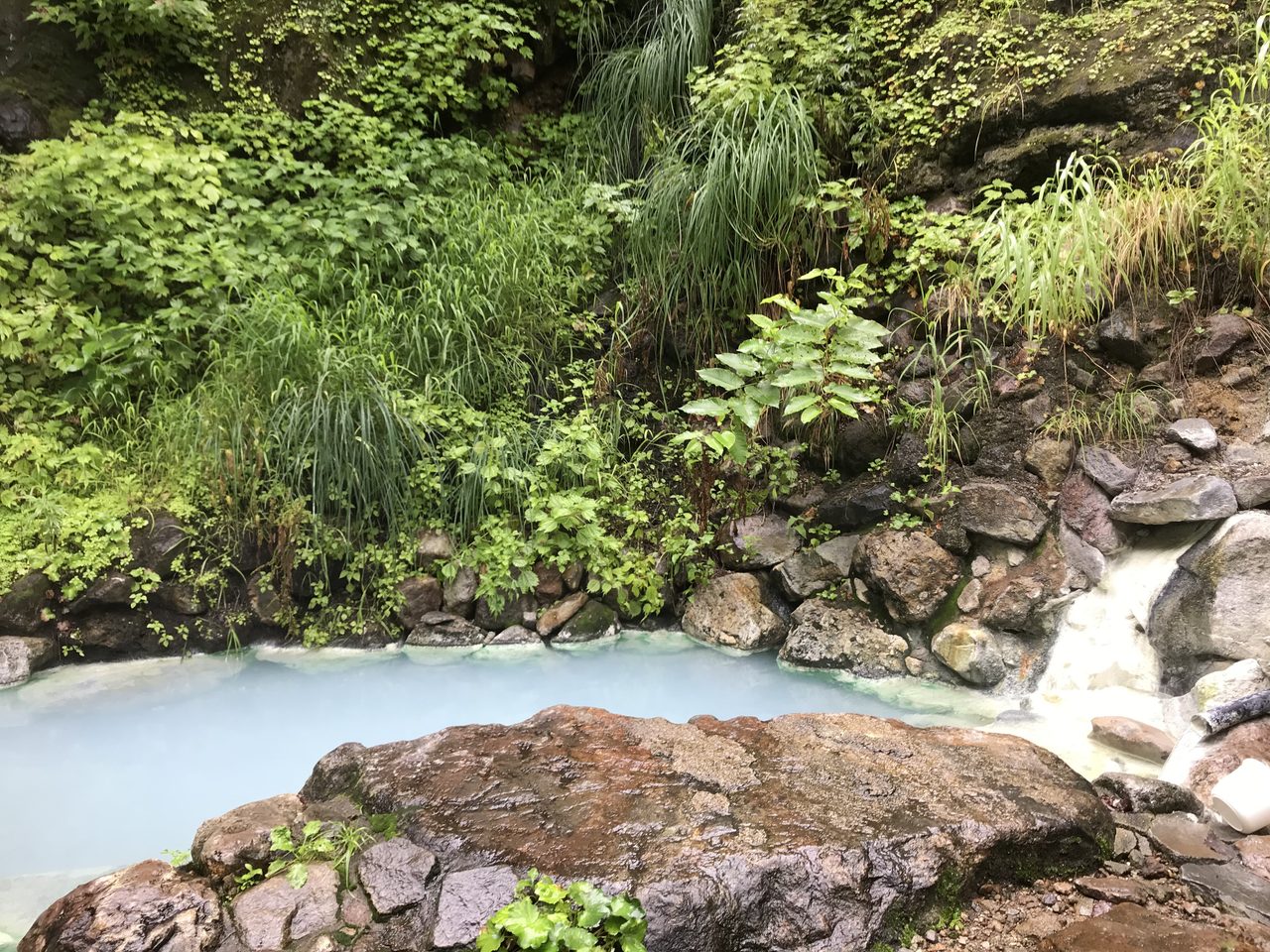
For a more remote experience, a second bath, Kawara-no-yu, is also nearby. It is mixed-gender (bring a large towel to wrap yourself in) and the trail diverges from the Ogon-no-yu path. You walk along the hiking trail and cross a large bridge, and the walk is a good deal longer, so sturdy shoes are essential. Combined with Ogon-no-yu, it makes a fine morning of mountain bathing.
Eating in the Village — Dainichiya
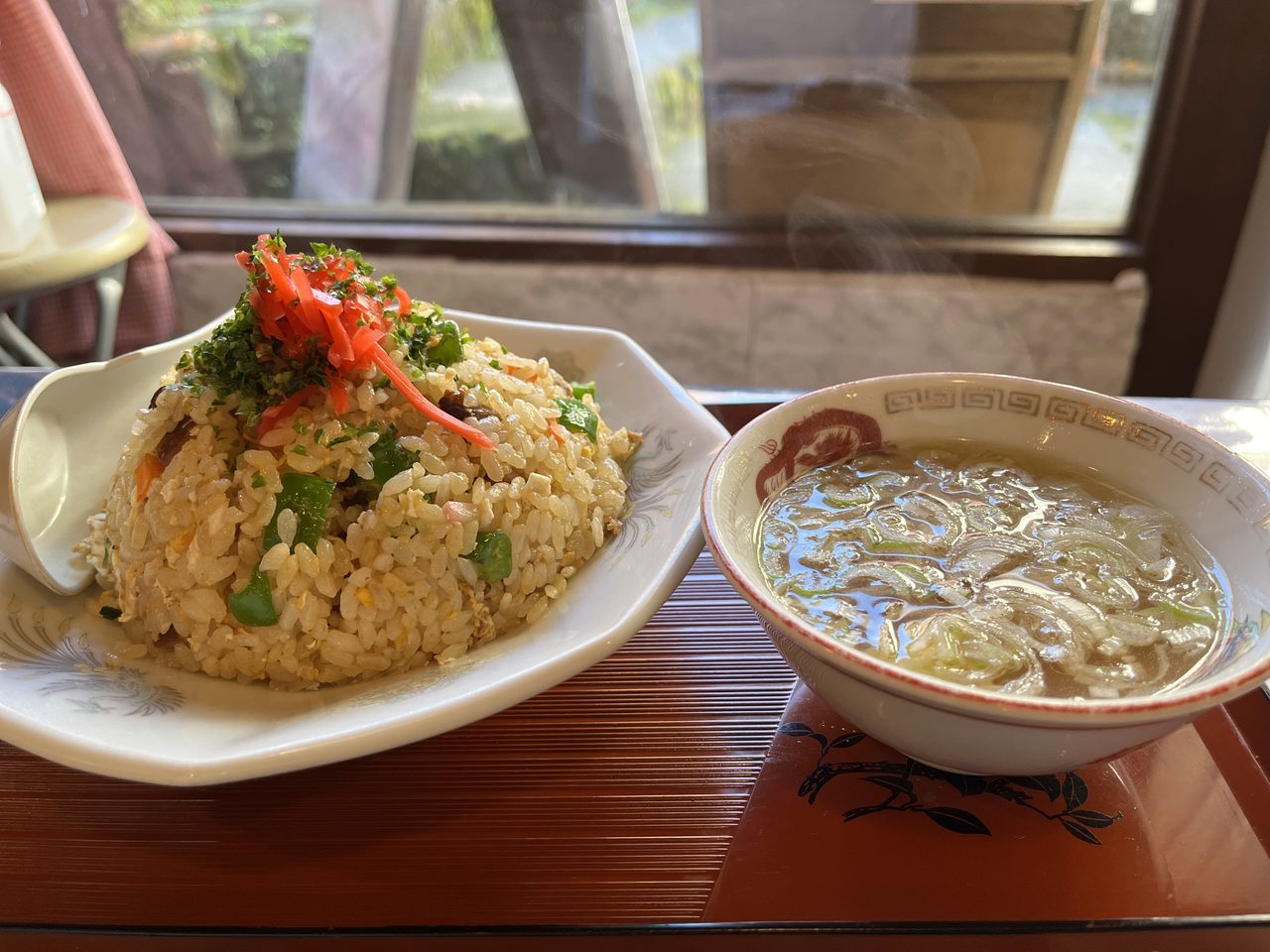
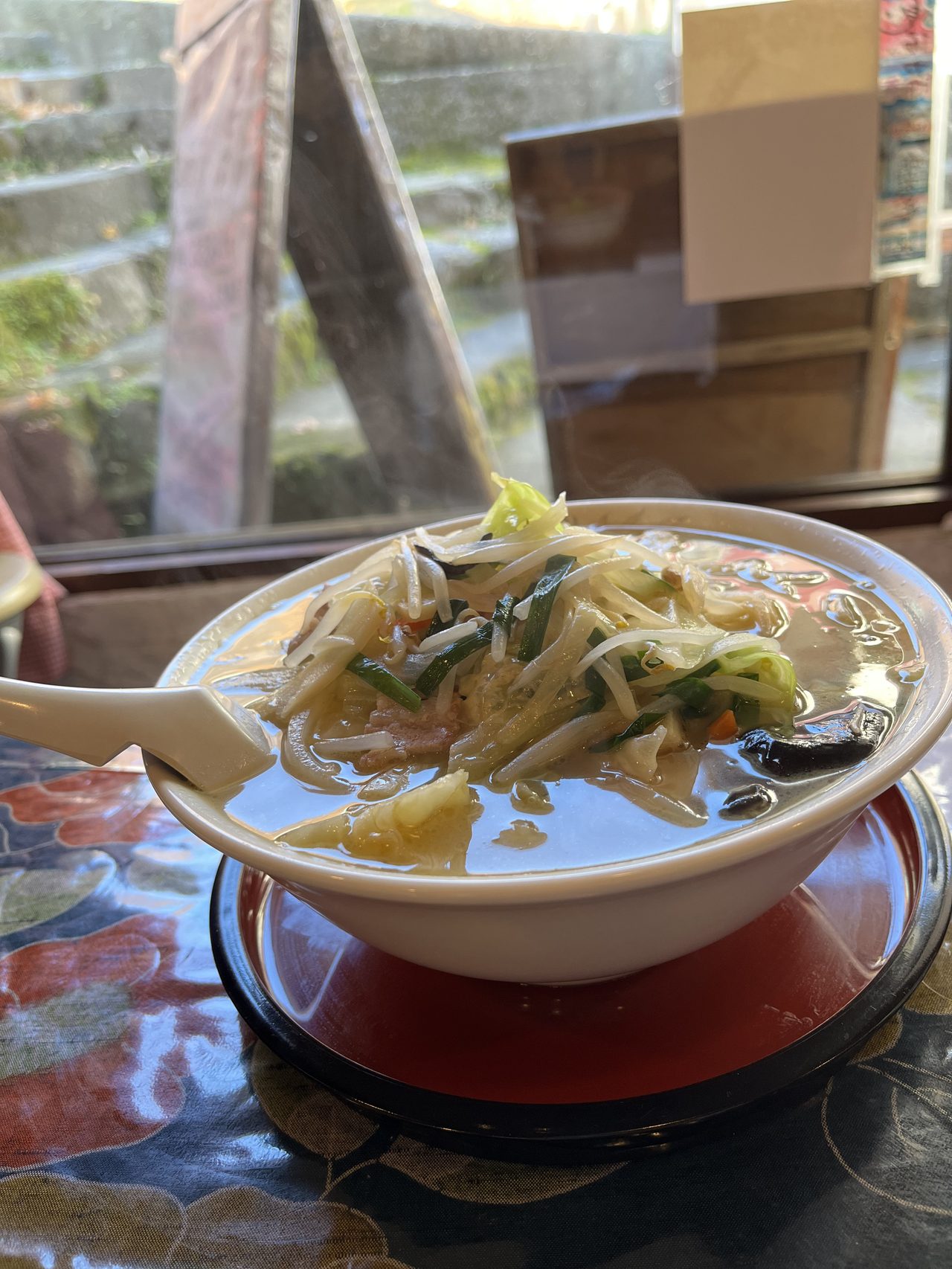
Left: The fried rice. Right: Tanmen, the most popular dish.
After the bath, Dainichiya at the far end of the village is a friendly place for a hot meal. The fried rice is superb, cooked by the owner’s grandmother with perfect seasoning, and the most popular dish is tanmen, a noodle soup topped with stir-fried vegetables. Ramen and rice-bowl dishes are also on the menu. It’s cash only, and posted hours vary (listed as 8:00–16:00 by the shop, though other sources differ), so check before you go.
Final Thoughts
Ogon-no-yu is a simple bath, but the combination of strong sulfur water, free entry, and a setting this beautiful makes it unforgettable. The effort to reach it, a bus ride and a short uphill walk, is part of what makes it special. Go early on an autumn morning, mind the opening dates, and bring a towel.
Ogon-no-yu is ideal for visitors who:
- Want a wild, natural outdoor bath without the cost of a stay
- Love autumn foliage and early-morning light
- Enjoy milky sulfur water in a mountain setting
- Are comfortable with basic facilities (no shower, small changing hut)