
When people imagine the ideal Japanese inn, they picture a grand wooden building, a moss-covered garden, a long corridor looking out over a courtyard — something that feels like stepping back in time.
Mukaitaki in Higashiyama Onsen is exactly that place. Founded in 1873, it was designated Japan’s first National Registered Tangible Cultural Property in 1996 — a living landmark that you can actually sleep in.
Why Mukaitaki stands out:
- Japan’s first National Registered Tangible Cultural Property — a beautifully preserved historic inn founded in 1873
- Five hot spring baths, all gensen kakenagashi (pure source-fed water, no additives)
- Traditional Aizu local cuisine served course by course in your room
This was a place I’d wanted to visit for a long time. The building and grounds alone are worth the journey — but the hot springs and food make it a complete experience. (This review is based on a June 2022 stay.)
Higashiyama Onsen “Mukaitaki”
| Address | 200 Yumoto Kawamuki, Higashiyama-machi, Aizu-Wakamatsu, Fukushima |
|---|---|
| Phone | 0242-27-7501 |
| Official Website | https://www.mukaitaki.jp/ |
| Day-use Bathing | Not available (overnight guests only) |
| Check-in / Check-out | From 15:00 / By 10:00 |
| Credit Cards | Accepted (VISA, JCB, AMEX, Mastercard, Diners and others) |
Getting There
Mukaitaki is in the Higashiyama Onsen area, a short distance from the center of Aizu-Wakamatsu City in Fukushima Prefecture.
The city is known for its well-preserved samurai history, most famously Tsurugajo Castle — a natural pairing with a stay at a historic ryokan like Mukaitaki.
🚄 From Tokyo
Take the Tohoku Shinkansen to Koriyama (~1.5 hrs), then transfer to the Ban-Etsu West Line to Aizu-Wakamatsu (~1.5 hrs). Total journey: around 3 hours. From Aizu-Wakamatsu Station, a taxi to Higashiyama Onsen takes about 10 minutes. The inn can also arrange pickup — check with them when booking.
🚗 By car
Accessible via the Banetsu Expressway. The Higashiyama Onsen area is signposted from central Aizu-Wakamatsu — about 10 minutes from the city center.
The Building — A Living Piece of Japanese History
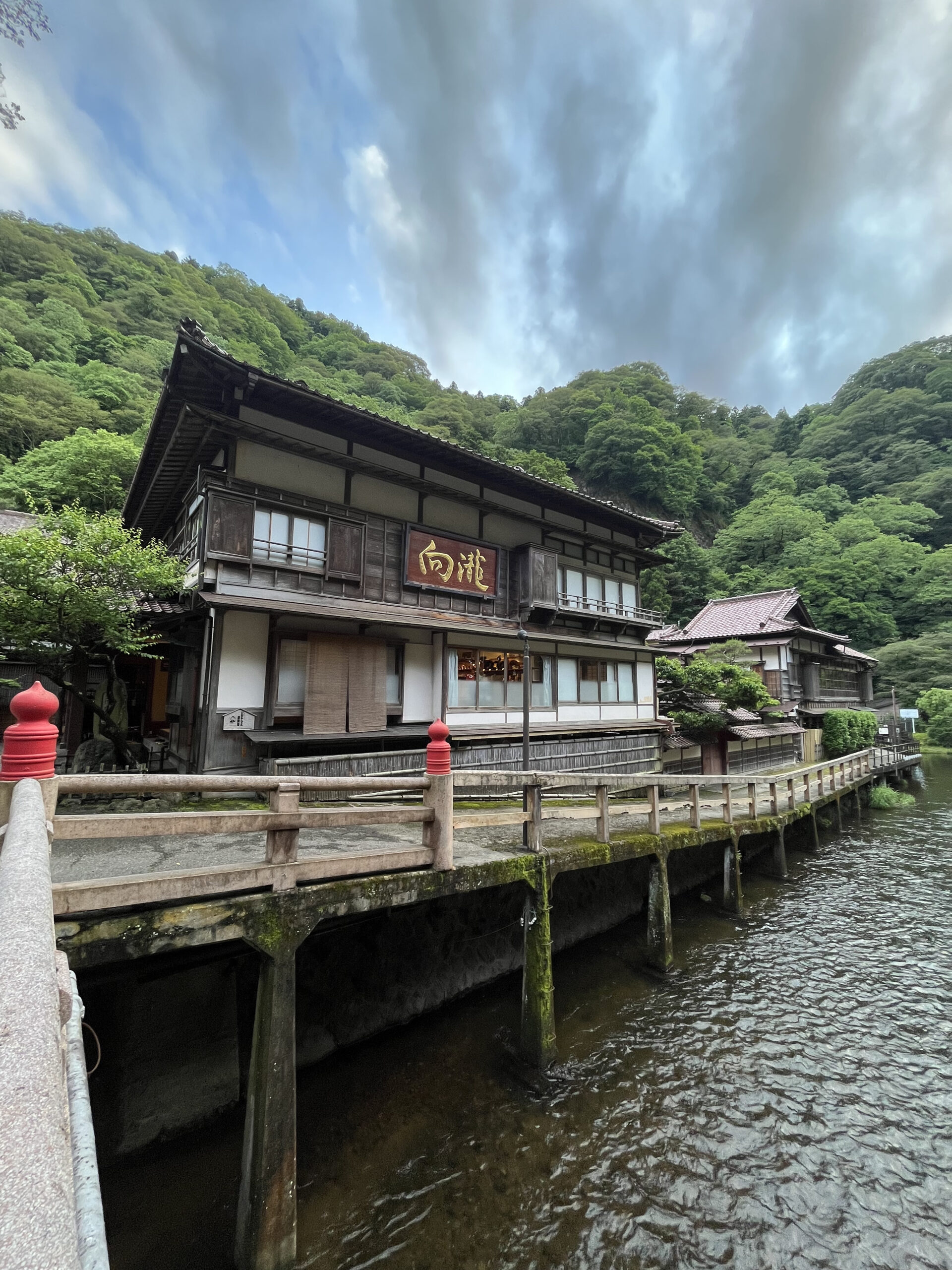
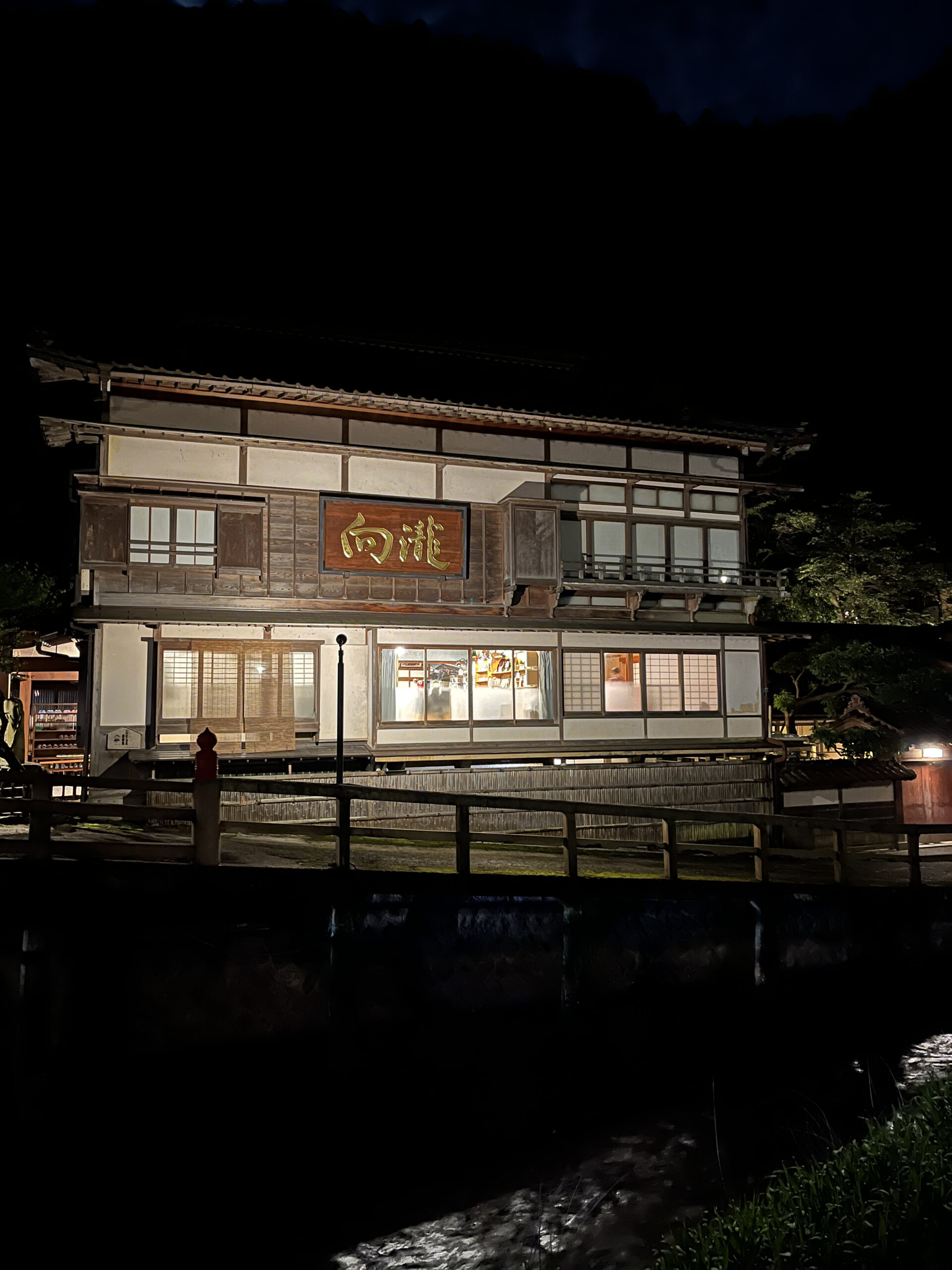
The gold “Mukaitaki” characters on the facade, and the inn lit up after dark. Both are worth photographing.
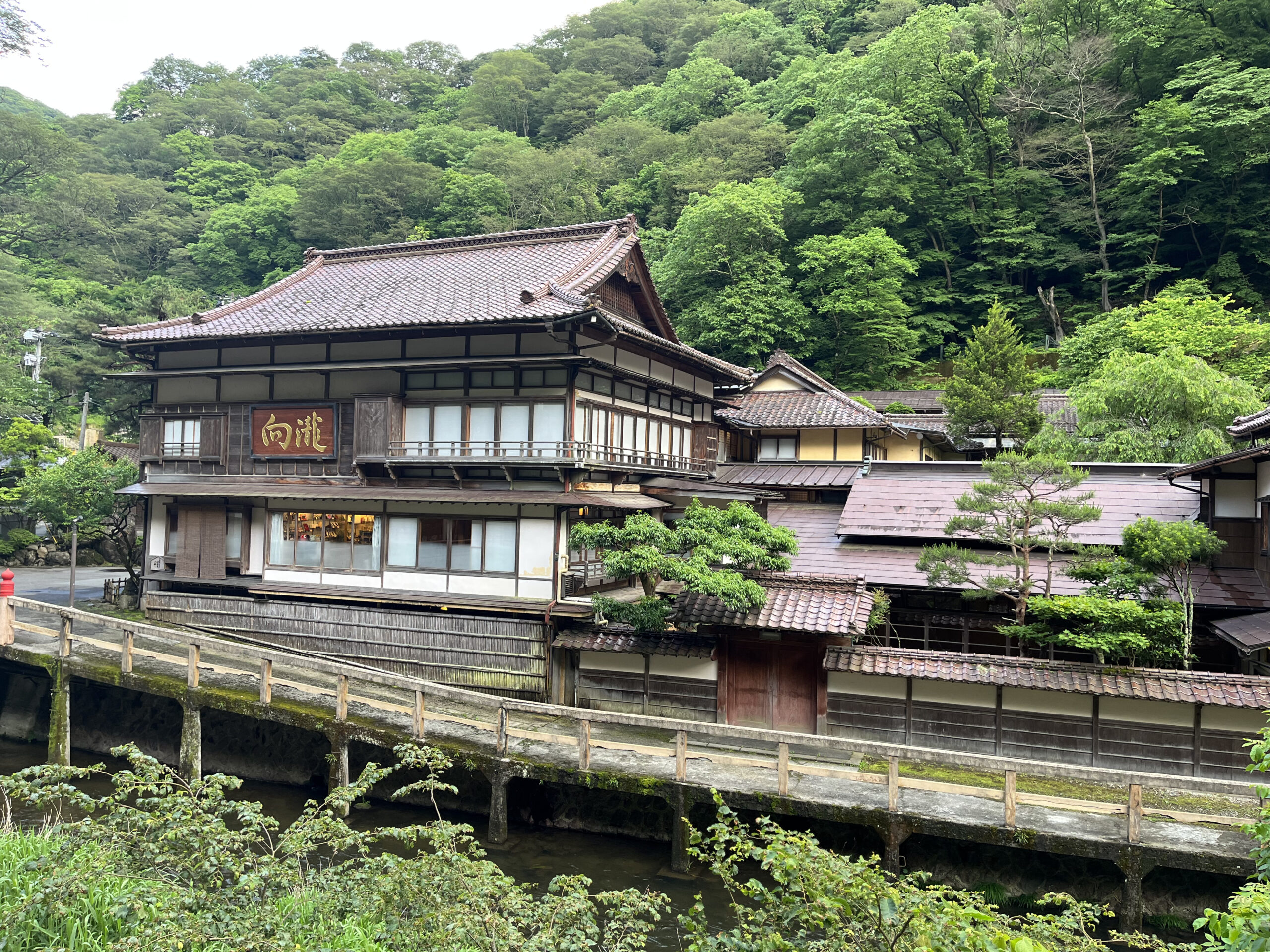
The first sight of Mukaitaki is genuinely impressive. The wide, multi-winged wooden building runs along the river, carrying a weight and dignity that only comes from 150 years of careful preservation.
The gold lettering of the inn’s name on the facade glows against the dark wood — it’s the kind of building that makes you stop and stare.
One word that came to mind: the same otherworldly atmosphere as Spirited Away. More than a few visitors have made the same comparison.
🏛 What is a “National Registered Tangible Cultural Property”?
Japan’s Cultural Properties Protection Law designates buildings of significant historical and architectural value. Mukaitaki was the very first inn in the country to receive this designation, in 1996 — recognizing both its Meiji-era wooden architecture and its unbroken 150-year history as a working ryokan.
The Garden and Interior — “This is Japan”
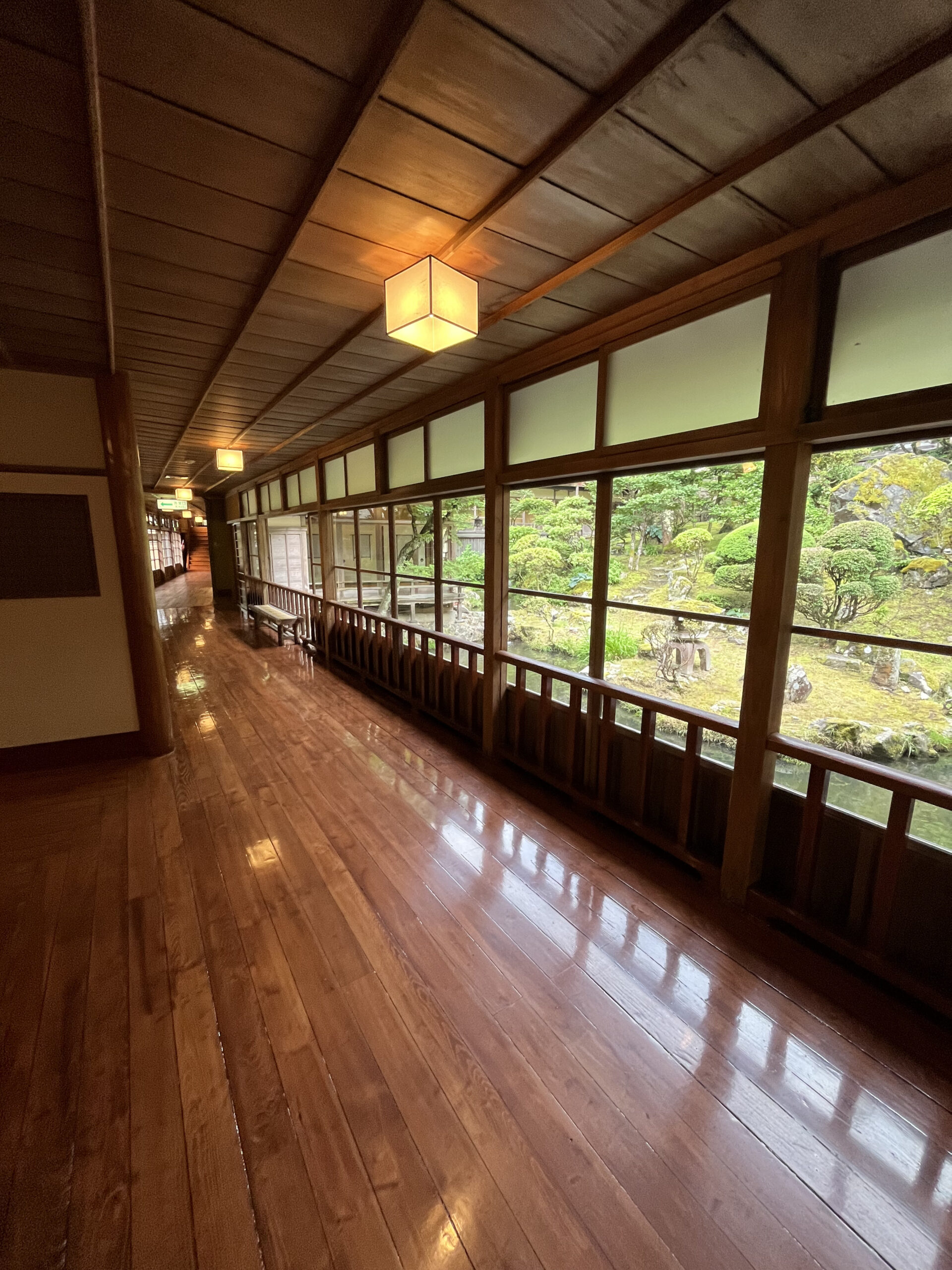
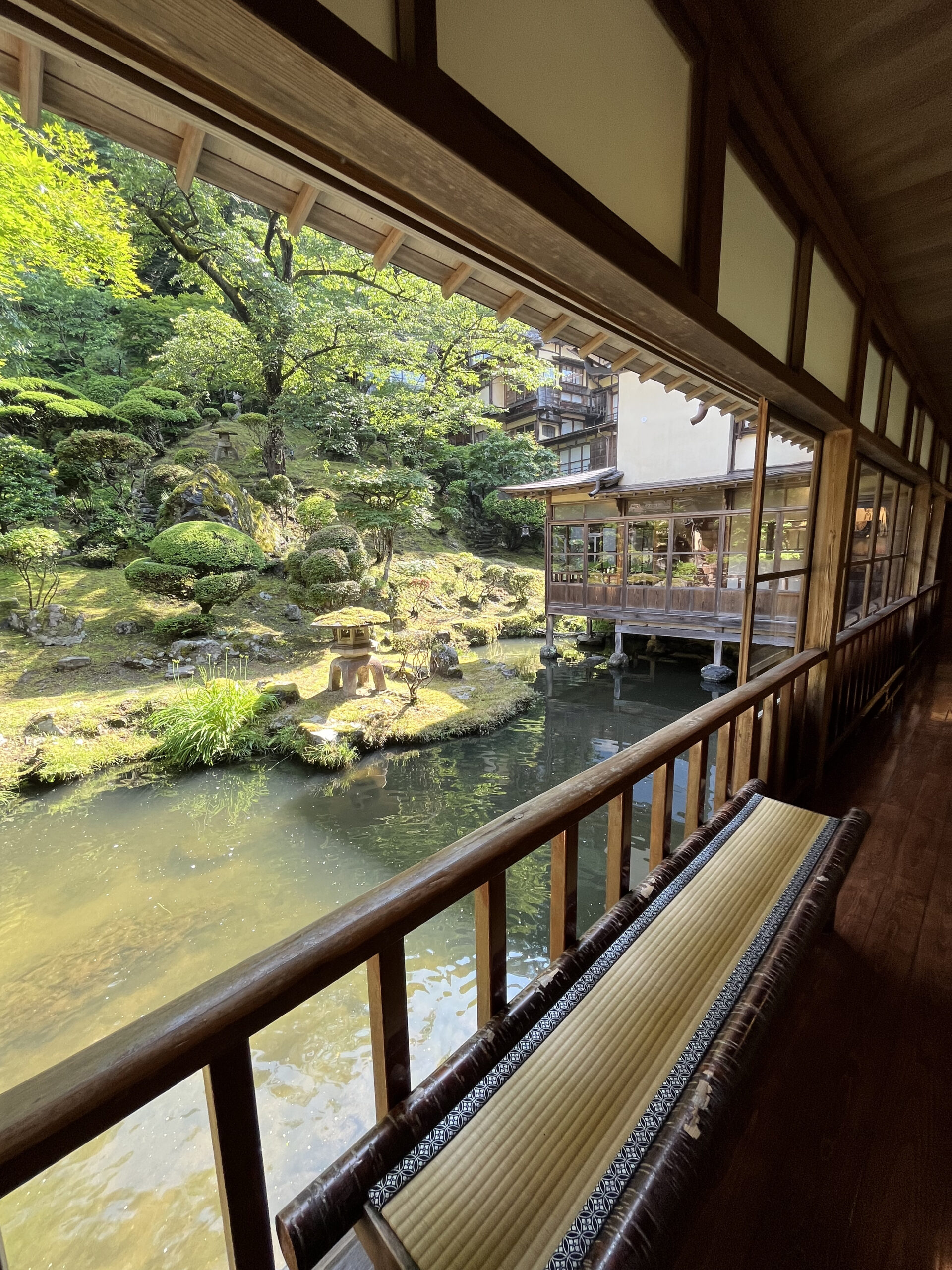
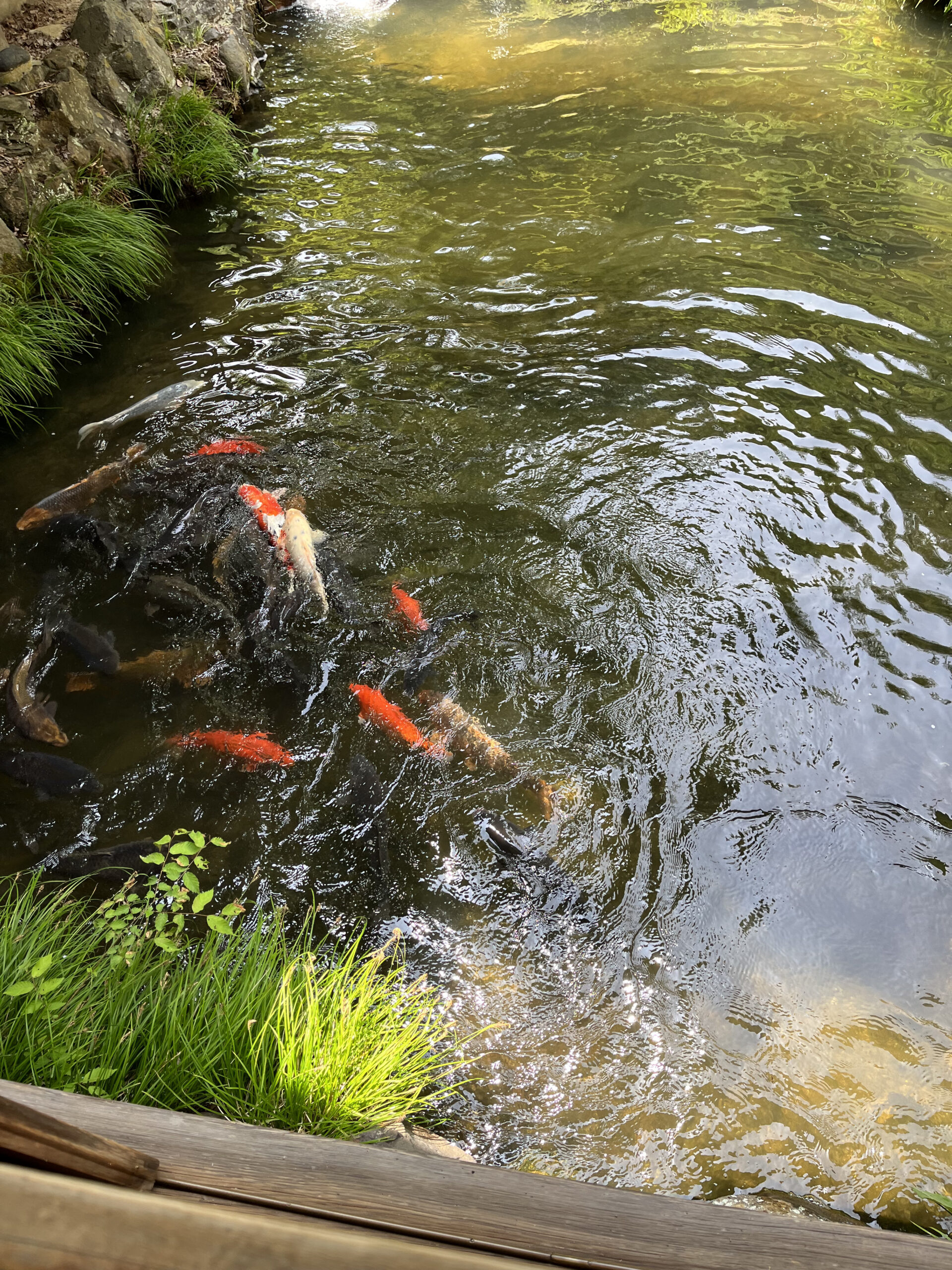
The inner garden — a classic Japanese-style courtyard with a large pond and koi swimming leisurely below.
Walking through the interior, every corridor, staircase, and garden view feels like a quiet revelation.
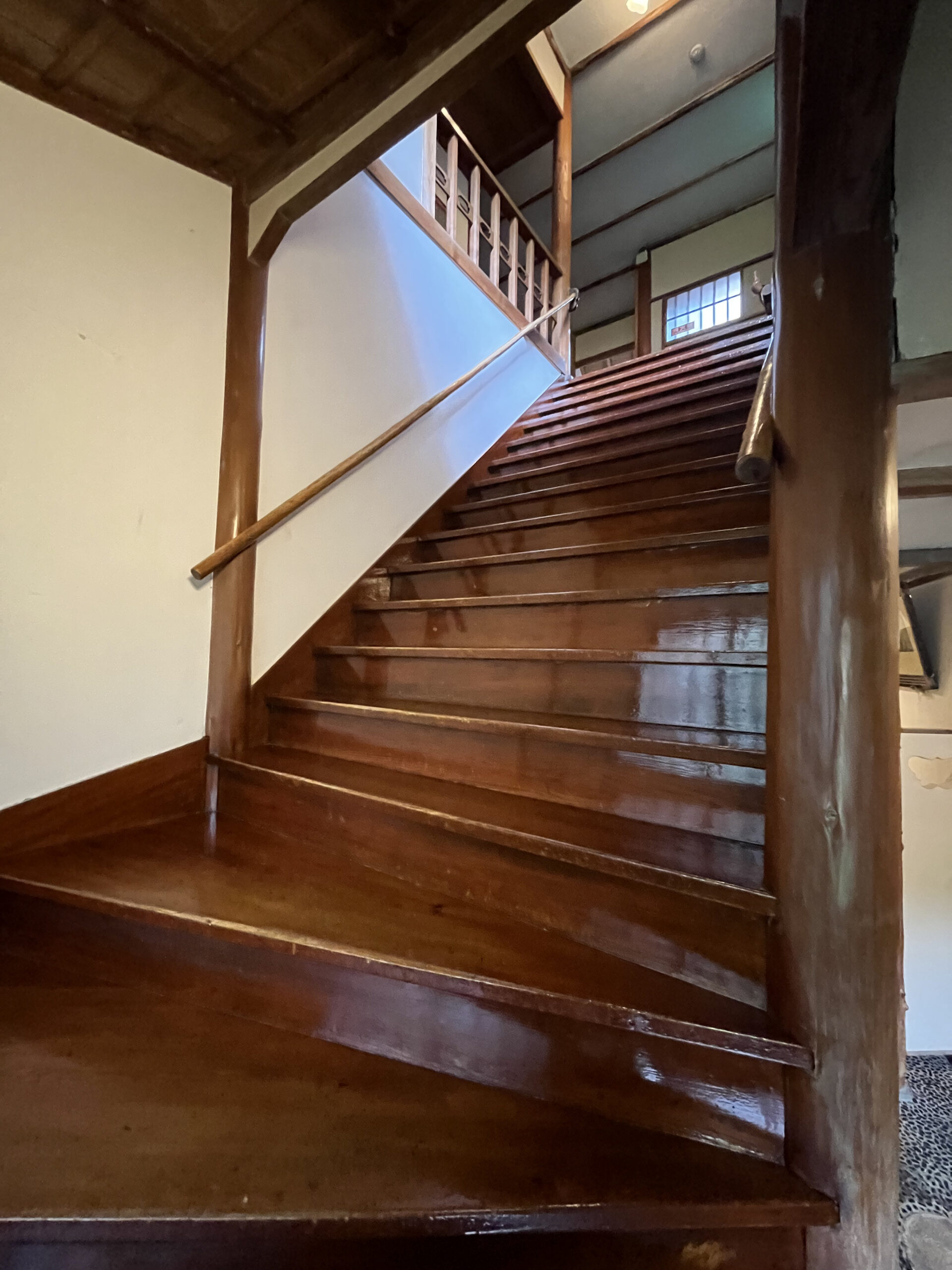
The wooden staircases are polished to a mirror shine — old, clearly, but impeccably maintained.
It’s the kind of detail that speaks to the care that goes into keeping a building like this alive.
The Room — “Matsu-no-Ma”
| Toilet | Private (en suite) |
|---|---|
| Refrigerator | Not available |
| Air Conditioning | Available |
| Wi-Fi | Available |
| TV | Available |
| Towels, Yukata & Tabi socks | Provided |
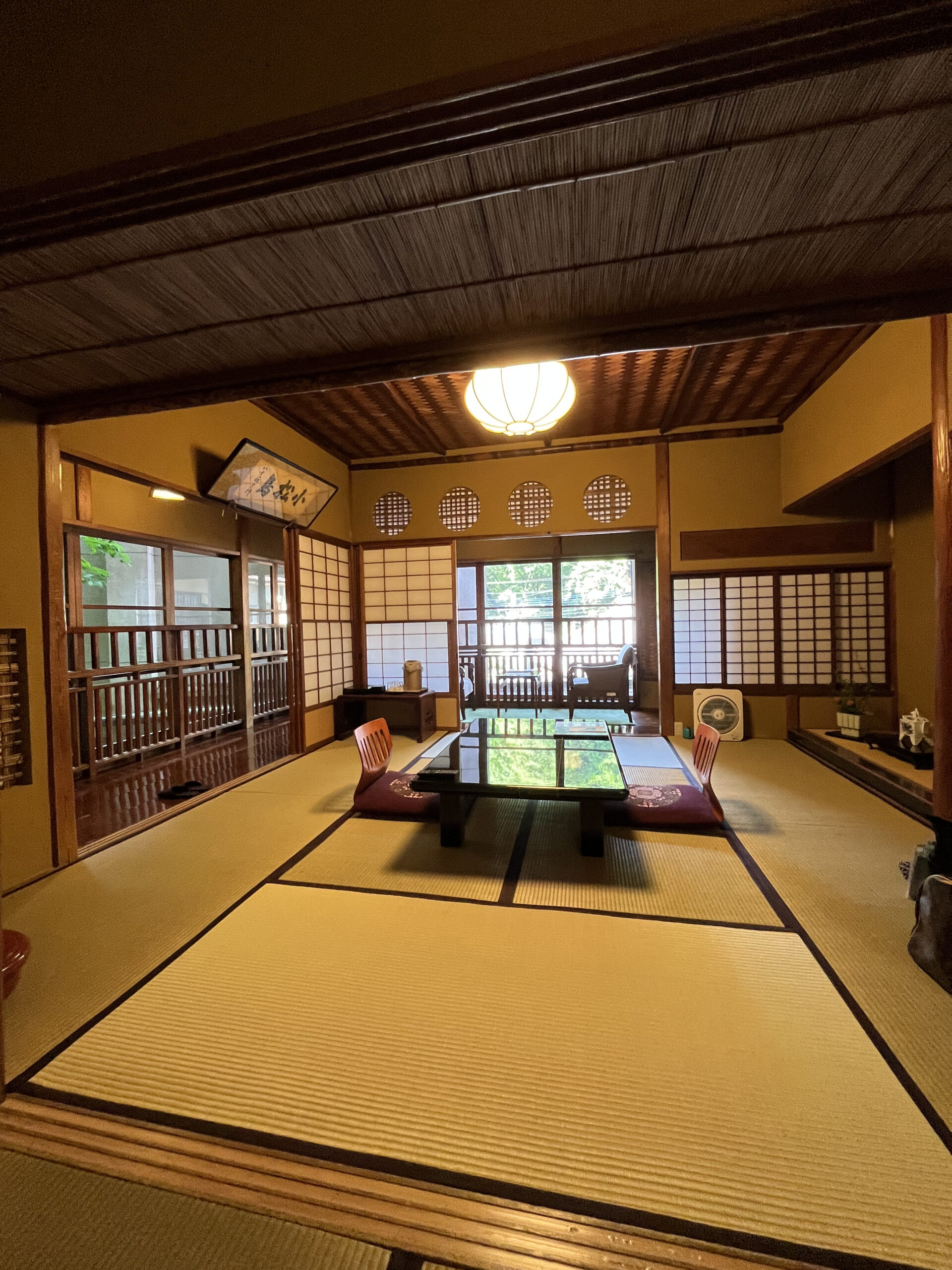
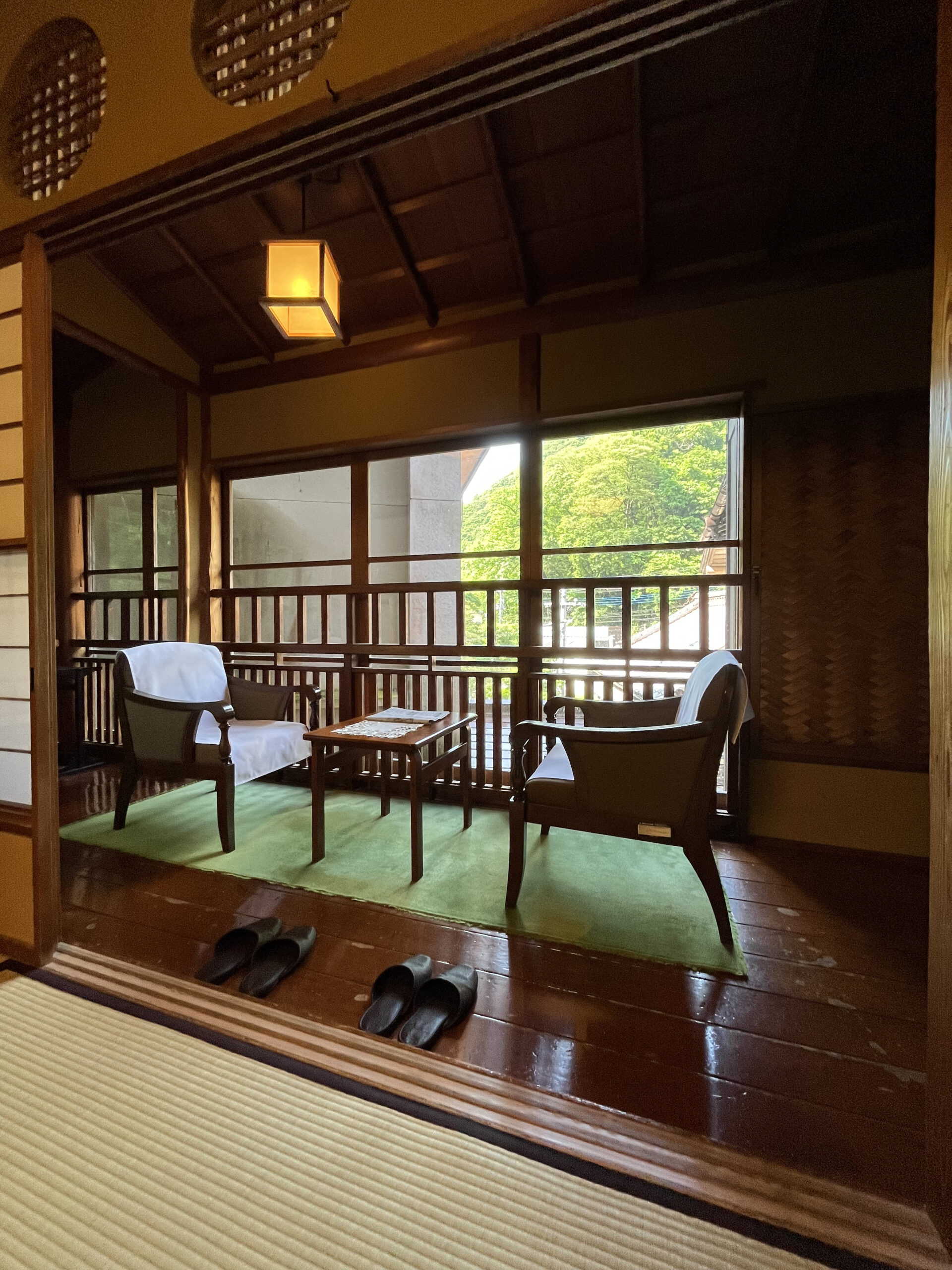
The “Matsu-no-Ma” (Pine Room) — a beautifully proportioned tatami room with a generous engawa veranda. Sitting here, you could almost feel like Japanese nobility.
The room is a classic Japanese tatami room, refined and traditional without being austere. The engawa — a wide indoor veranda area along the window — is particularly spacious, a wonderful spot to sit and look out. On arrival, thick matcha tea and yokan (sweet bean confection) are brought to the room — not the usual teabag and instant coffee of a standard hotel.
Some rooms also include a private in-room bath. The Matsu-no-Ma was one of them — a small but perfectly formed tub with its own source-fed hot spring water, available any time of night or day.
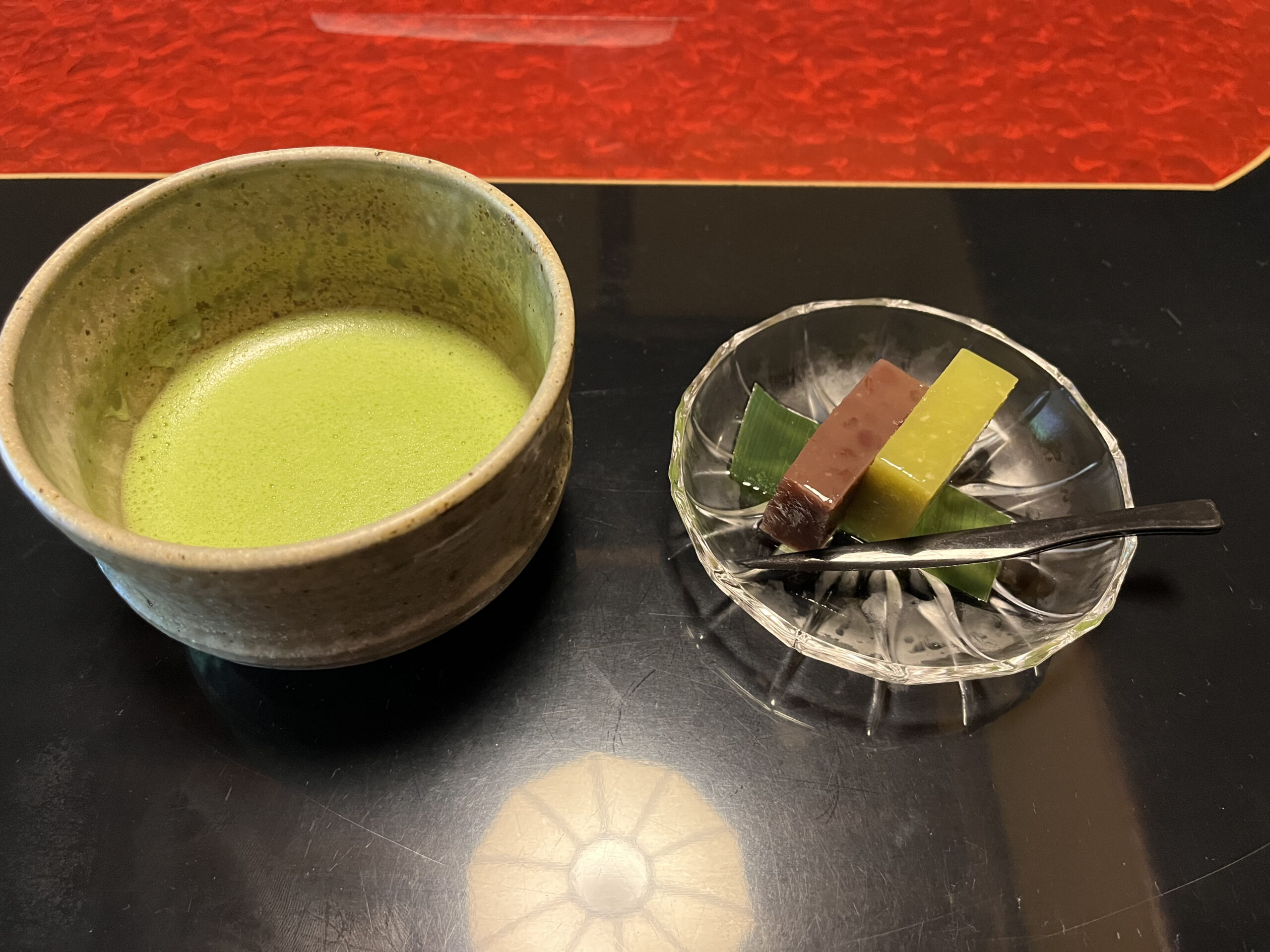
The Hot Springs — Five Baths, All Source-Fed
The hot spring setup at Mukaitaki is excellent: two shared indoor baths, three private family baths, and in-room baths available in select rooms.
All use 100% gensen kakenagashi water — pure, unfiltered, uncirculated spring water that is cleaned and refreshed daily. Every bath is a different experience.
| Spring Source | Higashiyama Onsen (wells 1, 2 & 3 combined) |
|---|---|
| Water Type | Sodium-Calcium Sulfate-Chloride Spring |
| Source Temperature | 56.6°C / 133.9°F |
| pH | 7.7 (mildly alkaline — good for skin) |
| Color / Scent | Clear, colorless — odorless and tasteless |
① Kitsune-yu (Fox Bath) — The Historic One
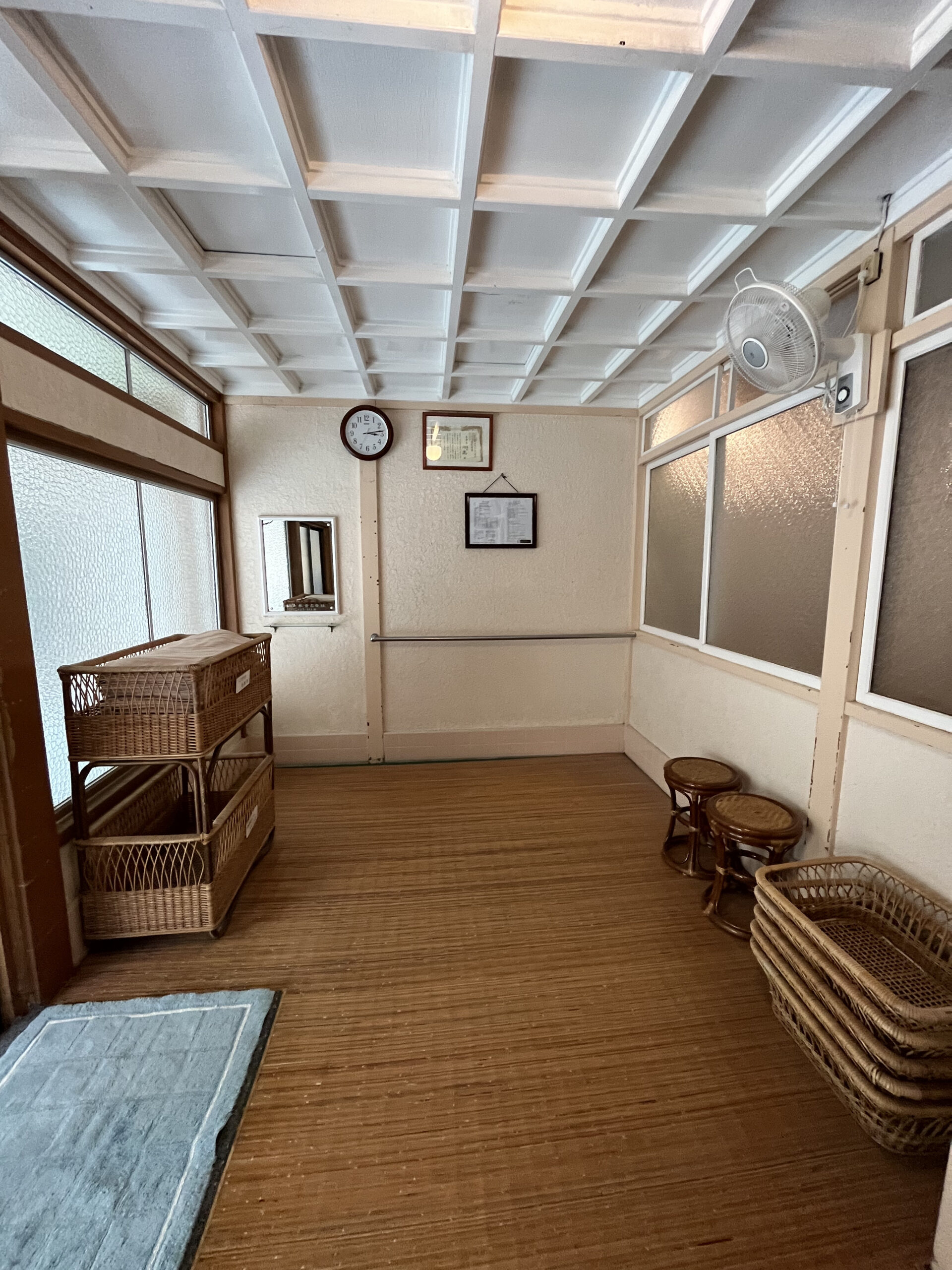
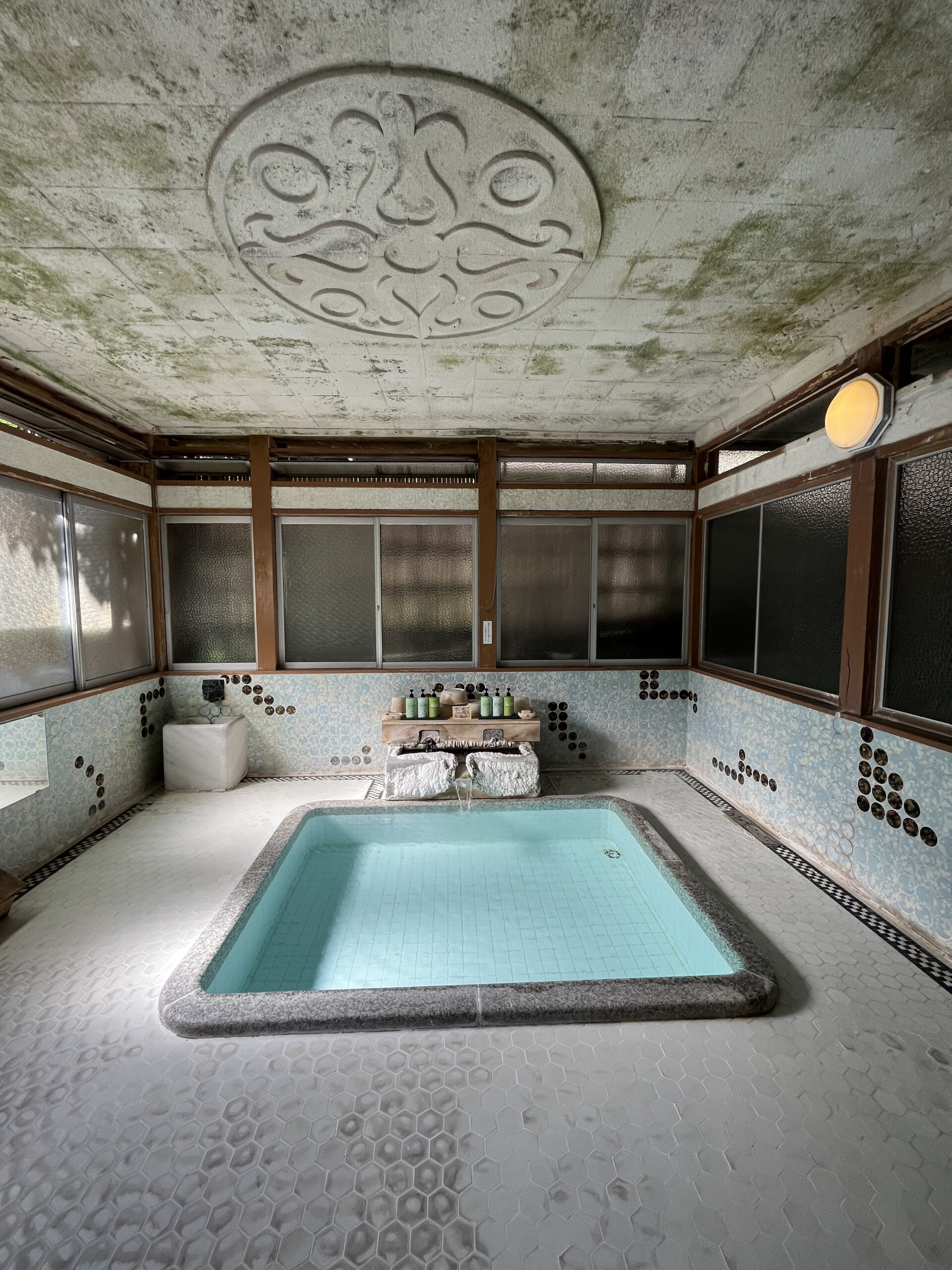
The Kitsune-yu changing room and bath — ancient in feel, but spotlessly maintained. The symmetrical tub design and the clan crest carved into the ceiling are worth looking for.
This bath dates back to when the inn operated as a designated retreat for the Aizu domain — likely centuries of use.
The tub is simple, symmetrical, and serious. The water is fed in at 45°C — genuinely hot, and not for the faint-hearted.
There are no showers here, so visit Saru-no-yu first if you need to wash. Clean bath towels are provided in the changing room.
② Saru-no-yu (Monkey Bath) — The Recommended One ★
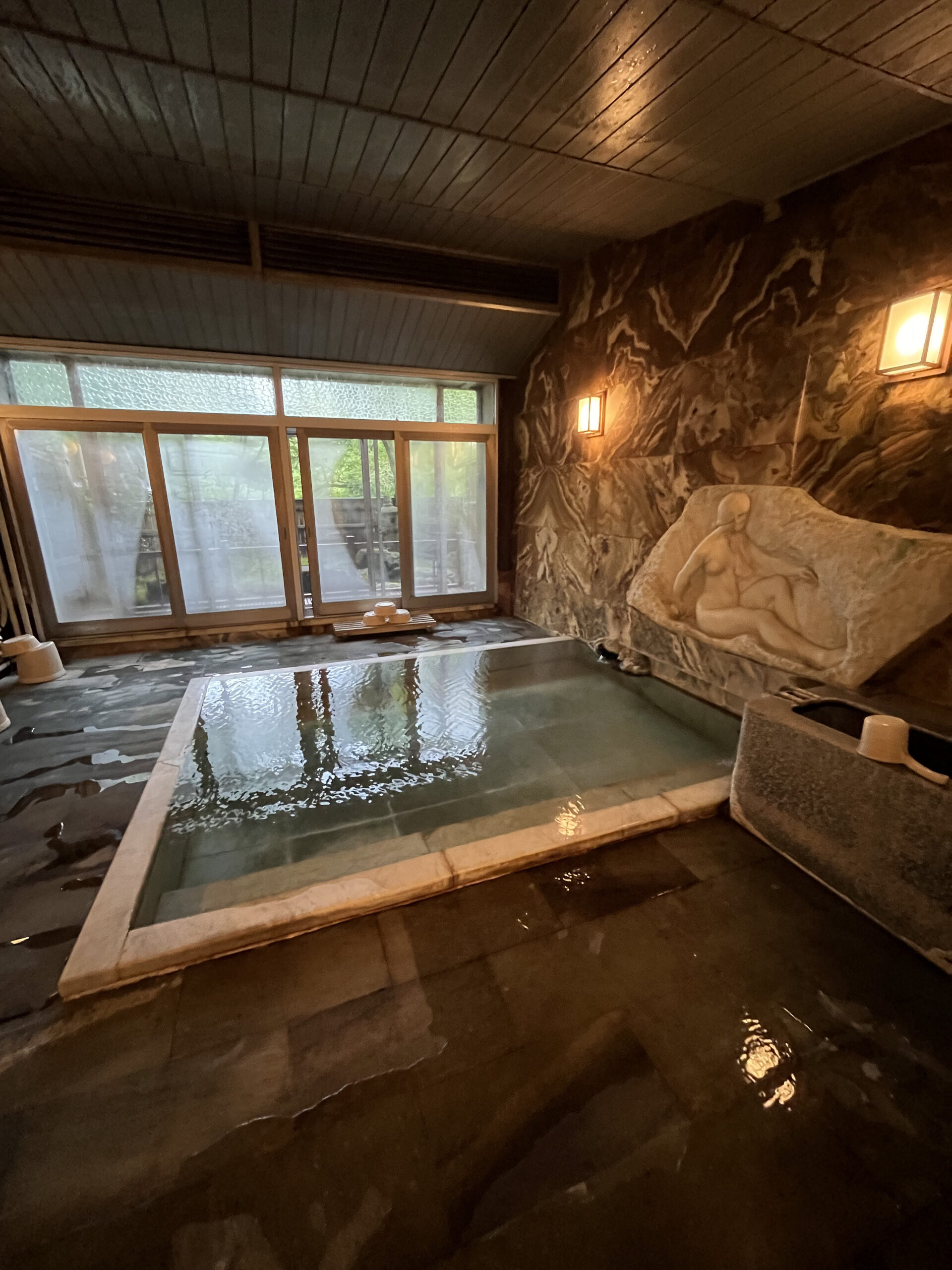
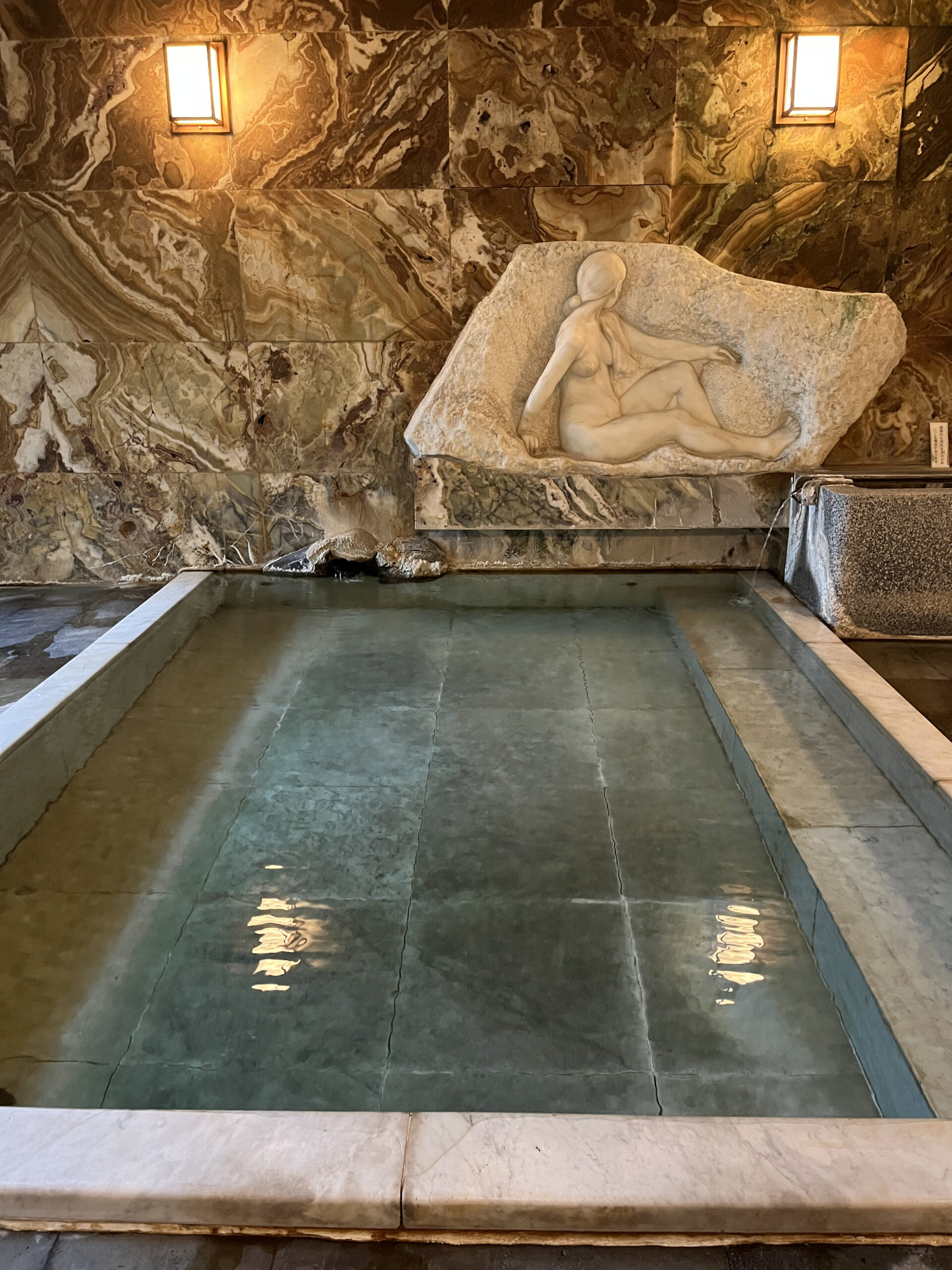
The Saru-no-yu — a large, marble-lined tub. More refined in feel than the Kitsune-yu, and significantly more soakable.
The largest of the communal baths, and the one to prioritize. The tub is lined with marble — an unexpected touch of luxury — and the water temperature runs around 39–40°C, making it ideal for a long, relaxed soak.
The pH of 7.7 is mildly alkaline, which tends to leave skin feeling noticeably soft. Showers and DHC amenities are available here.
③ Three Private Family Baths — Any Time, No Reservation
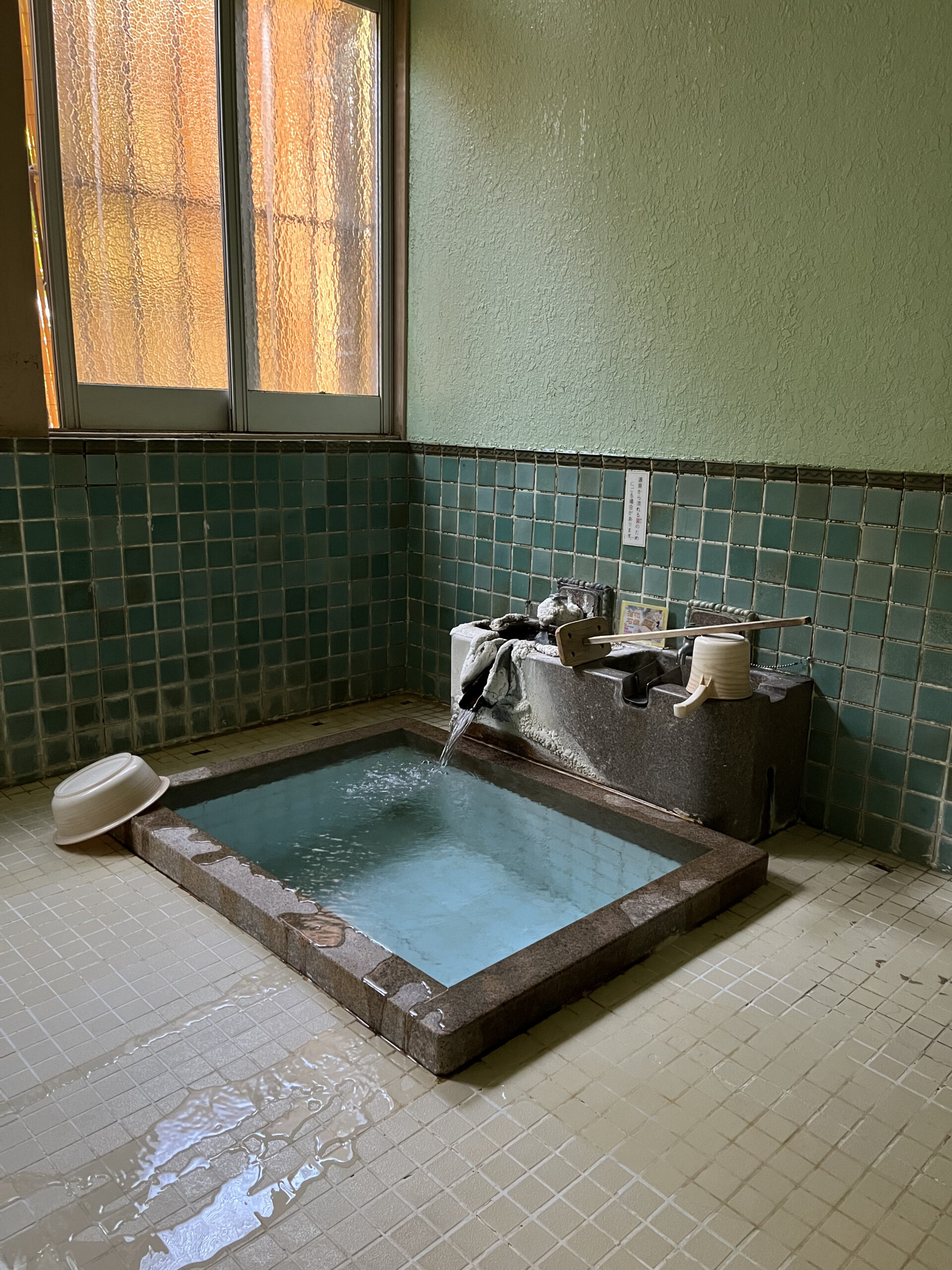
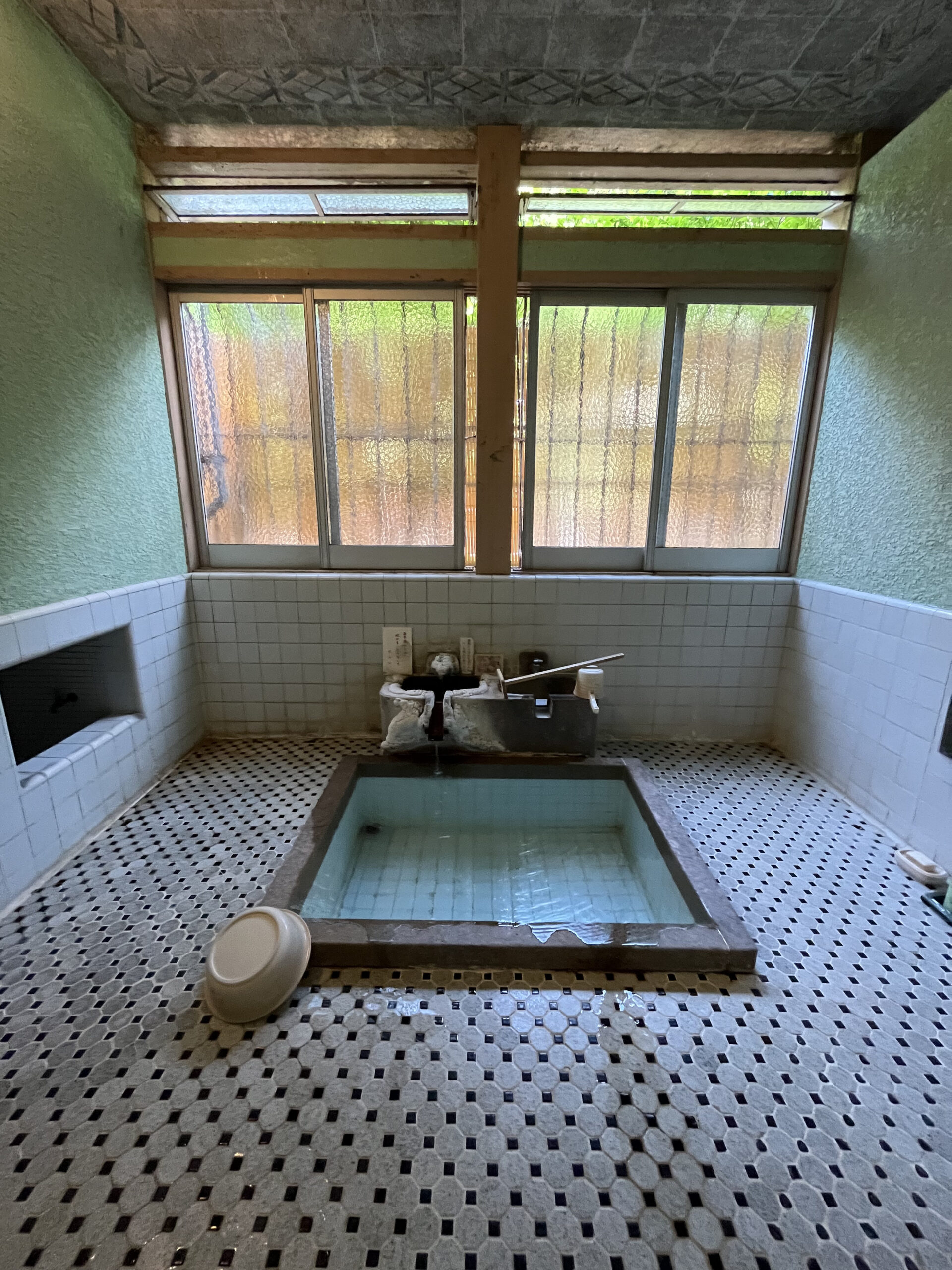
Two of the three private family baths — Suzu-no-yu and Tsuta-no-yu. Each has its own carved ceiling motif hidden above.
Three small private baths — named Tsuta-no-yu, Hyotan-no-yu, and Suzu-no-yu — are available to all guests on a first-come, first-served basis with no time limit.
Each shares the same design and water, but look up at the ceiling: each has a different carved relief decoration unique to that bath — a detail so quiet you could easily miss it.
Dinner & Breakfast — Aizu Cuisine, Course by Course
Meals are served in your room, with a staff member bringing each dish individually and explaining what it is — one of the most elegant forms of Japanese hospitality, and something you rarely experience at larger hotels.
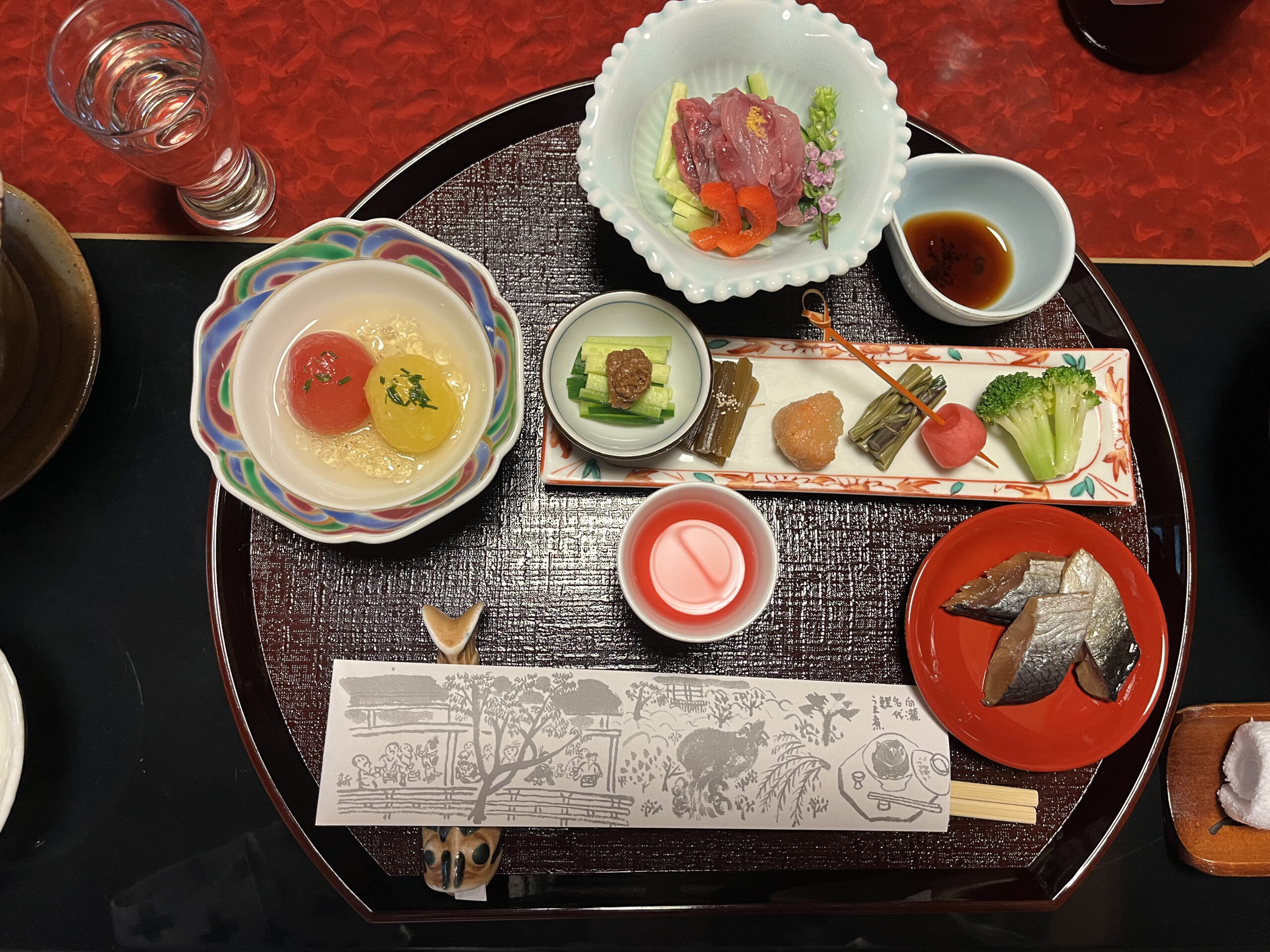
Dinner is a full course of Aizu regional cuisine — dishes rooted in the culinary traditions of this area. Highlights include koi no amani (sweet-simmered carp, a dish with Edo-period origins), kozuyu (a delicate Aizu-style soup made with scallop broth and local vegetables), and beni-masu-zushi (salmon trout sushi). A small, refined portion of Fukushima wagyu rounds it off beautifully.
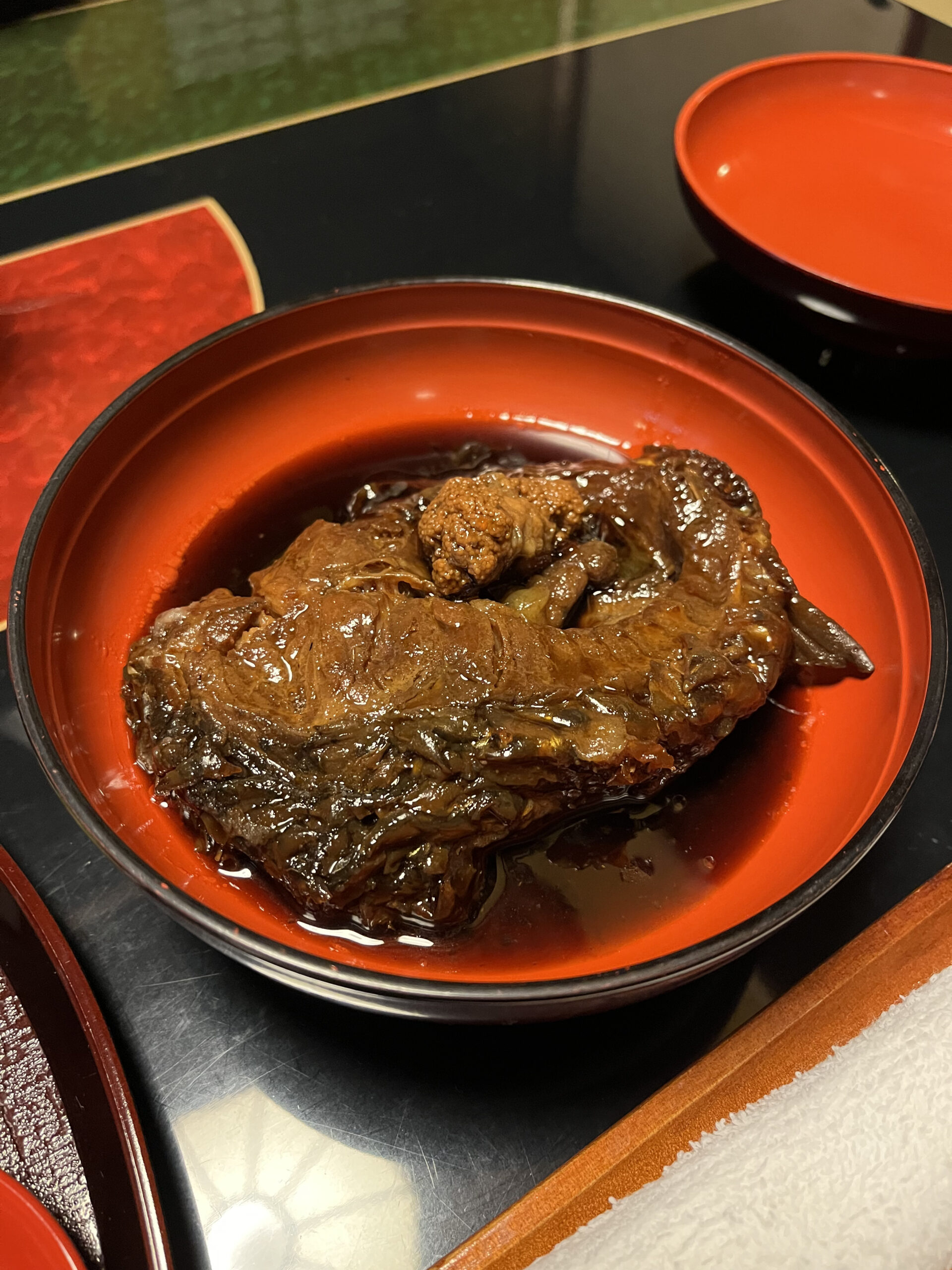
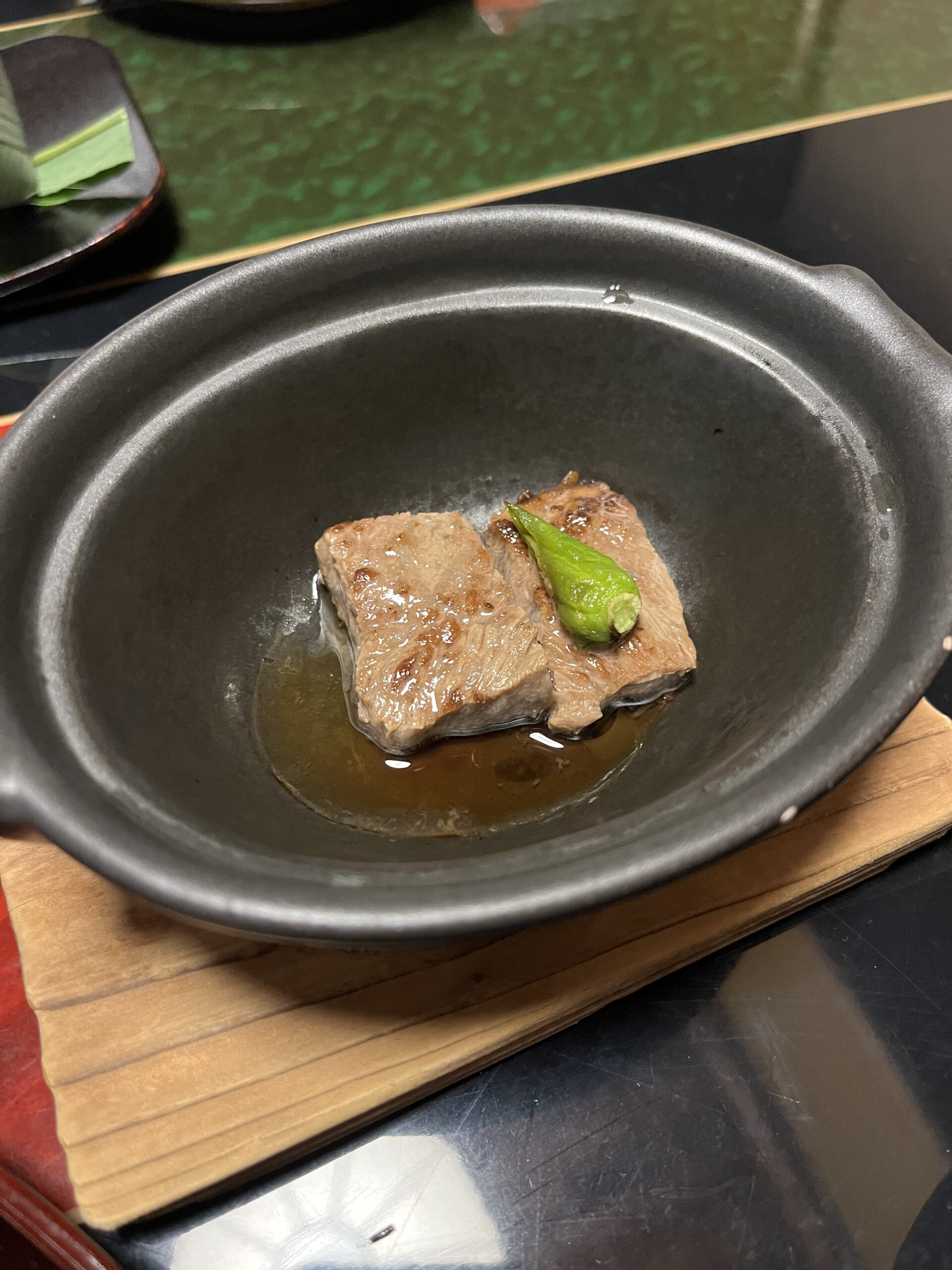
Left: Koi no amani — sweet-simmered carp, a recipe unchanged since the Edo period. Right: Fukushima wagyu beef, served in a deliberately modest portion so it doesn’t overwhelm.
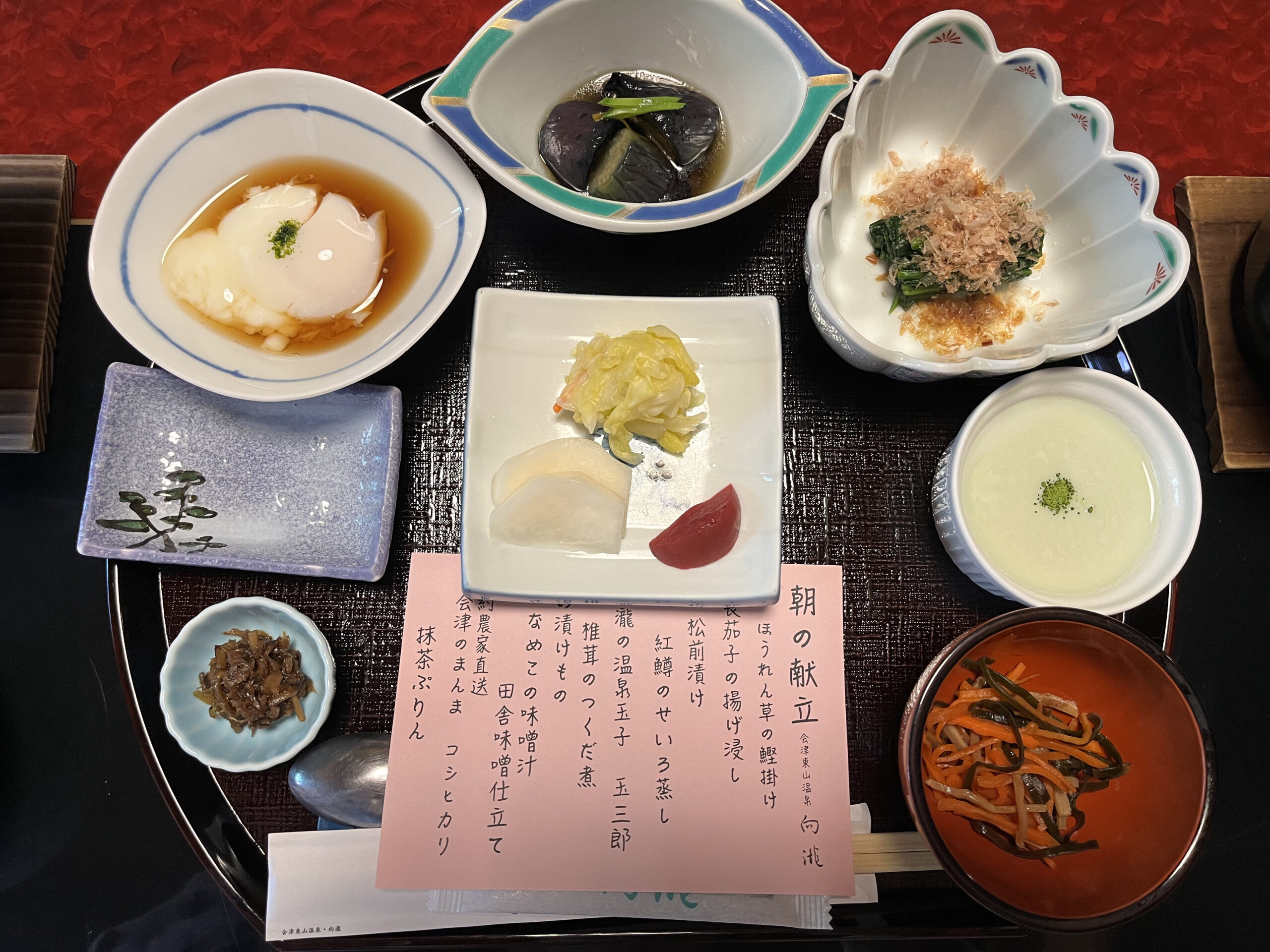
Breakfast is simpler and gentler — steamed beni-masu trout, pickled vegetables, and Aizu Koshihikari rice (one of Japan’s most celebrated varieties). The miso soup is served in a small pot to keep it warm. Easy on the stomach, and exactly right before a final soak before checkout.
Final Thoughts
Mukaitaki is among the most memorable places I’ve stayed in Japan. The building is extraordinary — not as a museum piece, but as a living, breathing inn where history and daily life coexist. The hospitality is warm and unhurried, the food is deeply rooted in the region, and the hot springs are exceptional.
One small moment summed it up: at checkout, the staff member who had looked after us stood outside and waved until our car was completely out of sight. It’s a small gesture — but in that moment it felt like the whole inn was sending us off.
This inn is a great fit if you:
- Want to stay in a genuinely historic building — not a replica, but the real thing
- Are interested in Japanese cultural heritage and regional cuisine
- Prefer a quiet, traditional inn over a large resort hotel
- Are combining a stay with a visit to Aizu-Wakamatsu’s samurai sites and Tsurugajo Castle
If you visit Japan looking for something beyond the standard tourist trail, Mukaitaki is one of the places that will stay with you longest.