
This article contains advertisements
On the border between Akita and Aomori prefectures, hidden along a narrow mountain pass called Yatate Toge, sits a ryokan with a name that translates loosely to “sun shadow”: Hikage Onsen. For centuries, this spring has been known locally as a reisen — a “miracle water” said to restore travelers who bathe here for just three days.
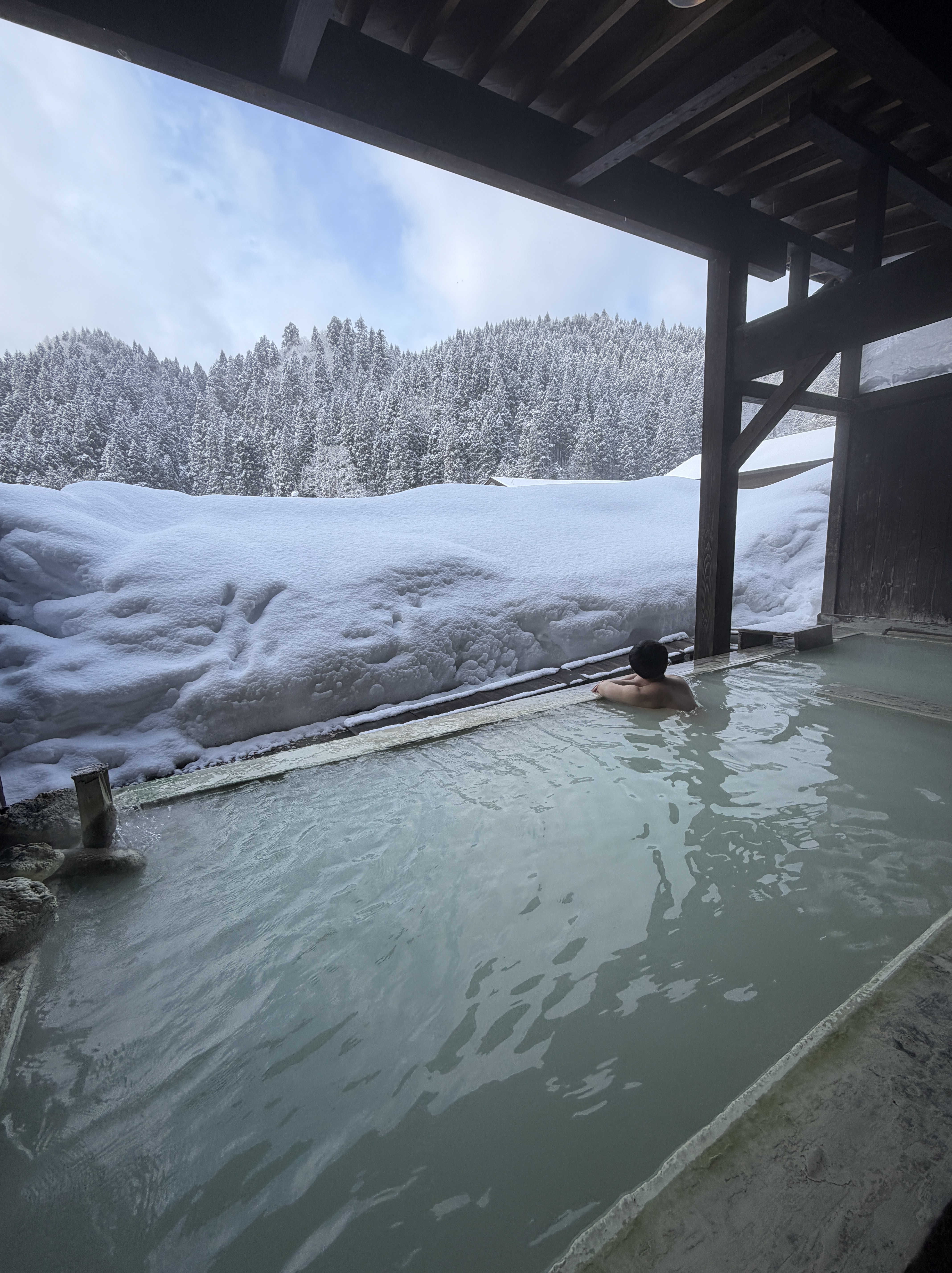
I visited in February, when snow blanketed every rooftop and tree in the valley, and the inn felt exactly like what the word hitou — hidden hot spring — was invented to describe.
Why Yarimikan stands out:
- Two distinct milky-white sulfur springs — one in the indoor bath, one in the outdoor bath, each with its own character
- An unusually large and stylish interior featuring a library, history museum, and co-working space
- Five private baths (two indoor, three outdoor) available to overnight guests, bookable twice per stay
- A genuinely spectacular winter setting, with snow-covered forest visible from every outdoor bath
- Hikage Onsen
- Inn Details
- Getting There — Access Guide
- Arriving Through the Snow
- An Unexpectedly Vast and Stylish Interior
- The Rooms
- The Hot Springs — Two Sources, Seven Bathing Spaces
- ① The Main Bath — Indoor, with an Exceptional Reclining Pool
- ② The Outdoor Bath — A Gourd-Shaped Pool with Winter Views
- ③ Private Indoor Baths — “Menke Yukko” (Overnight Guests Only)
- ④ Private Outdoor Bath — “Urugeru Yukko” (Best Location)
- ⑤ Private Outdoor Bath — “Anbe Ii Yukko” (Most Sheltered)
- ⑥ Private Outdoor Bath — “Takimi-no-Yukko” (Waterfall View)
- Dining — Refined, Warm, and Thoughtfully Served
- Final Thoughts
Hikage Onsen
Inn Details
| Address | 37 Hashiritate, Odate-shi, Akita 017-0001, Japan |
|---|---|
| Phone | +81-186-51-2011 |
| Official Website | hikage.club |
| Day-use Bathing | Adults ¥800 / 10:00–15:30 (last entry 15:00) — hours vary seasonally |
| Check-in / Check-out | From 15:00 / By 10:00 |
| Credit Cards | Accepted (VISA / JCB / American Express / Diners Club / MasterCard) |
| Overnight Rate | From approx. ¥24,750 per person (2 meals included) |
▼Book your stay▼
Getting There — Access Guide
Hikage Onsen sits deep in the mountains straddling Akita and Aomori prefectures, near a mountain pass that historically marked the boundary between the two regions. It’s remote by design, and reaching it takes some planning — especially in winter.
🚄 By Train + Taxi (Recommended for Non-Drivers)
Take the Tohoku Shinkansen from Tokyo to Odate Station (via transfer, approx. 3.5–4 hours total), or fly into Odate-Noshiro Airport. From Odate Station, the inn is roughly 30–40 minutes by taxi (advance reservation recommended — this is a rural area with limited taxi availability). Alternatively, from Aomori side, the nearest expressway interchange is Ikarigaseki IC.
🚗 By Car (Most Practical Option)
The nearest interchange isIkarigaseki ICon the Aomori side of the Tohoku Expressway. From there, follow Route 7 and turn onto the narrow mountain road leading to the onsen.Studded winter tires are mandatory from November through April— the final approach road is consistently snow-covered in winter, and this is serious mountain driving, not a light dusting.
| Nearest Interchange | Ikarigaseki IC (Tohoku Expressway, Aomori side) |
|---|---|
| Nearest Major Station | Odate Station (JR Tohoku Shinkansen via transfer) |
| From Odate Station | Taxi, approx. 30–40 minutes (reserve in advance) |
| Total from Tokyo | Approx. 4–5 hours door to door |
| JR Pass | ✅ Shinkansen portion to Odate is covered; local taxi/transfer not included |
| Winter Driving | ⚠️ Studded tires or chains required Nov–Apr; road conditions can be severe |
Arriving Through the Snow
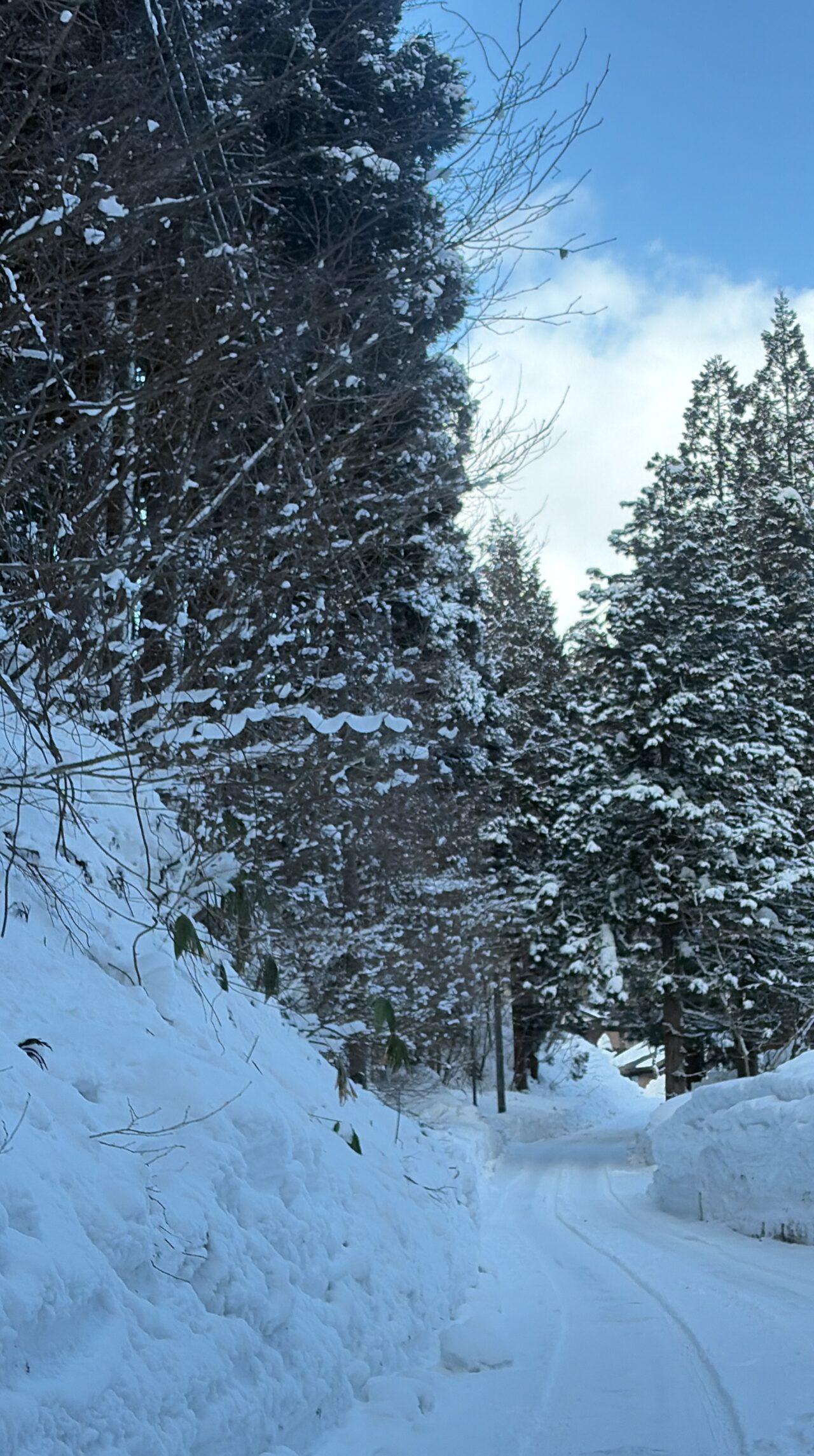
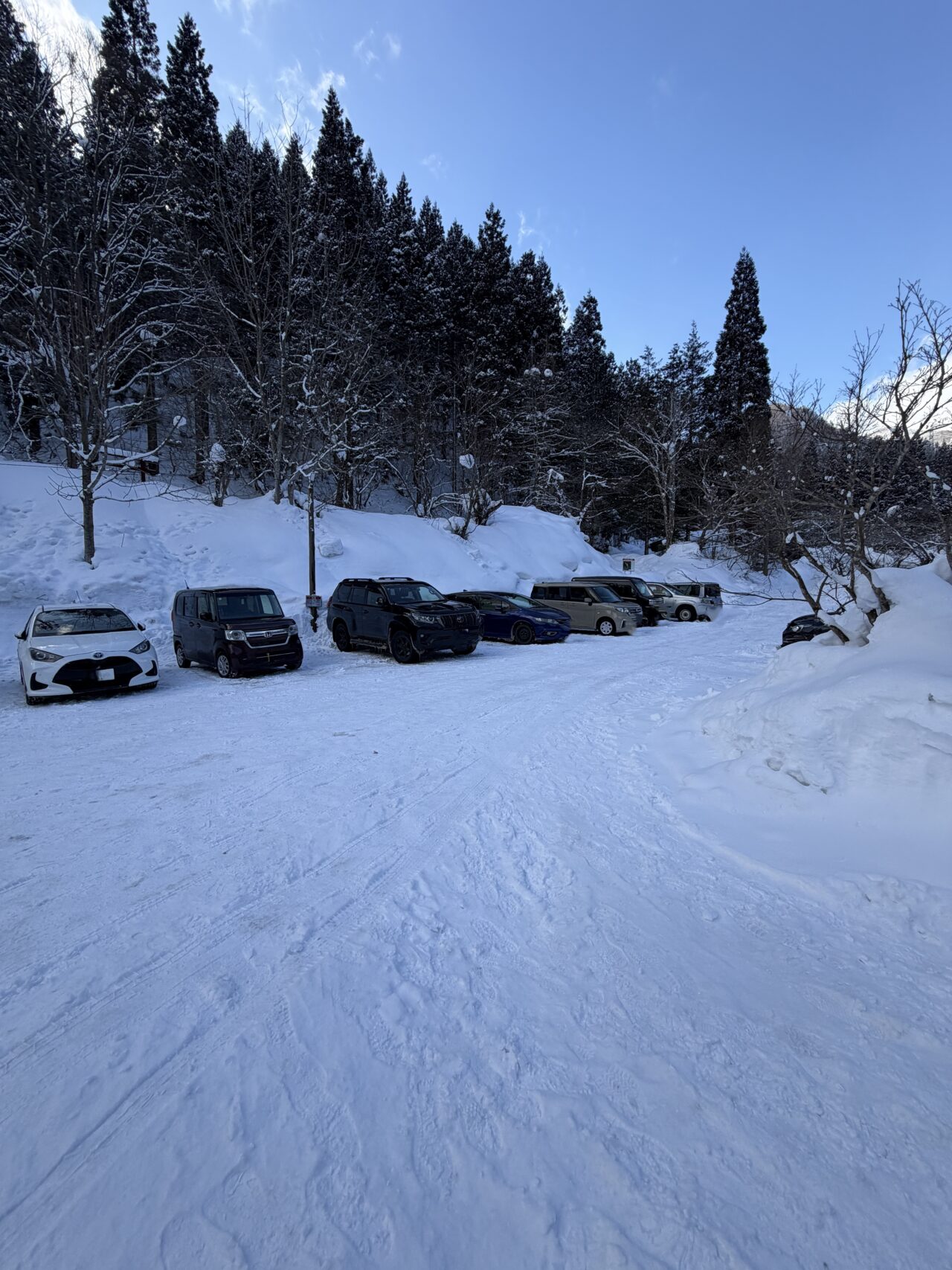
Left: The final approach road, thick with snow — a proper introduction to Tohoku winter. Right: The parking lot, spacious enough that finding a space is rarely an issue.
I drove in via Route 7, following an increasingly narrow road deeper into the mountains. The snow was substantial — this is exactly the kind of “we’ve really arrived in Tohoku” feeling that makes a winter visit here so rewarding, provided you come prepared for the driving conditions.
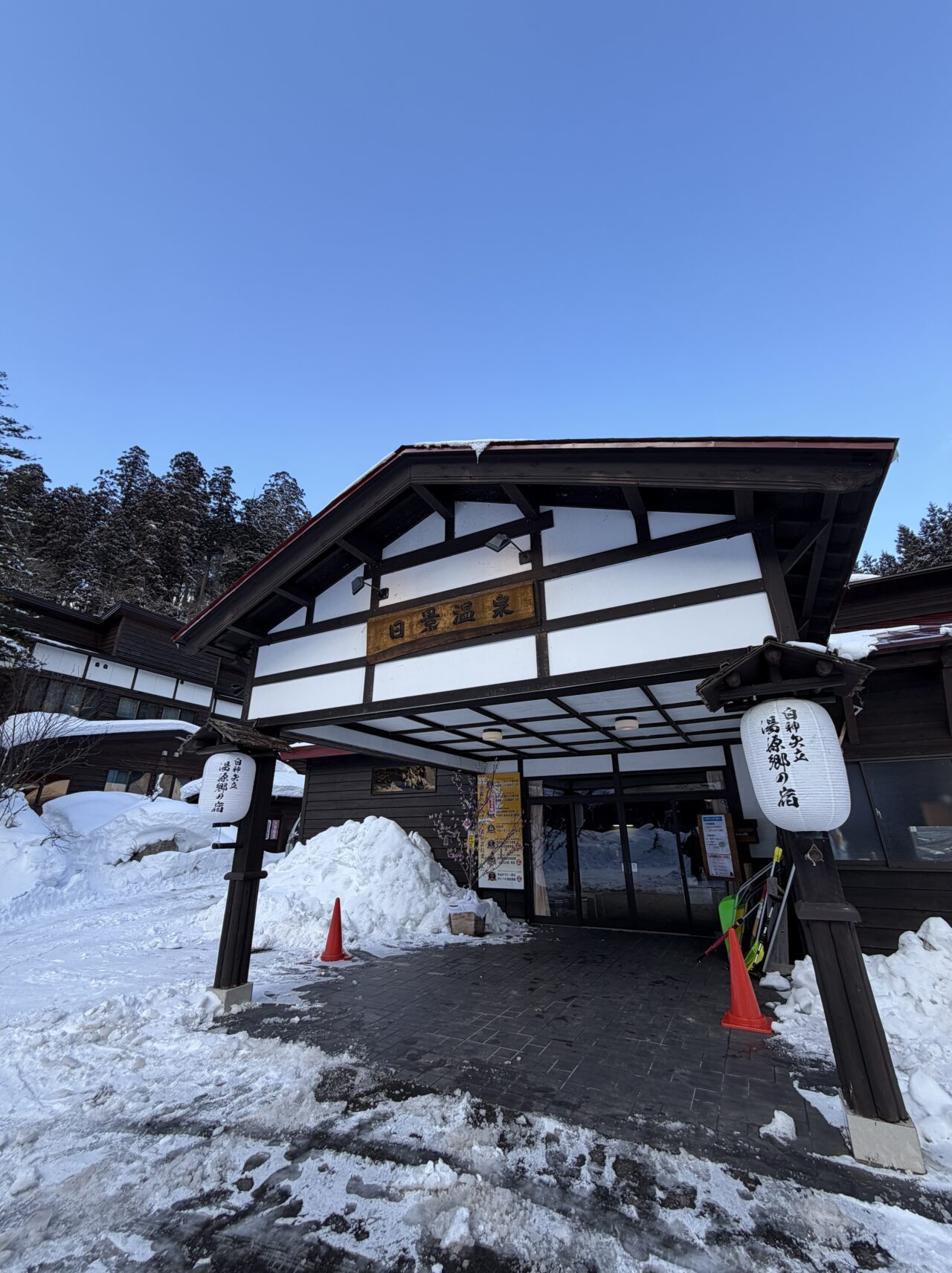
An Unexpectedly Vast and Stylish Interior
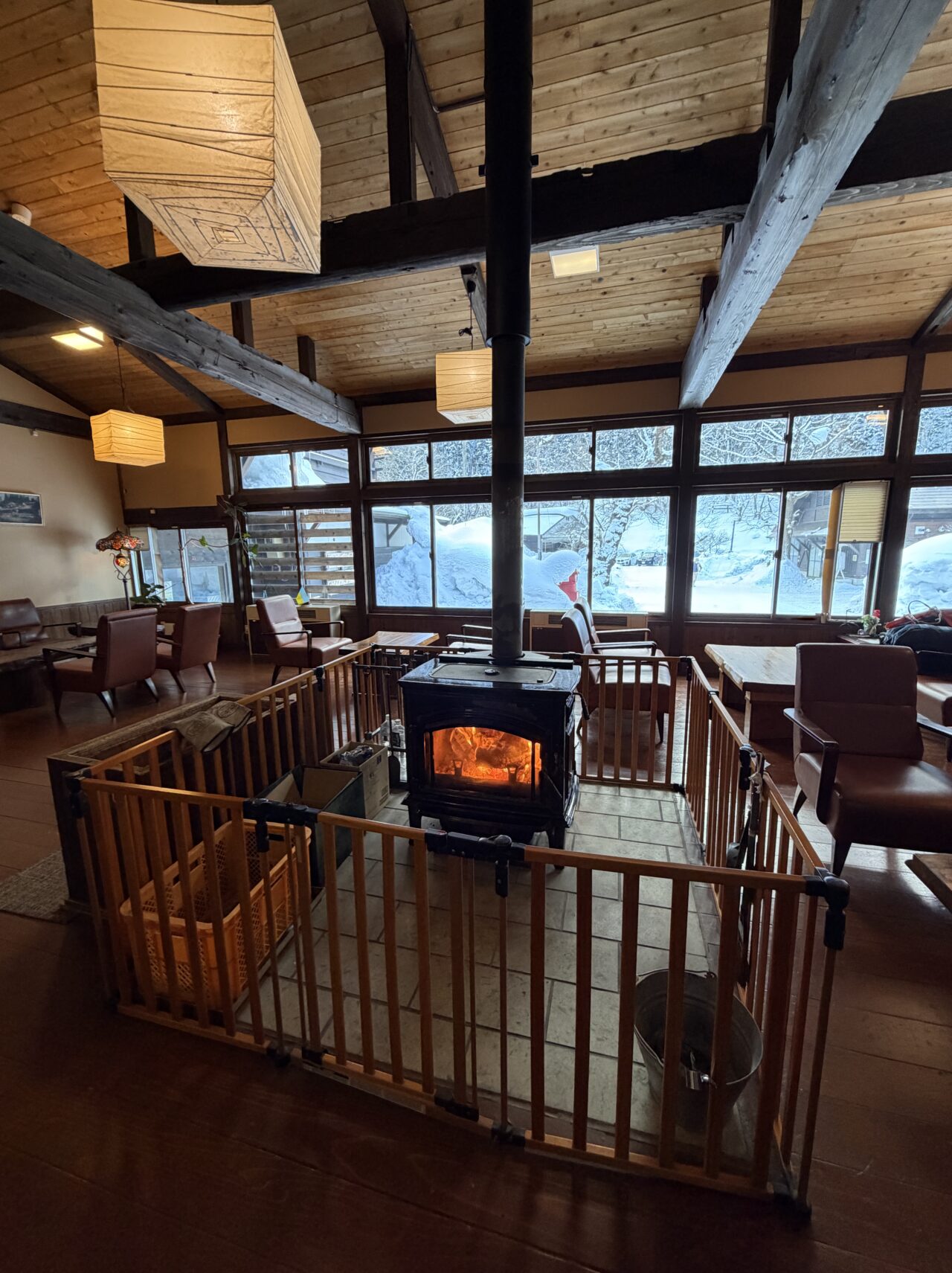
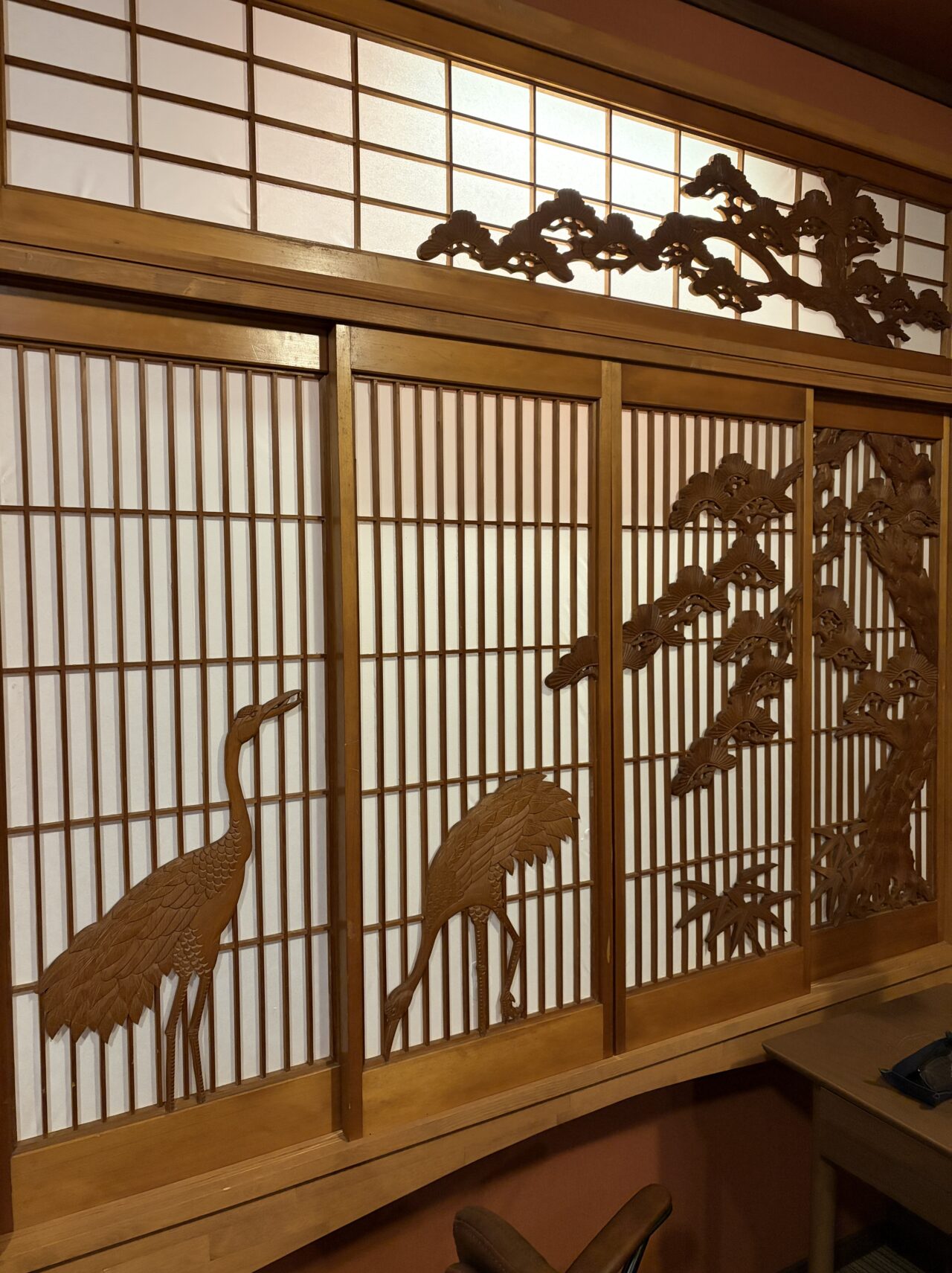
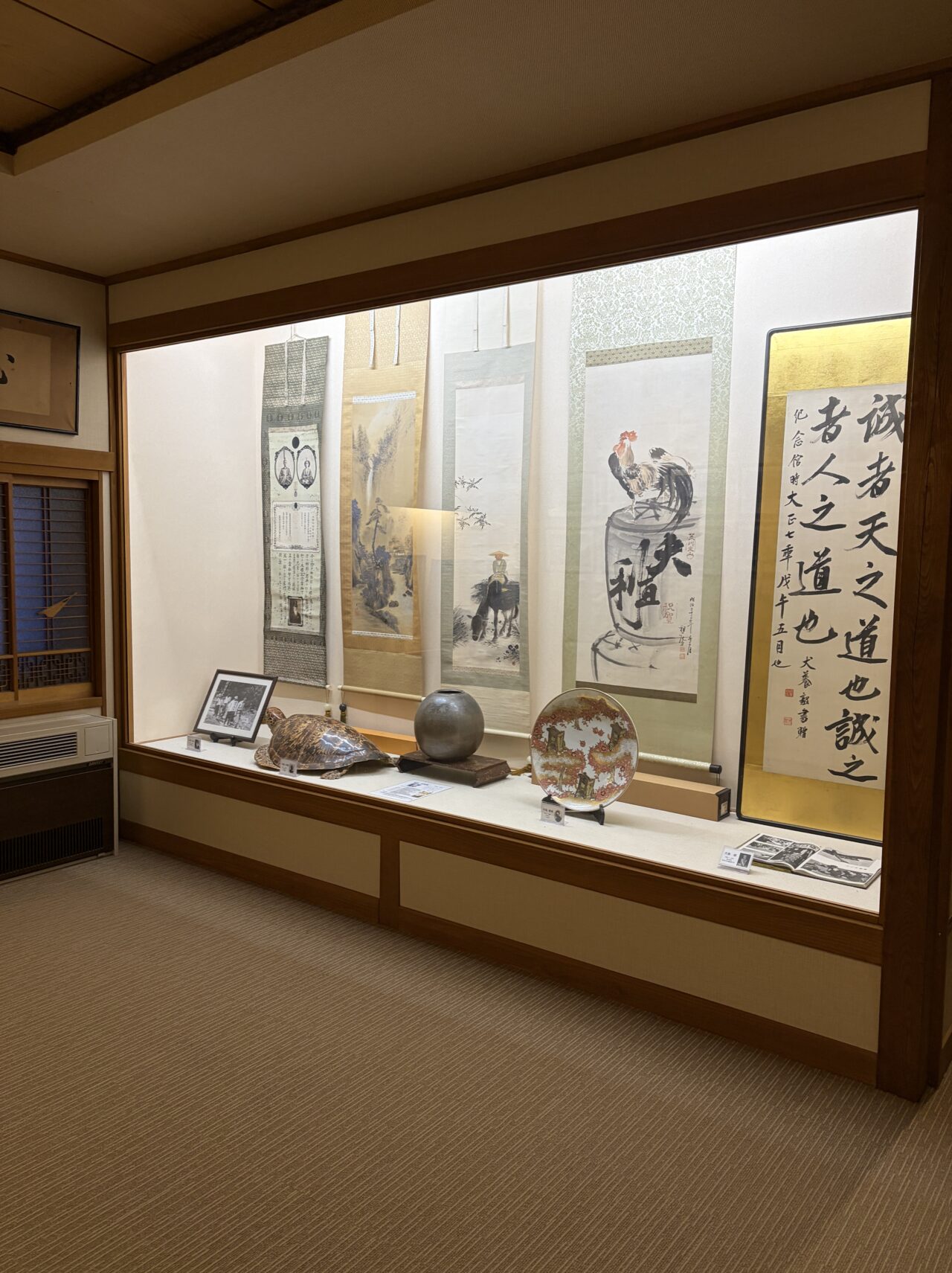
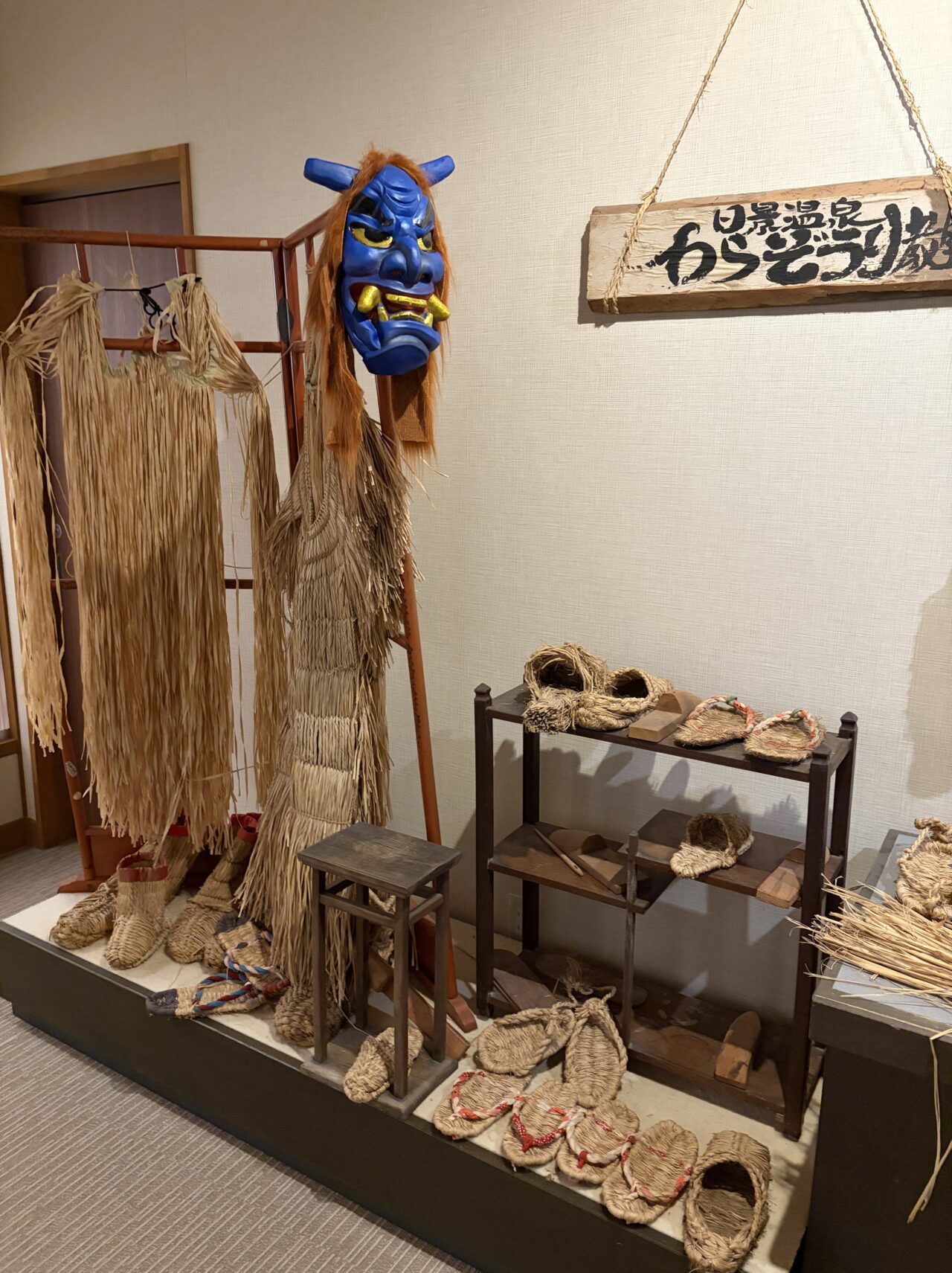
A small history museum on-site displays old photographs and documents tracing the inn’s long history as a regional healing spring.
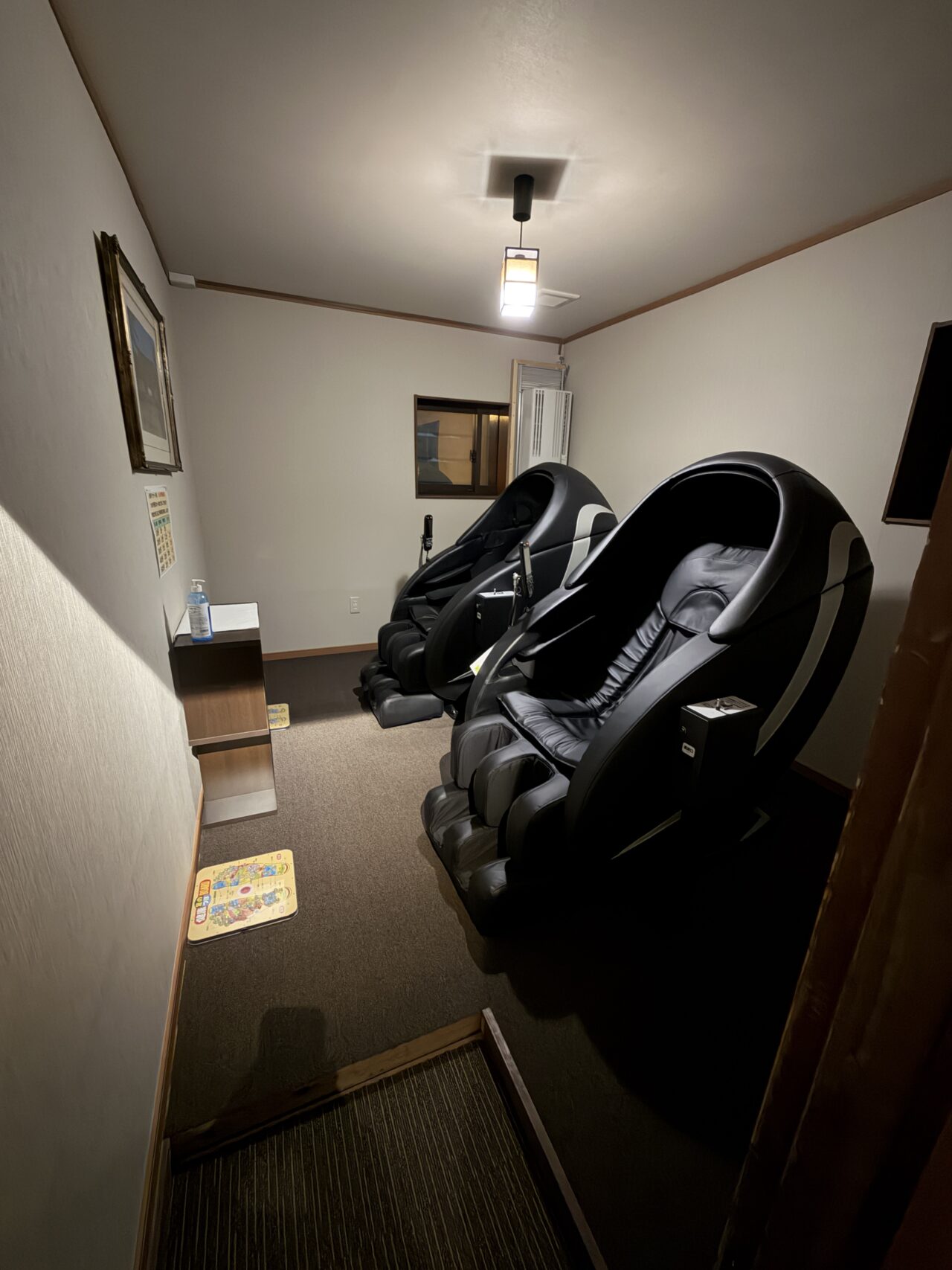
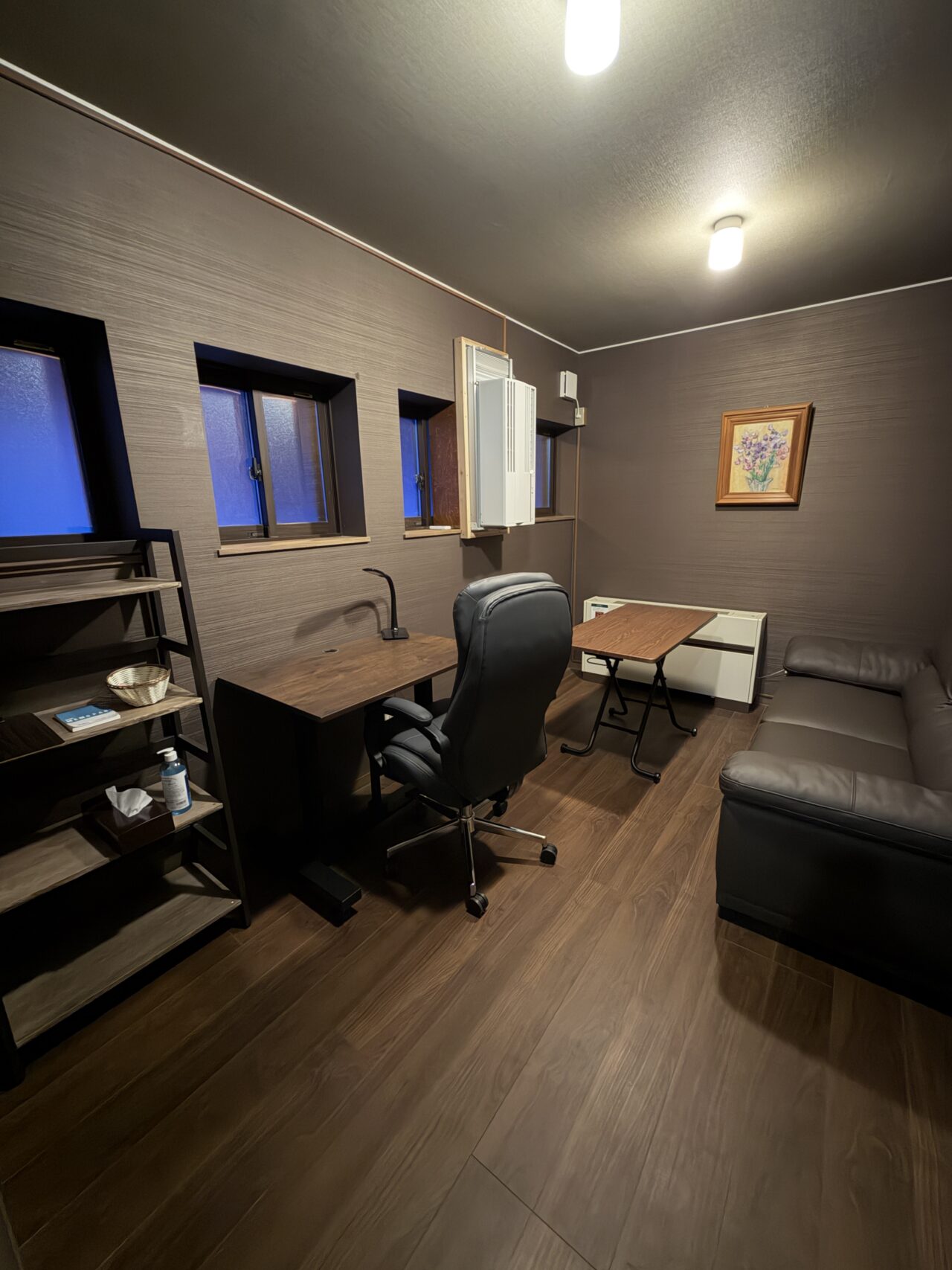
Left: A relaxation room with premium massage chairs (paid use). Right: A dedicated “workation” room for guests who need quiet space to work undisturbed.
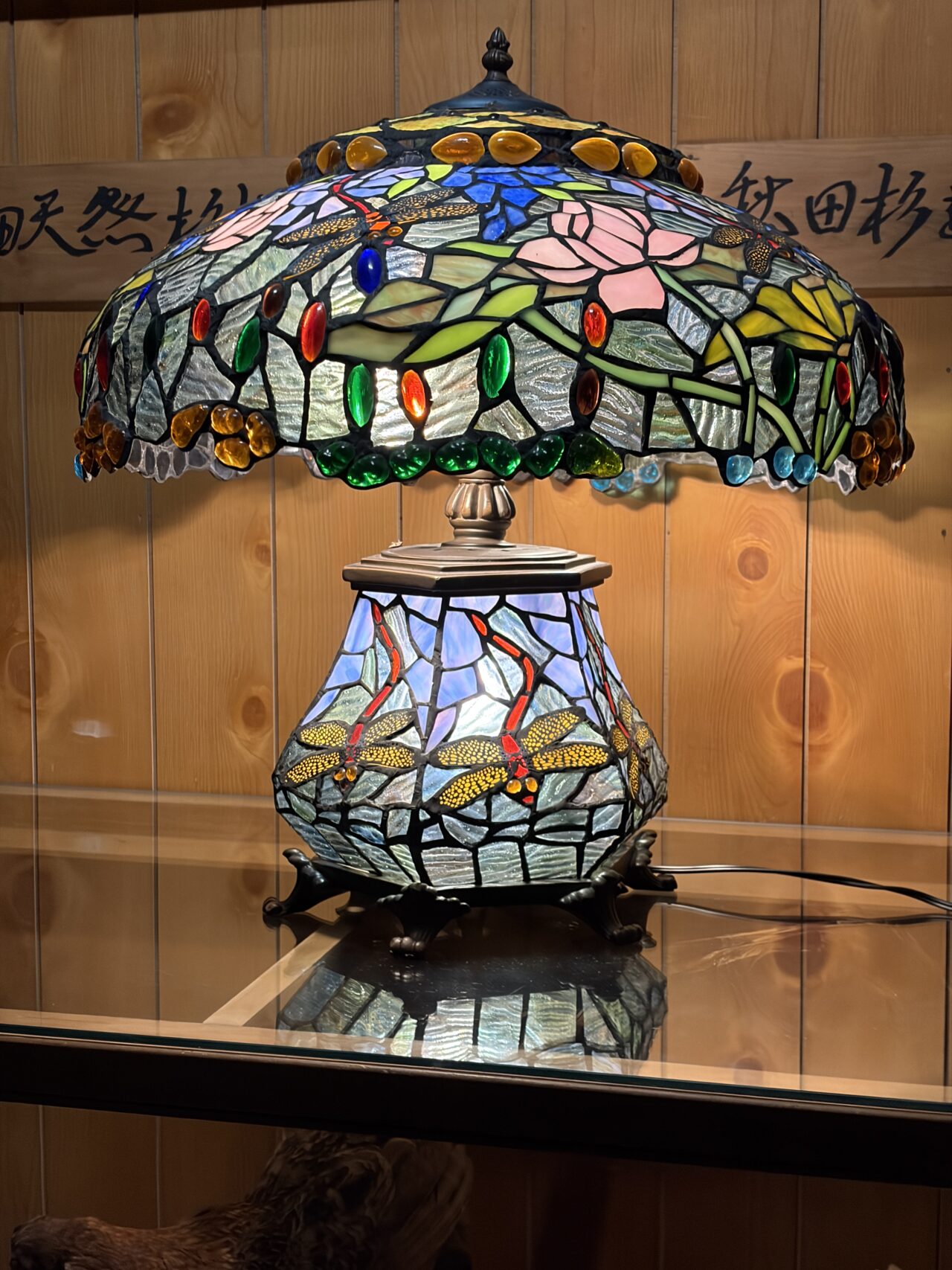
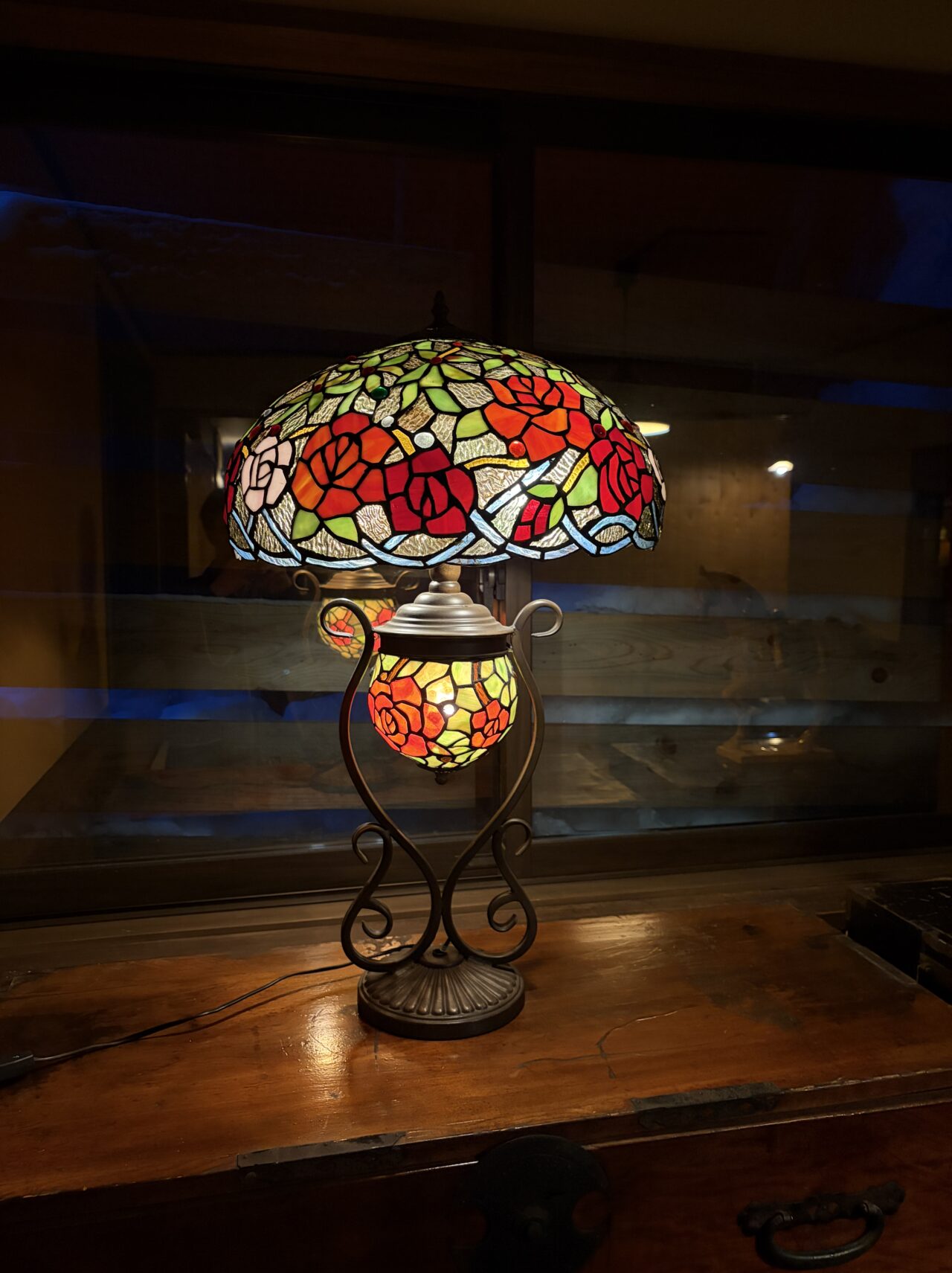
Stained-glass light fixtures are scattered throughout the building — small design details worth pausing for as you explore.
Between the library, history museum, relaxation room, workation space, and beautifully appointed staircases, there’s genuinely more to see here than at almost any other hidden hot spring inn I’ve visited. Budget time to explore — it’s part of the stay, not a sideshow to it.
The Rooms
| Toilet | En suite (in-room) |
|---|---|
| Refrigerator | Available |
| Air Conditioning / Heating | Available |
| Wi-Fi | Available |
| Television | Not provided |
| Towels & Yukata | Provided |
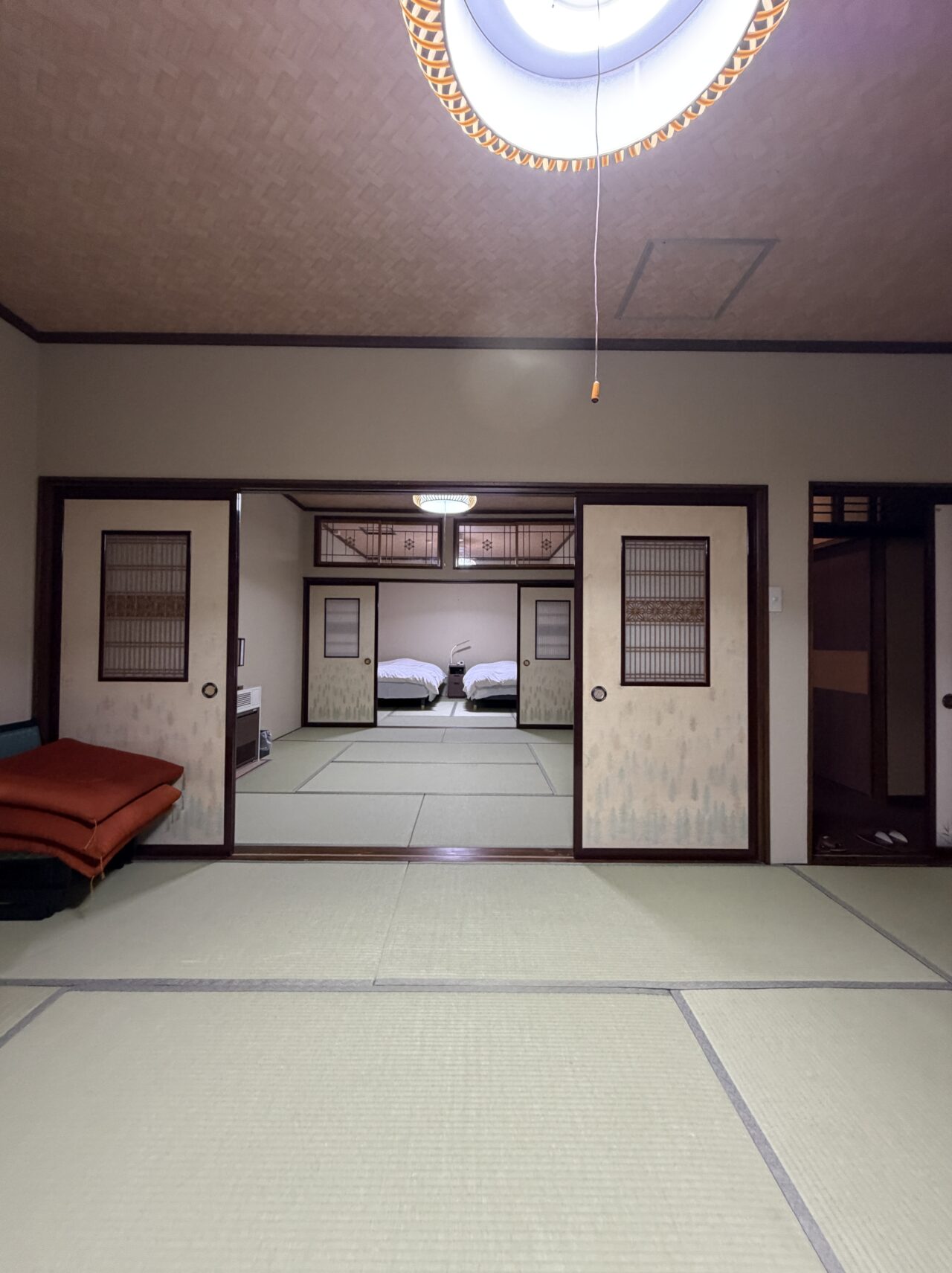
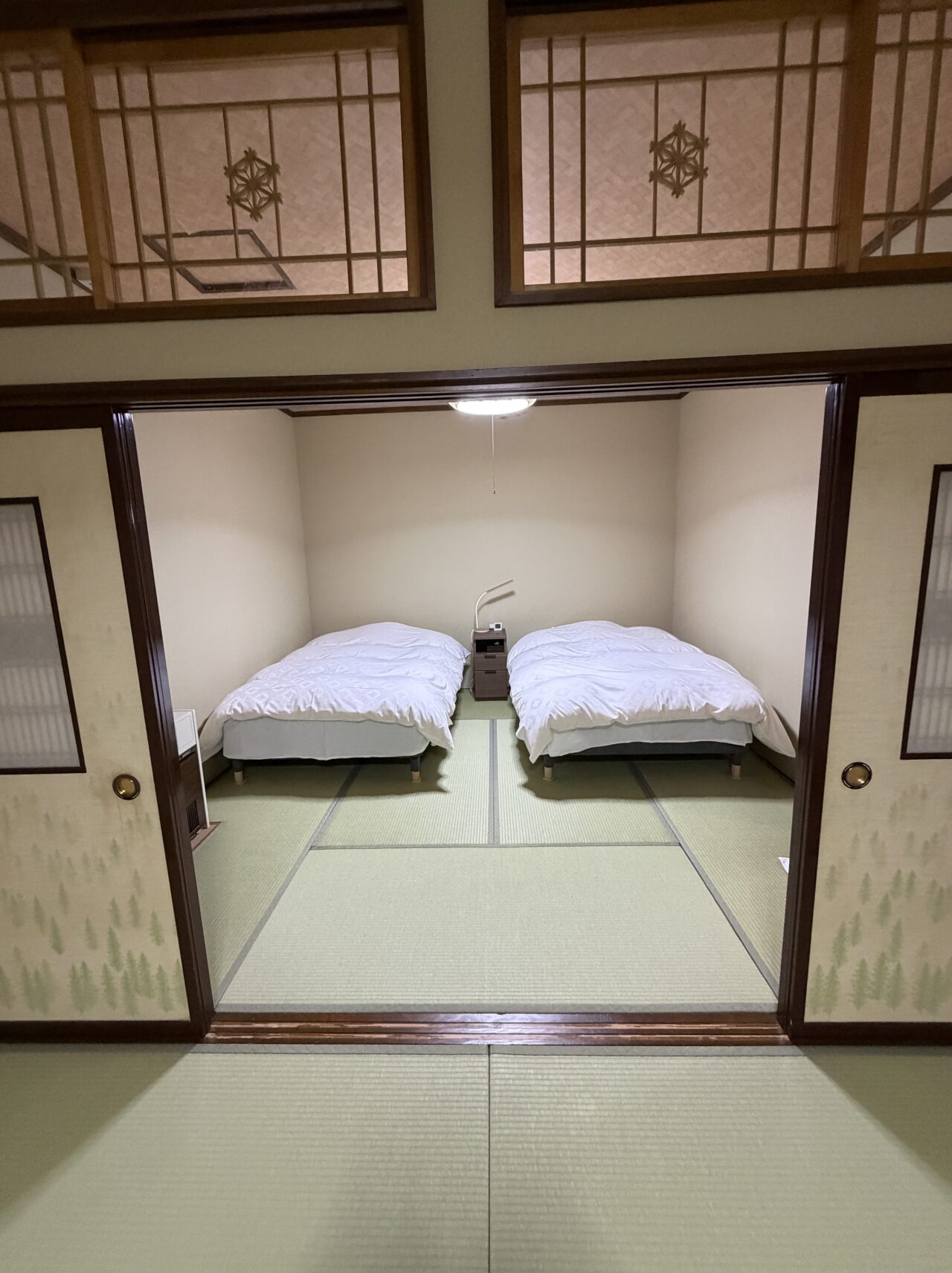
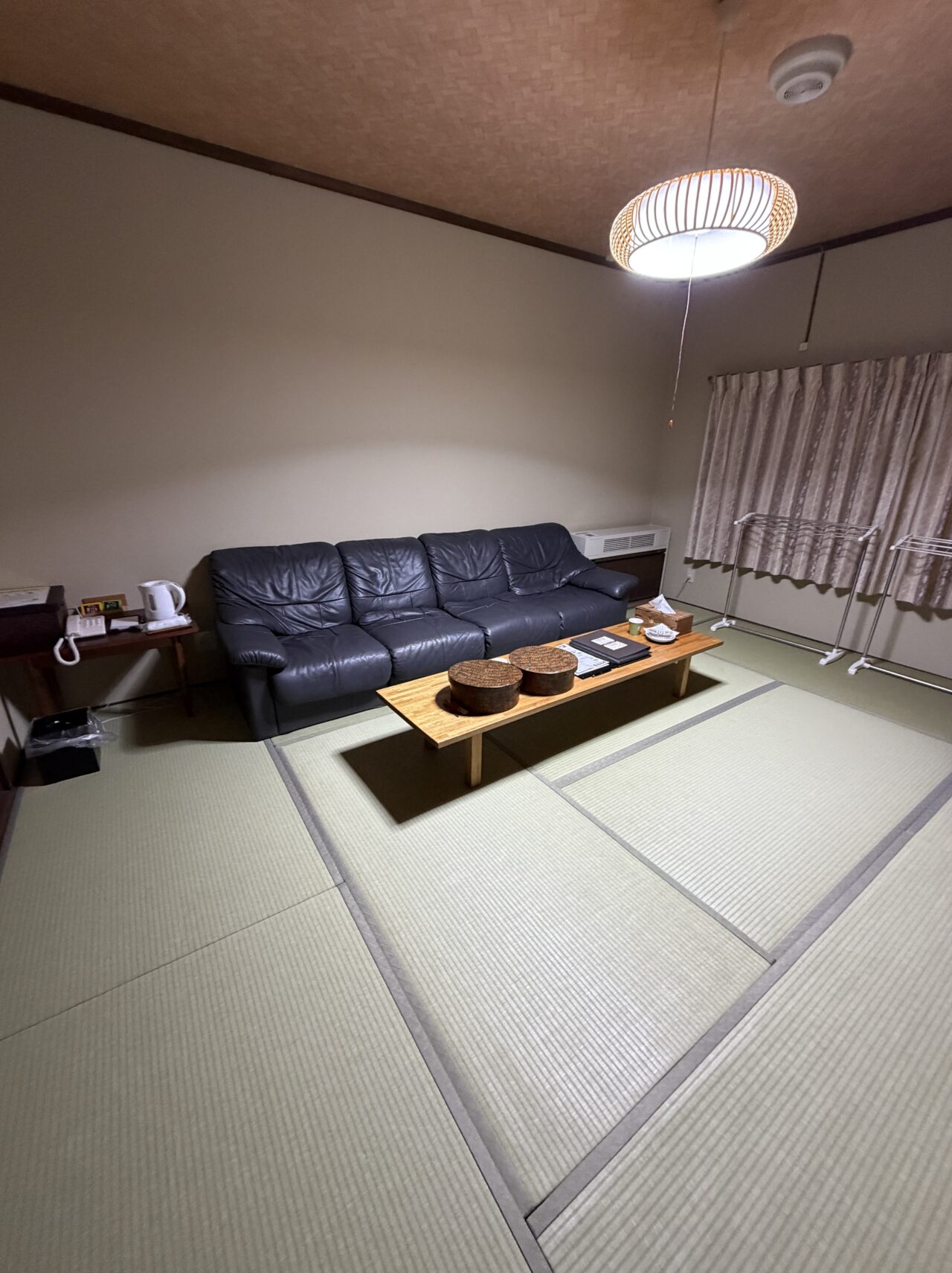
Left: A comfortable bed in the sleeping section. Right: A third room with sofa seating — three full rooms is, frankly, more space than most travelers know what to do with. A genuine luxury.
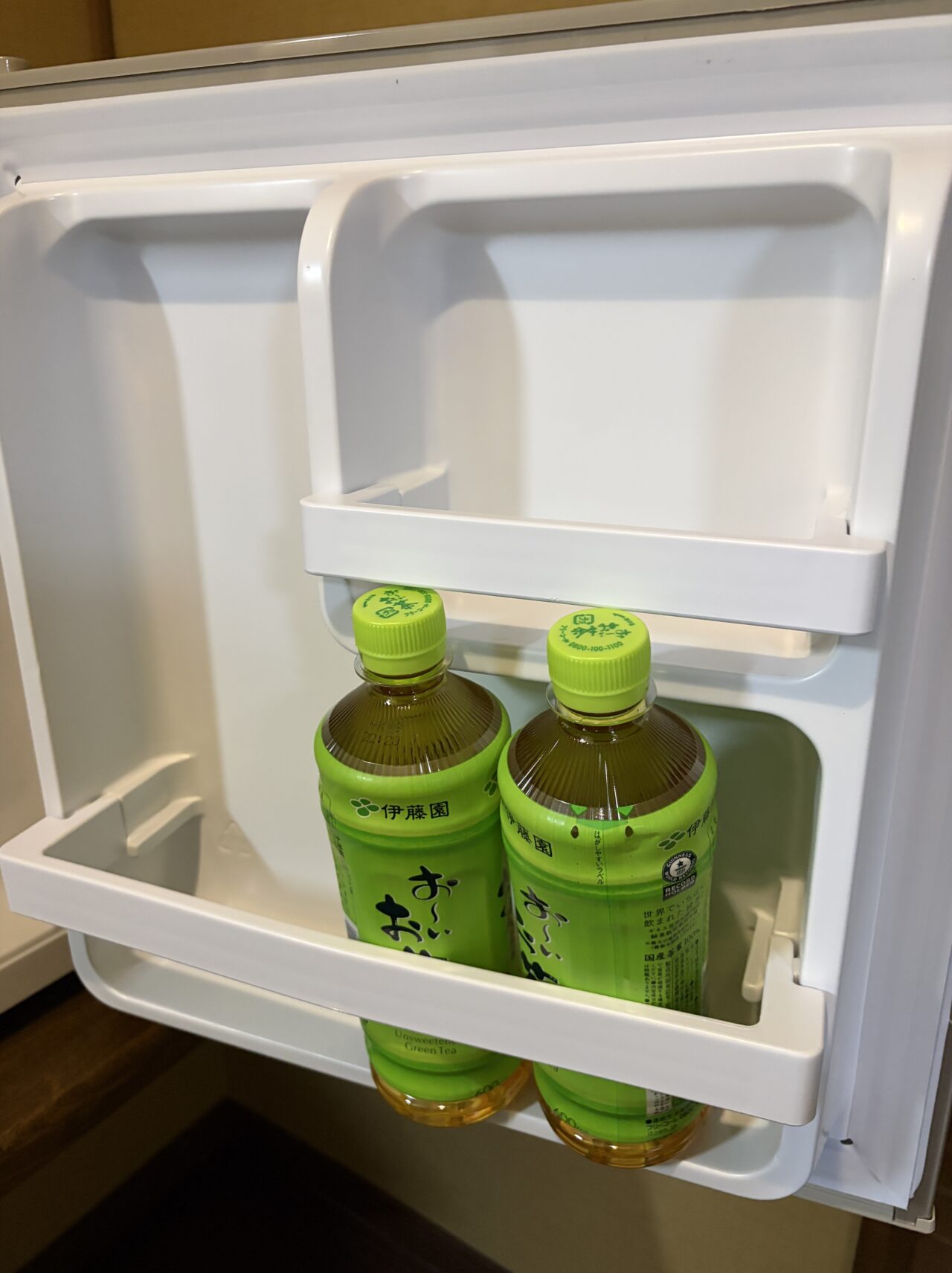
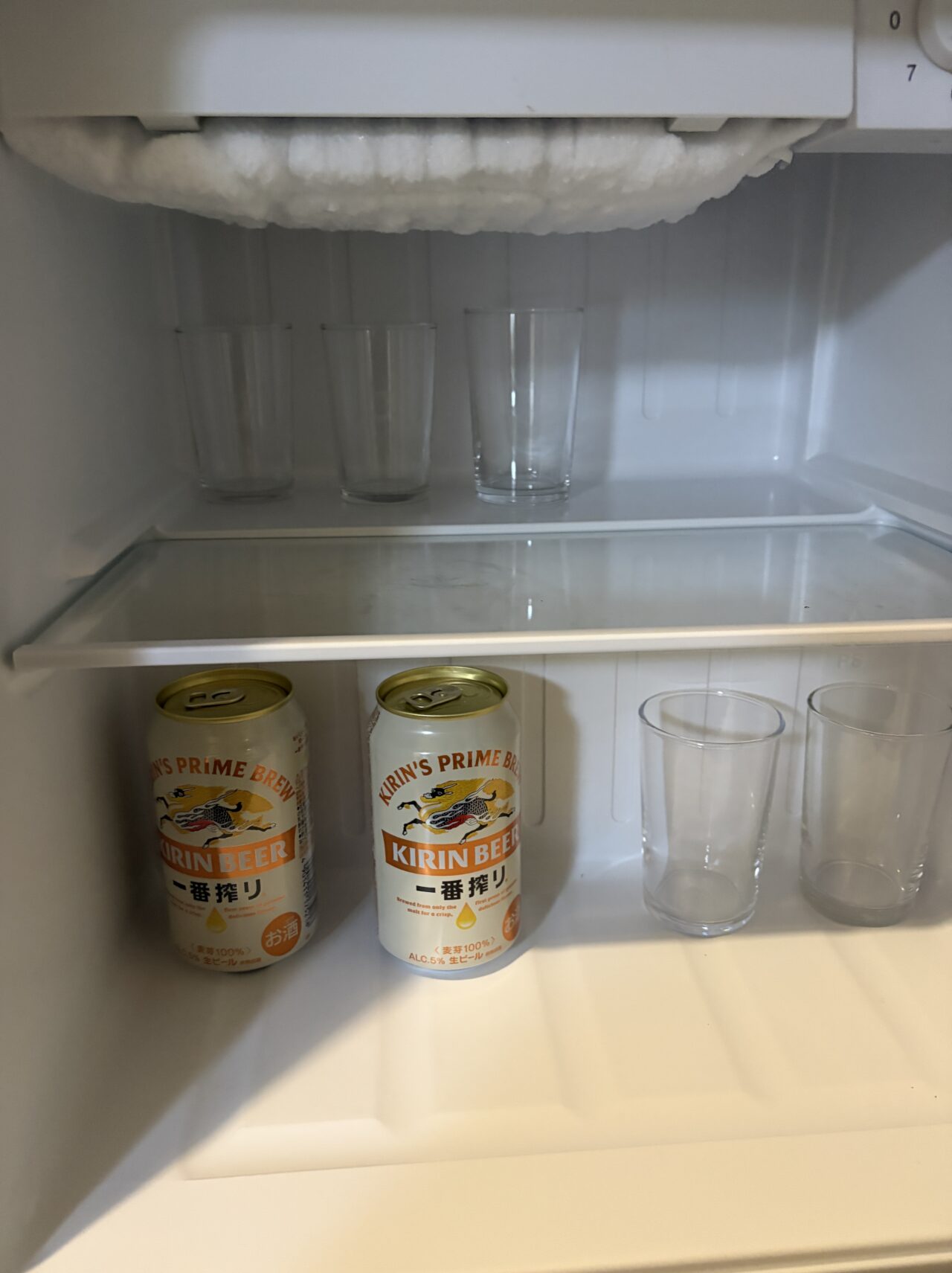
A thoughtful touch: the in-room refrigerator comes stocked with complimentary tea and beer — a rare inclusion at Japanese ryokan, where alcohol is almost always a paid extra.
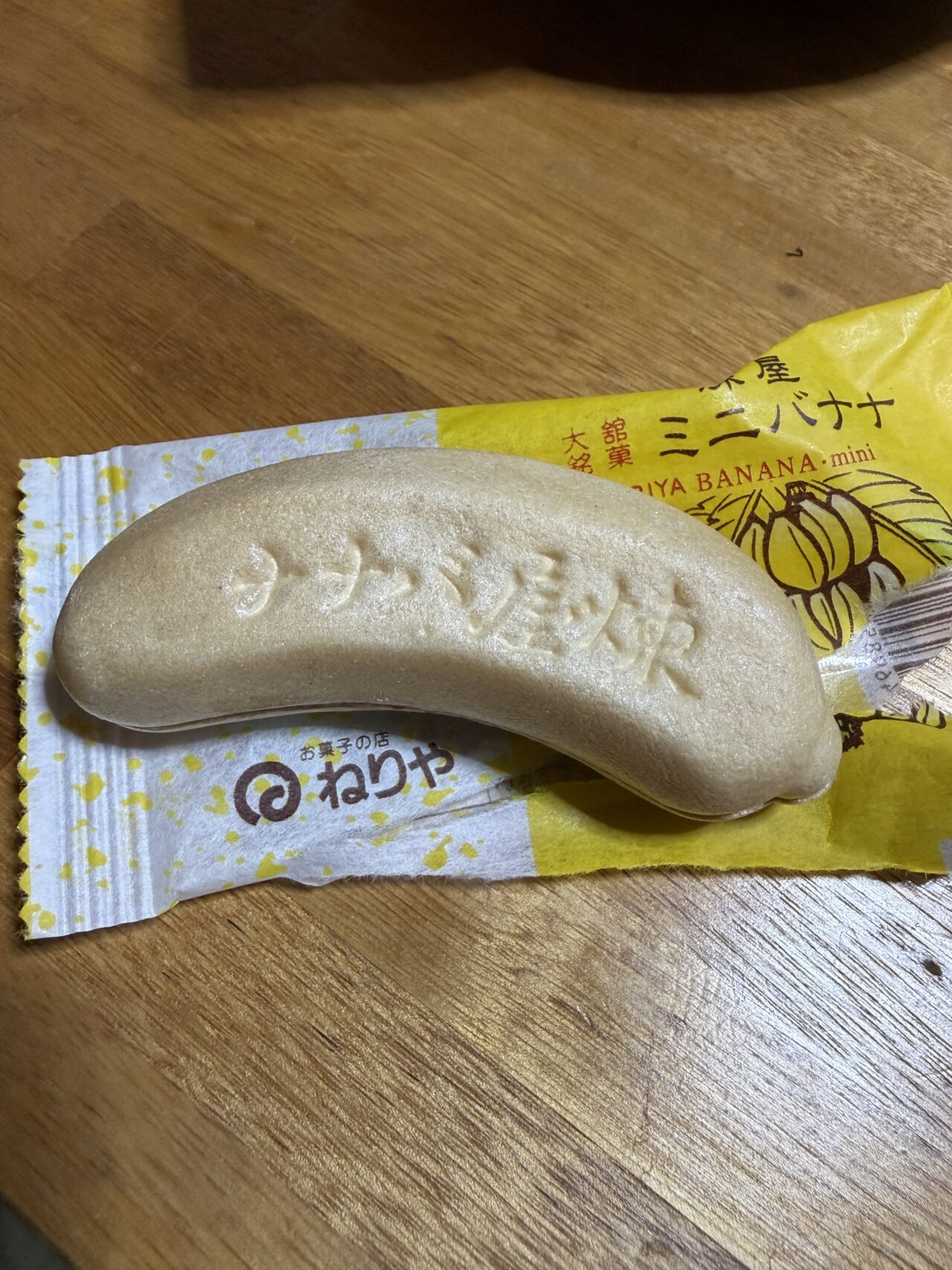
Every room comes with individual heating — a welcome detail in a region this cold. A humidifier is also provided, useful in the dry winter air. The one thing missing is a television, though between the baths and the extensive common areas, this is easy to overlook. Come prepared to explore rather than watch TV, and the lack of one won’t register as a downside.
The Hot Springs — Two Sources, Seven Bathing Spaces
Hikage Onsen draws from two separate sources — one feeding the indoor bath, another feeding the outdoor bath — and the lineup is extensive:
- Gender-separated indoor bath & outdoor bath
- Two private indoor baths (kashikiri)
- Three private outdoor baths (kashikiri)
🔑 Private Bath Reservations
Overnight guests may use the private outdoor baths
twice per stay
— once on the day of arrival, once the following morning — by placing a numbered magnet with their room number on the reservation board in the lounge (first-come, first-served). Between 23:00 and 5:00, however, the private baths are open for free, unreserved use by any guest.
The indoor and outdoor baths draw from two chemically distinct sources, both producing the same beautiful milky-white sulfur water but with slightly different character:
① The Main Bath — Indoor, with an Exceptional Reclining Pool
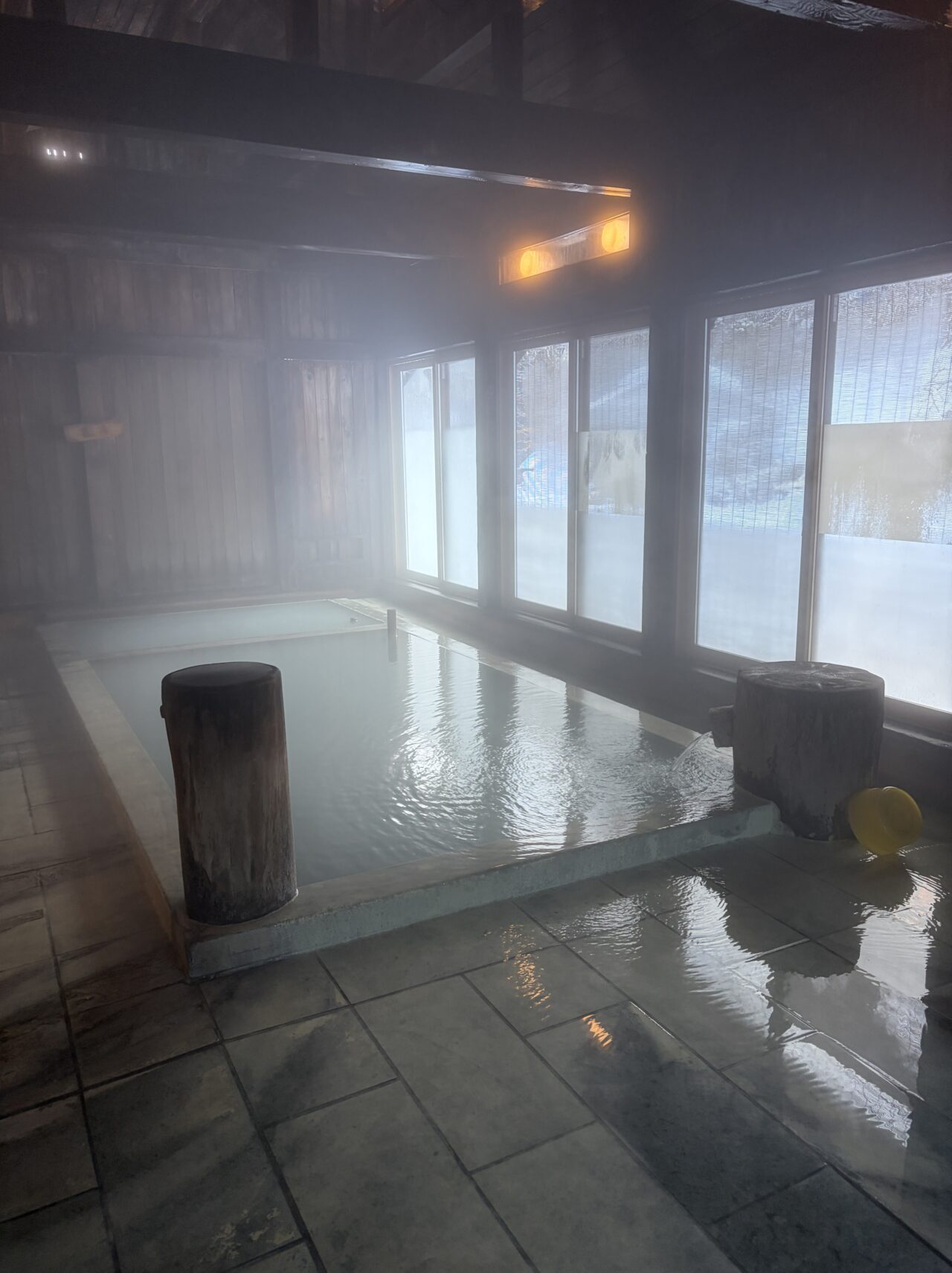
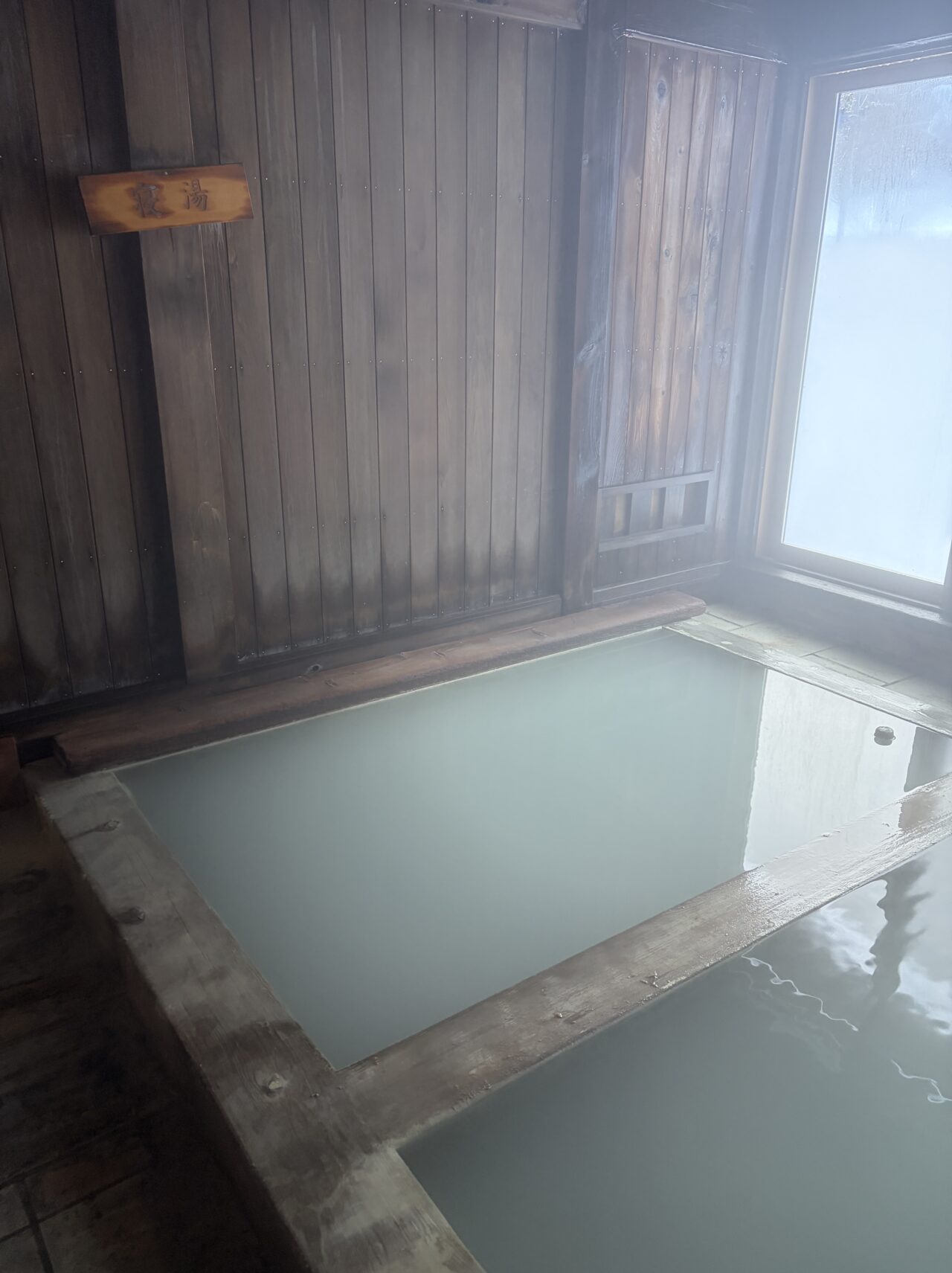
Left: The long indoor bathtub, water overflowing beautifully at the edges. Right: The reclining section at the back — my personal favorite spot in the entire inn.
The indoor bath is where I’d send anyone with limited time. A long, rectangular tub keeps water constantly overflowing at the edges, but the standout feature is a shallow reclining pool at the back where you can lie down almost horizontally. At roughly 38°C, it’s gentle enough to stay in for a very long time — the kind of temperature that makes you drowsy in the best possible way.
This is the one I’d recommend for a slow, unhurried soak.
② The Outdoor Bath — A Gourd-Shaped Pool with Winter Views
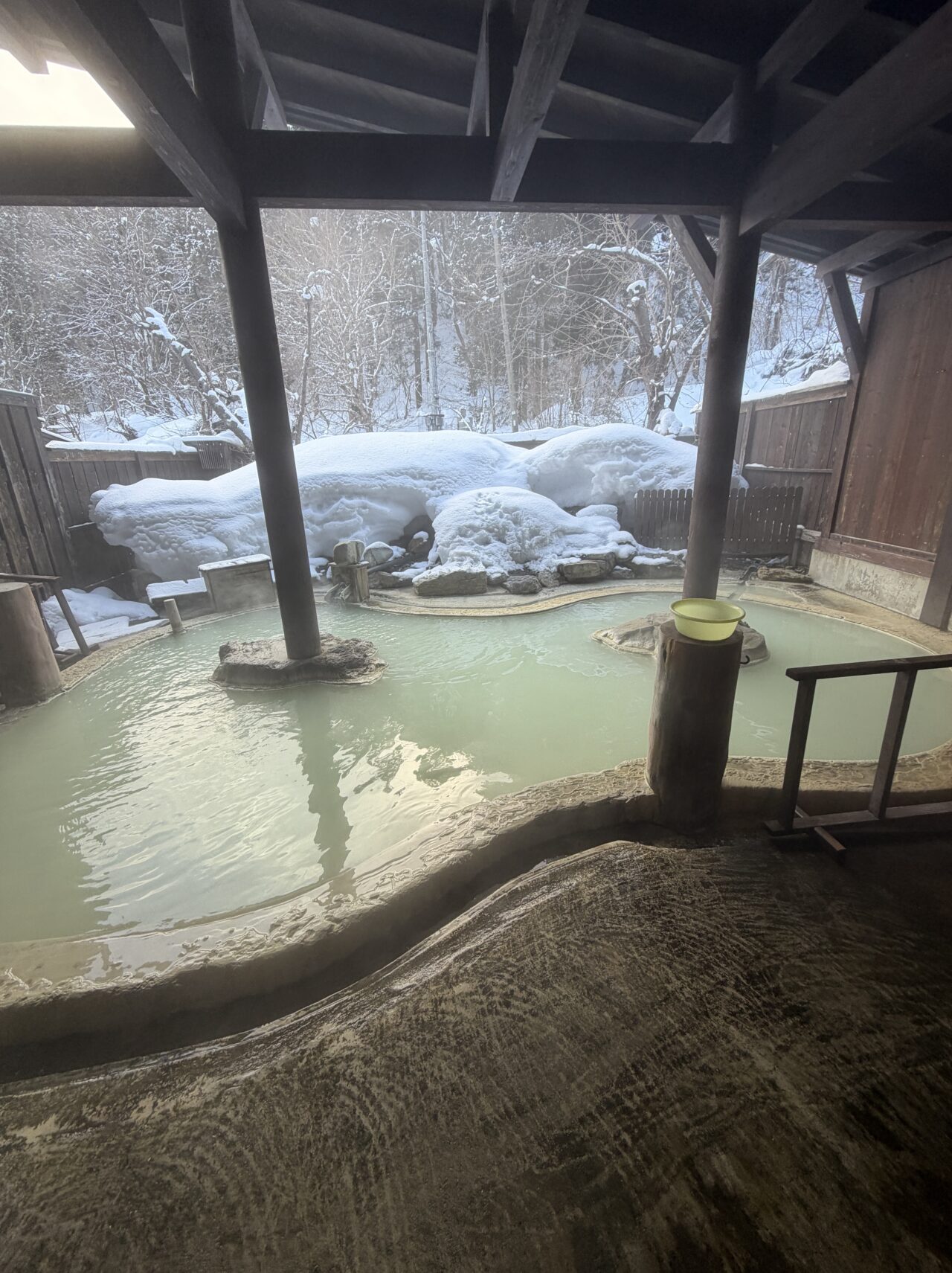
Just past the indoor bath, the outdoor pool has a striking, almost artistic gourd shape. The location is excellent, and in winter the crisp, cold air makes the contrast with the hot water especially satisfying. One practical note: the stone flooring gets cold, and parts can ice over — watch your footing.
③ Private Indoor Baths — “Menke Yukko” (Overnight Guests Only)
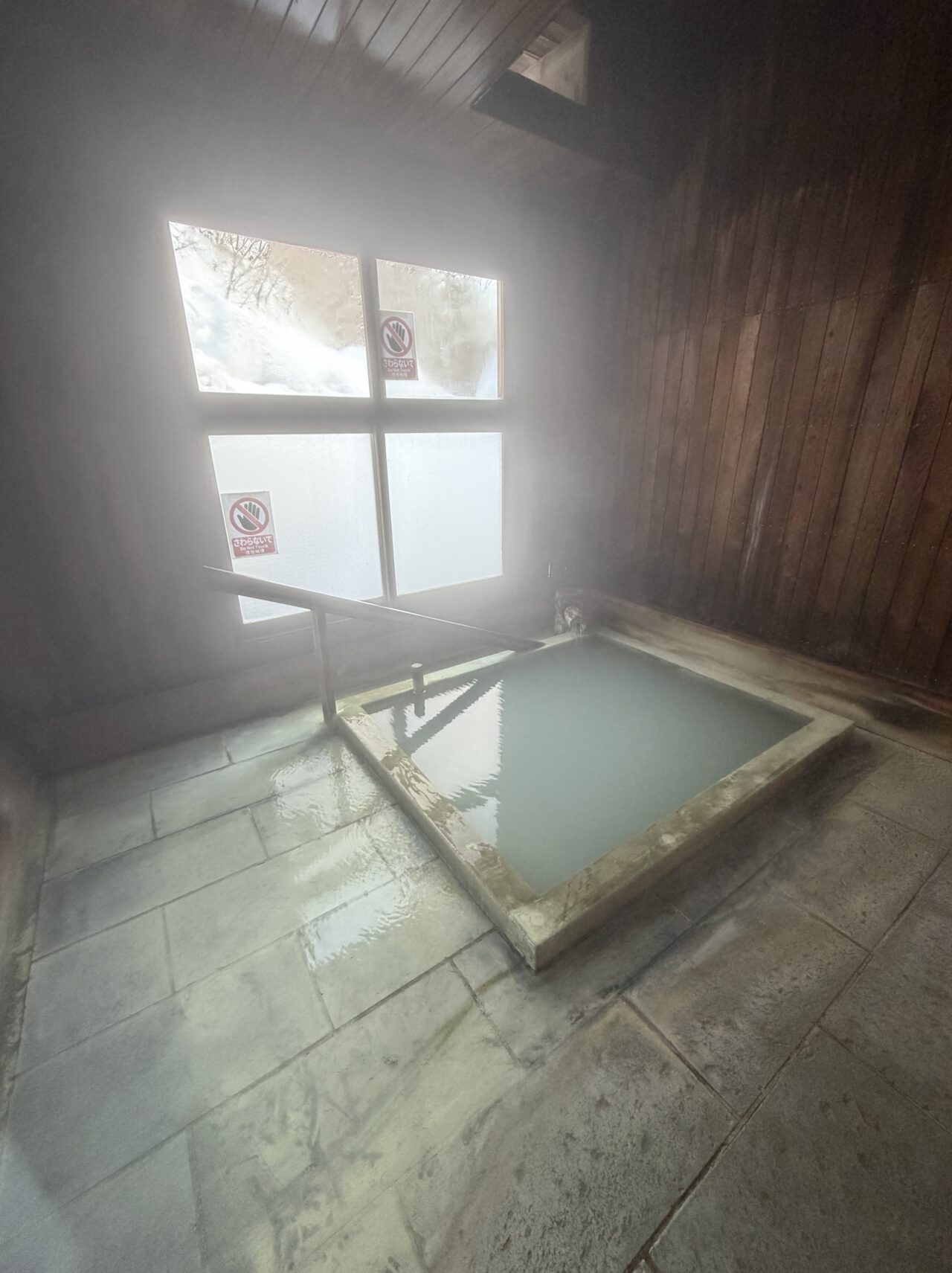
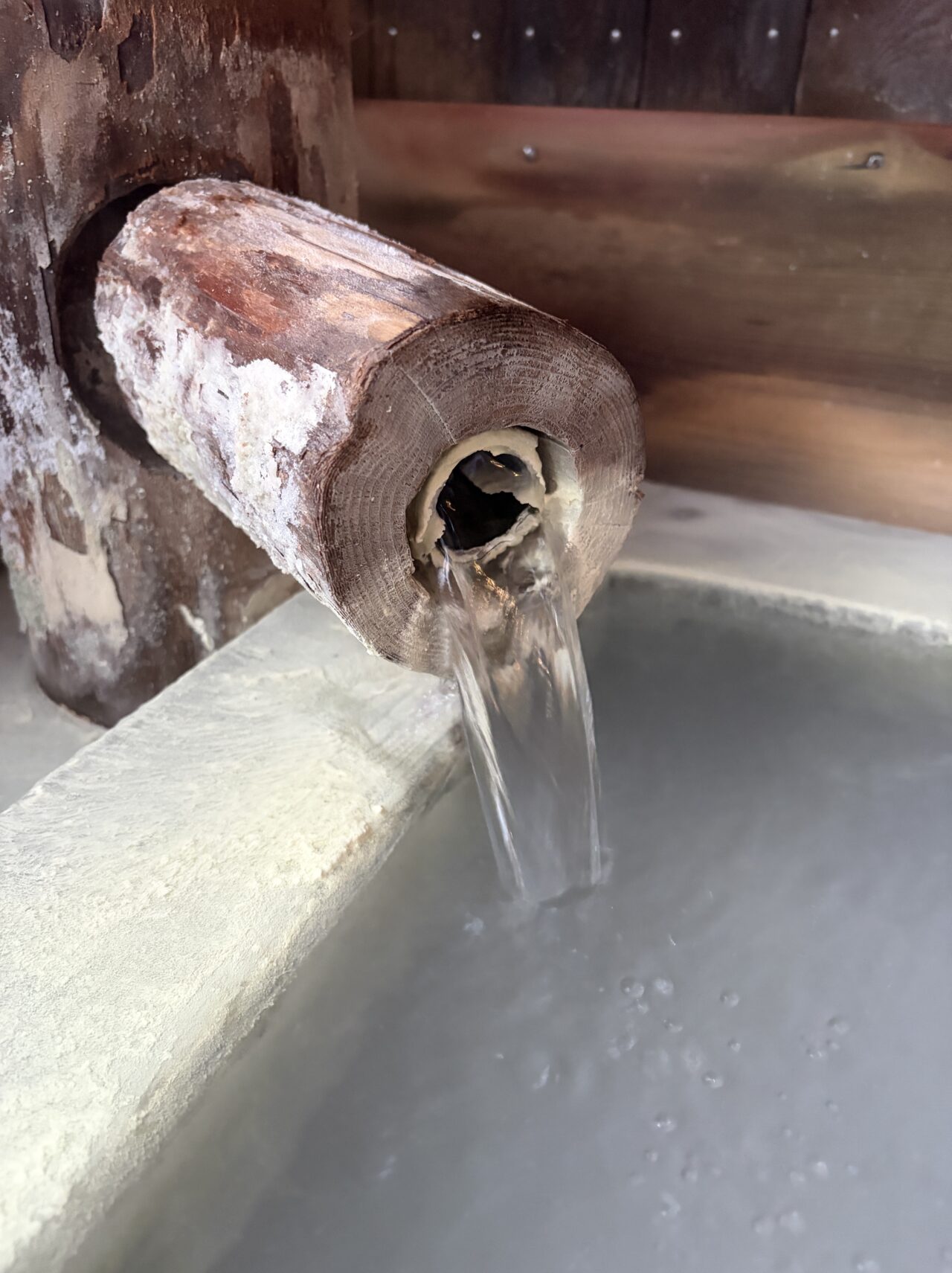
Left: A compact but comfortably sized private tub. Right: Continuously overflowing water — genuinely exciting to watch fill.
Two private indoor baths, named “Kita-acchi” (North side) and “Minami-kocchi” (South side) — check carefully which one you’ve reserved.
I used the “Kita-acchi” (north) bath. It’s on the smaller side but perfectly proportioned for a private soak, with the same gently overflowing water that made the indoor communal bath so appealing. Using this source rather than the hotter outdoor spring, the temperature here is more moderate and easier to relax into for longer.
④ Private Outdoor Bath — “Urugeru Yukko” (Best Location)
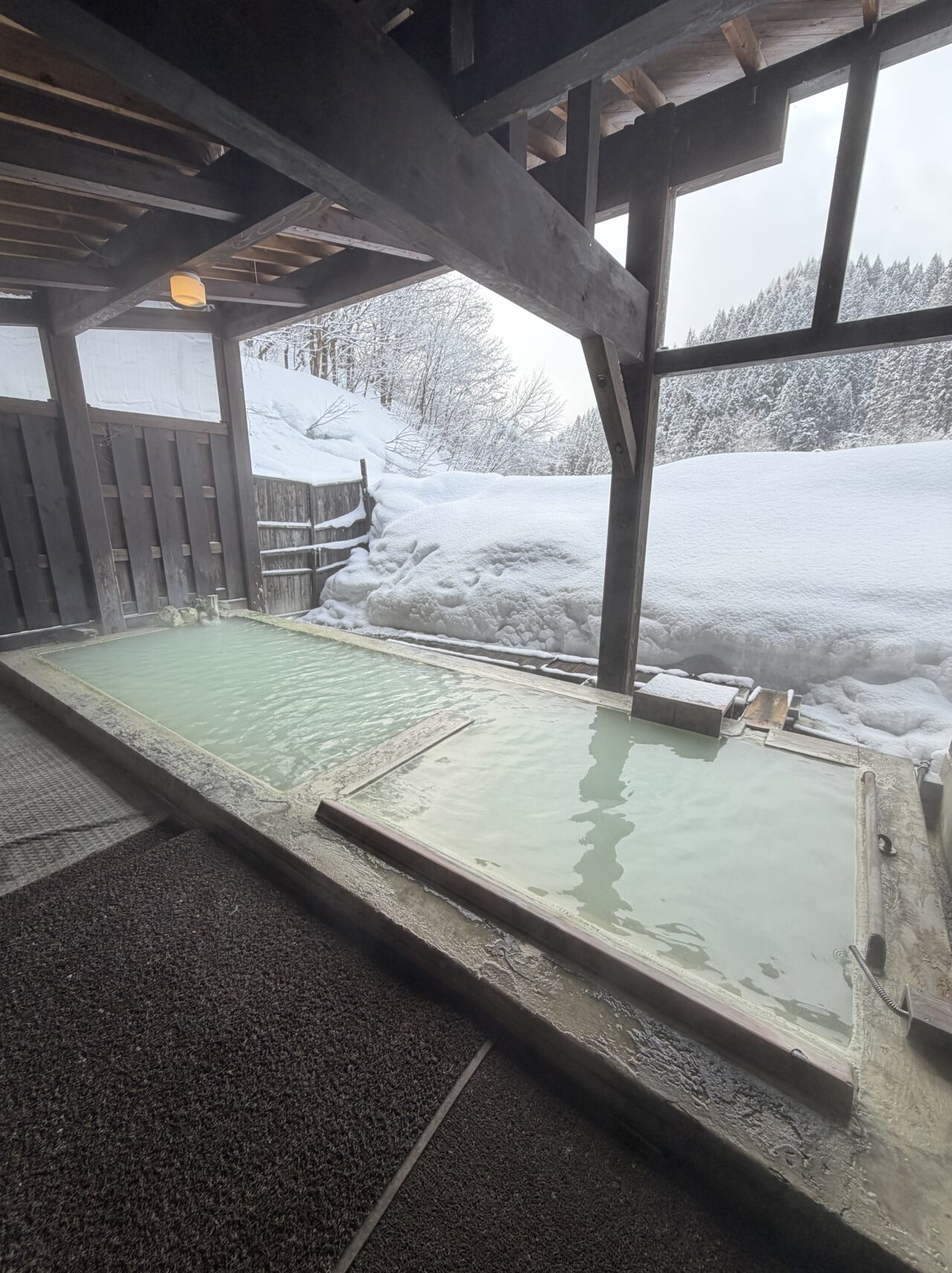
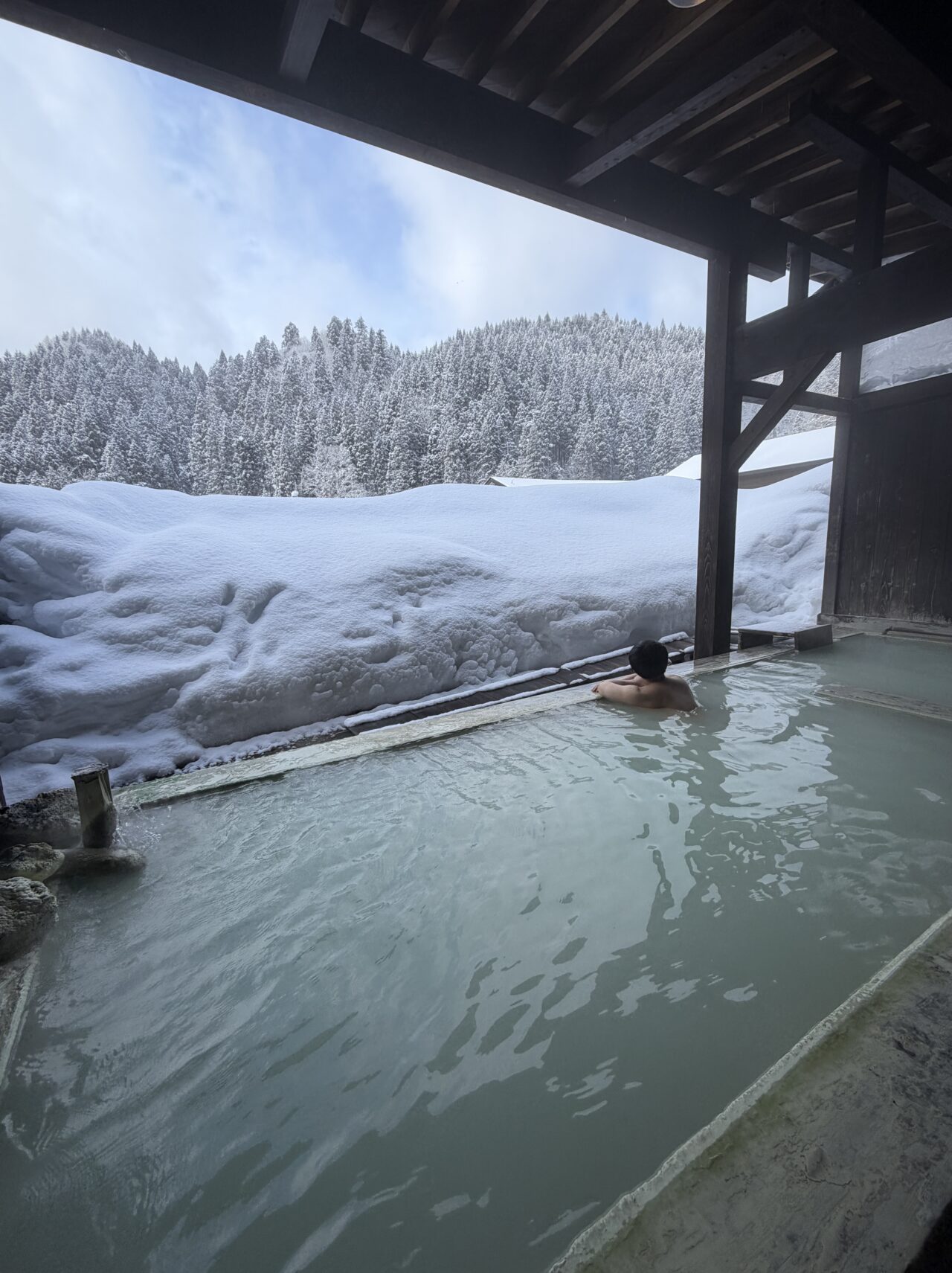
Of the three private outdoor baths, this is the one with the most open, expansive setting — and it delivers the strongest sense of season. Snow piled on the surrounding trees, cold air on your face, hot mineral water on your skin: this is what draws people to hot spring travel in the first place. The spring source is the same hotter outdoor water, so if you prefer things cooler, this runs a bit warm.
⑤ Private Outdoor Bath — “Anbe Ii Yukko” (Most Sheltered)
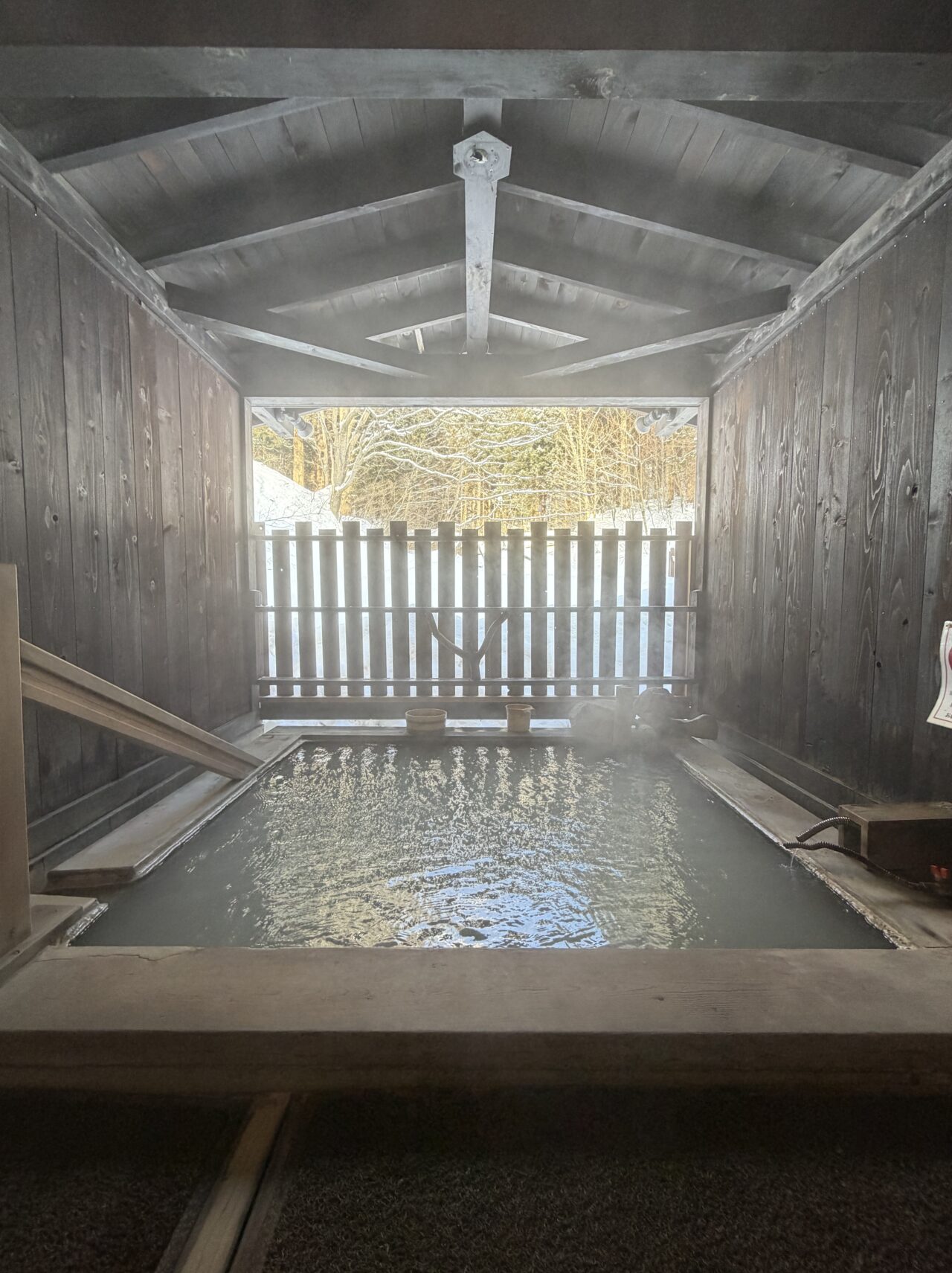
This second private outdoor bath is more enclosed by walls, trading the open forest views for genuine shelter from the elements. The trade-off makes sense on a stormy day. Being smaller, the water here felt especially fresh, though it also ran on the hotter side — a good choice if you like your baths properly hot.
⑥ Private Outdoor Bath — “Takimi-no-Yukko” (Waterfall View)
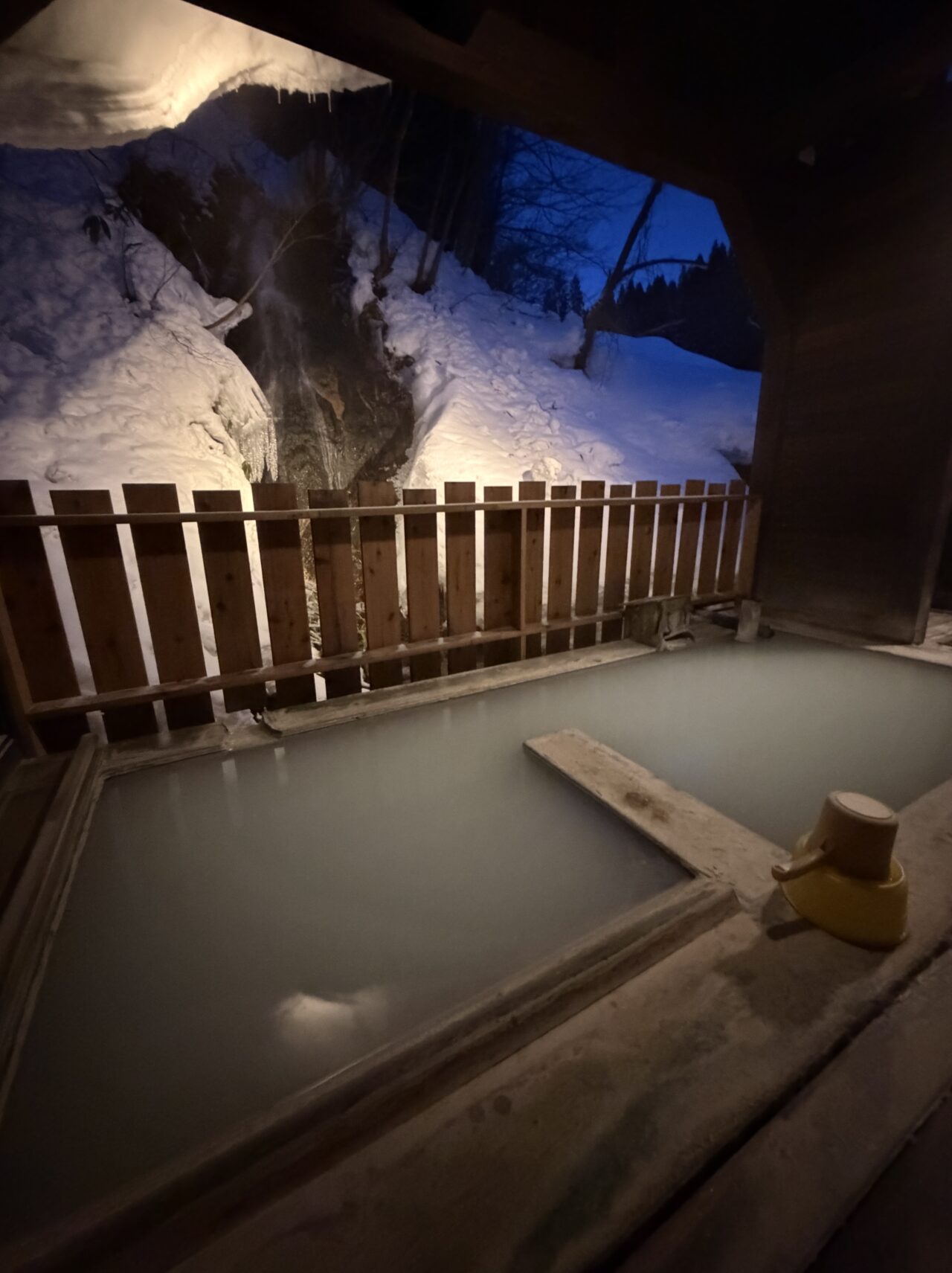
The final private bath overlooks a genuinely dramatic waterfall and includes its own reclining pool section, similar to the main indoor bath. Unfortunately, it was closed during my February visit due to heavy snow — a reminder that some facilities here are seasonal, so it’s worth confirming availability with the inn if this is a priority for you.
Dining — Refined, Warm, and Thoughtfully Served
Both dinner and breakfast are served in private dining rooms — a calm, unhurried setting that suits the elevated style of cooking here.
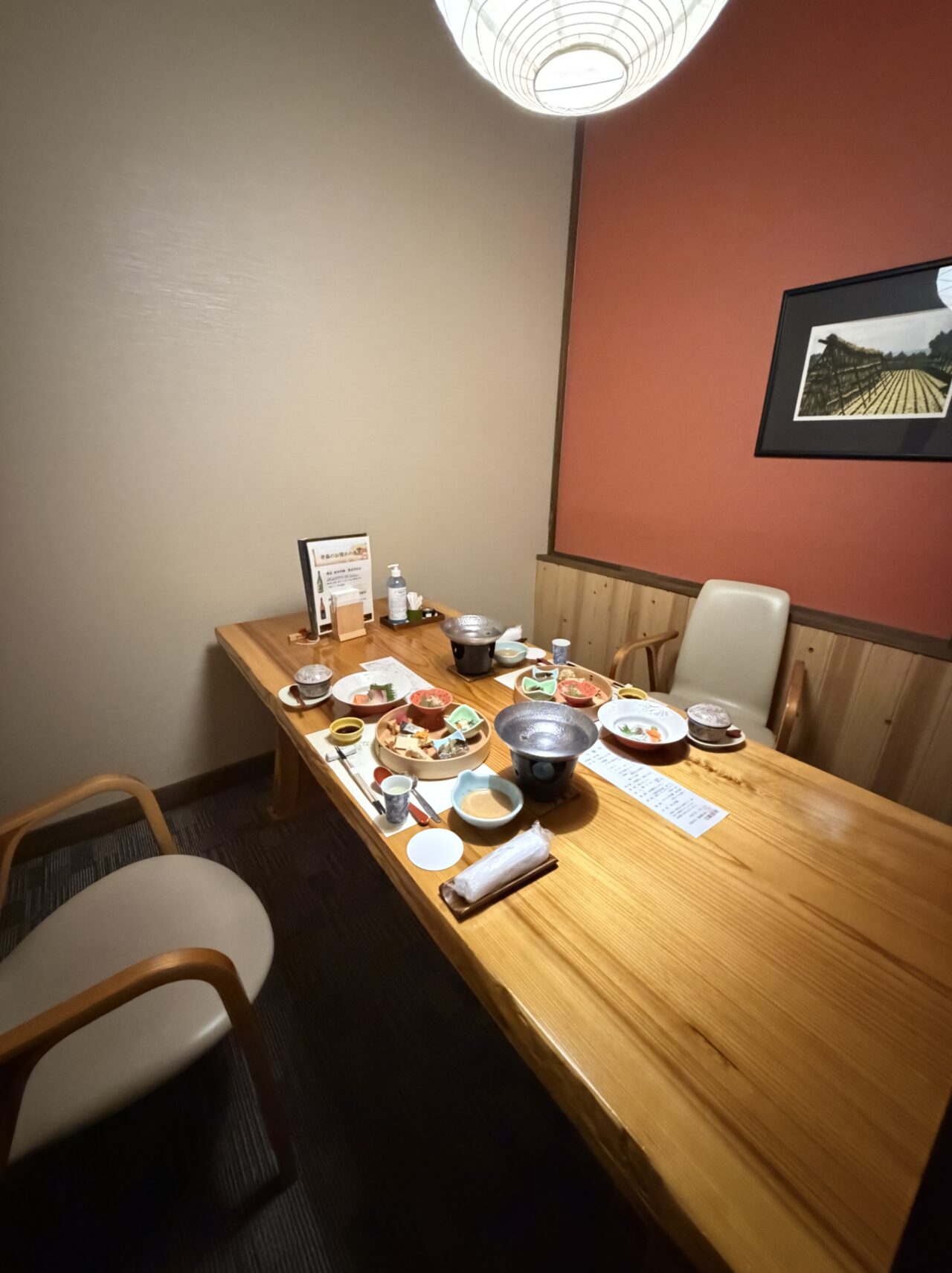
Dinner
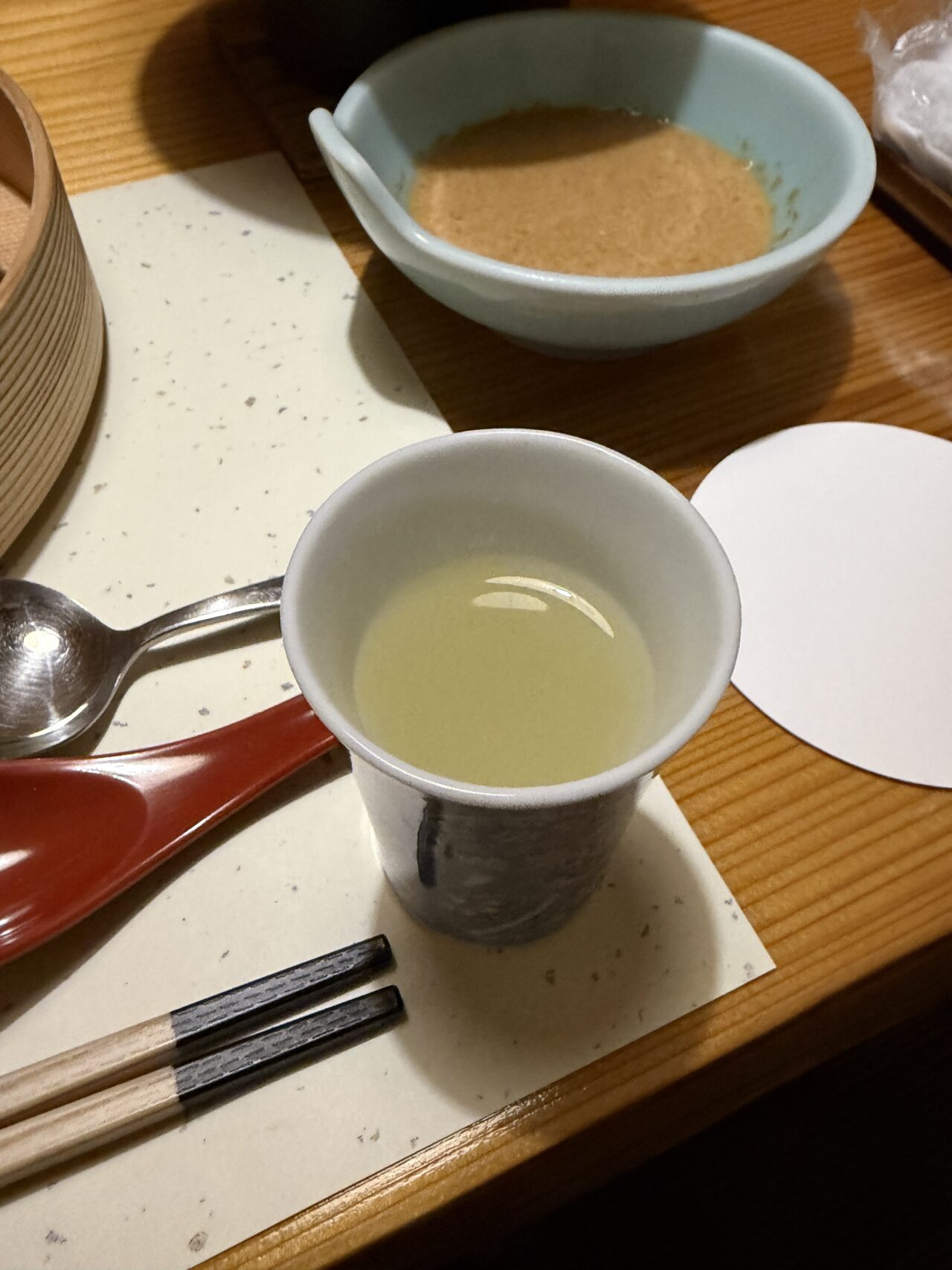
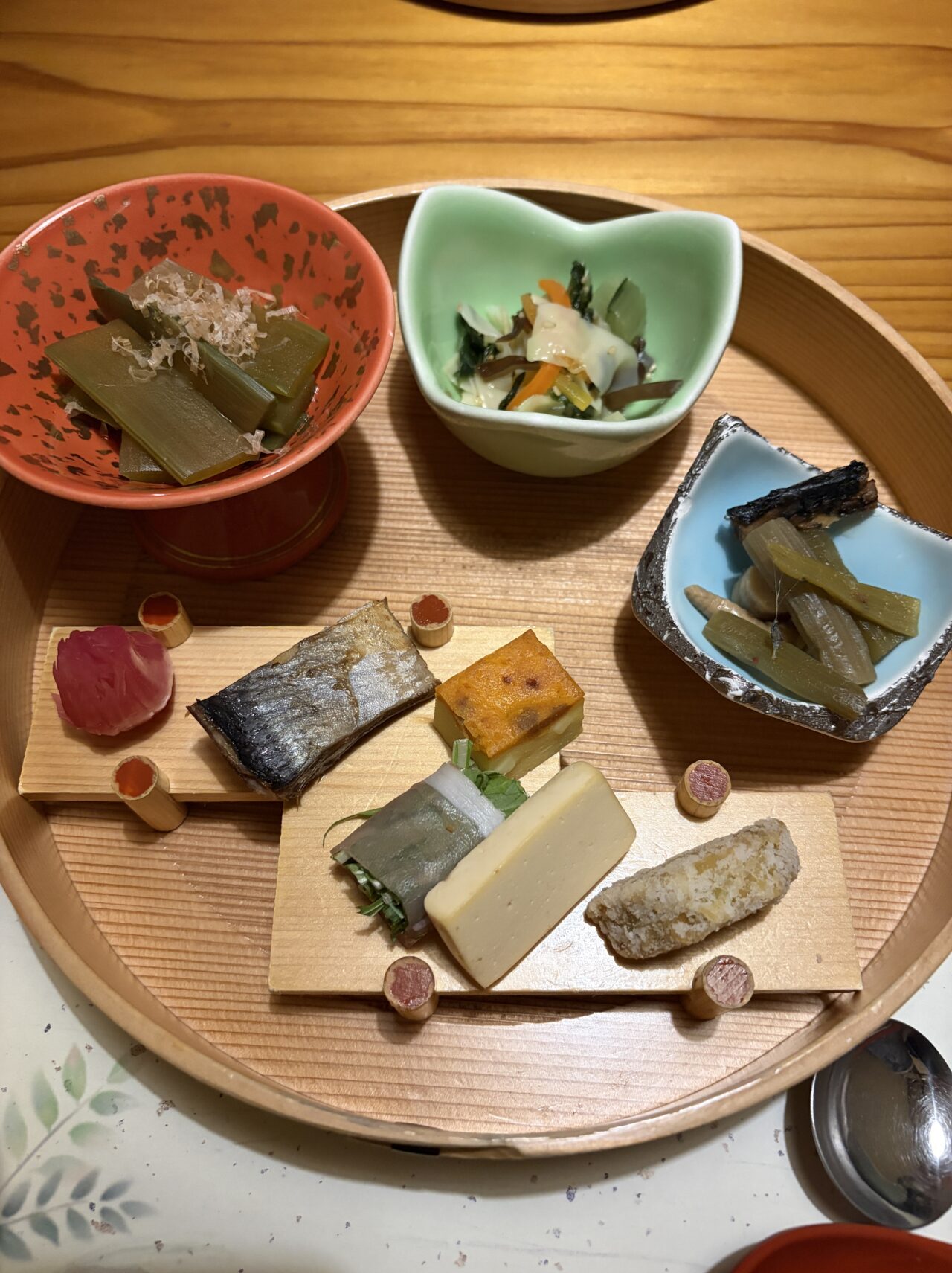
Left: Dinner opens with a sweet yuzu citrus wine. Right: An appetizer plate built around foraged mountain vegetables — beautifully plated, every element clearly considered.
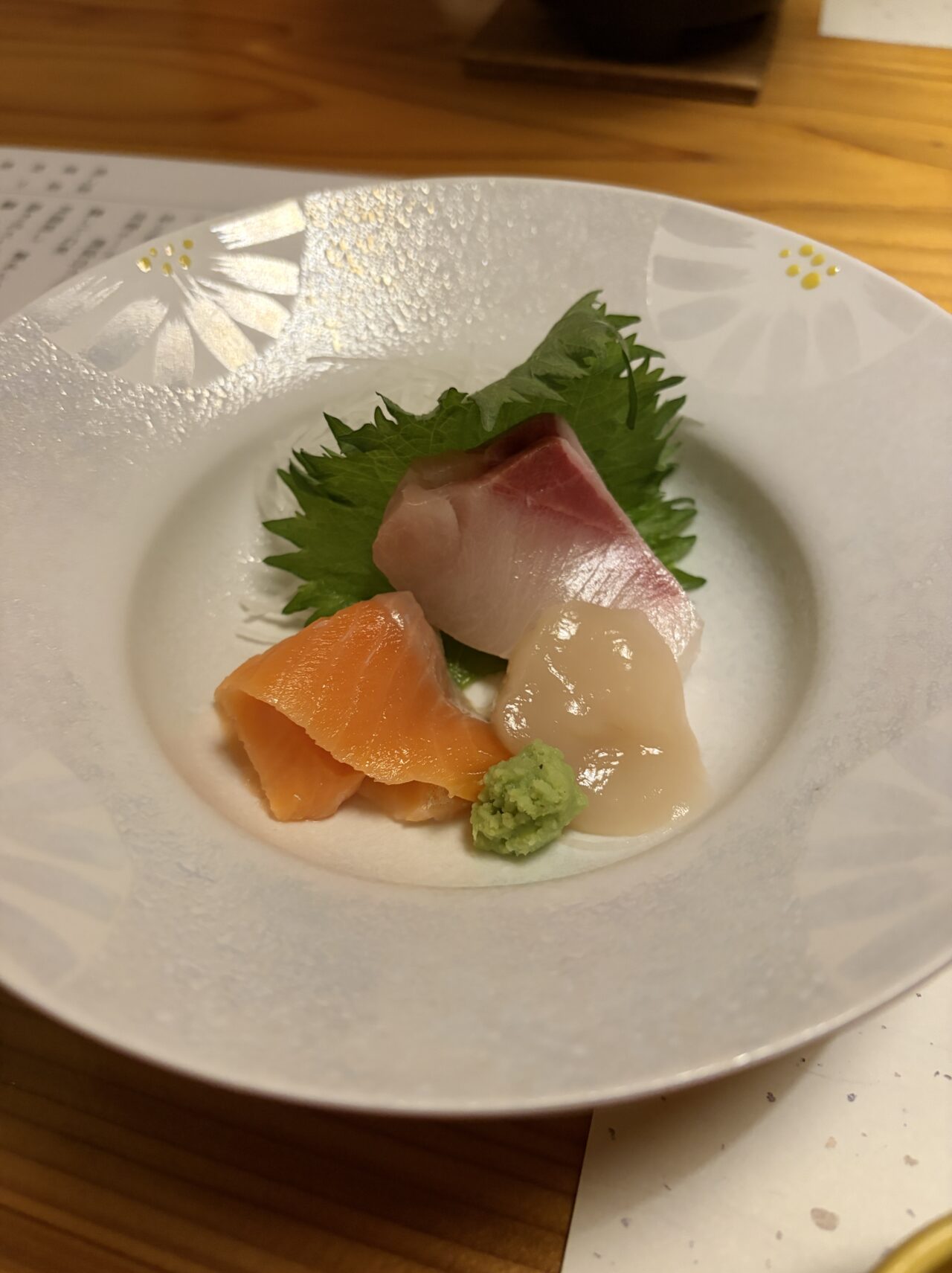
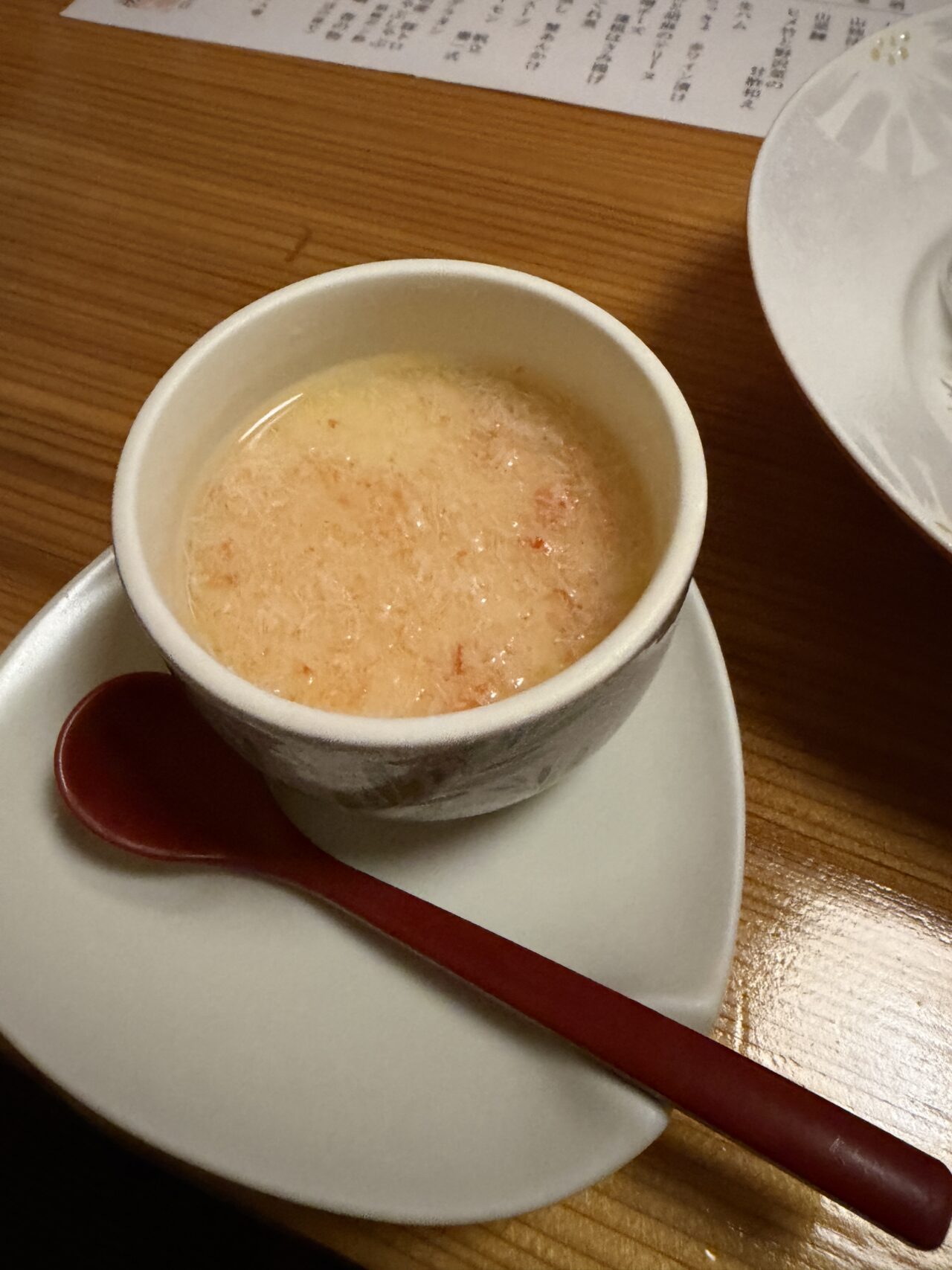
Left: Fresh, clean-tasting sashimi in a modest, well-judged portion. Right: Chawanmushi (steamed egg custard) topped with a rich crab sauce.
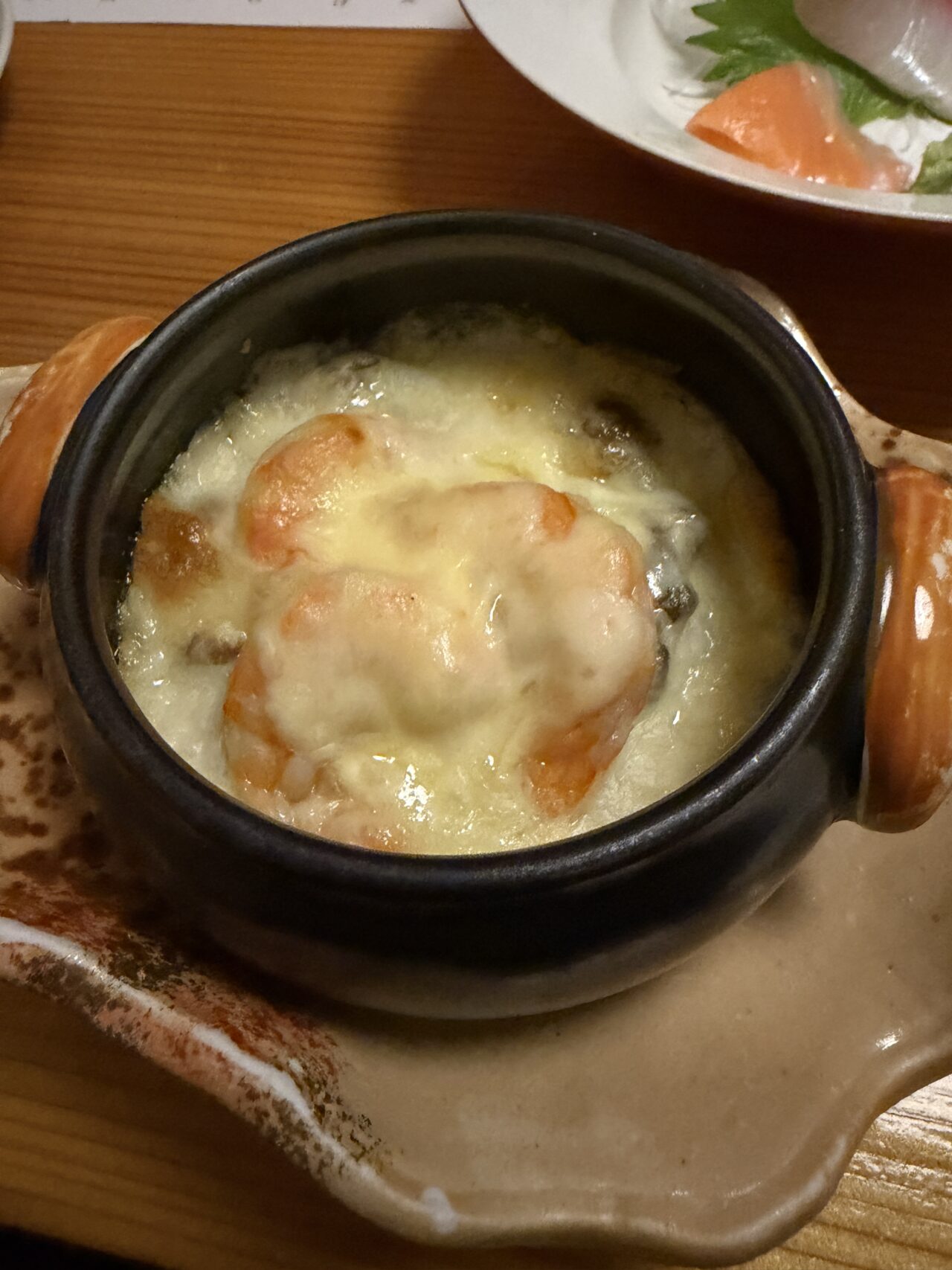
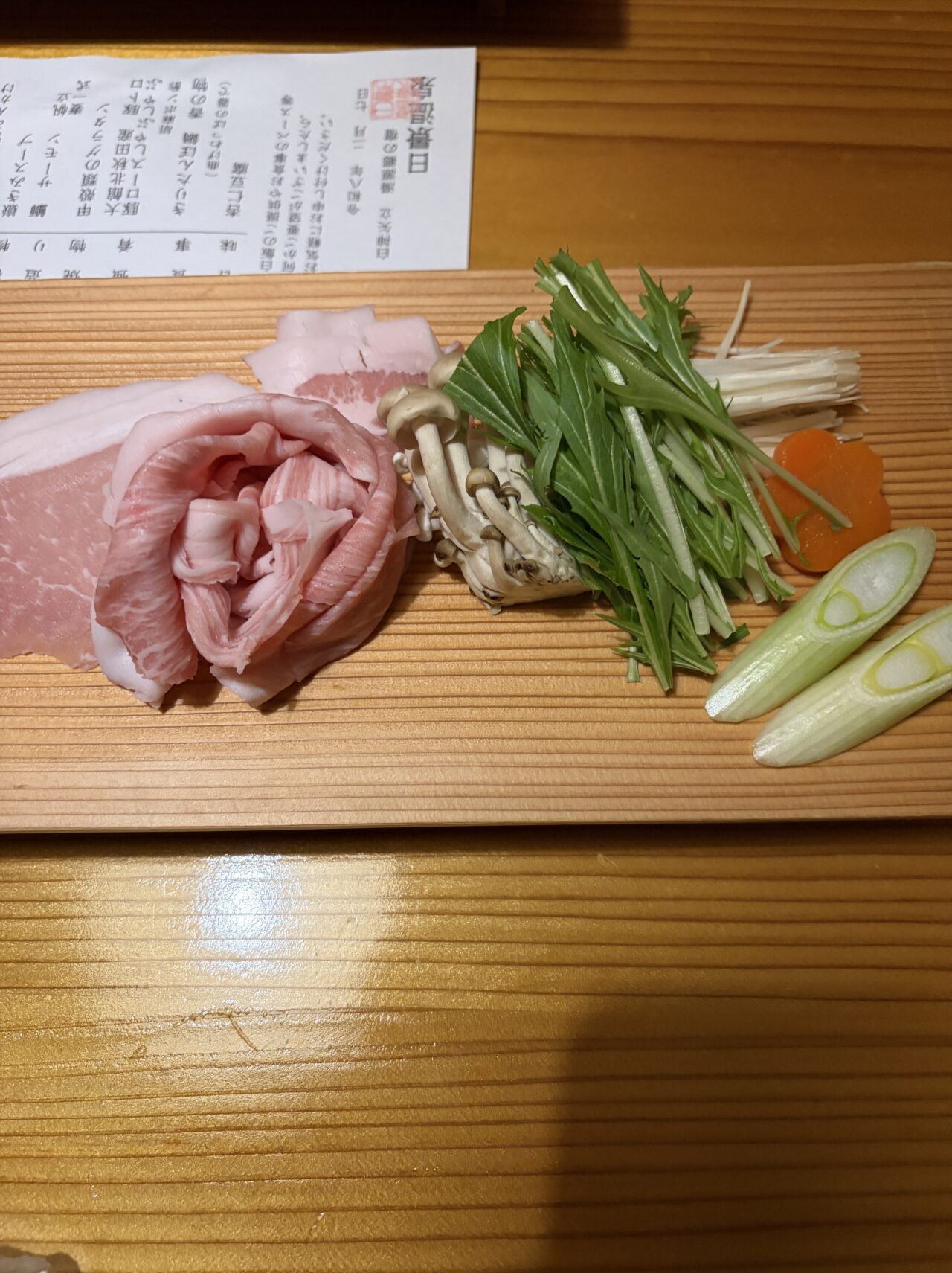
Left: A shrimp gratin, served genuinely piping hot — every dish here arrives on a warmed plate at exactly the right temperature. Right: Pork shabu-shabu using Odate-grown pork, kept light by the quick-cooking method and paired with a sesame dipping sauce.
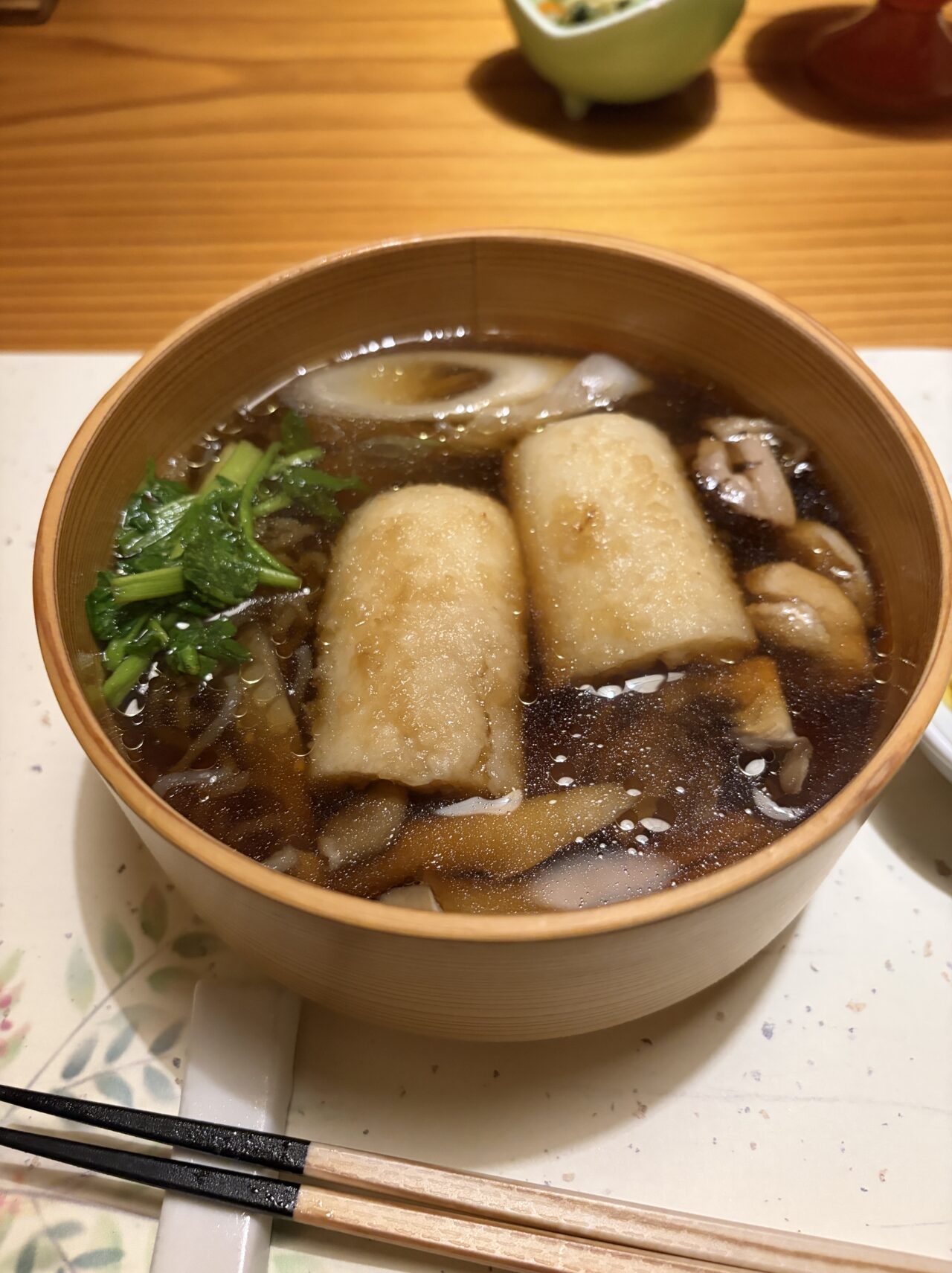
Kiritanpo nabe — Akita’s signature dish, pounded rice sticks simmered in a rich chicken broth.
🍲 What is Kiritanpo?
Kiritanpo is Akita Prefecture’s most famous regional dish: freshly cooked rice is pounded, formed around a skewer, and lightly grilled, then simmered in kiritanpo nabe — a hot pot made with a rich chicken (usually free-range jidori) broth, seasonal vegetables, and burdock root. The rice absorbs the broth and becomes wonderfully soft on the outside while staying dense within. It’s a dish deeply tied to Akita’s identity and one of the best-known regional foods in the Tohoku region.
Breakfast
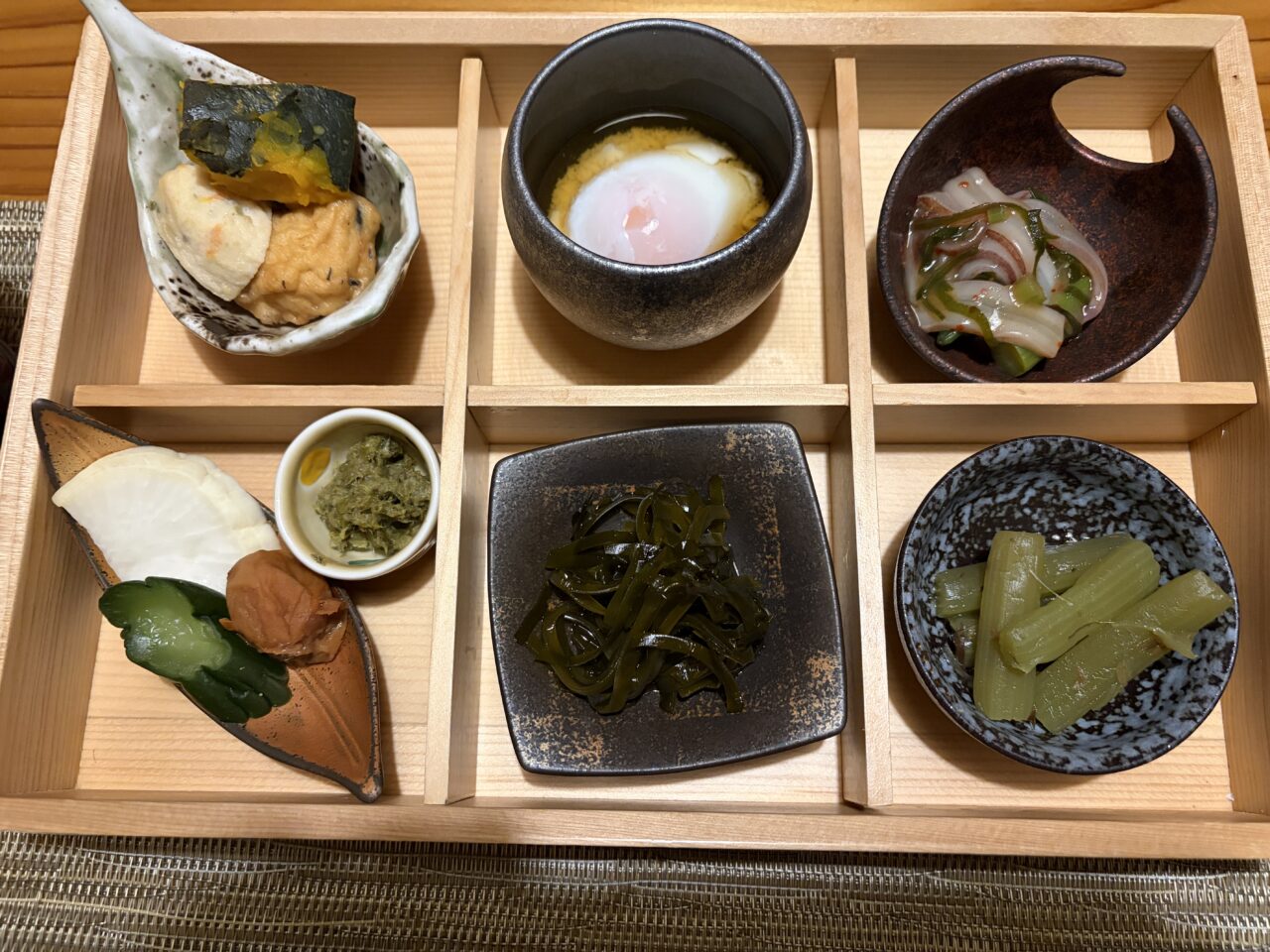
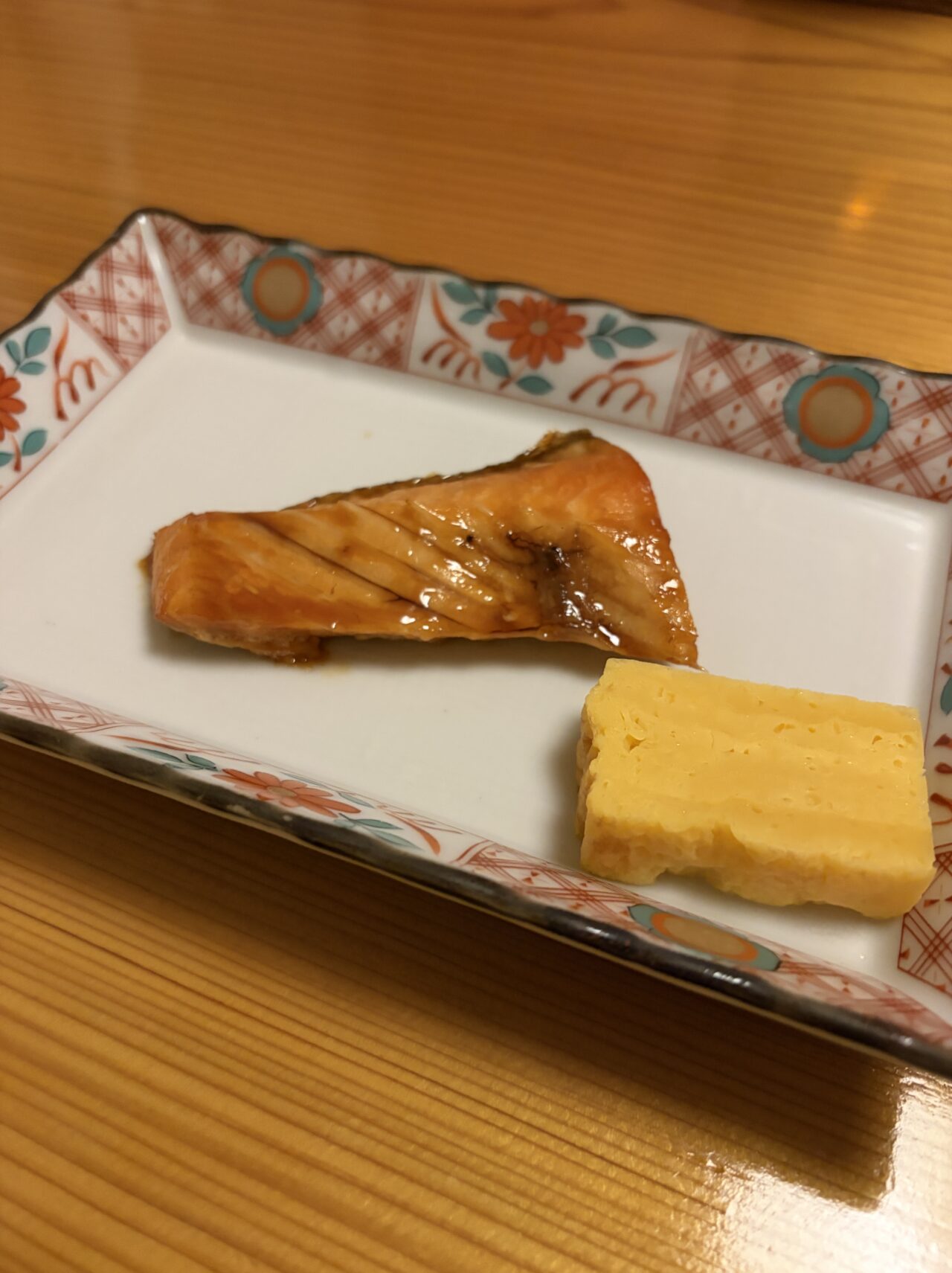
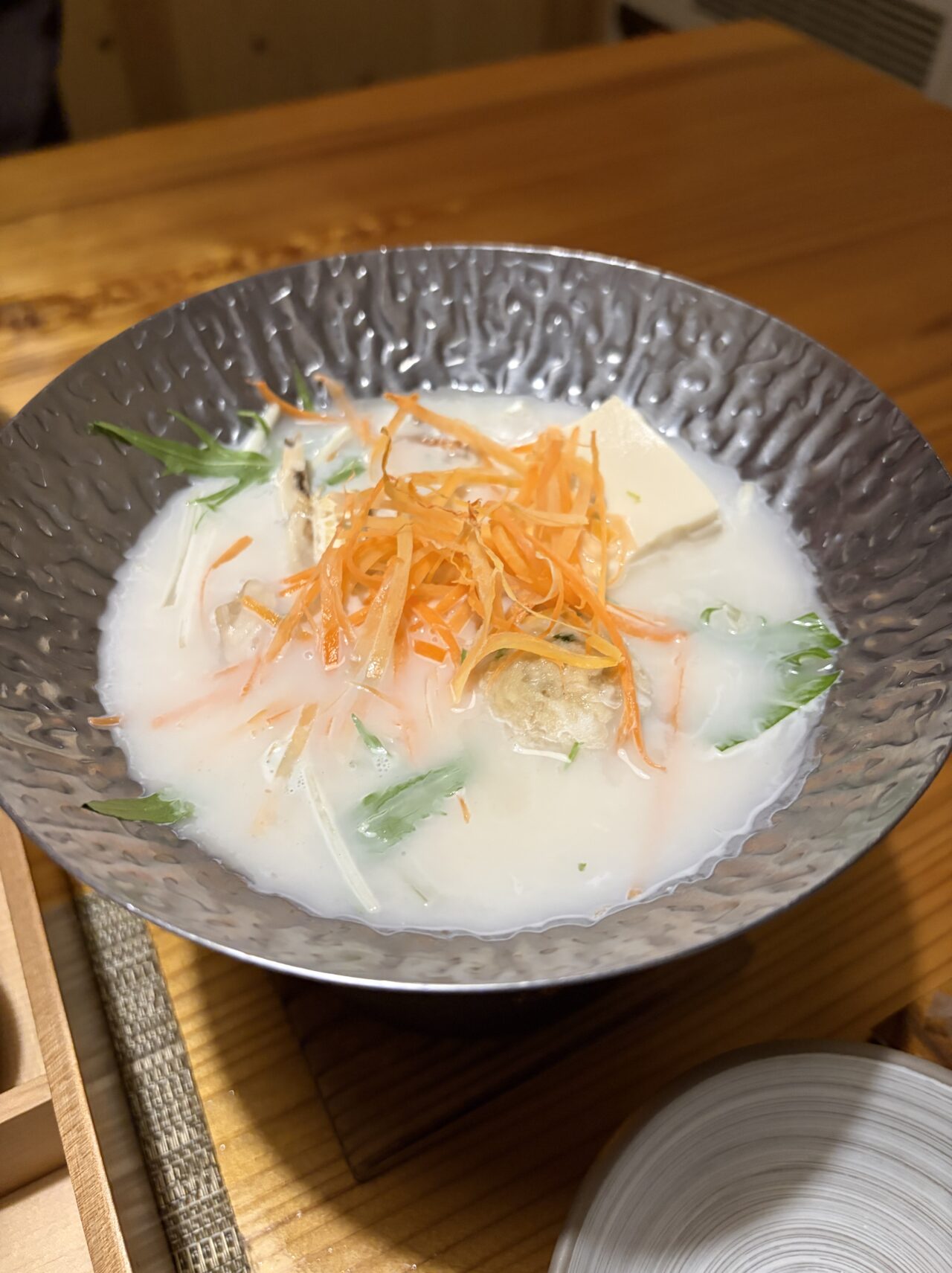
Left: Grilled salmon and a rolled Japanese omelet — breakfast staples, both done well. Right: A warm soy milk hot pot, gentle on the stomach and perfectly suited to a cold morning.
Final Thoughts
Hikage Onsen manages something genuinely rare: the atmosphere of an authentic hidden hot spring inn, paired with a level of comfort and design sensibility that feels thoroughly modern. Two distinct sulfur springs, a meal that punches well above what you’d expect from a remote mountain ryokan, and a building large enough to spend an entire afternoon exploring — this is a place that recharges you on every level.
Hikage Onsen is ideal for visitors who:
- Want to relax in private baths at their own pace
- Are looking for a modern, comfortable stay within an authentic hidden hot spring setting
- Are traveling as a couple, with a partner, or as a family
- Can visit in winter — snow season is when this inn truly shines
▼Book your stay▼