
This article contains advertisements
There are hot springs in Japan, and then there is Tsurunoyu.
Tucked deep in the mountains of Akita Prefecture, this thatched-roof ryokan has been welcoming guests for over 350 years.
It is, without question, one of the most iconic onsen inns in the entire country — the kind of place that appears on every “must-visit Japan” list, yet somehow still feels like a secret once you’re standing inside its ancient wooden gates.
I’ve visited multiple times across different seasons, and every single stay has left me with that same feeling: this is what Japan’s hot spring culture is truly about.
Why Tsurunoyu stands out:
- Over 350 years of history — one of Japan’s most celebrated hidden hot spring inns (hitou)
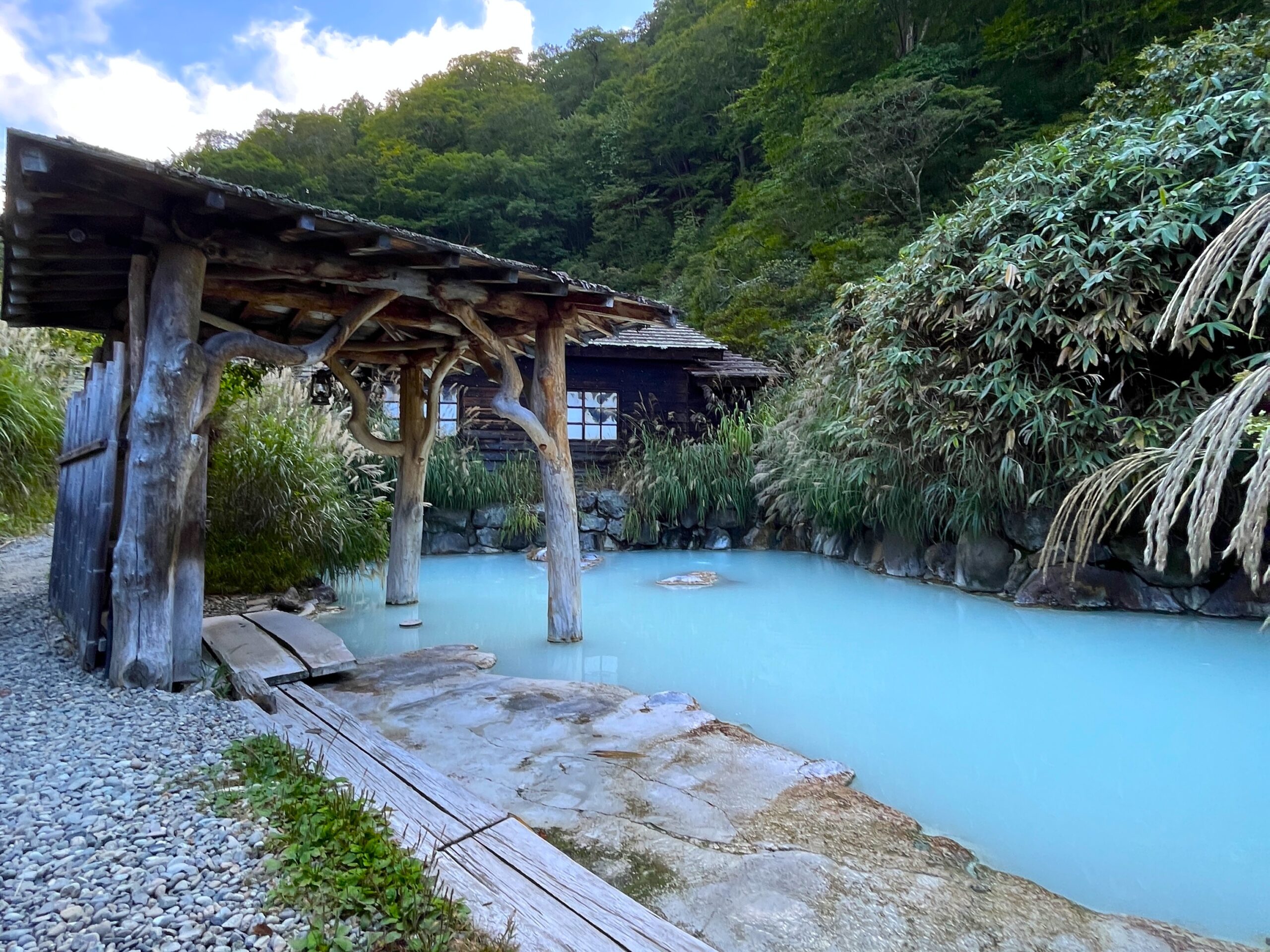
- A vast, milky-white mixed-gender outdoor bath that is the most photographed onsen scene in Japan
- Four distinct spring sources across six bathing spaces, including a secret private outdoor bath
- The legendary imo-nabe (mountain yam hot pot) — a dish worth traveling for on its own
- Tsurunoyu Onsen
- Getting There from Tokyo — Access Guide
- A Place Where Time Stands Still
- The Rooms
- The Hot Springs — Four Spring Sources, Six Baths
- ① Shiro-yu (White Spring) — Indoor Bath
- ② Kuro-yu (Black Spring) — Indoor Bath
- ③ Naka-no-yu (Central Spring) — Mixed-Gender Outdoor Bath ★
- ④ Private Indoor Bath (Overnight Guests Only)
- ⑤ Two Private Rental Baths — Kashikiri-buro (Overnight Guests Only)
- ⑥ Hidden Private Outdoor Bath (Overnight Guests Only) ★
- Dinner & Breakfast — Mountain Food Done Right
- Final Thoughts
Tsurunoyu Onsen
| Address | 50 Tazawako-sotsuda Kokuyurin, Semboku-shi, Akita 014-1204, Japan |
| Phone | +81-187-46-2139 |
| Official Website | Akita’s Hidden Hot Spring, Tsuru-no-Yu Onsen |
| Day-use Bathing | Adults: 700 JPY Children: 300 JPY |
| Day-use Hours | 10:00 – 15:00 Note: The open-air bath is closed on Mondays. |
| Check-in Check-out | From 15:00 By 10:00 |
| Credit Cards Accepted | yes(VISA, MasterCard) |
▼Book your stay▼
Getting There from Tokyo — Access Guide
Tsurunoyu sits in a remote mountain valley in Akita Prefecture. The journey itself is part of the experience, but plan ahead — especially in winter when snow can affect road conditions.
🚄 By Shinkansen (Recommended)
Take the Akita Shinkansen “Komachi” from Tokyo (Ueno) to Tazawako Station — approximately 3 hours. From Tazawako Station, take the Tazawako Kogen Resort bus to the “Nyuto Onsen” stop (approx. 40 min), then board the ryokan’s own shuttle bus (reservation required). Total travel time from Tokyo: around 4 hours.
🚗 By Car
Exit at Tazawako IC on the Akita Expressway and head toward Lake Tazawa, then north on Route 149 following signs for Nyuto Onsen. The final stretch is a narrow gravel road through the forest. In winter, studded tires or snow chains are essential.
| Route | Tokyo (Ueno) → Tazawako Station → Nyuto Onsen → Tsurunoyu |
|---|---|
| Train | Akita Shinkansen “Komachi” to Tazawako Station (~3 hrs) |
| From Tazawako Station | Resort bus (~40 min) + ryokan shuttle (reservation required) |
| Taxi from Station | Approx. ¥3,500–4,500, ~35 minutes |
| JR Pass | ✅ Shinkansen portion covered (local bus not included) |
A Place Where Time Stands Still
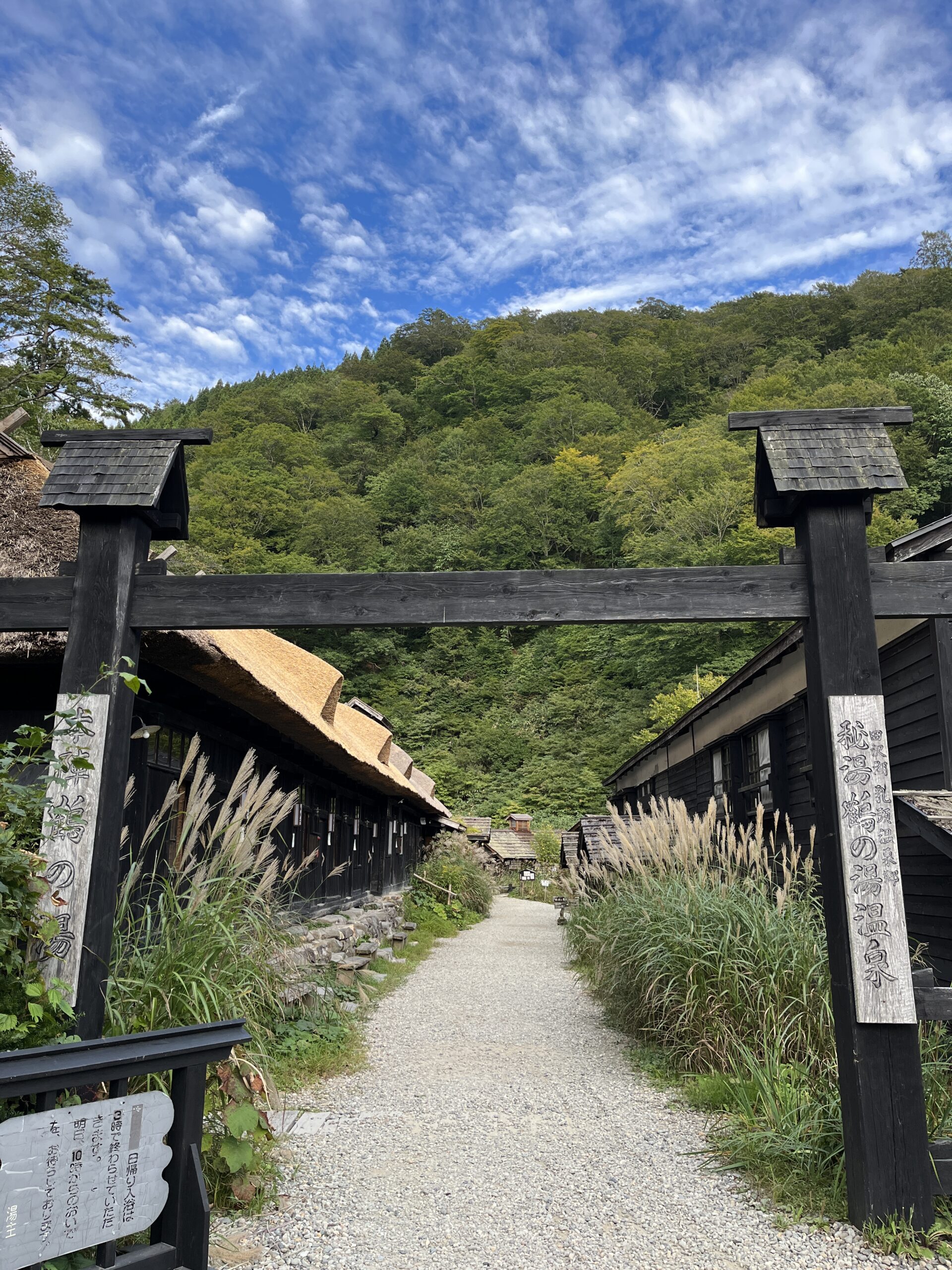
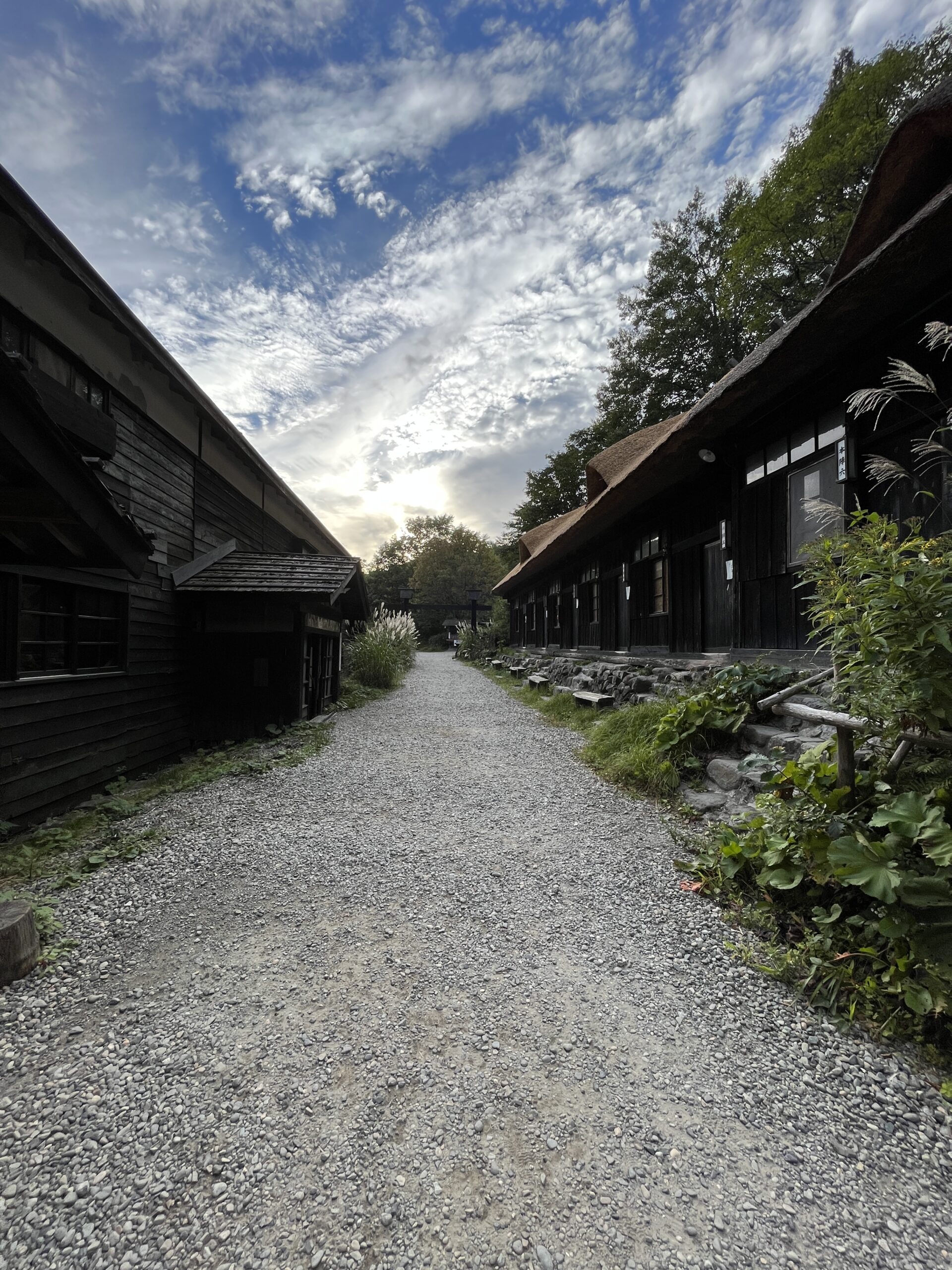
The name “Nyuto Onsen” comes from Nyuto-yama, the volcanic mountain that feeds all seven hot spring inns in this valley.
The road leading here winds through forest and farmland, and the modern world gradually falls away long before you arrive.
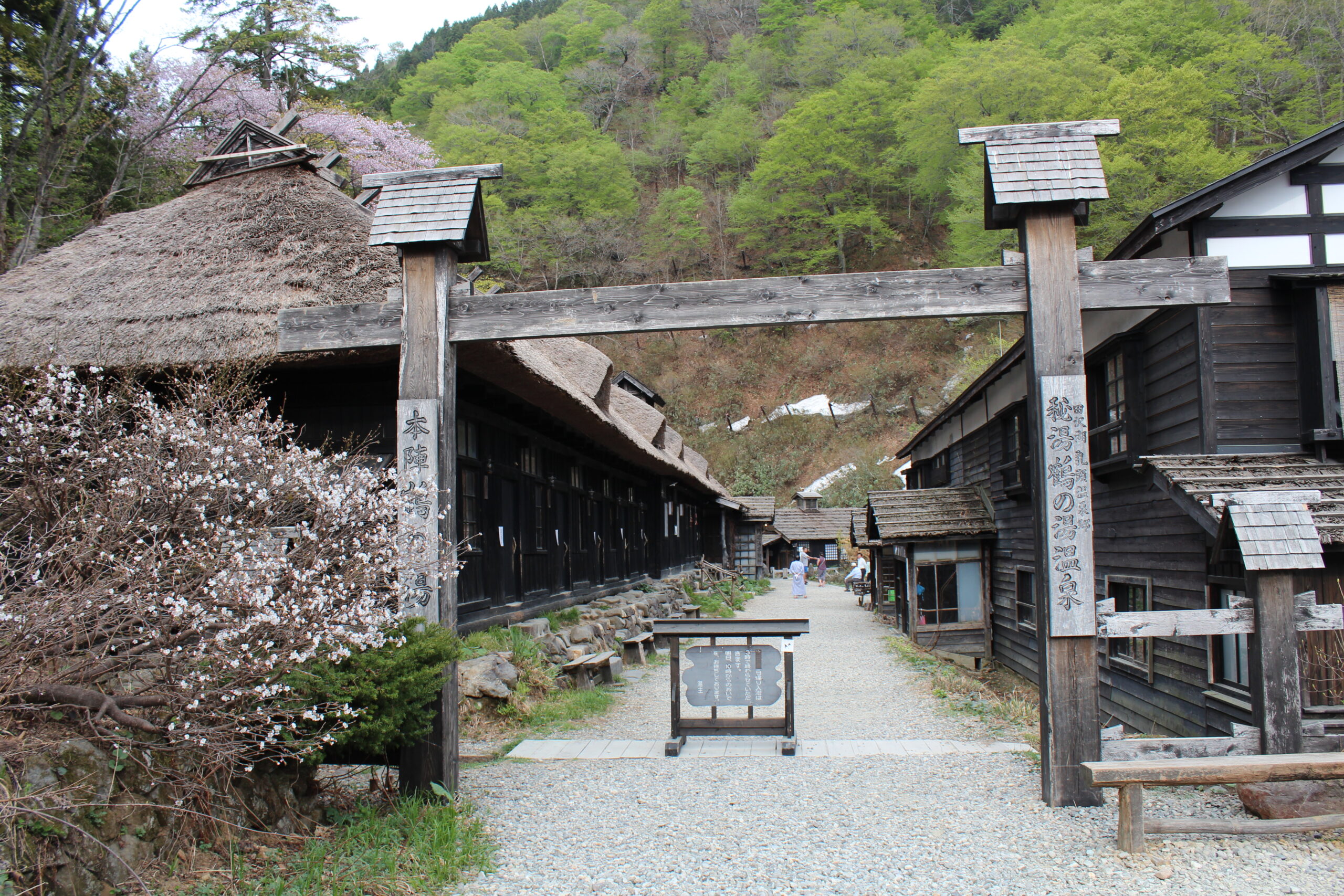
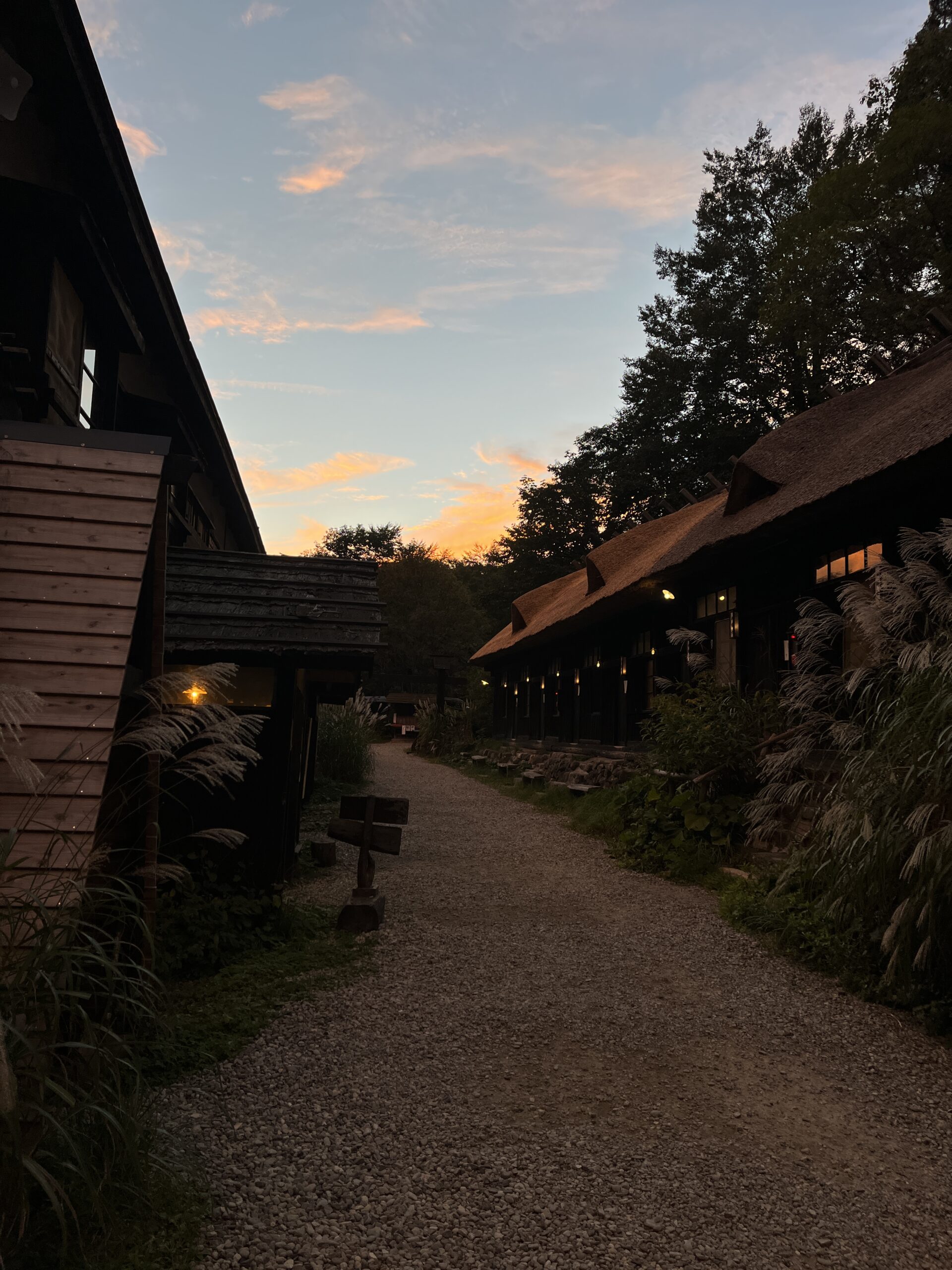
Left: Mountain cherry blossoms in May. Right: Dusk — the warm glow of lanterns against the evening sky is one of those images that stays with you.
Each season rewrites the scenery entirely: cherry blossoms in May, vivid green in summer, red maples in autumn, and deep snow in winter.
I’ve visited in multiple seasons, and the inn rewards every return. The famous “Tsuru no Chashitsu” teahouse on the grounds is open on weekends (10:00–14:30) for drinks — a charming spot if you’re day-tripping.
The Rooms
| Toilet | En suite in Shin-Honjin / Higashi-Honjin; shared in Ichi-go-kan, Ni-go-kan, San-go-kan |
|---|---|
| Refrigerator | Not provided |
| Air Conditioning | Not available (heating provided) |
| Wi-Fi | Available, but connectivity is limited in the mountains |
| Television | Not provided |
| Towels & Yukata | Provided |
Tsurunoyu offers several room types.
The atmospheric Honjin (main thatched-roof building) features rooms with an irori (sunken hearth) — the most evocative option, though toilet facilities are shared.
The Shin-Honjin and Higashi-Honjin are newer annexes with en-suite toilets, still traditionally styled but more comfortable for first-time visitors.
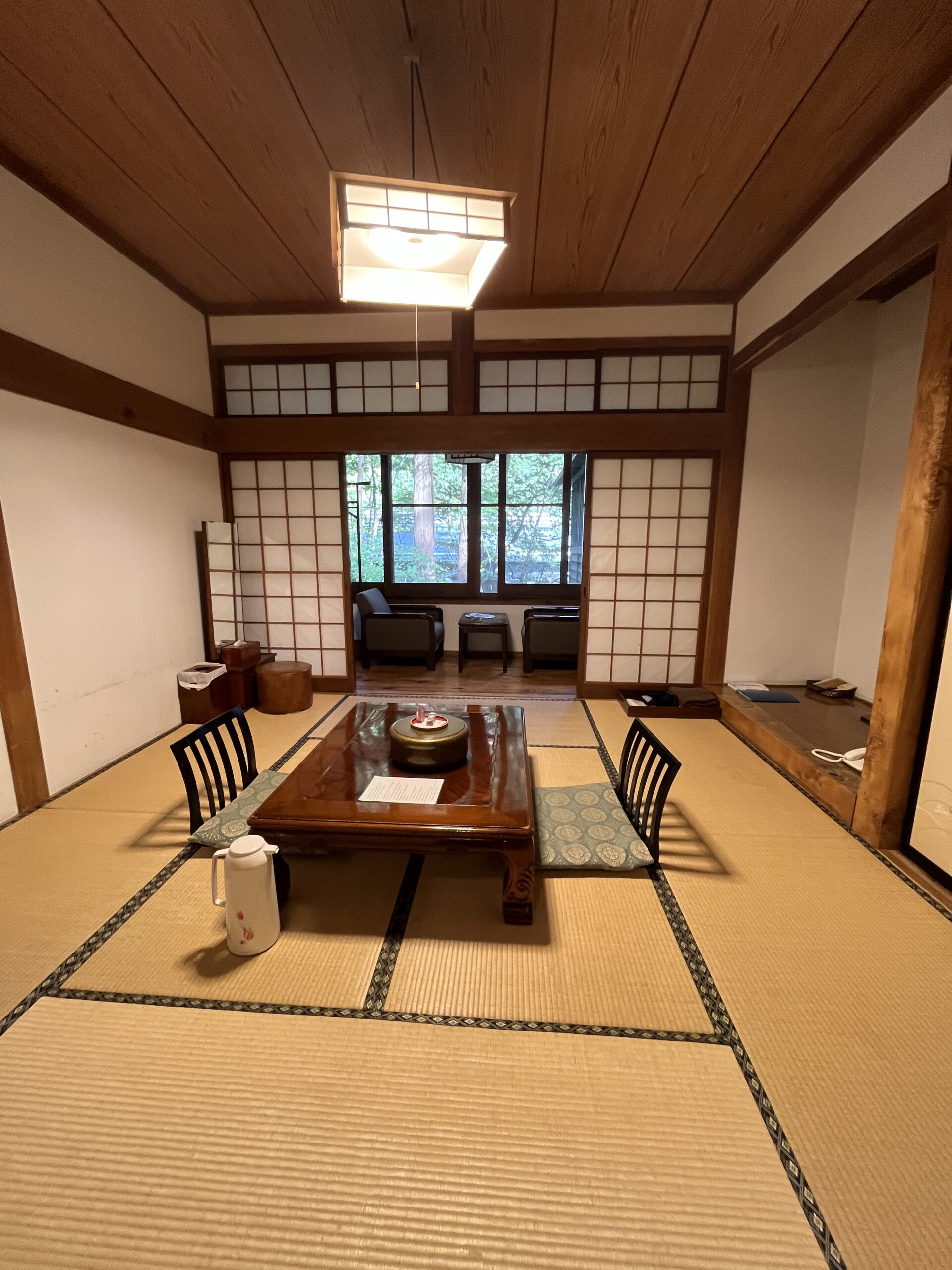
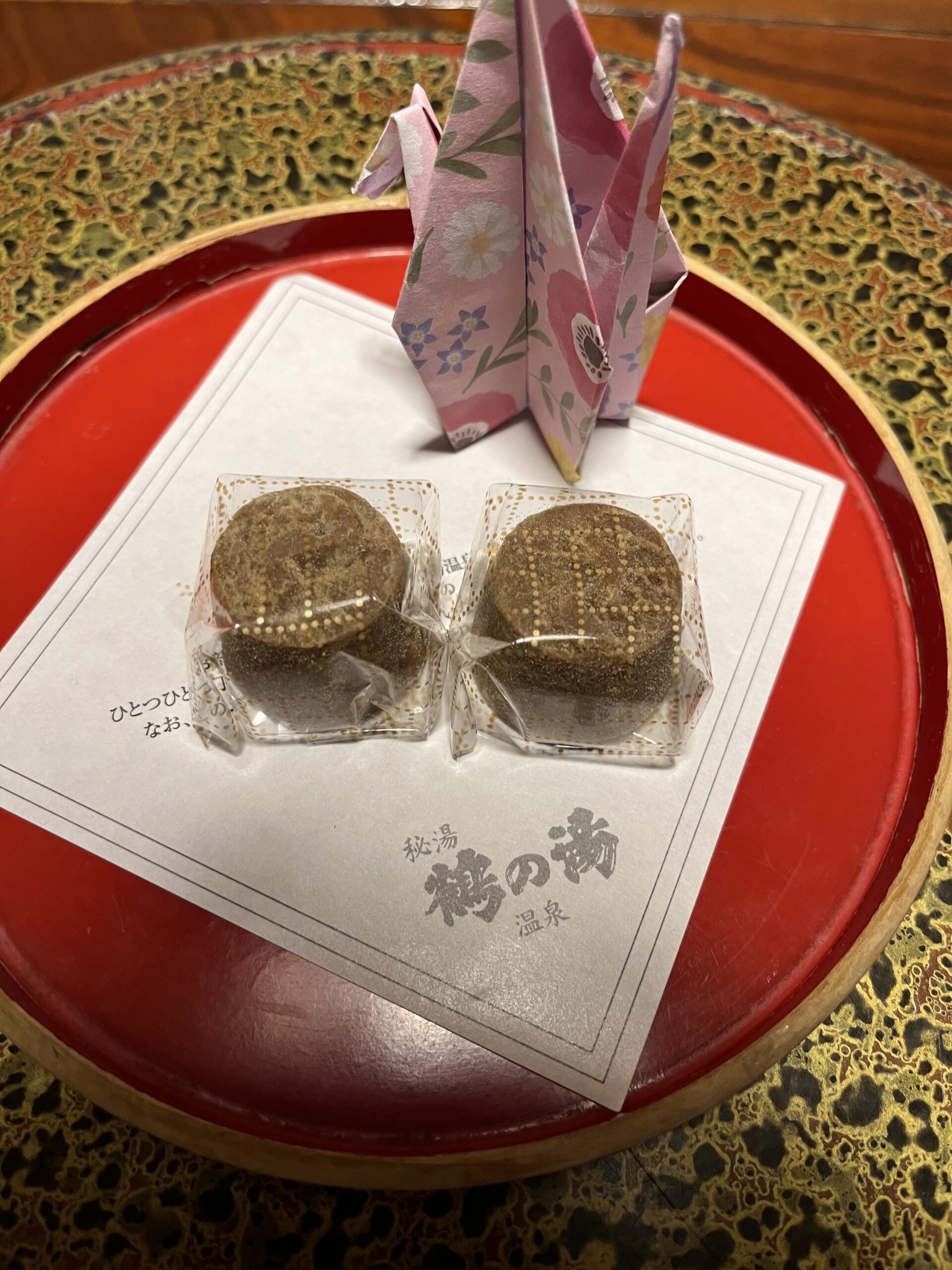
Left: The Shin-Honjin room — clean, quiet, and comfortable. Right: A welcome treat of wagashi sweets and a folded paper crane. Small gestures that make a real impression.
Prepare for no TV and no air conditioning. In summer the mountain altitude keeps evenings cool enough; in winter the heating is reliable.
The spotty Wi-Fi is, honestly, part of the appeal — consider it a forced and welcome digital detox.
The Hot Springs — Four Spring Sources, Six Baths
Tsurunoyu draws from four distinct spring sources — Shiro-yu, Kuro-yu, Naka-no-yu, and Taki-no-yu — each with a slightly different mineral profile.
Day visitors can access three baths; overnight guests enjoy all six, including private baths most visitors never find.
① Shiro-yu (White Spring) — Indoor Bath
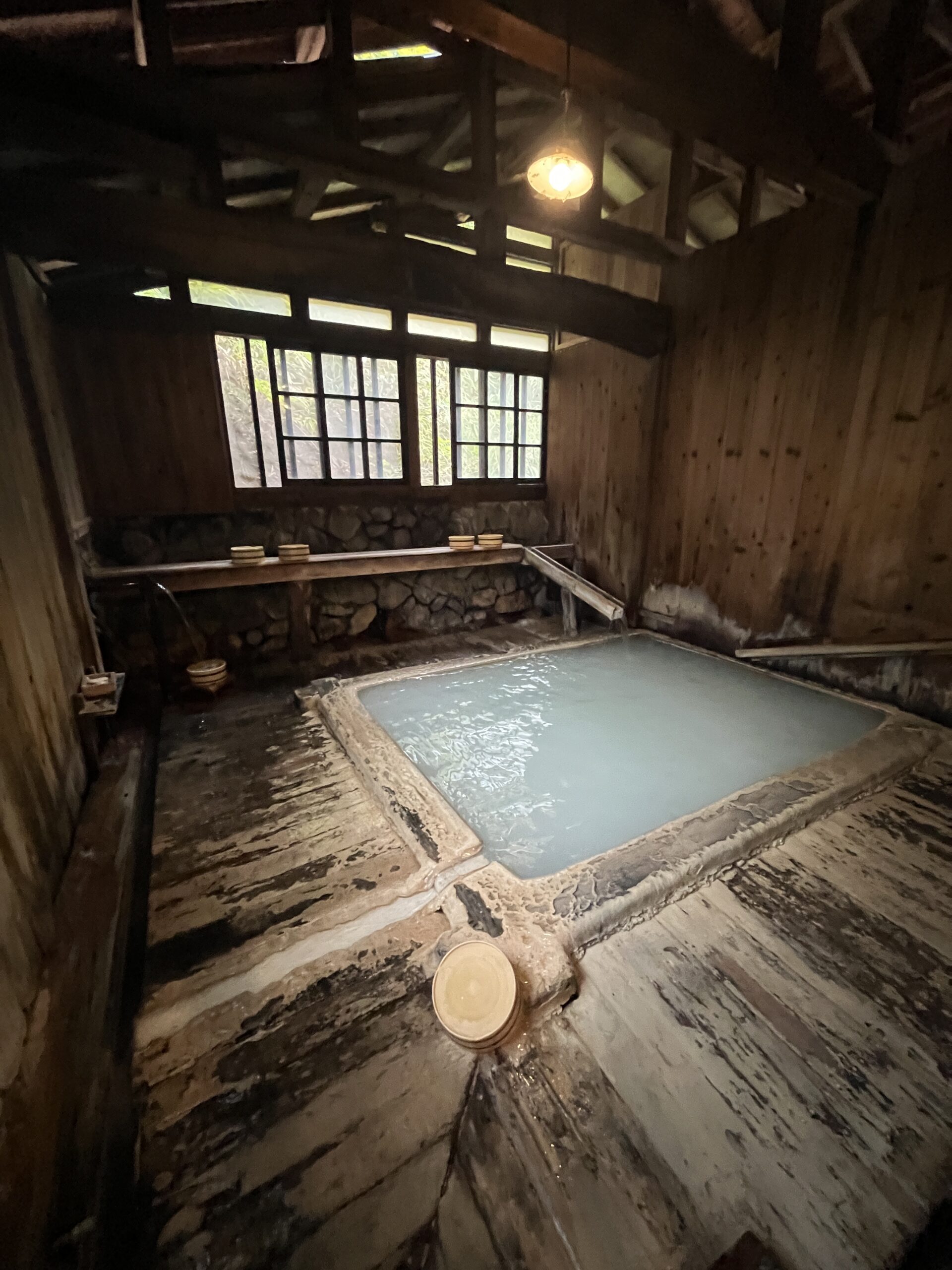
The first thing you notice is the color: a luminous, cloudy white that seems almost too beautiful to be real.
Hot spring water turns milky when dissolved hydrogen sulfide gas oxidizes on contact with air — a natural phenomenon unique to sulfur springs.
Spring water arrives via a long wooden trough, pouring into the bath with a continuous, calming sound.
At around 40–42°C, it’s easy to stay in for a long, deeply relaxing soak.
The sulfur aroma is gentle and pleasant — not overwhelming. The spacious tub means you’re never crowded.
② Kuro-yu (Black Spring) — Indoor Bath
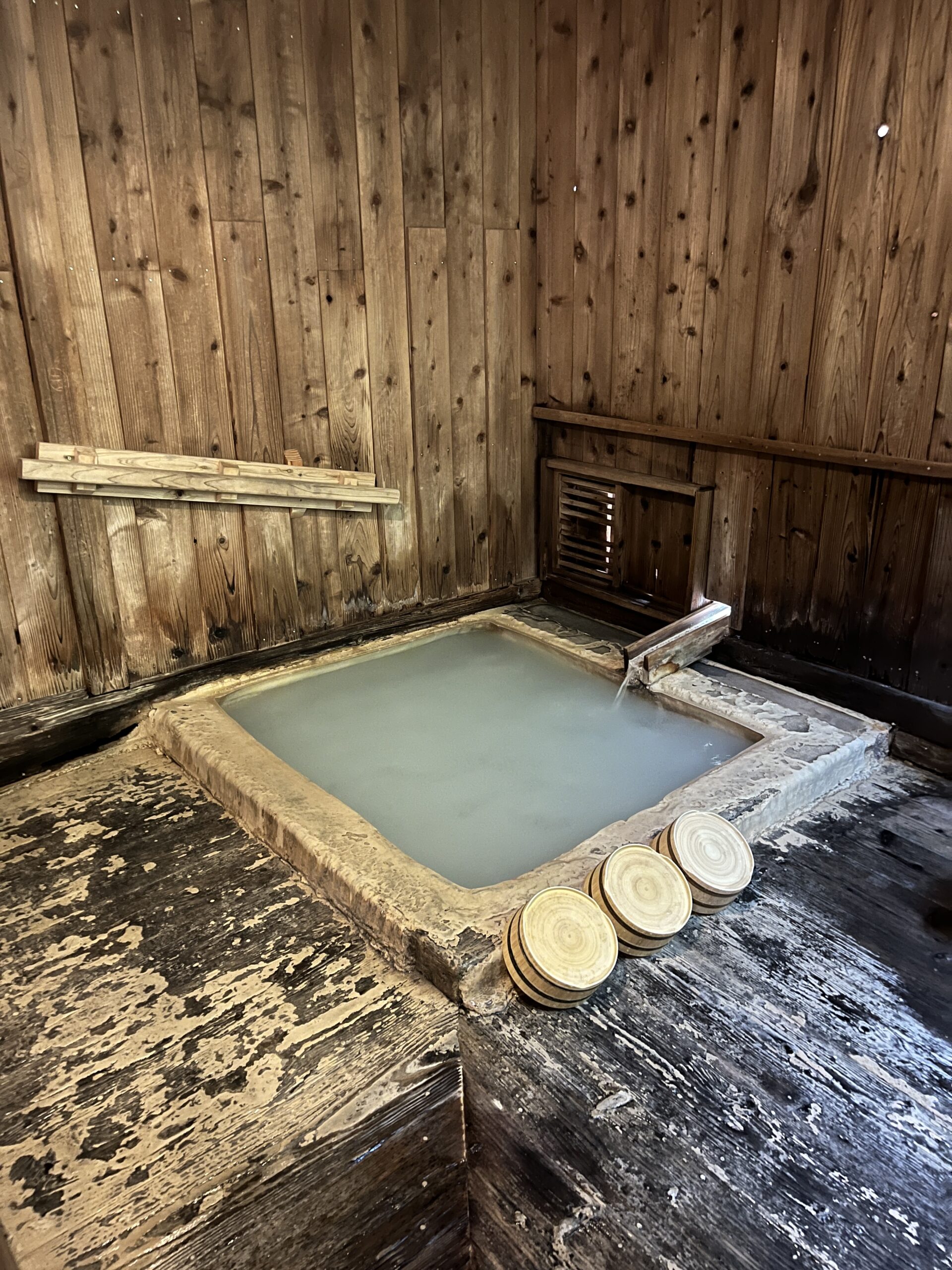
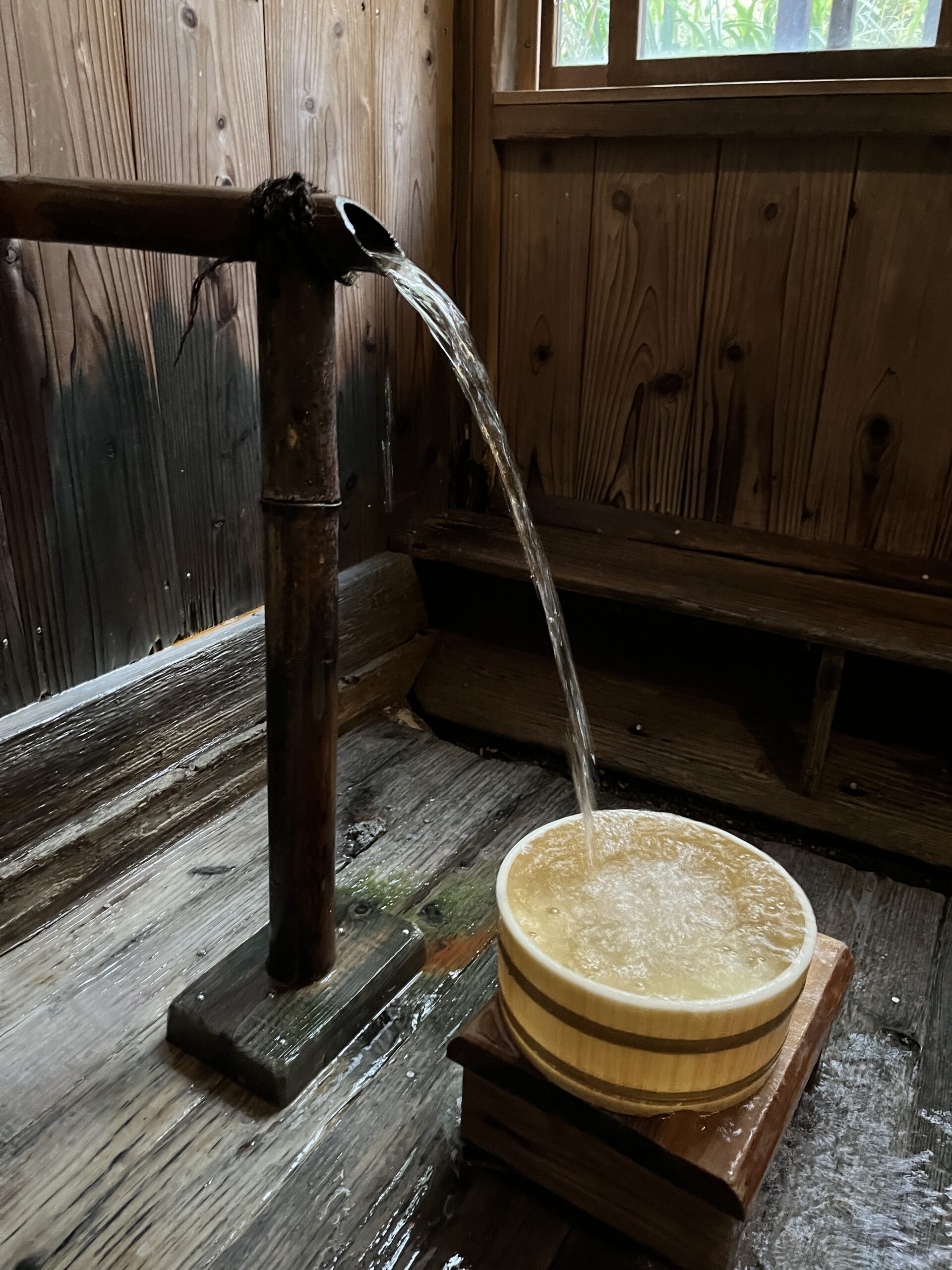
Left: The Kuro-yu — compact and concentrated. Right: A cool water basin nearby lets you adjust the temperature if needed.
The Kuro-yu sits right beside the Shiro-yu but feels like a completely different experience.
The tub is noticeably smaller — two or three people at most — and the spring water feels more concentrated, with a stronger mineral presence.
It runs hotter than the Shiro-yu; if you find it too warm, the cool water basin nearby is there to help.
Because of the small size, the water feels particularly fresh — if you arrive to find it empty, you’re in for a treat.
③ Naka-no-yu (Central Spring) — Mixed-Gender Outdoor Bath ★
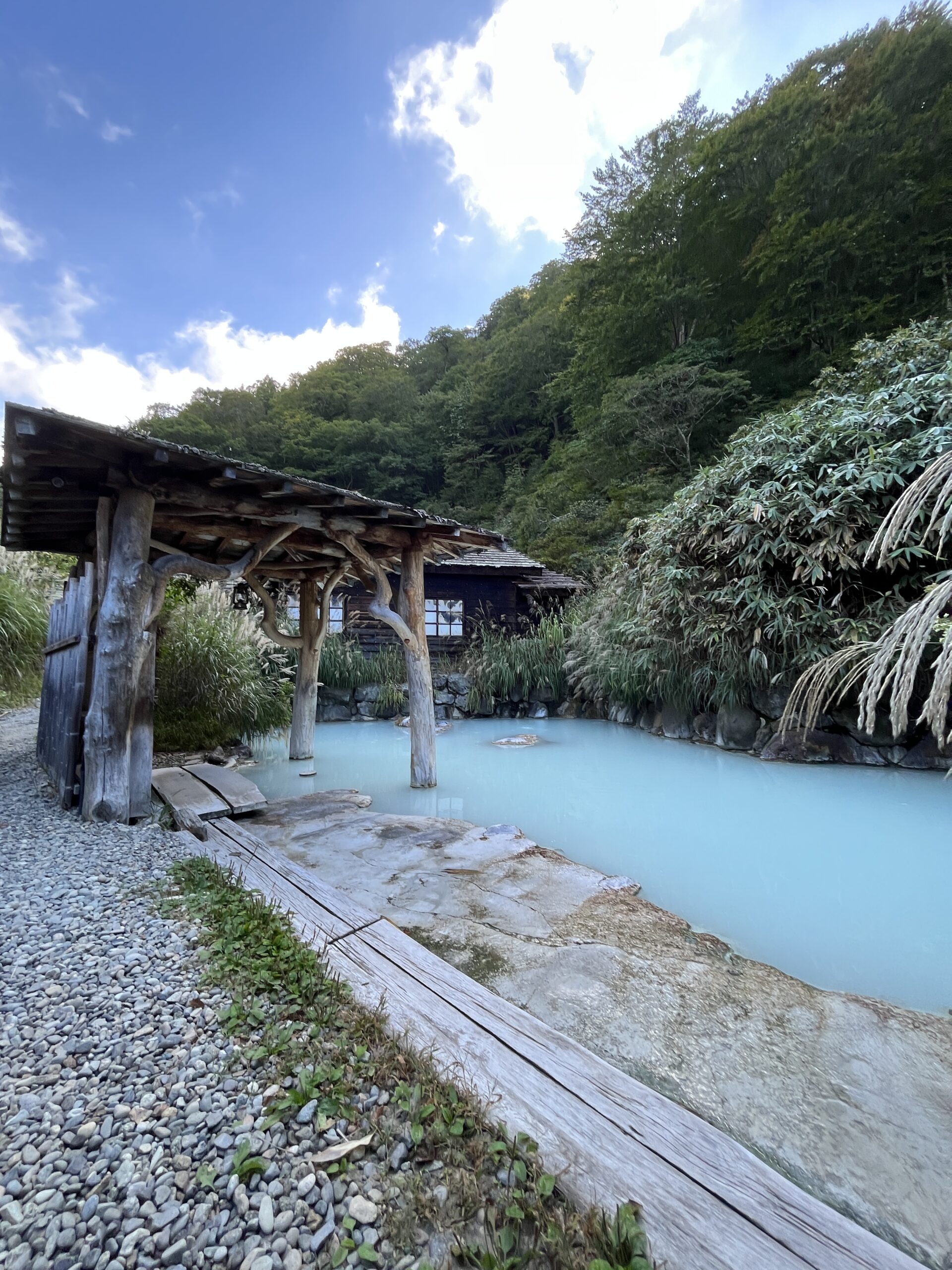
This is the bath that appears on every postcard: a vast, milky-white outdoor pool beneath a rustic wooden roof, surrounded by trees, with the sound of a mountain stream just beyond the edge.
It is breathtaking in every season.
♨ About Mixed-Gender Bathing (混浴 / Konyoku)
If you’re unfamiliar with konyoku, this is Japan’s traditional practice of men and women bathing together — historically the norm at rural hot springs. At Tsurunoyu, the Naka-no-yu is designed thoughtfully: the water is so cloudy that visibility below the surface is virtually zero. Women enter from a separate door on the right, stepping directly into the water from a private changing area — there’s no exposed walkway. This makes it one of the most comfortable and natural mixed-gender baths in Japan. Many international guests find it far more relaxed than they expected.
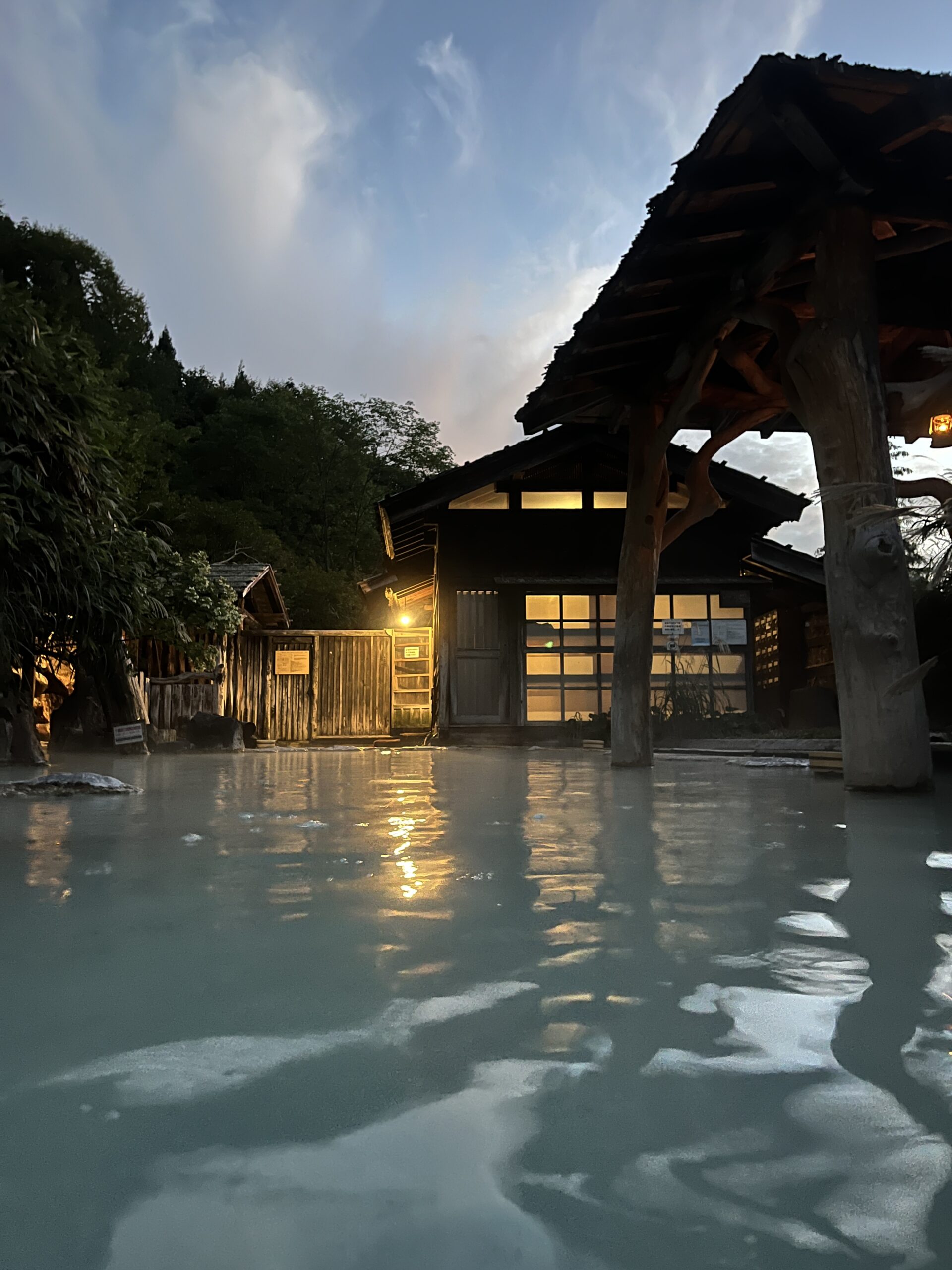
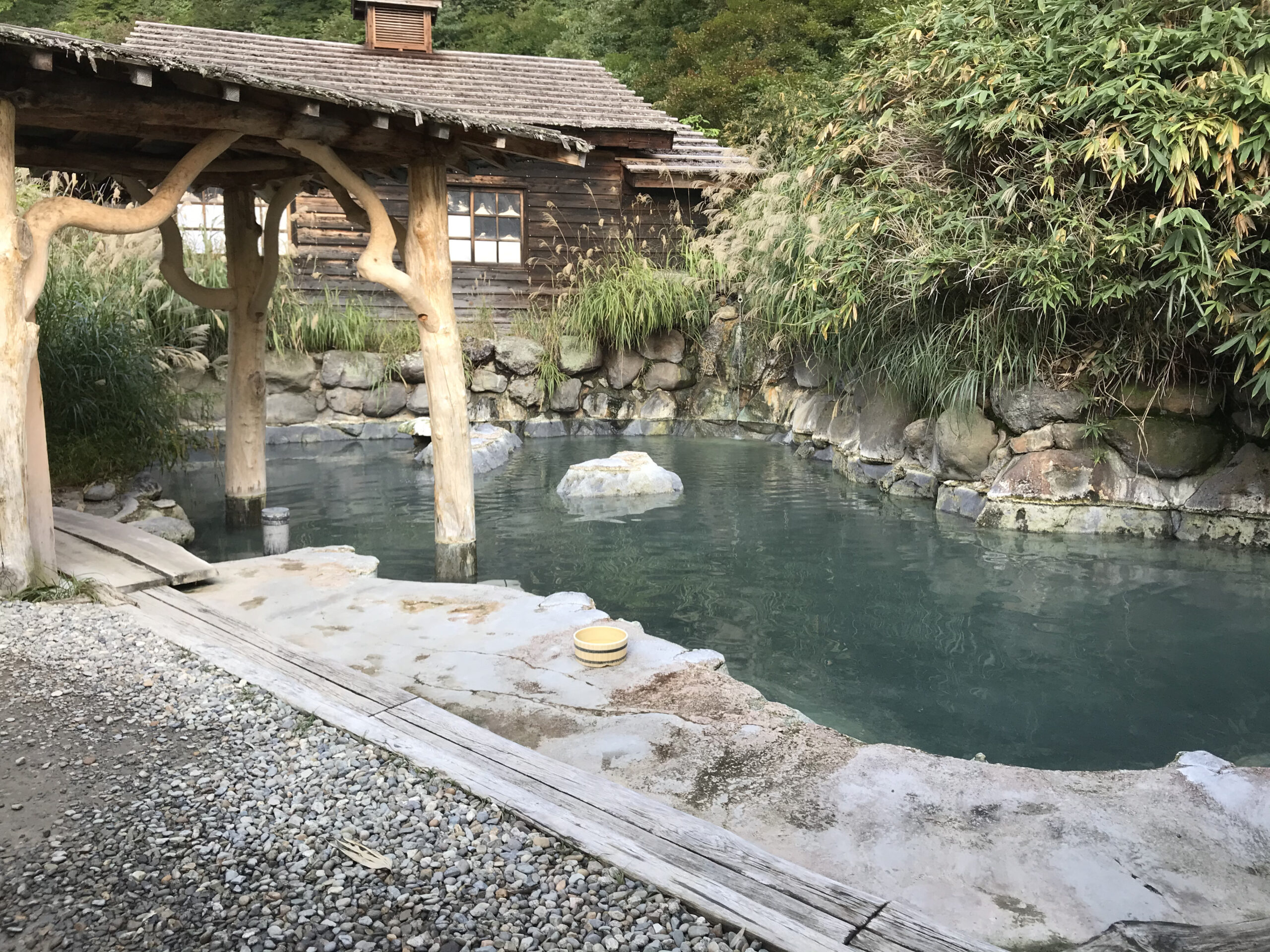
Left: By lantern light at night — one of the most magical bathing settings in Japan. Right: The bath temporarily clear just after Monday’s cleaning, before air contact turns the water milky again.
The large size keeps the temperature at a very comfortable warmth — ideal for long, unhurried soaks.
In the evening, hanging lanterns cast a golden glow across the steaming water. One hidden detail worth knowing: every Monday the bath is drained for cleaning.
When fresh spring water is added, it’s briefly completely transparent before turning milky.
A rare and beautiful sight — if you’re staying Sunday night, check Monday morning.
④ Private Indoor Bath (Overnight Guests Only)
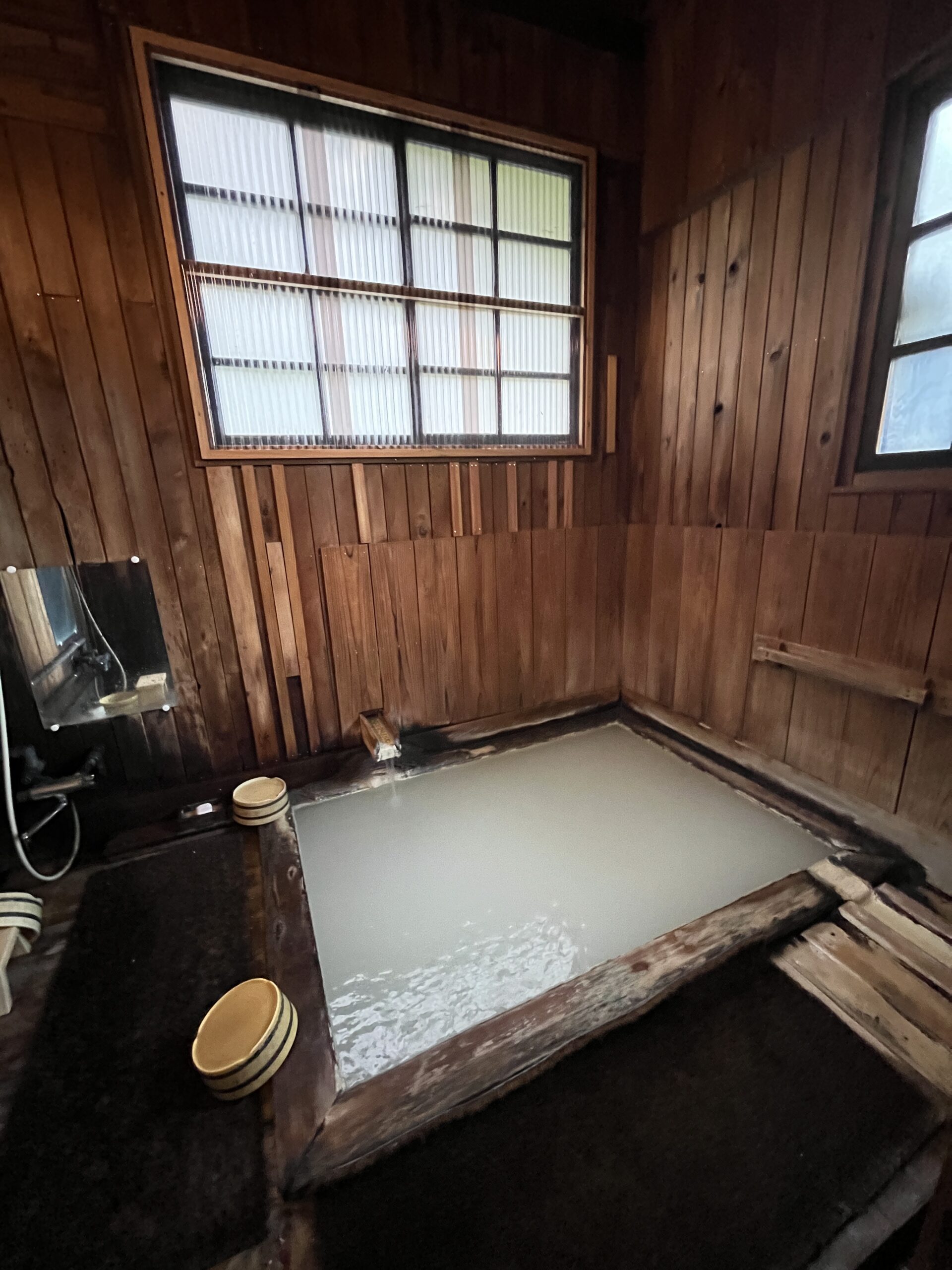
Overnight guests have access to a small gender-separated indoor bath using the Shiro-yu spring.
Quiet and unhurried, it’s the ideal choice for a late-night or early-morning soak when you want complete solitude.
⑤ Two Private Rental Baths — Kashikiri-buro (Overnight Guests Only)
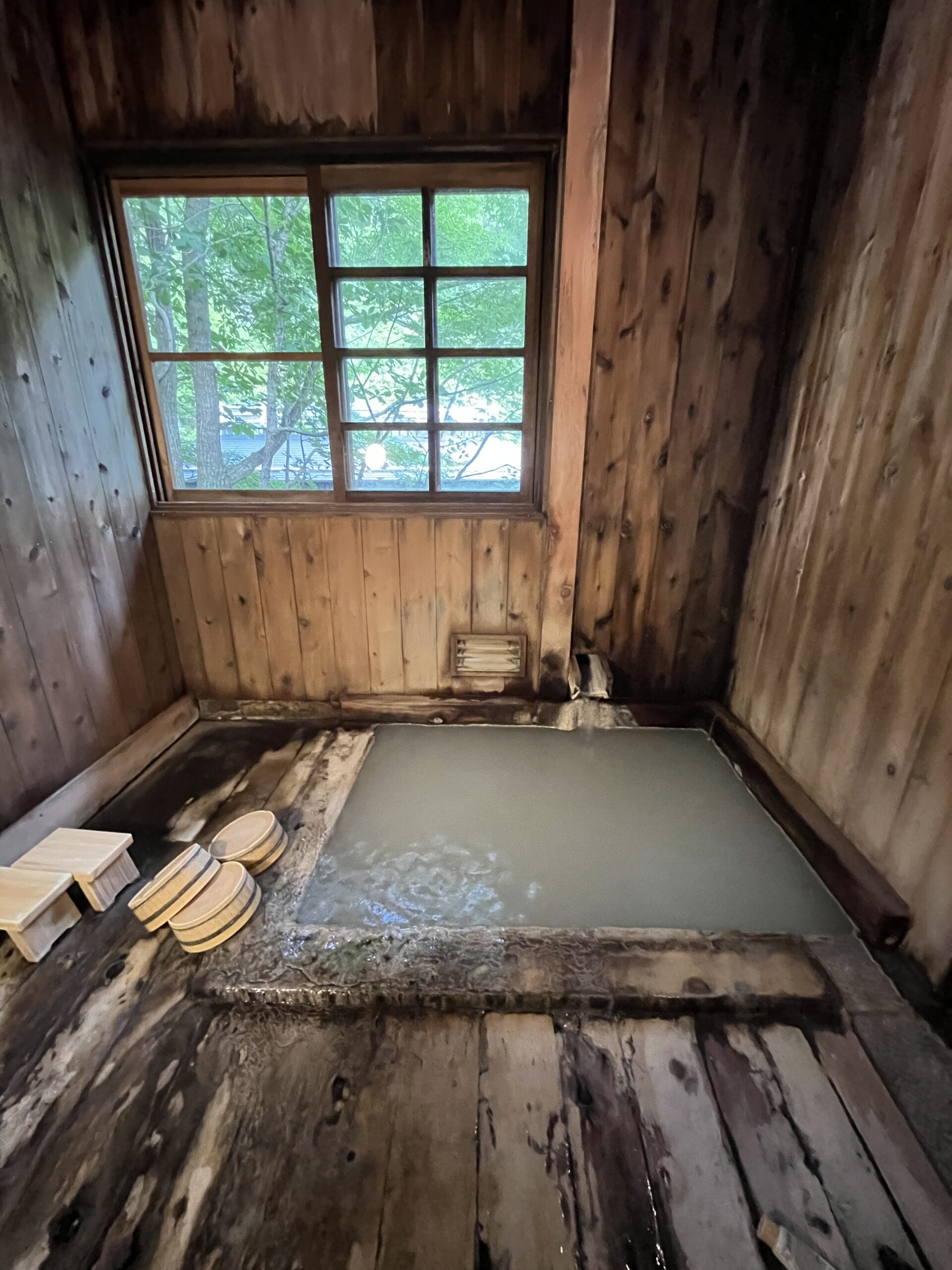
Two small private baths using the Kuro-yu spring are available to overnight guests at no extra charge — simply check if the door is unlocked.
These baths run notably hot with no cold water tap, so use the shower head to cool things down slightly.
⑥ Hidden Private Outdoor Bath (Overnight Guests Only) ★
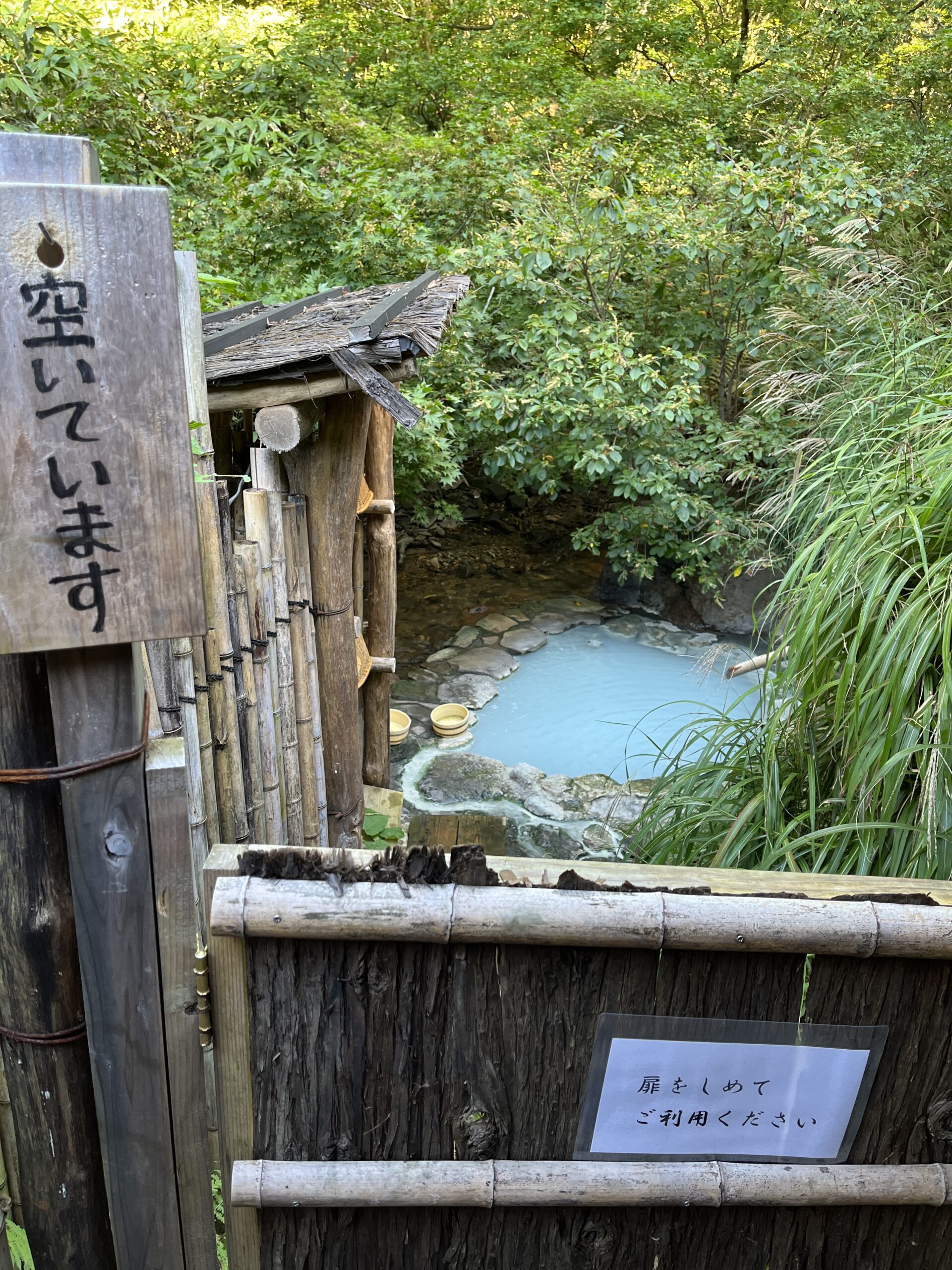
Here’s the detail most guests never discover: tucked away near the Higashi-Honjin wing, behind an unmarked door along a lantern-lit corridor, is a small private open-air bath.
There’s no sign outside and no mention of it at check-in.
Find the door on the ground floor of the east wing, flip the wooden plaque from “Vacant” to “In Use,” and it’s yours.
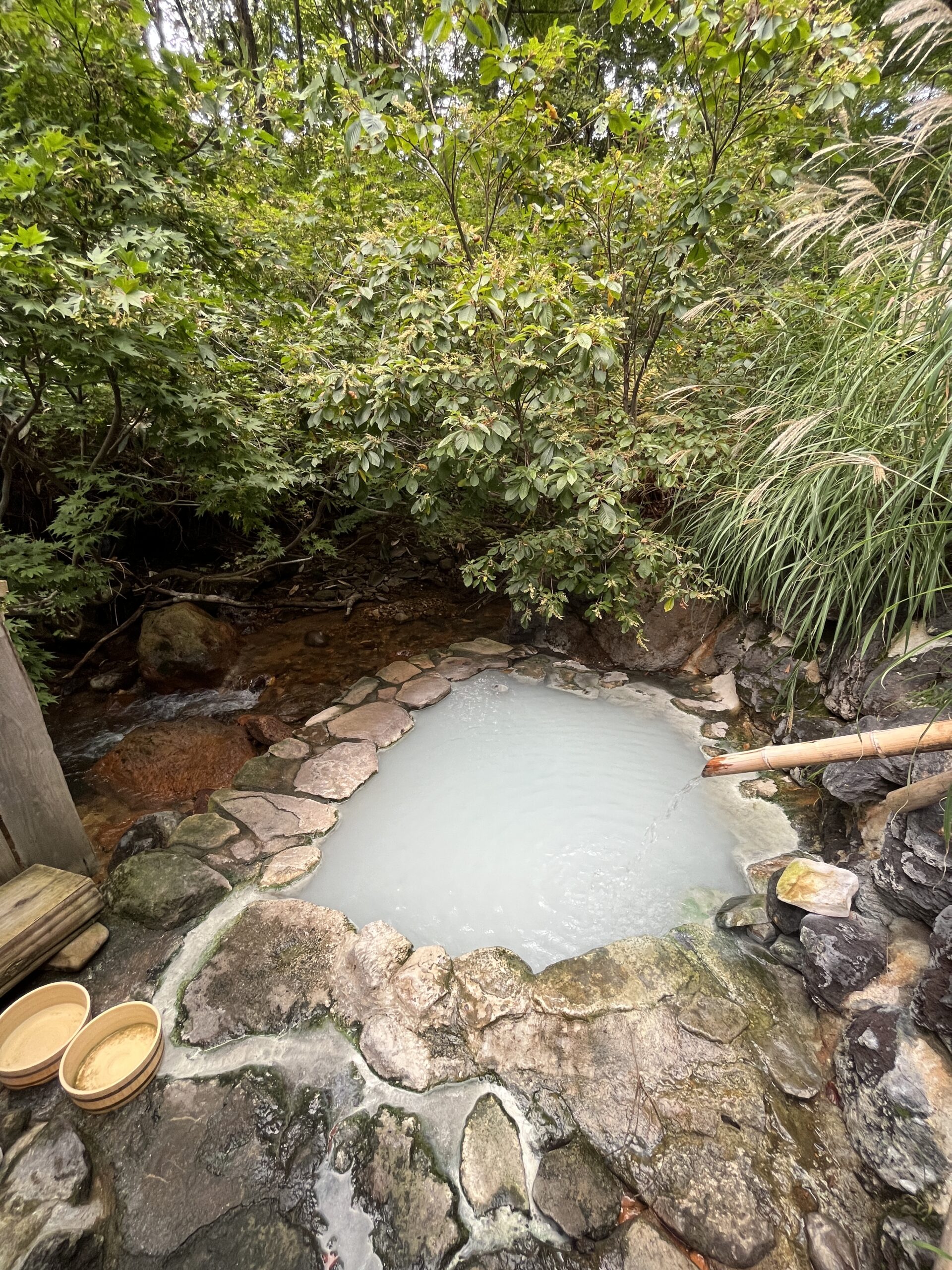
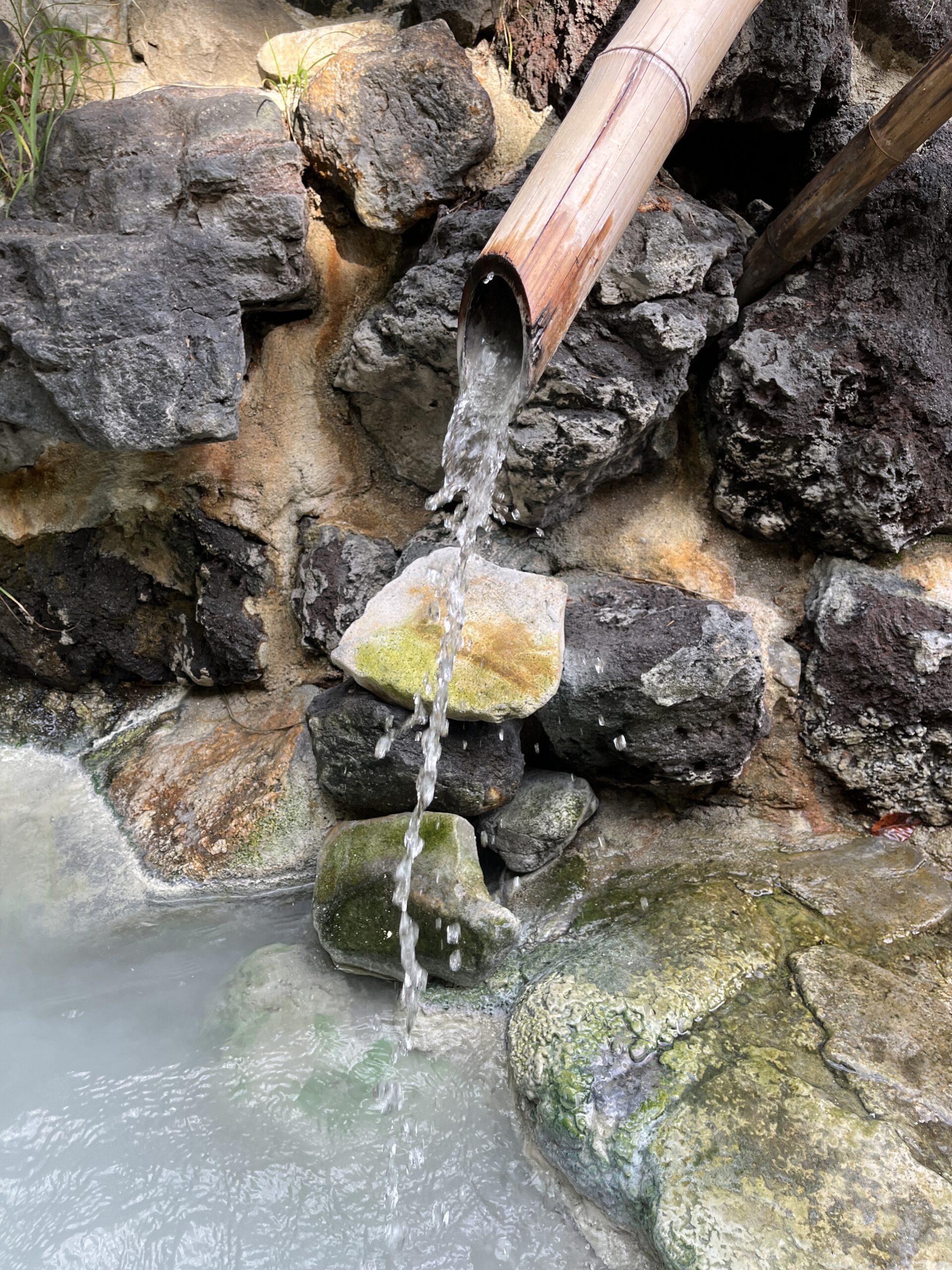
Left: A clear mountain stream flows just to the left of the bath. Right: Spring water arriving through a bamboo pipe — simple and perfect.
The view to the left is a mountain stream; the only sounds are flowing water and birdsong. Unlike the large communal outdoor bath, which can get lively during peak hours, this hidden spot is completely silent.
Spring water arrives through a bamboo pipe and runs slightly warm. This is genuinely one of the finest bathing experiences I’ve had anywhere in Japan. Don’t leave without finding it.
Dinner & Breakfast — Mountain Food Done Right
Both meals are included in virtually all overnight plans.
Depending on your room type, dinner is served in-room (most buildings) or in the main dining hall (Ni-go-kan, San-go-kan).
The food is simple, seasonal, and completely authentic to this mountain region.
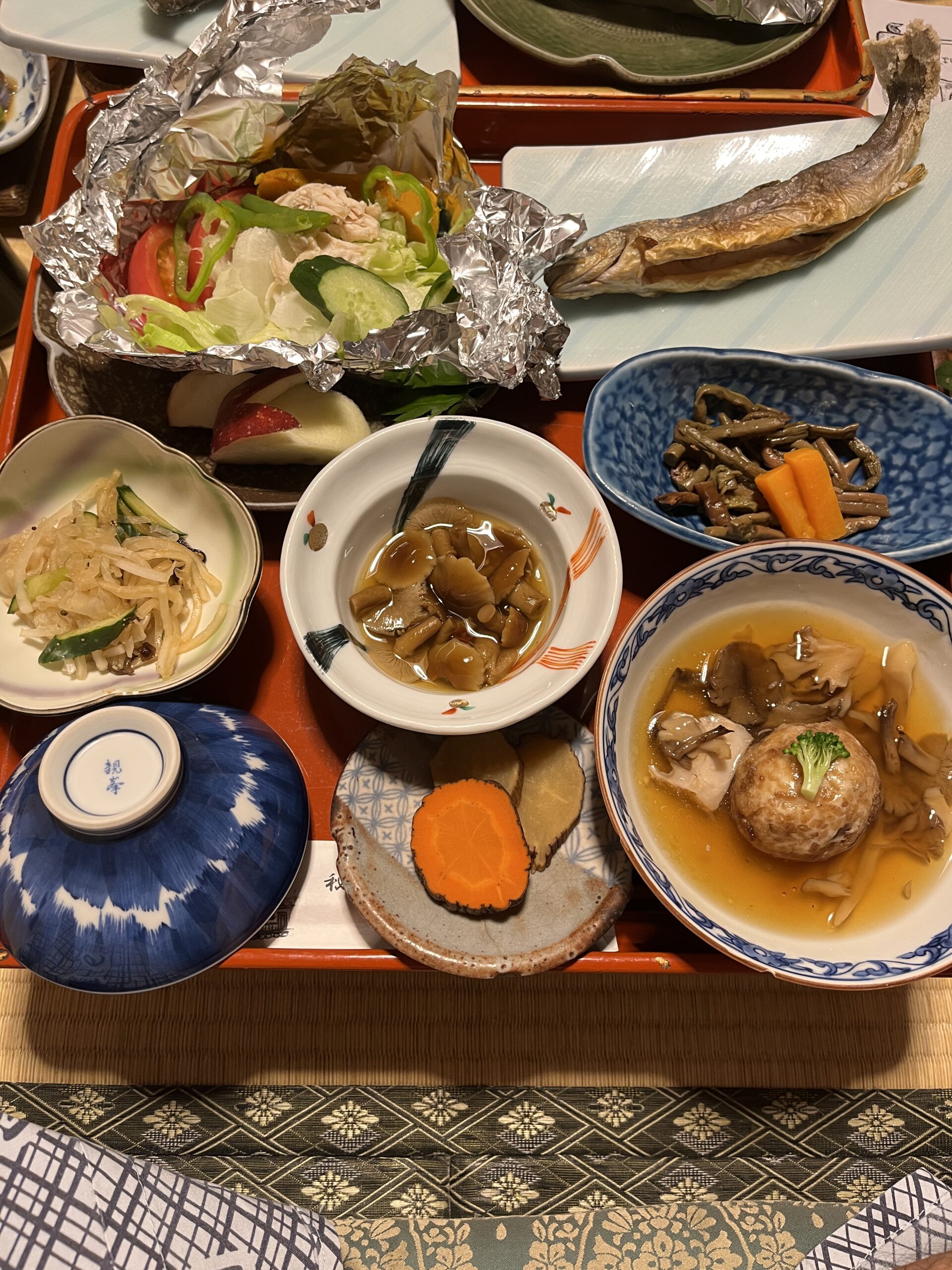
The table arrives covered in small dishes: zenmai (fiddlehead fern), grilled iwana (Japanese river char), nameko mushrooms, and Akita-style rice cakes.
On the side: iburi-gakko, the famous Akita smoked pickled daikon — smoky, crunchy, and completely unlike any pickle you’ve had elsewhere.
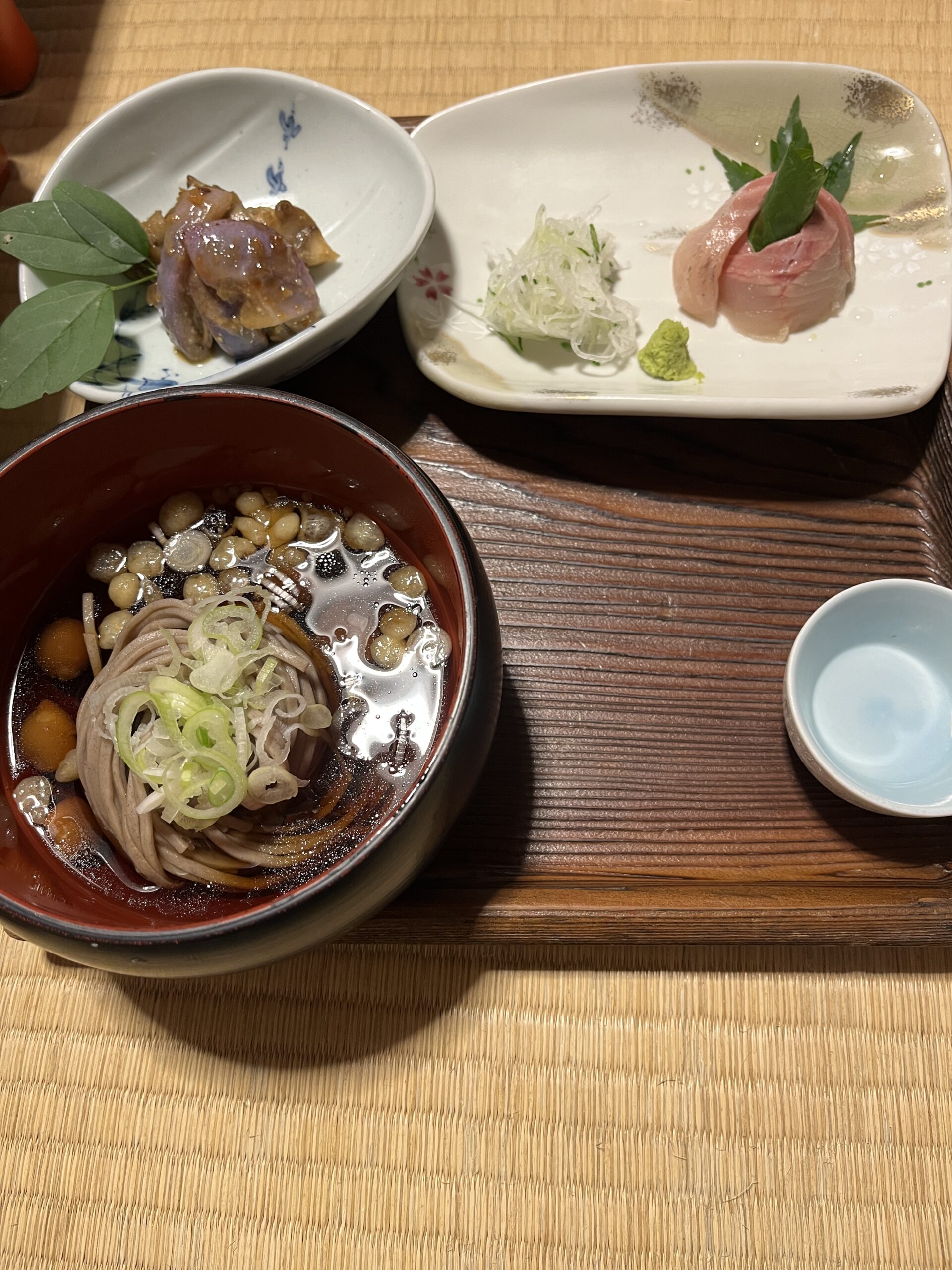
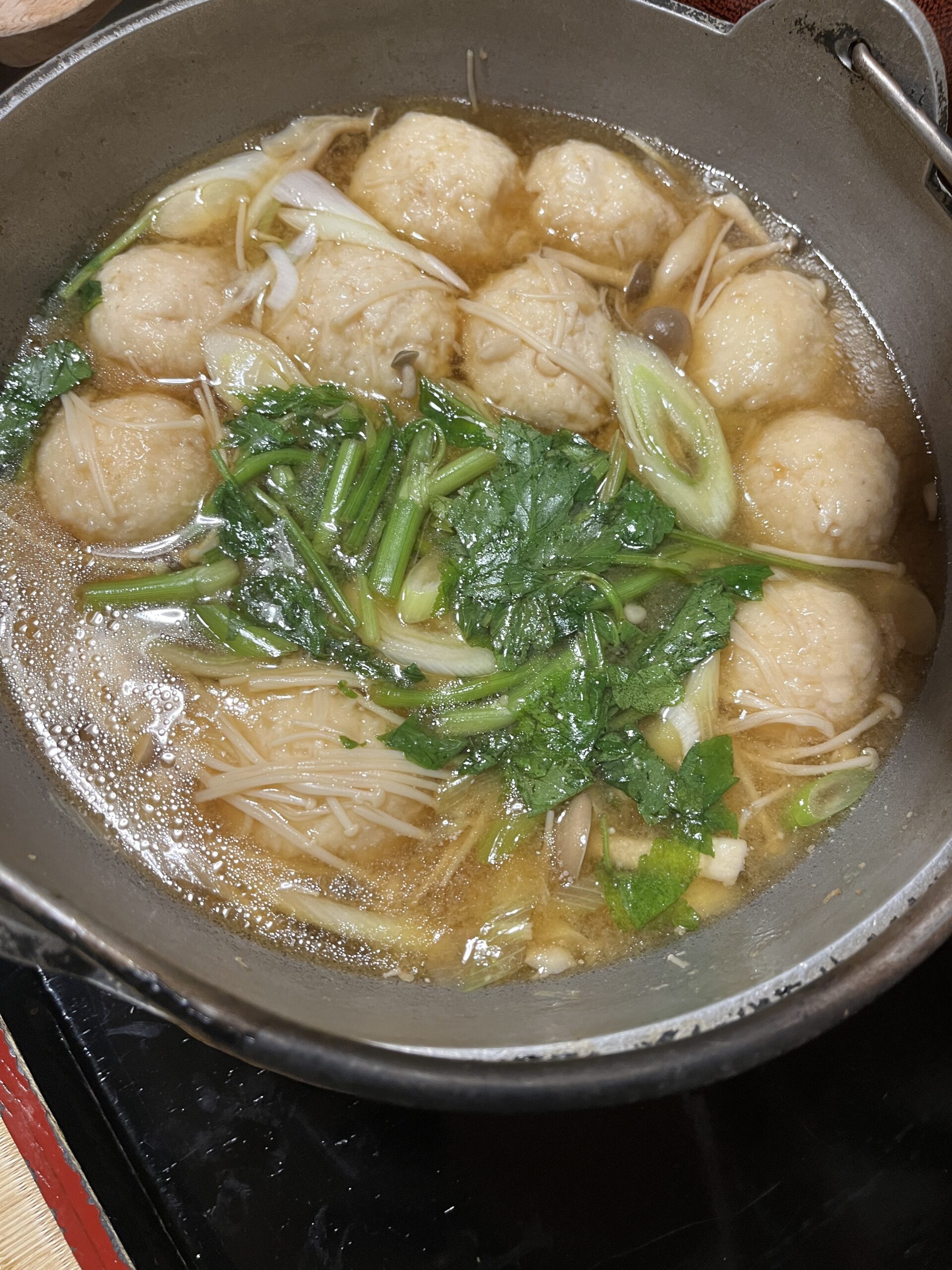
Left: Iwana sashimi and soba noodles in mushroom dashi broth — a second course of extraordinary depth. Right: The imo-nabe — Tsurunoyu’s signature dish and, without exaggeration, one of the best things I’ve eaten in Japan.
And then, the centrepiece: imo-nabe, Tsurunoyu’s signature hot pot.
Silky mountain yam dumplings in a miso-based broth with mushrooms and seri (Japanese parsley), the liquid rich with umami and — I’m fairly convinced — a secret touch of butter.
The dumplings are soft and dense in a way that’s difficult to describe; they’ve absorbed the entire flavour of the mountains.
I have thought about this dish since every visit.
🍲 About Imo-nabeImo-nabe (芋鍋)
is a regional hot pot dish from Akita using yamaimo (Japanese mountain yam), shaped into small dumplings and simmered in a miso-based broth with seasonal mountain vegetables and mushrooms. Tsurunoyu’s version has been refined over generations and is considered the definitive expression of this local dish.
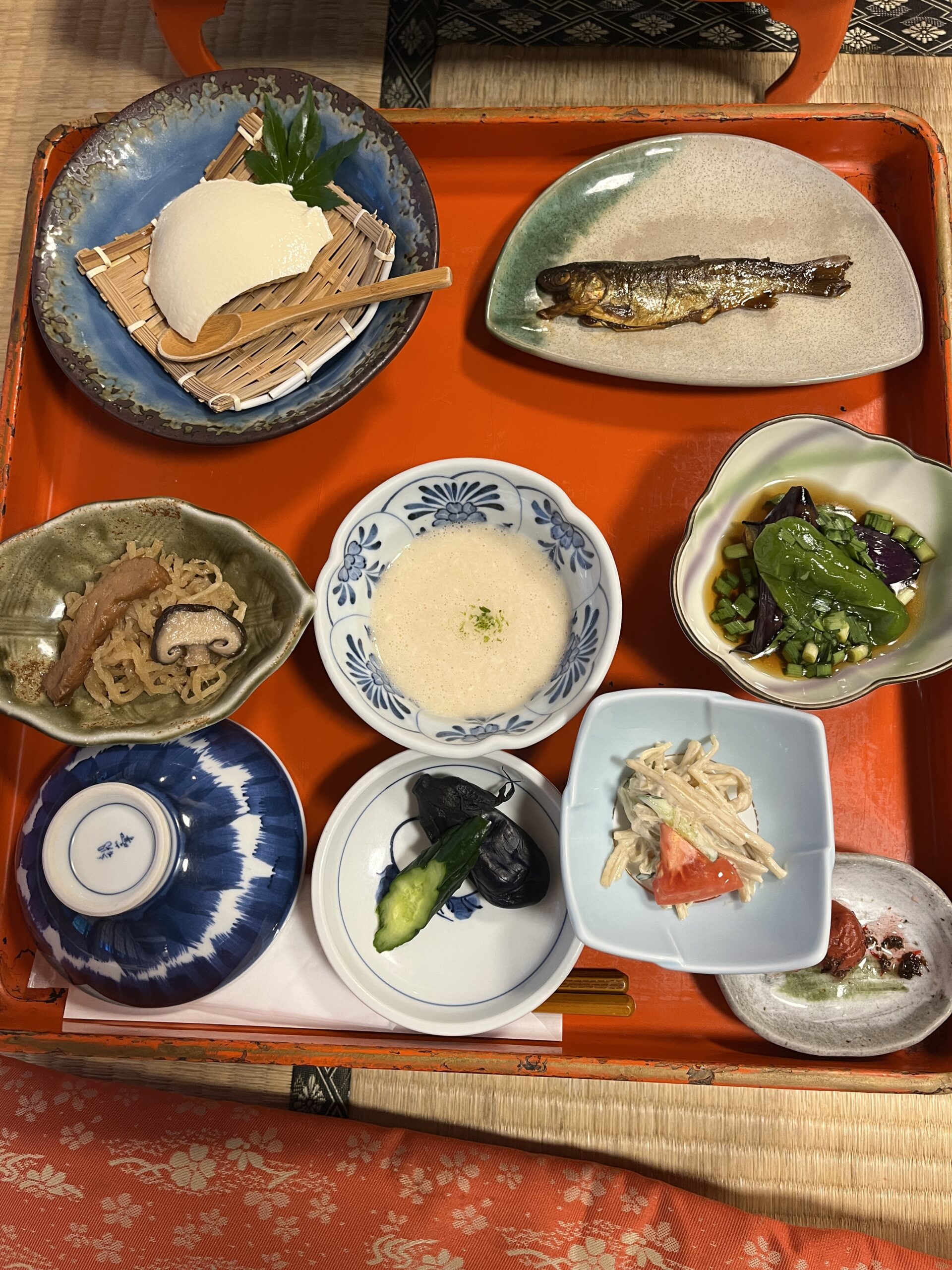
Breakfast is served in the main building: grilled fish, pickles, tofu, miso soup, and freshly cooked rice.
The highlight is tororo — grated raw mountain yam poured over rice — silky, lightly savory, and easy enough to eat that you’ll want seconds.
The perfect start to a morning of more bathing.
Final Thoughts
Tsurunoyu is not for everyone — and that’s precisely what makes it special. No air conditioning, no TV, patchy internet, rustic rooms.
But if you are drawn to Japanese hot spring culture in its most genuine, unfiltered form, this place will exceed every expectation.
I’ve returned more times than almost any other inn in Japan. Each visit leaves me feeling genuinely restored. It is, without question, a place worth building a trip around.
Tsurunoyu is a perfect fit if you:
- Want to experience authentic Edo-period atmosphere in a working historic inn
- Are a hot spring enthusiast who wants to compare multiple distinct spring sources in one stay
- Are looking for a genuinely romantic, lantern-lit evening deep in the Japanese mountains
- Need a complete break from screens and city noise — a true digital detox
▼Book your stay▼