
This article contains advertisements
Nyuto Onsen Village’s most famous inn, Tsurunoyu, is known worldwide for its thatched roofs, its vast mixed-gender outdoor bath, and its signature potato hot pot — a place that draws crowds even among people who’ve never set foot in a Japanese hot spring before.
What’s less known is that Tsurunoyu has a quieter sibling a short drive away: Yamanoyado, an annex built in 1994 that trades the main inn’s bustle for something calmer — three private baths available essentially around the clock, and meals cooked over an open hearth.
Why Yamanoyado stands out:
- Three private baths (two indoor, one outdoor) available nearly 24 hours a day
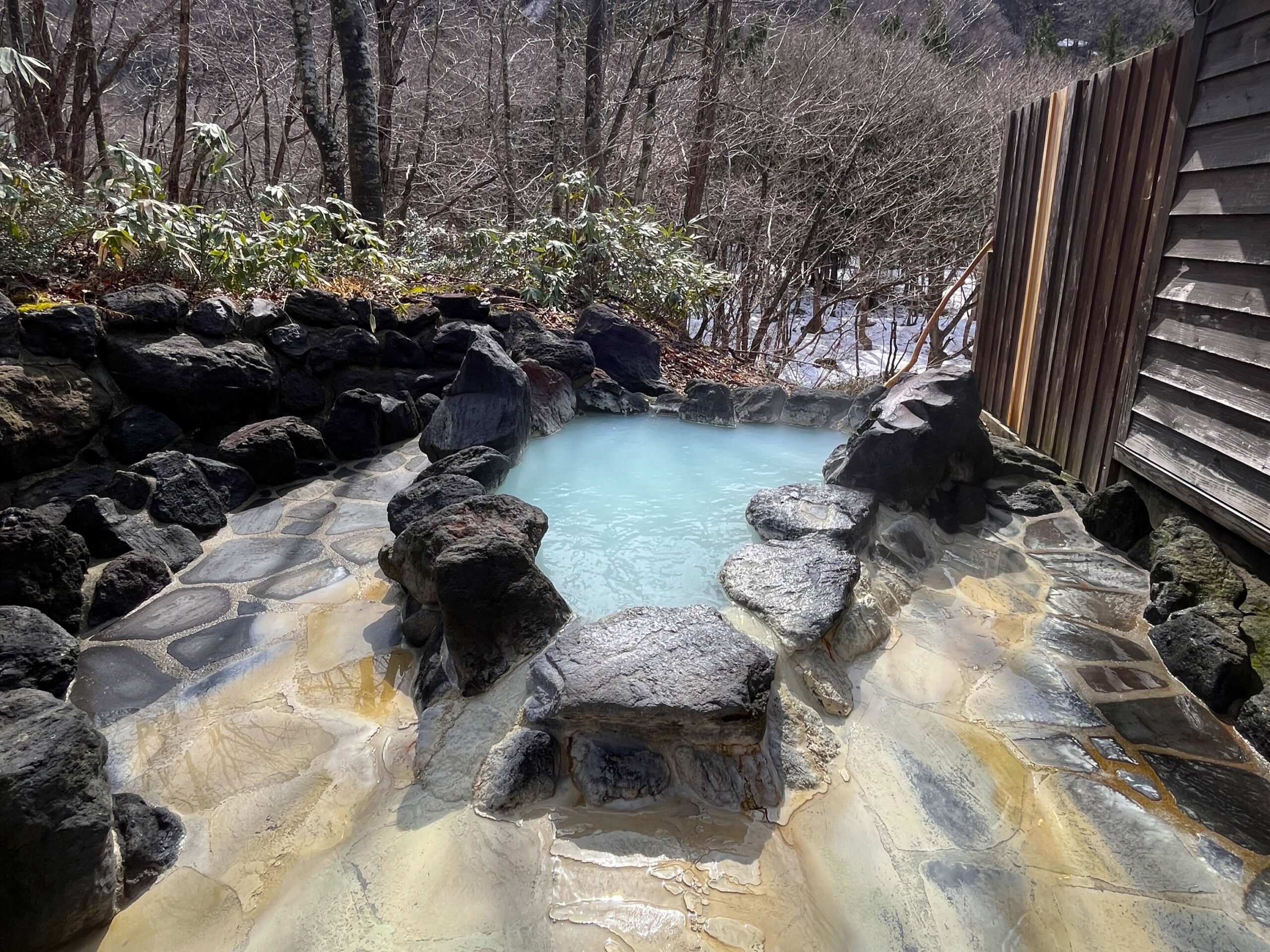
- A gentle, sky-blue-tinted sulfur spring kept deliberately lukewarm — ideal for long, unhurried soaks
- Dinner and breakfast cooked and served around a traditional irori hearth
- A genuinely quiet, no-day-trippers atmosphere, distinct from the busier main Tsurunoyu
- Free shuttle access to the famous baths at the main Tsurunoyu inn
If you want to experience the heart of Nyuto Onsen in a quieter setting, Yama-no-Yado is the perfect choice.
Tsurunoyu Annex “Yamanoyado”
| Address | 1 Yunotai, Tazawako Obonai, Semboku City, Akita 014-1201, Japan |
| Phone | +81-187-46-2100 |
| Official Website | Tsuru-no-yu Onsen, Yamanoyado Annex, Nyuto Onsen Village, Akita’s Hidden Hot Spring |
| Day-use Bathing | Not available |
| Check-in Check-out | 15:00 – 19:00 By 10:00 |
| Credit Cards Accepted | VISA, MasterCard |
| Room Rates | From 18,700 JPY per night (including dinner and breakfast) For single occupancy, an additional 50% will be charged. |
▼Book your stay▼
Getting There from Tokyo — Access Guide
Yamanoyado shares the same general access route as the main Tsurunoyu, deep in the mountains of Nyuto Onsen Village — though as the annex, it sits a little further off the main road, down its own narrower approach.
🚄 By Train + Bus/Taxi (Recommended)
Take the Akita Shinkansen “Komachi” from Tokyo (Ueno) to Tazawako Station (approx. 3 hours). From Tazawako Station, either take the Tazawako Kogen Resort bus toward Nyuto Onsen and get off near Tsurunoyu, then arrange a short taxi transfer to Yamanoyado, or take a taxi the entire way from the station (roughly 30 minutes). Total travel time from Tokyo: approximately 4–4.5 hours.
🚗 By Car
Exit at Tazawako IC on the Akita Expressway, head toward Lake Tazawa, then follow Prefectural Route 149 north into the mountains. A sign for Tsurunoyu marks a left turn onto a narrower mountain road; continuing further, a separate sign for “Yamanoyado” marks the turn to the annex. The road isn’t especially tight, but first-time drivers on rural Japanese mountain roads should take it slowly. Parking is informal — there’s no strict designated lot, but open space is available near the entrance.
| Route | Tokyo (Ueno) → Tazawako Station → Nyuto Onsen → Yamanoyado |
|---|---|
| Train | Akita Shinkansen “Komachi” to Tazawako Station (~3 hrs) |
| From Tazawako Station | Resort bus toward Nyuto Onsen + short taxi, or taxi direct (~30 min) |
| JR Pass | ✅ Shinkansen portion covered (local bus/taxi not included) |
A Newer Building That Feels Like It’s Always Been There
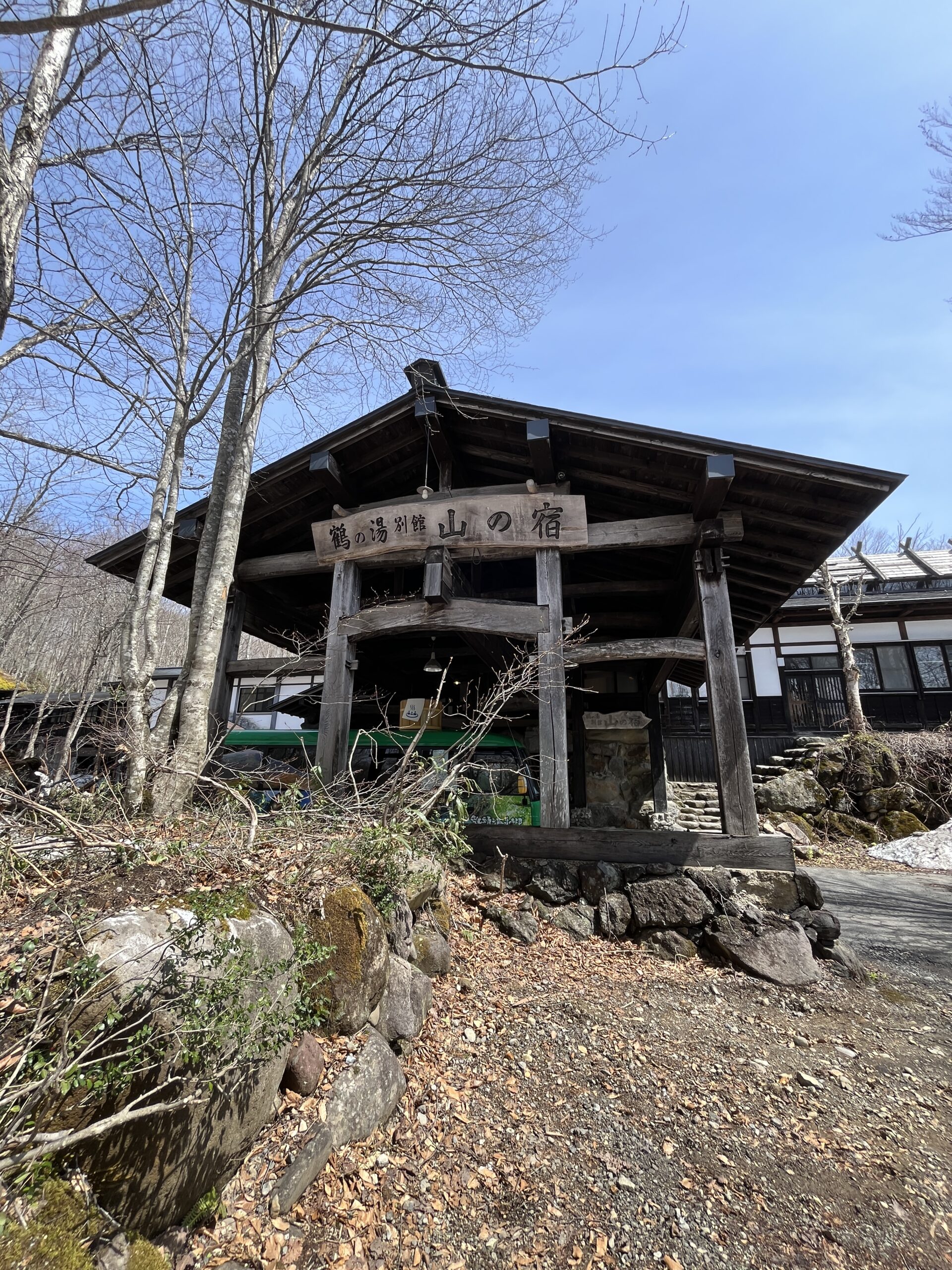
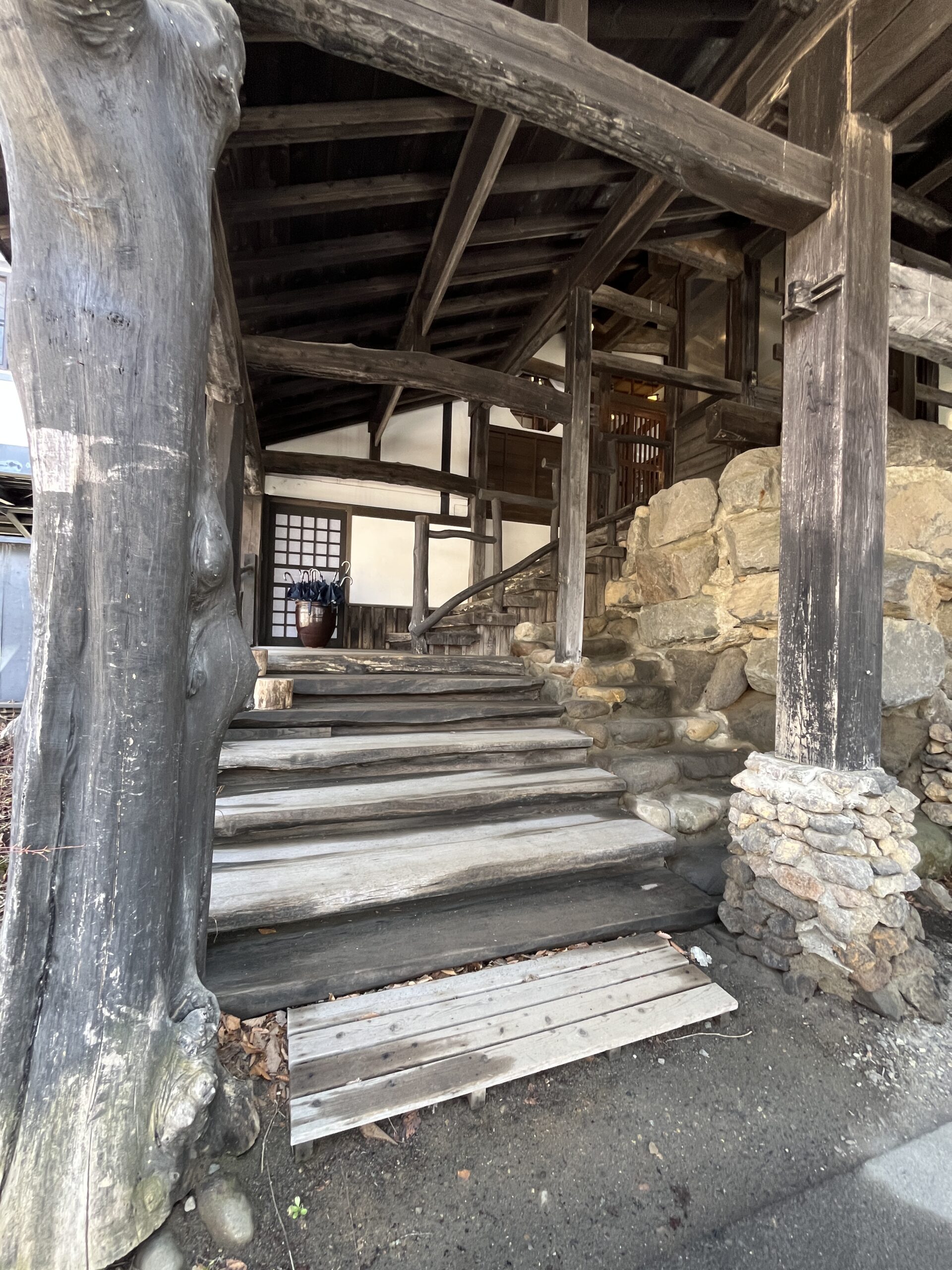
Left: Yamanoyado’s exterior, its thatched-style roof echoing the main Tsurunoyu inn. Right: The wooden entrance staircase, full of atmosphere despite the building’s relatively recent construction.
Yamanoyado opened in 1994 — young by the standards of Nyuto Onsen Village’s centuries-old inns — but its architecture blends into the surrounding forest so naturally that it feels far older. Inside, long wooden corridors, lanterns from the Association for the Preservation of Japan’s Hidden Hot Springs, and a hushed, unhurried atmosphere set the tone for the rest of the stay.
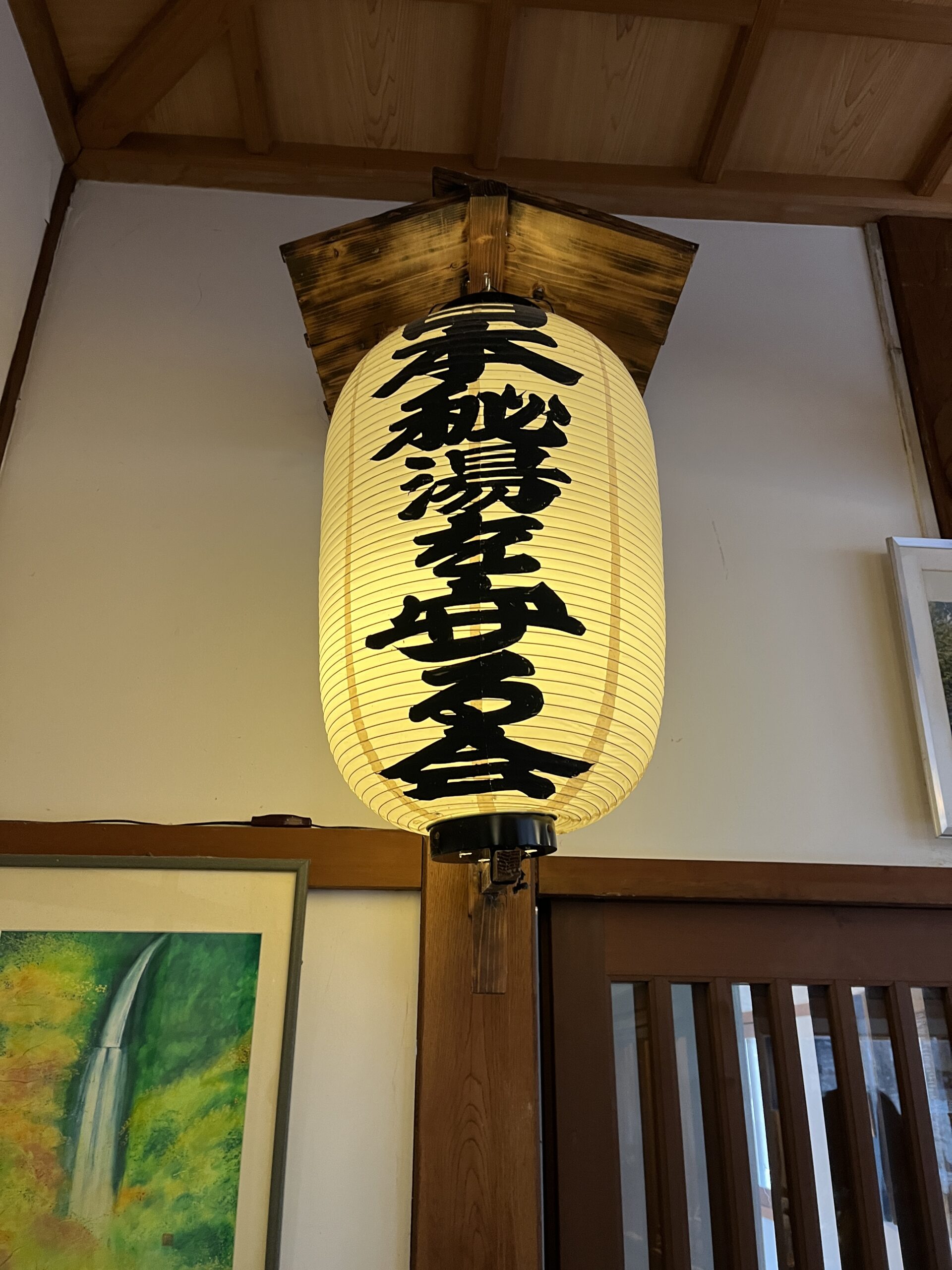
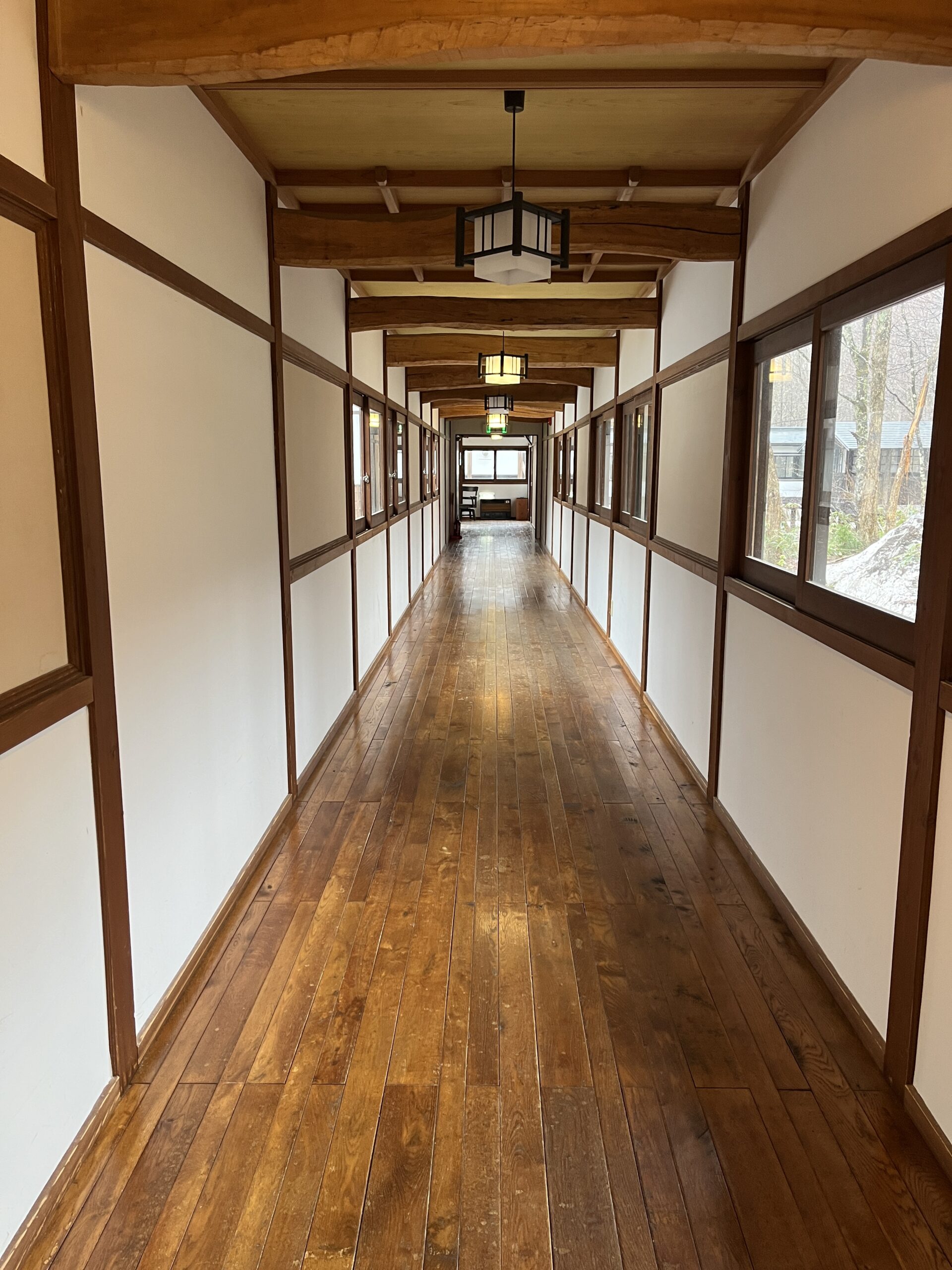
Left: Lanterns marking Yamanoyado’s membership in Japan’s Hidden Hot Spring Preservation Association — a mark of authenticity found at many of the country’s most remote inns. Right: A long, quiet corridor typical of the building’s calm atmosphere.
♨ What is the Hidden Hot Spring Preservation Association?
Nihon Hitou wo Mamoru Kai is a nationwide association of roughly 180 remote, rustic ryokan that have pledged to preserve their traditional character and natural surroundings. A lantern bearing this mark, as seen throughout Yamanoyado, is generally a reliable sign of an authentic, source-fed hot spring experience.
The Rooms
| Toilet | En suite (in-room) |
|---|---|
| Refrigerator | Available |
| Air Conditioning | Not available (heating provided) |
| Wi-Fi | Available |
| Television | Not available |
| Towels & Yukata | Provided |
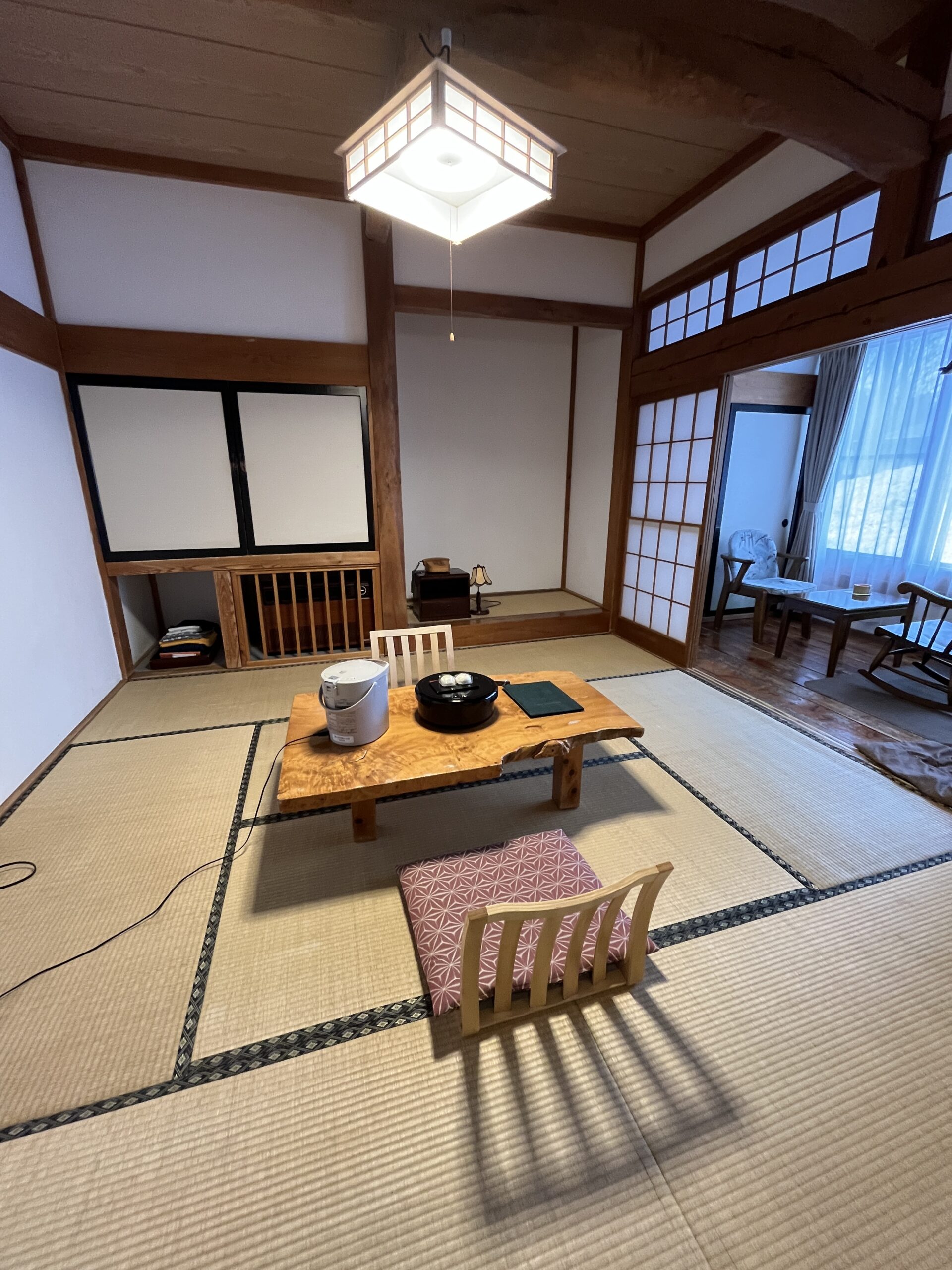
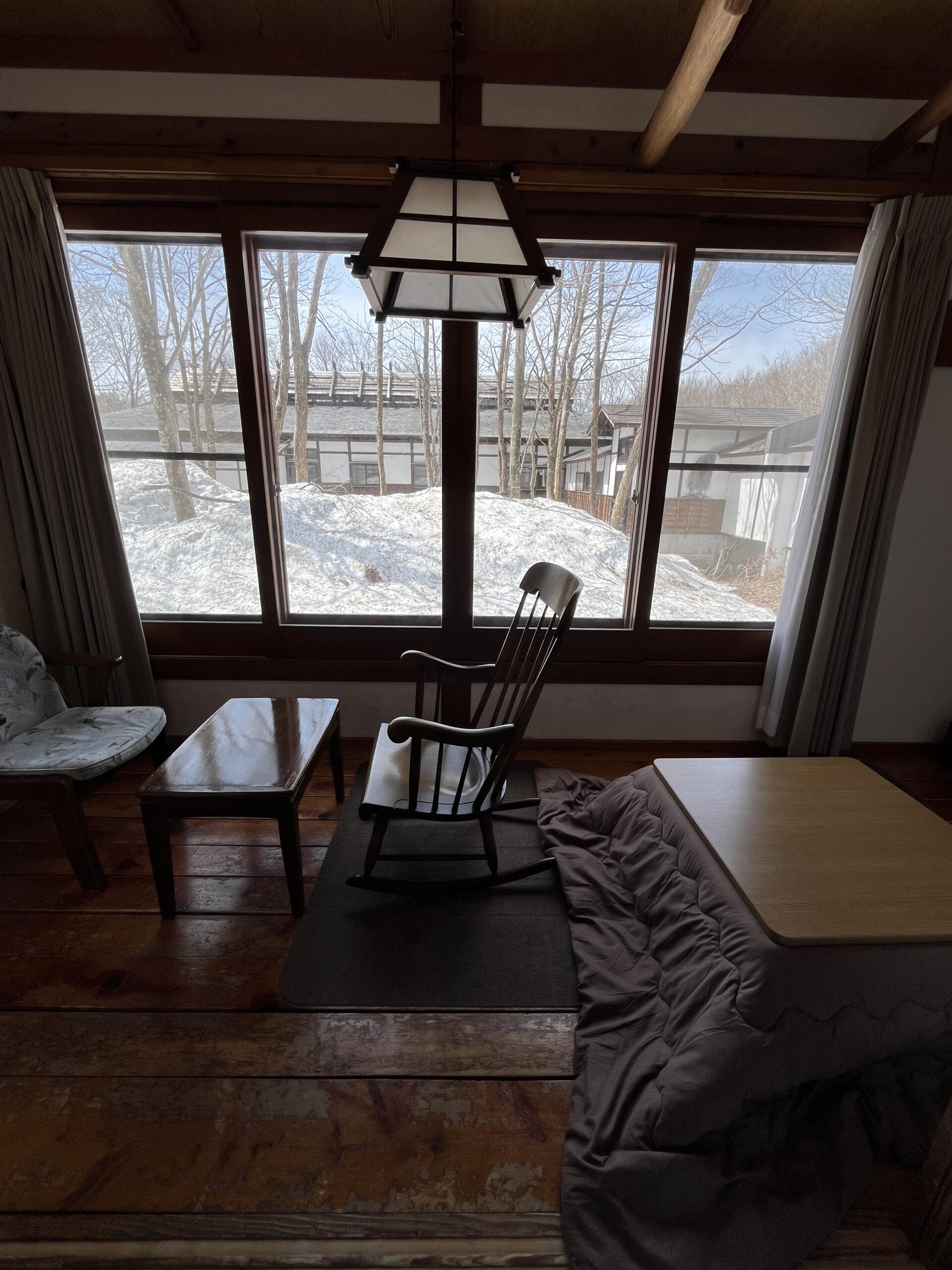
Left: A simple, spacious tatami room — no television, in keeping with the main Tsurunoyu’s understated style. Right: A window seat and a horigotatsu (sunken kotatsu table with a recessed floor well) — a cozy spot, especially useful in winter.
Rooms are unpretentious but well-kept, with a refrigerator and heating covering the essentials — there’s no air conditioning, though the mountain air keeps summer nights comfortable regardless.
Each room has its own small toilet and bath, though with three atmospheric private baths available elsewhere in the building, almost no one uses the in-room bath.
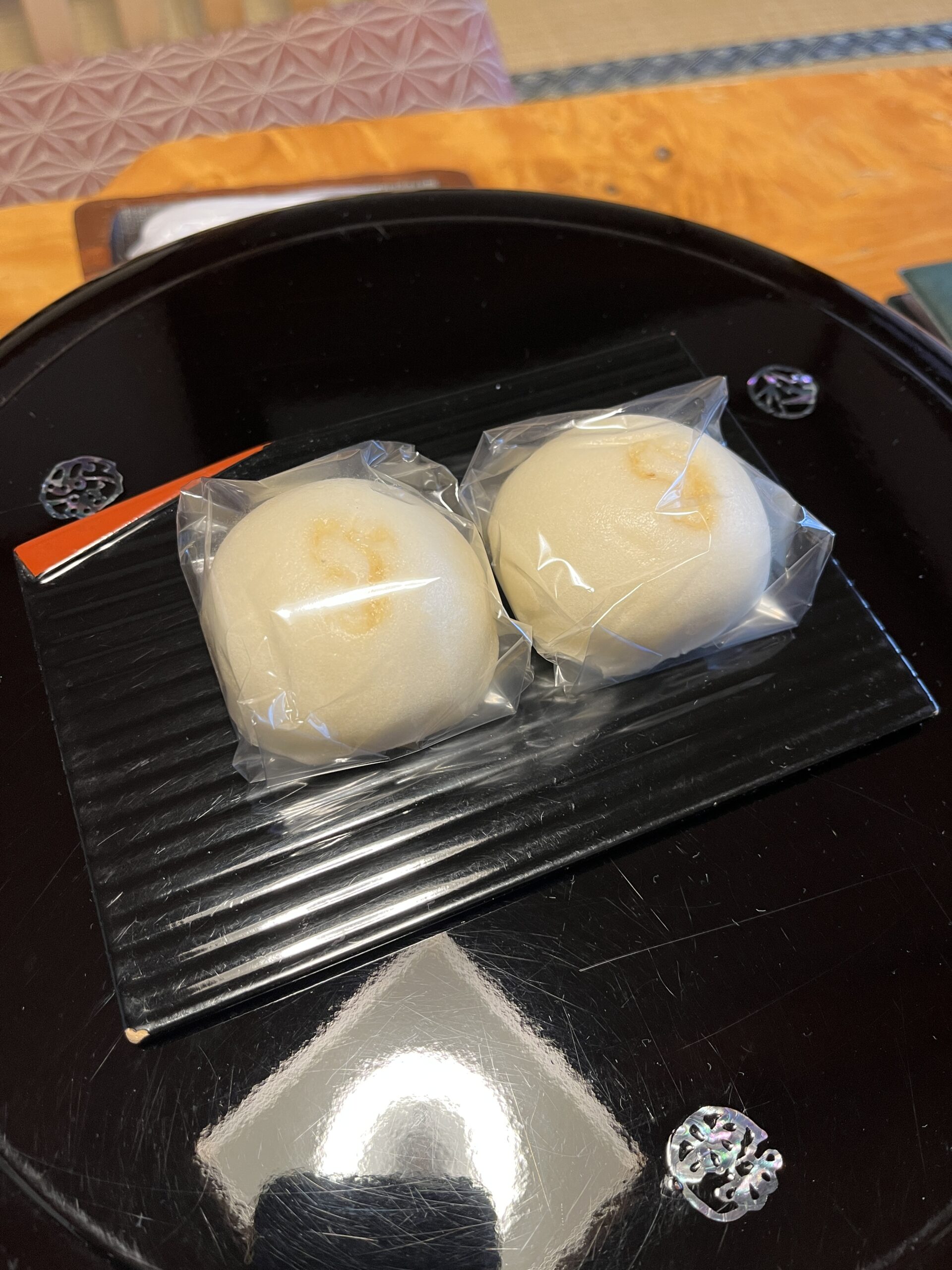
On the table, look out for Tsuru-man, a manju (sweet bun) made with local mountain yam and filled with smooth, mildly sweet red bean paste — genuinely good, and available to buy as a souvenir if you like it.
The Hot Springs — A Gentle, Sky-Blue Sulfur Spring
As of this visit, Yamanoyado offers three private baths — two indoor and one outdoor — all fed by water piped in from the main Tsurunoyu inn’s source.
Bathing hours run from 15:00 to 11:00 the following morning, effectively around the clock. Each bath is marked by a wooden sign with an attached key; take the sign with you to indicate the bath is occupied, and lock the door behind you for privacy.
Indoor Baths — Two Mirror-Image Rooms
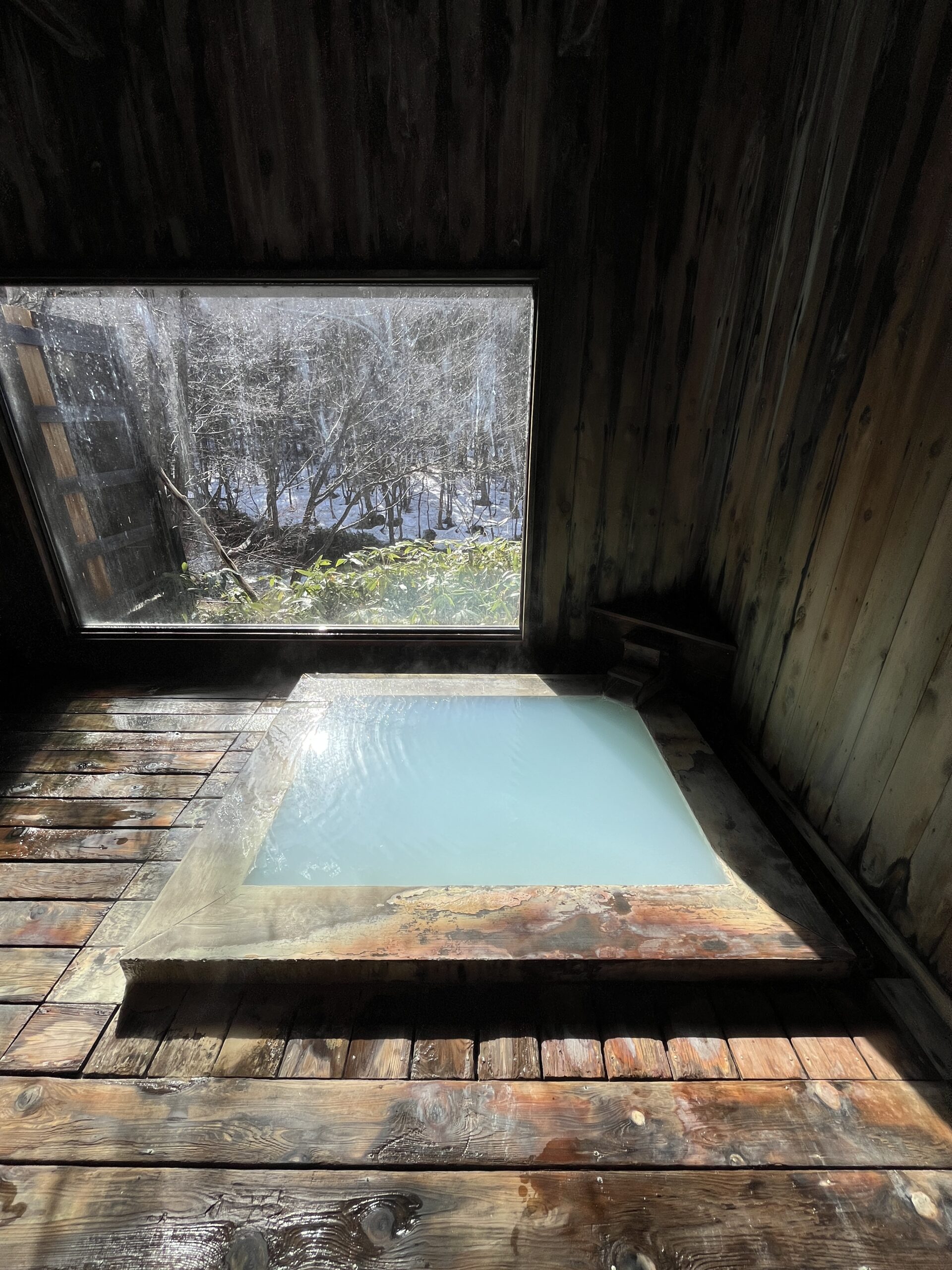
The two indoor baths are near-identical, mirror-image rooms, each with continuously overflowing, milky-white water carrying a delicate blue tint.
In the cooler months, the water settles at a genuinely luxurious 38–39°C — warm enough to relax in, cool enough to stay for a very long time without overheating.
A soft white film sometimes forms on the surface, a natural feature of the mineral-rich water rather than anything to be concerned about.
Open-Air Bath — Birdsong and Mountain Air
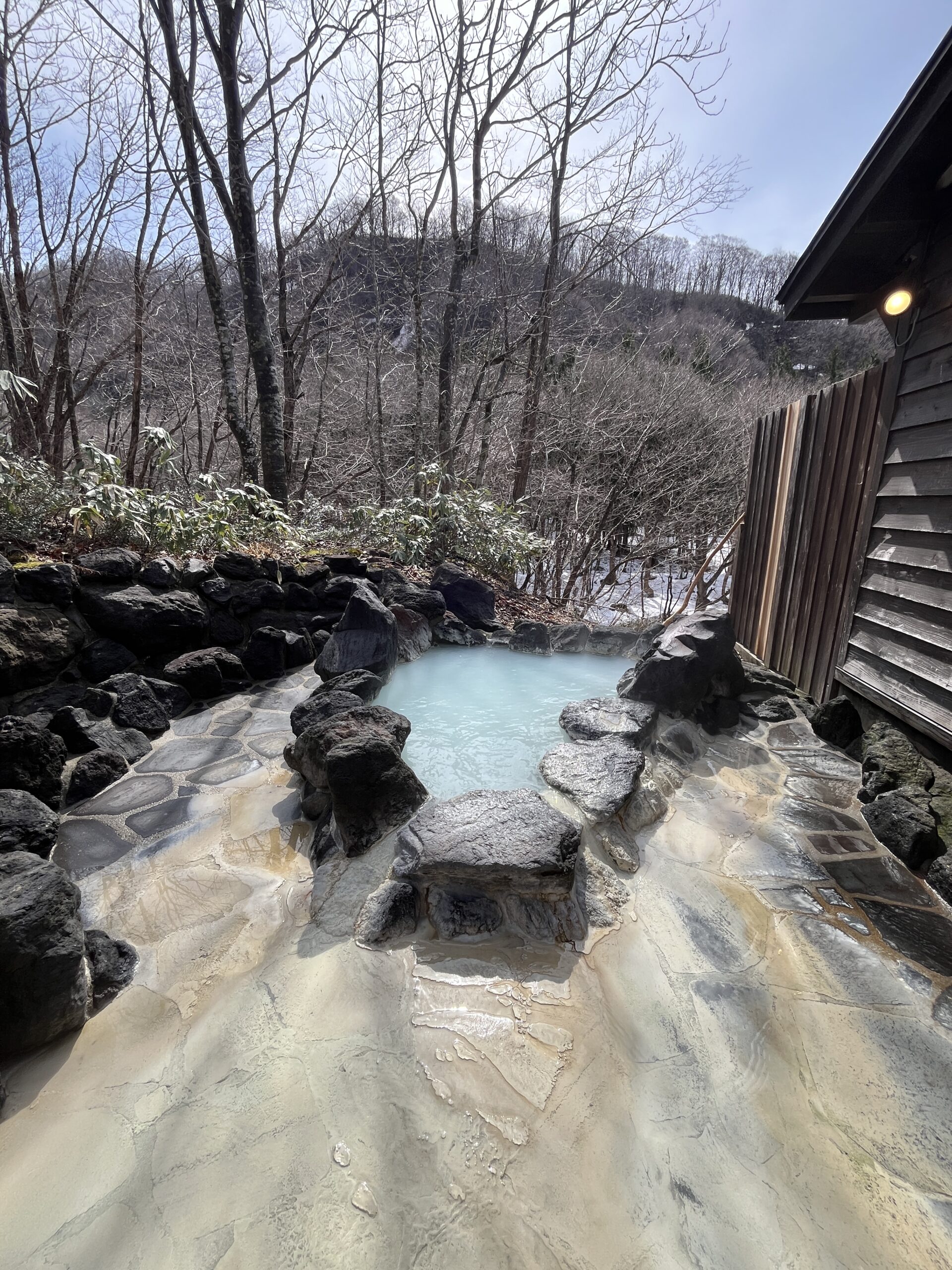
The single open-air bath is a simple stone pool surrounded by forest, sharing the same gentle blue-white water and lukewarm temperature as the indoor baths.
A morning soak here, with birdsong overhead and cool mountain air on your skin, is arguably the highlight of a stay at Yamanoyado — a genuinely peaceful way to start the day.
A second outdoor bath exists on the property but was out of service at the time of writing.
Dining — Cooked and Served Around an Irori Hearth
Both dinner and breakfast are served around a traditional irori (sunken hearth), adding a rustic, communal warmth to the meal that suits the mountain lodge setting perfectly. Guests can choose their preferred seating time for both meals: dinner at 18:00, 18:30, or 19:00, and breakfast at 7:00, 7:30, or 8:00.
🔥 What is an Irori?
An irori is a traditional sunken hearth set into the floor, historically used for both heating and cooking in Japanese mountain homes. At inns like Yamanoyado, guests often finish grilling their own food over the embers — skewered fish, meat, or vegetables — adding an interactive, communal element that’s rare at more conventional ryokan.
Dinner — Mountain Vegetables and Tsurunoyu’s Signature Potato Hot Pot
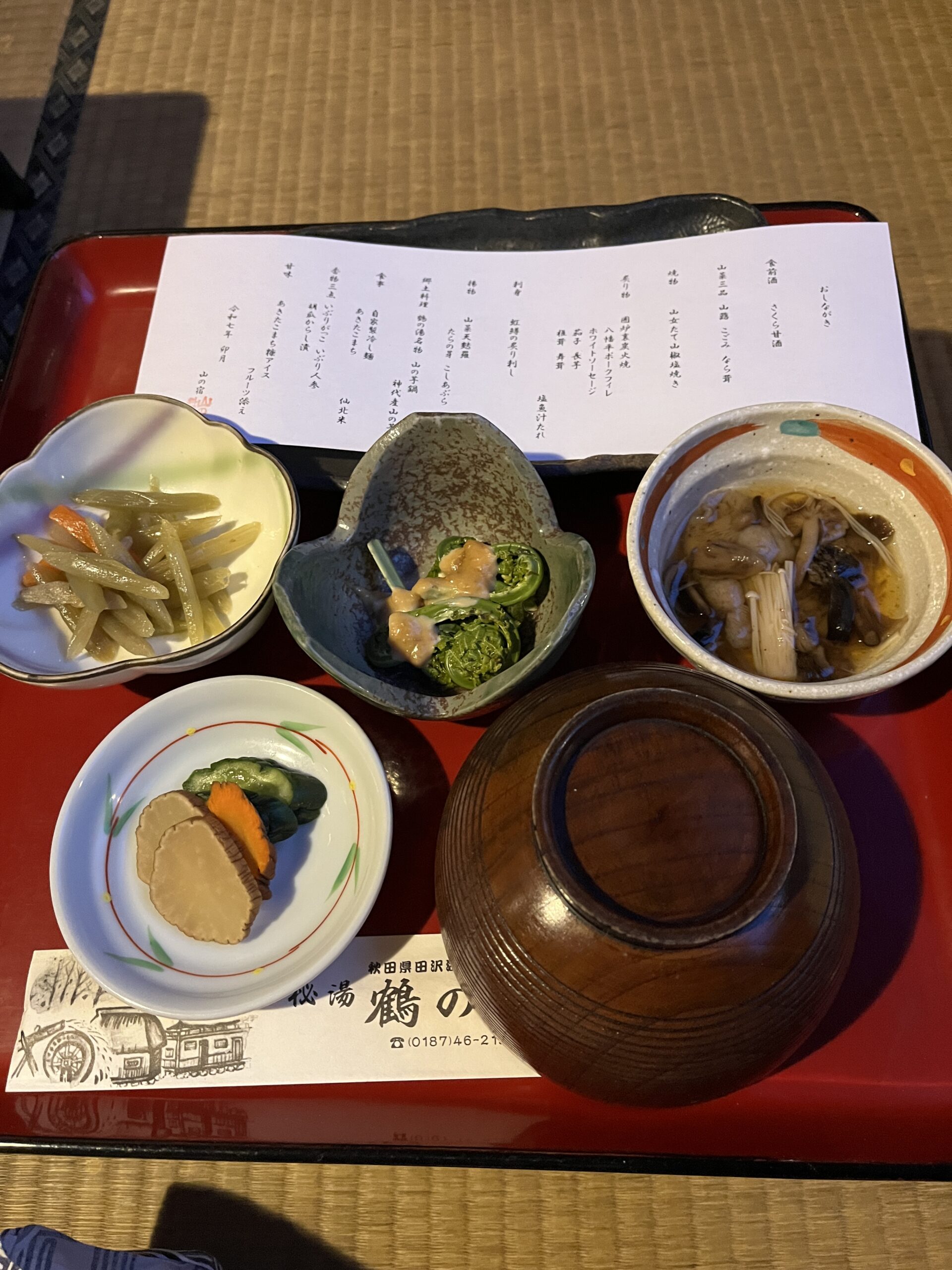
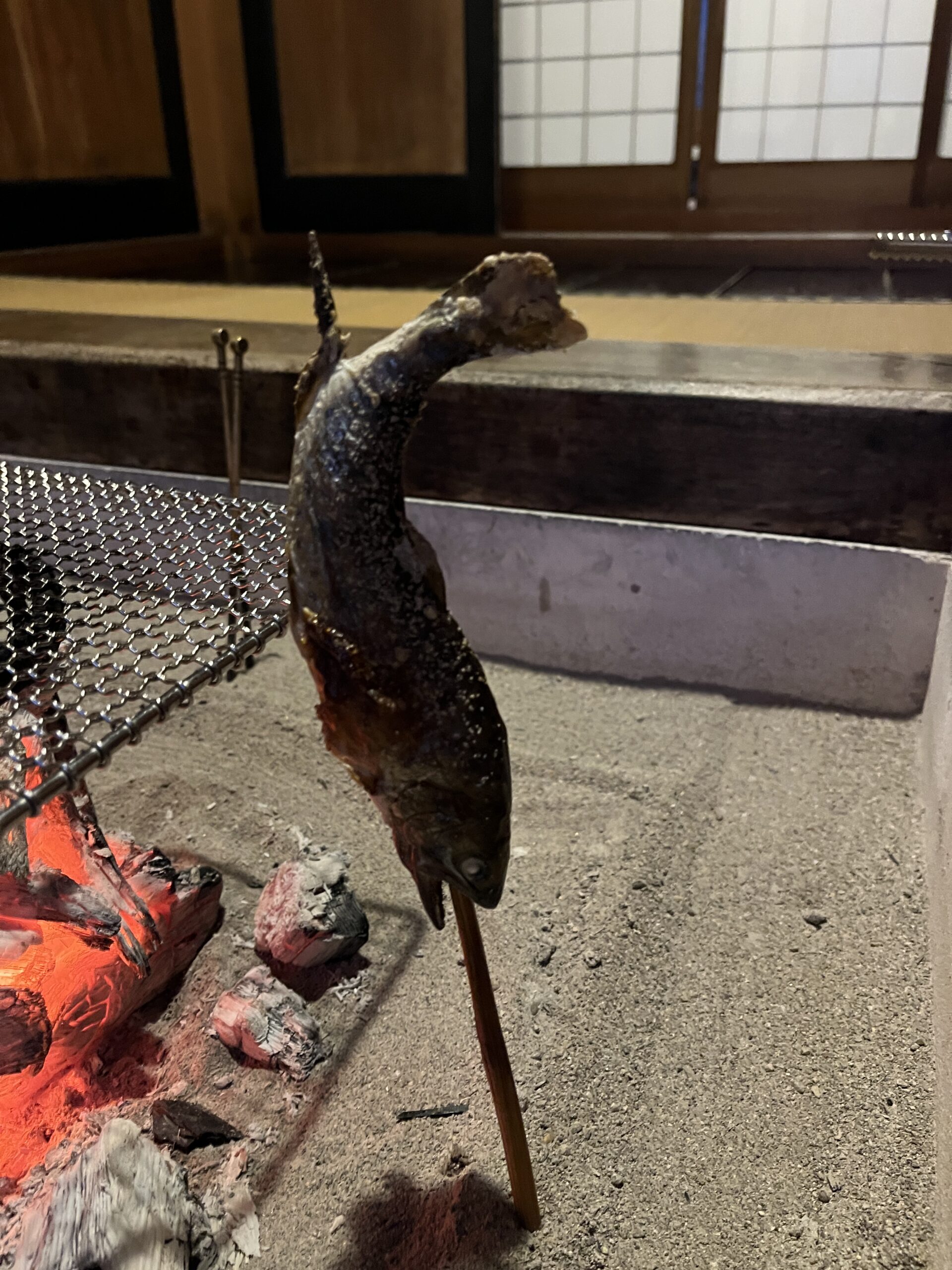
Left: Sansai (mountain vegetable) dishes, including kogomi (ostrich fern) — a springtime specialty found almost nowhere outside settings like this. Right: Salt-grilled yamame trout, kept warm and fragrant by standing it near the hearth’s embers.
Dinner opens with a warm amazake (sweet, low-alcohol rice drink) served fireside, followed by a genuinely generous spread: foraged mountain vegetables, salt-grilled river trout, and a self-grill course of pork, sausage, and shiitake mushrooms cooked over the hearth and dipped in a local salted-fish sauce.
Rainbow trout sashimi and a tempura course featuring tara-no-me (angelica shoots) and kogomi round out the mountain flavors, best enjoyed with nothing more than a pinch of salt.
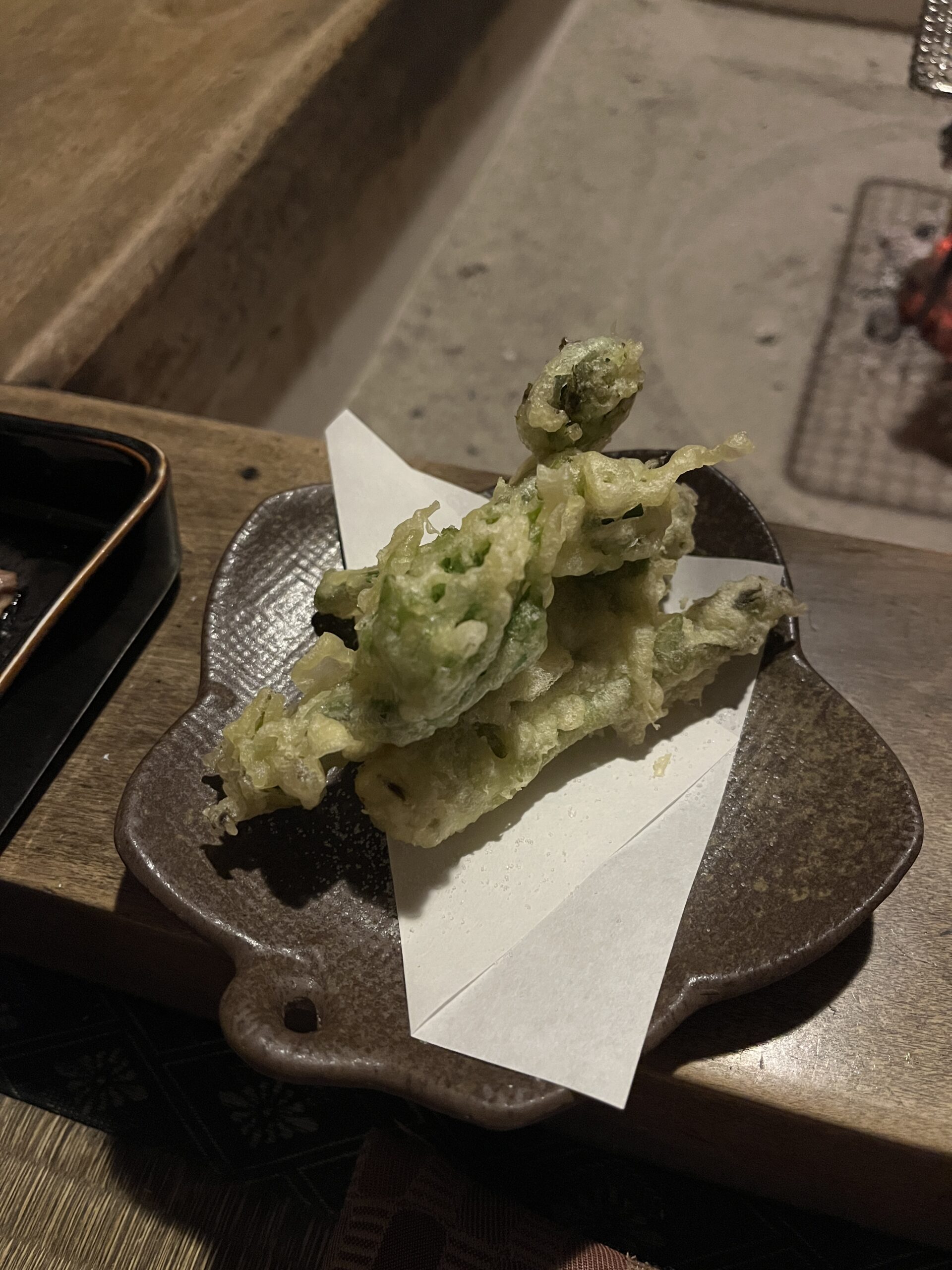
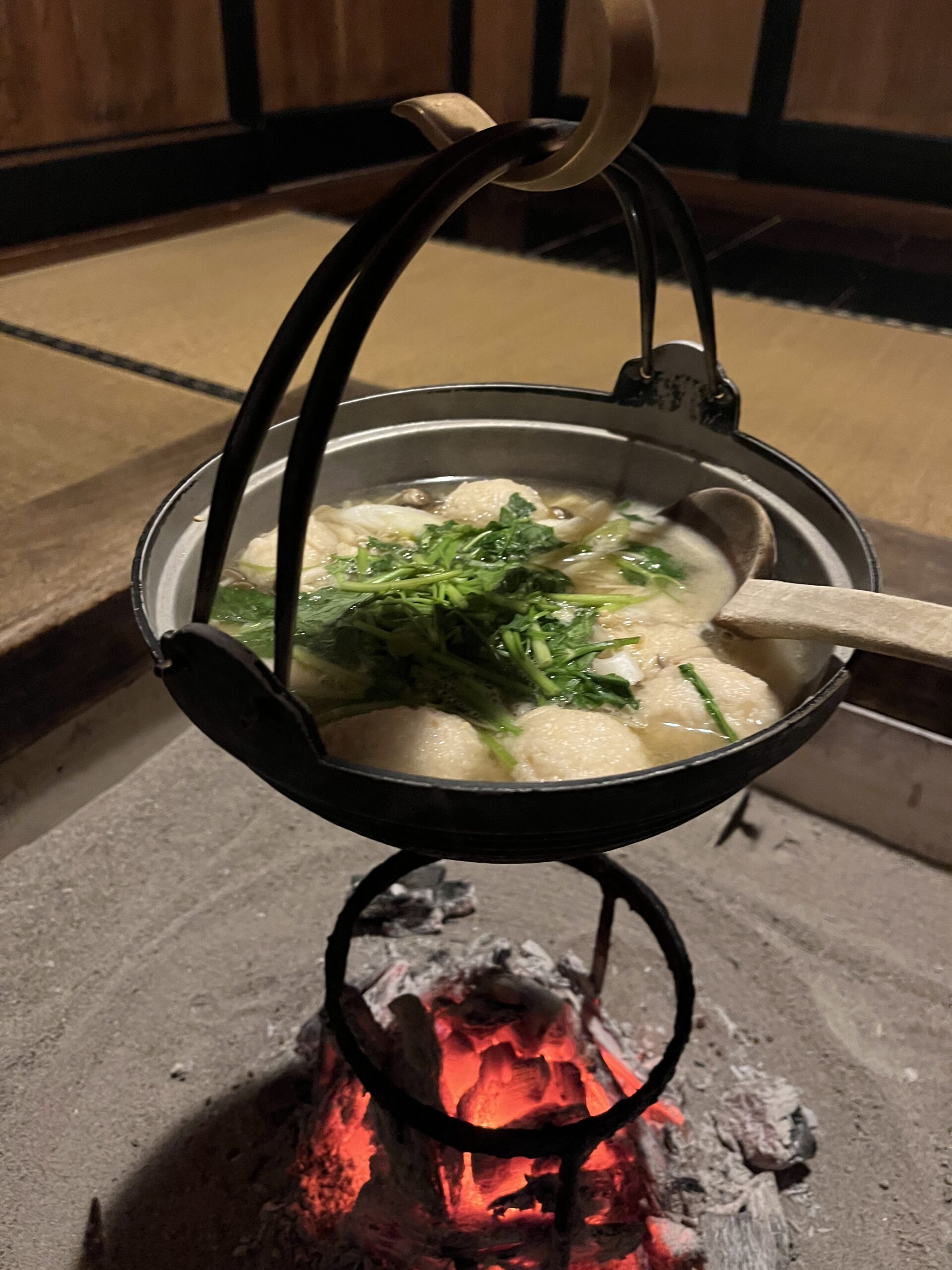
Left: Tempura of tara-no-me and kogomi, two classic sansai ingredients. Right: Imo nabe, Tsurunoyu’s celebrated potato hot pot, with grated yam dumplings and crisp seri (Japanese parsley) in a rich mushroom-and-miso broth.
The centerpiece is imo nabe, the same potato hot pot that made the main Tsurunoyu famous — soft yam dumplings and a deeply savory mushroom broth, with seri adding a crisp textural contrast. It’s rich enough to feel filling well before dinner ends, yet somehow still worth going back for more.
Breakfast — A Lighter Meal by the Same Hearth
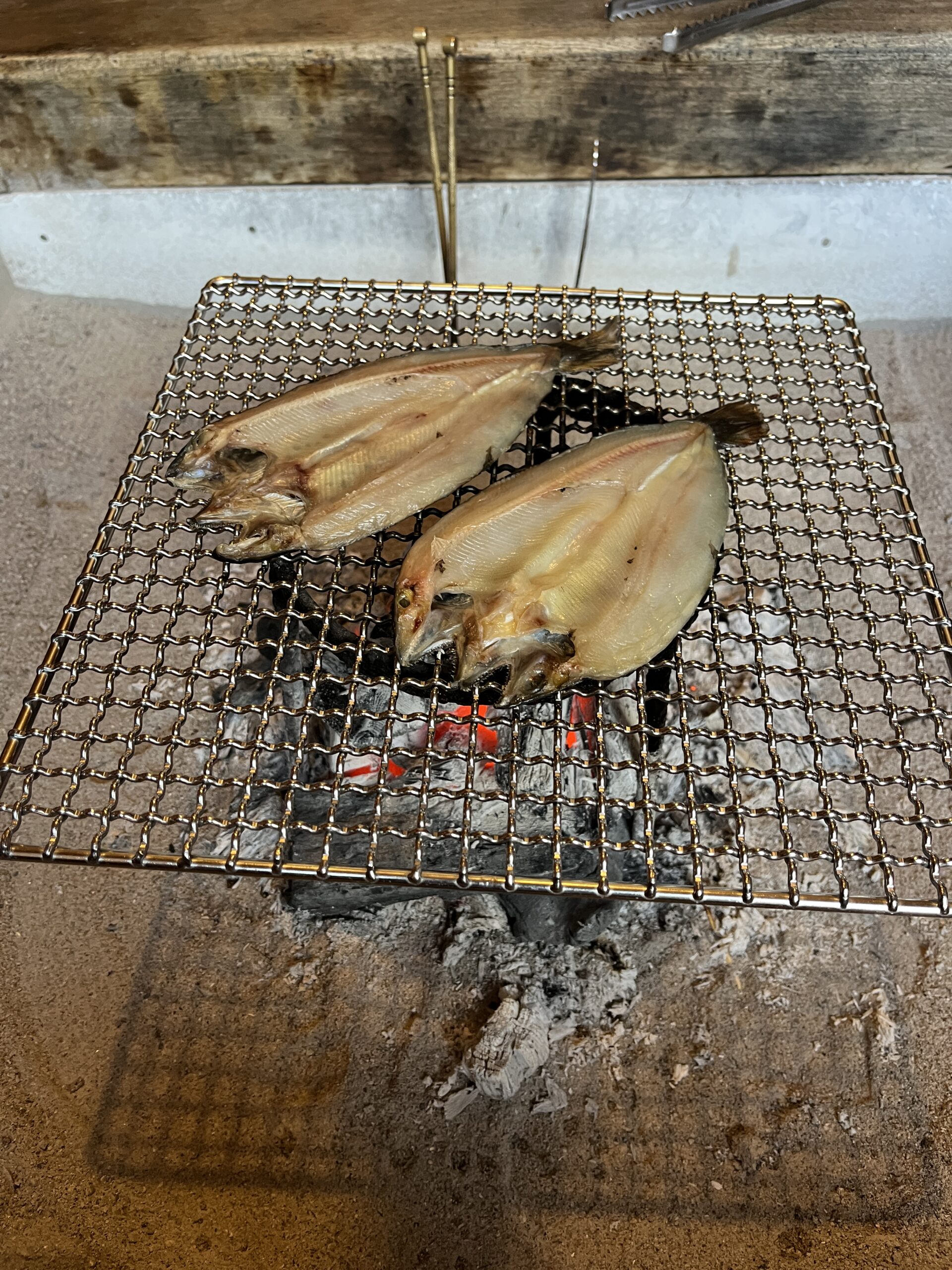
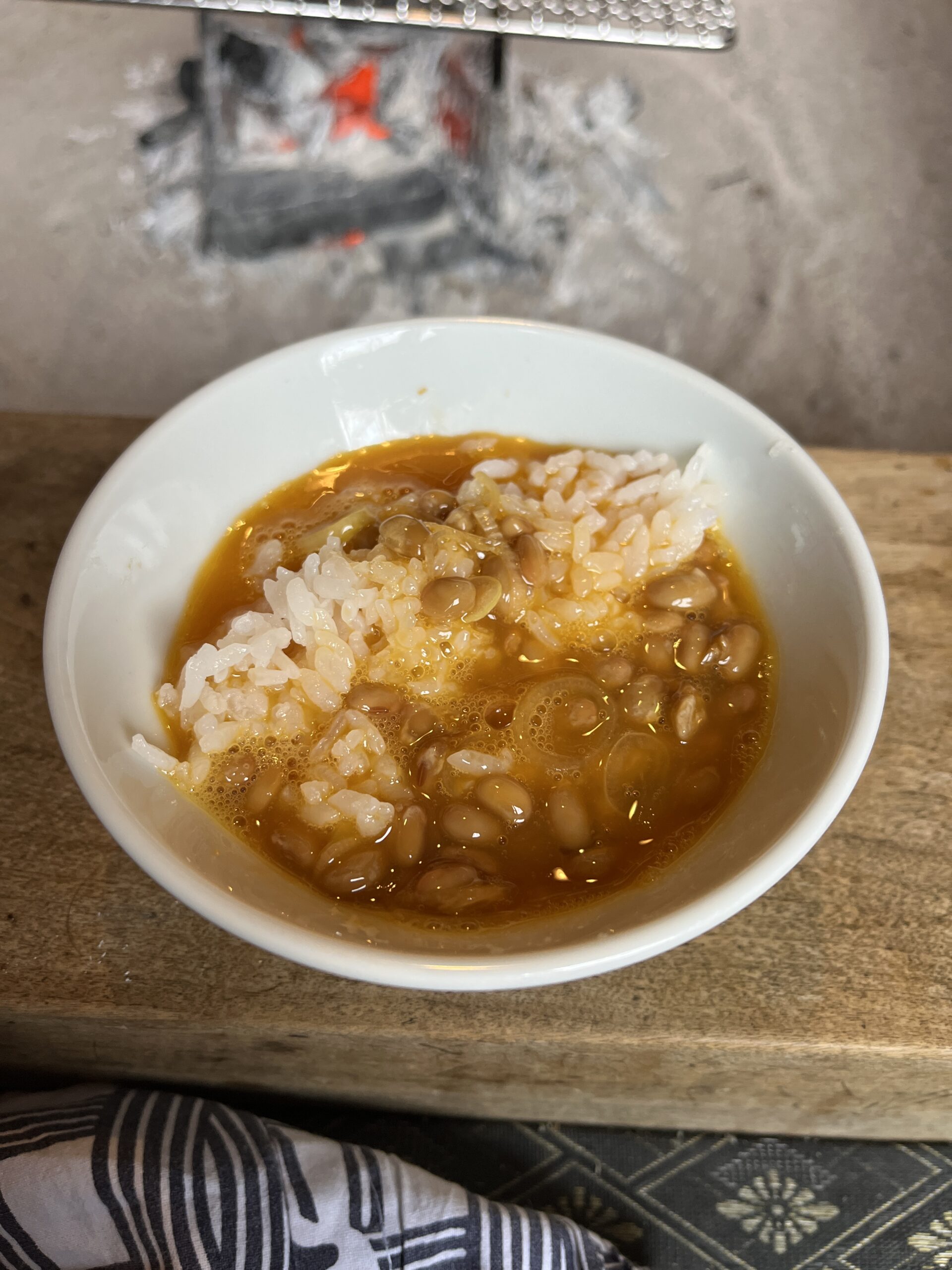
Left: A grilled fish fillet, warmed over the same hearth used the night before. Right: Natto and raw egg mixed into rice — a classic, simple Japanese breakfast staple.
Breakfast is simpler than dinner but keeps the same hearth-side charm: a grilled fish fillet, miso soup, fresh tofu, and the classic combination of natto and raw egg stirred into a bowl of rice — a comforting, no-frills way to start the day before heading back out to the baths.
Final Thoughts
Yamanoyado offers a genuinely different side of Nyuto Onsen Village from its famous parent inn: quieter, more private, and built around long soaks in gentle, sky-blue water rather than a crowded mixed bath.
Three atmospheric private baths, a memorable hearth-side dinner, and a free shuttle to the main Tsurunoyu’s own baths mean guests get the best of both — solitude when they want it, and easy access to the valley’s most iconic hot spring when they don’t.
Yamanoyado is ideal for visitors who:
- Want a genuinely quiet, low-key version of the Nyuto Onsen experience
- Enjoy long soaks in gentle, lukewarm water rather than hot, intense baths
- Appreciate private bathing available almost around the clock
- Want to try irori hearth dining and self-grilled mountain ingredients
- Are curious about Tsurunoyu but prefer to skip the crowds at the main inn
▼Book your stay▼