
This article contains advertisements
Zao Onsen, in the mountains of Yamagata Prefecture, is one of Japan’s best-known hot spring resorts — as famous for its winter “snow monsters” (frost-covered trees) as for its intensely acidic, sulfur-rich water.
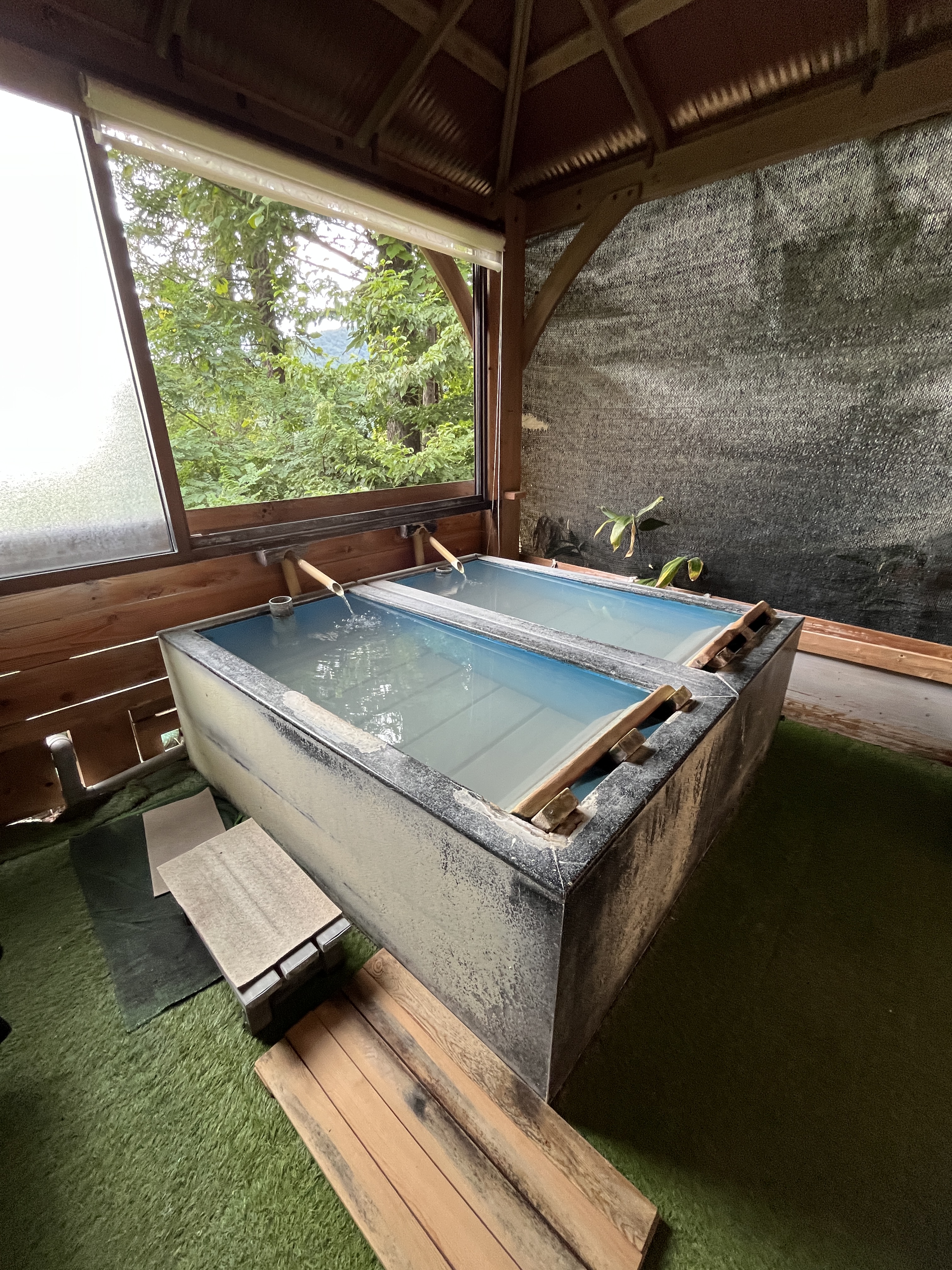
On a hillside above the main village sits Zenshichinoyu, a ryokan built almost entirely around that water: five separate private outdoor baths, a mixed-gender bath, and an indoor bath, all fed by one of the most acidic hot springs in the country.
Why Katsuranoyu Marunaga Ryokan stands out:
- Two distinct spring sources — Shin-Awa-no-yu and Konashi-no-yu — both milky-white sulfur springs
- A mixed-gender outdoor bath kept deliberately lukewarm, ideal for a long, unhurried soak — especially magical under falling snow
- A rarely advertised private bath where decades of mineral buildup have fused the tub to the floor in striking natural sculpture
- A relaxed, low-key atmosphere in one of Nagano’s most scenic mountain settings
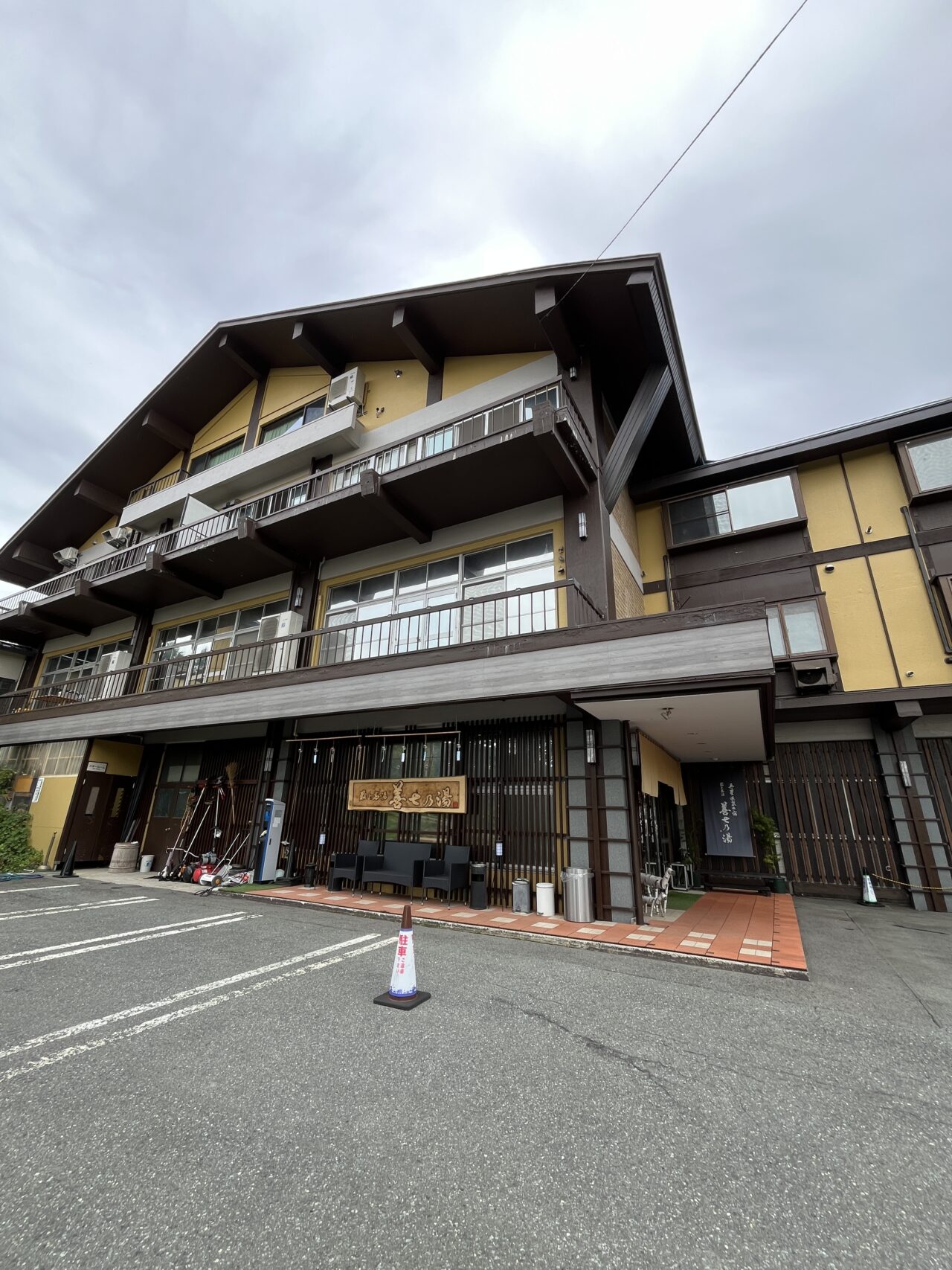
Zenshichinoyu, Zao Onsen
| Address | 825 Zao Onsen, Yamagata-shi, Yamagata 990-2301, Japan |
|---|---|
| Phone | +81-23-694-9422 |
| Official Website | oohira.co.jp |
| Day-use Bathing | ¥1,000 (indoor/mixed baths) · Private baths priced separately, reservation required |
| Day-use Hours | 10:30–21:00 (cleaning break 19:00–19:30) |
| Check-in / Check-out | From 15:00 / By 10:00 |
| Overnight Rate | From approx. ¥16,000 per person (2 meals included, varies by season/plan) |
▼Book your stay▼
Getting There from Tokyo — Access Guide
Zao Onsen has no train station of its own; the gateway is JR Yamagata Station, from which the resort is reached by bus. It’s a straightforward trip by Japanese standards, well-served by the Yamagata Shinkansen.
🚄 By Train + Bus (Recommended)
Take the Yamagata Shinkansen “Tsubasa” directly from Tokyo Station to Yamagata Station (approx. 2 hours 40 minutes, no transfer). From Yamagata Station’s bus terminal, board a Yamako Bus bound for Zao Onsen (approx. 35–40 minutes) and ride to the last stop, “Zao Onsen Bus Terminal.” From there, Zenshichinoyu offers a same-day-request shuttle pickup, or it’s a short taxi ride up the hill. Total travel time from Tokyo: approximately 3.5–4 hours.
🚗 By Car
Exit at Yamagata Zao IC on the Yamagata Expressway (approx. 30 minutes to the inn), or Kaminoyama IC on the Tohoku Chuo Expressway (approx. 20 minutes) if approaching from the south. The final approach to the inn includes a steep slope — winter visitors should bring studded tires or chains; the inn also lends chains free of charge on request.
| Route | Tokyo Station → Yamagata Station → Zao Onsen → Zenshichinoyu |
|---|---|
| Train | Yamagata Shinkansen “Tsubasa” to Yamagata (~2 hrs 40 min, direct) |
| From Yamagata Station | Yamako Bus to Zao Onsen Bus Terminal (~35–40 min) |
| Total from Tokyo | Approx. 3.5–4 hours door to door |
| JR Pass | ✅ Shinkansen portion fully covered (local bus not included) |
| Winter Driving | ⚠️ Steep approach road; studded tires or chains required Nov–Apr |
A Hillside Perch Above the Onsen Village
Zao Onsen is one of Japan’s most storied hot spring resorts, known for its fiercely acidic waters and for the “snow monsters” — trees encased in wind-sculpted ice — that draw crowds to the nearby Zao Ropeway every winter.
Zenshichinoyu sits on a hillside above the main village, with the famous Zao Onsen Dairotenburo (a large communal outdoor bath) about a 5-minute walk away and the ropeway roughly 5 minutes by car.
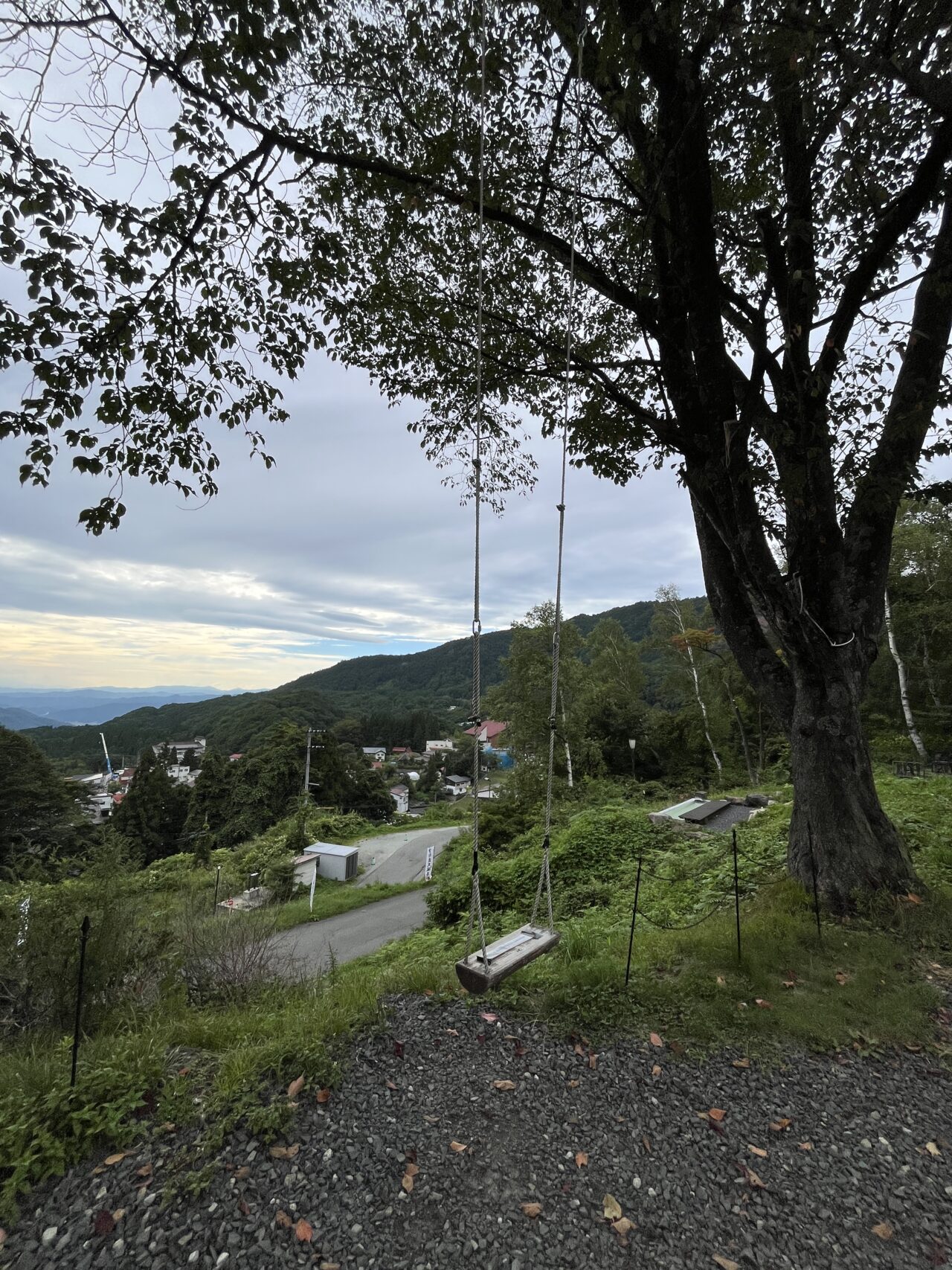
The inn’s elevated position opens onto wide views of the surrounding hills — a large rope swing on the grounds (weight limit applies) adds a playful touch.
A Lobby Full of Small, Thoughtful Touches
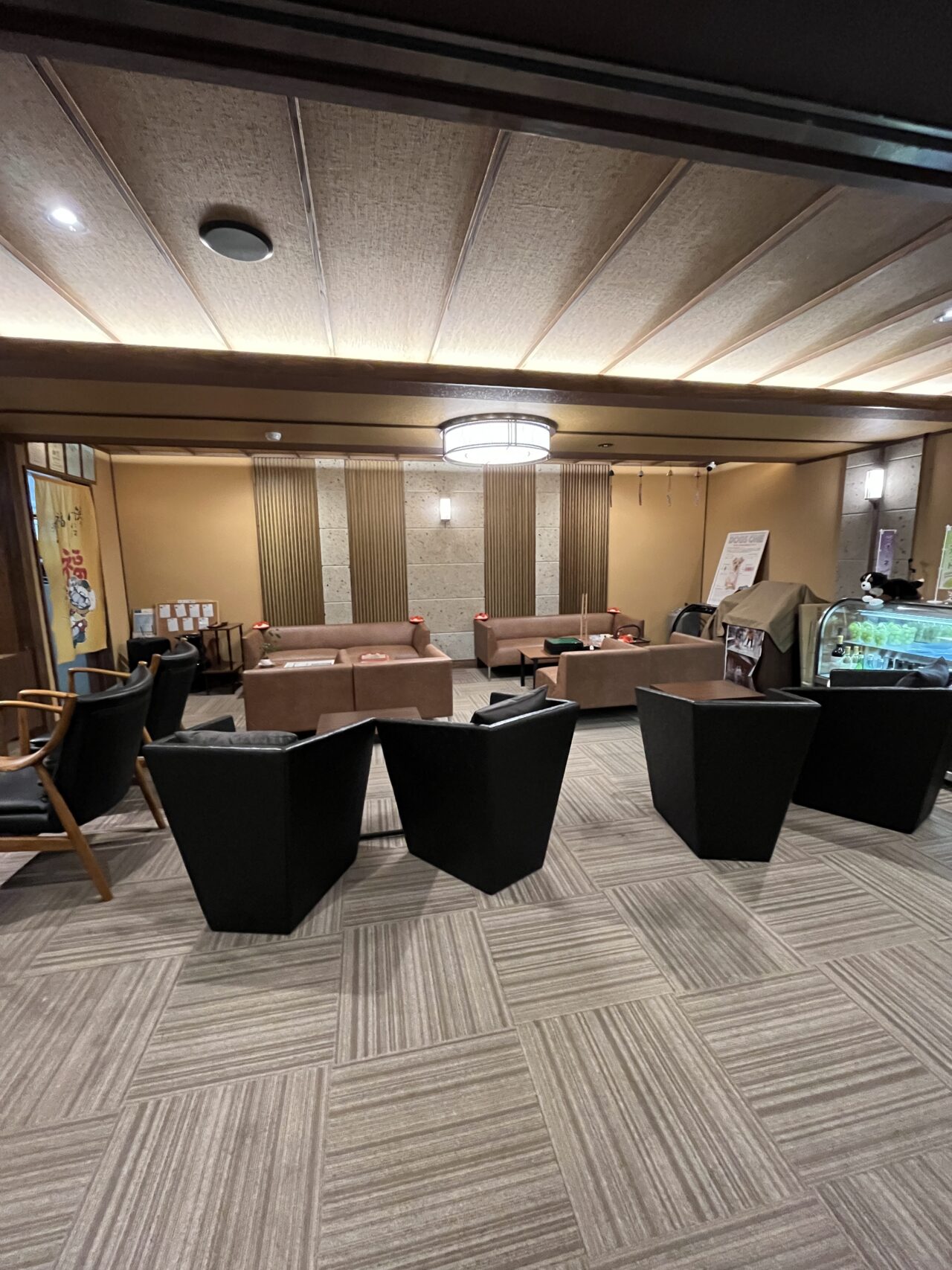
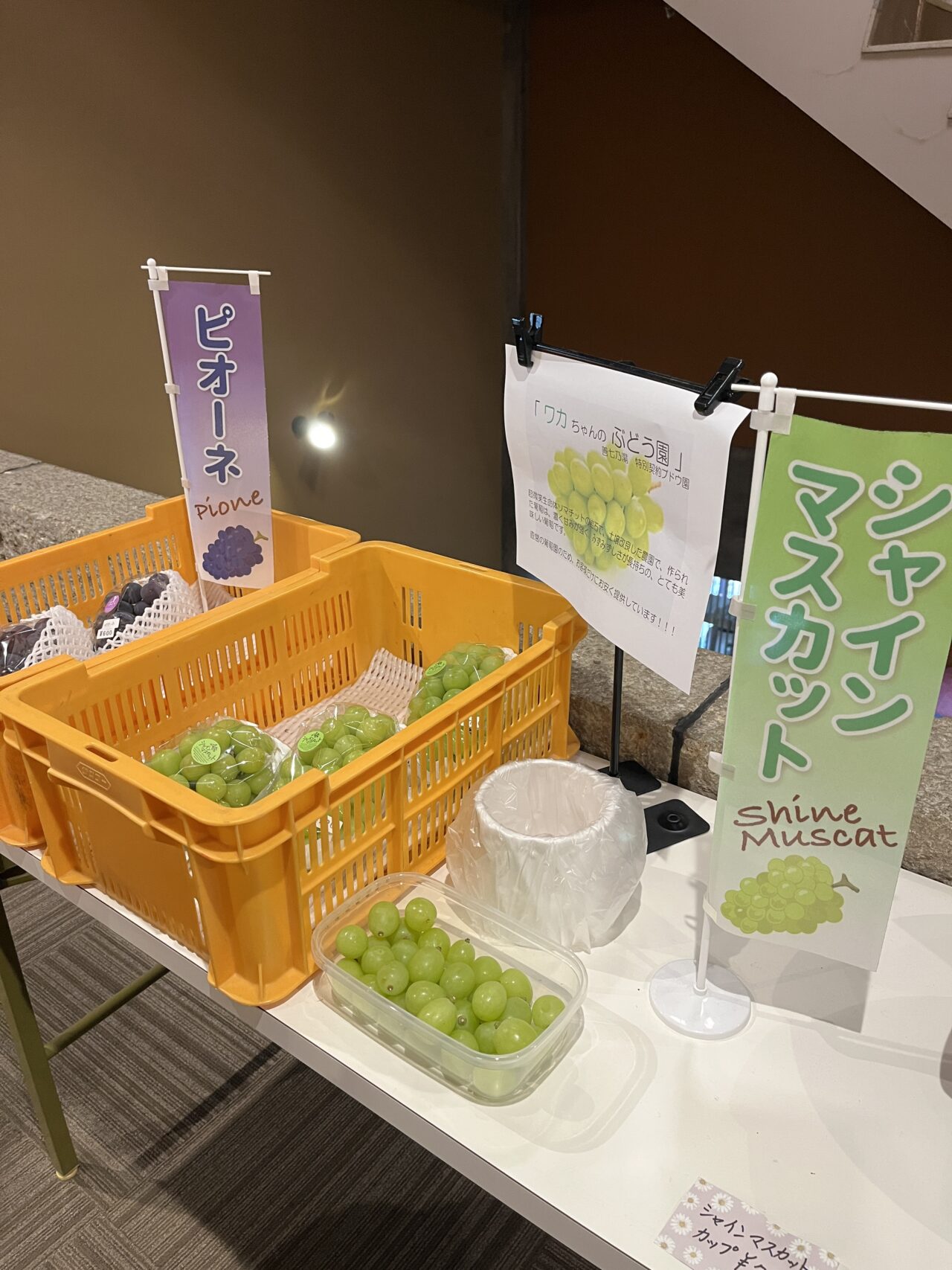
Left: The spacious, comfortable lobby lounge. Right: Complimentary Shine Muscat grapes and boiled eggs are laid out for guests to help themselves.
The lobby is generous with small extras: chilled lemon water for after a bath, a free bottle of milk per guest (a classic post-onsen tradition in Japan), and a choice of yukata robes and amenities to take to your room.
For private bath sessions, guests can even bring a small ceramic flask and cup — filled with tea, not alcohol — to sip while soaking, a charming touch that mimics the classic image of bathing with a drink in hand.
The Rooms
| Toilet | En suite (in-room) |
|---|---|
| Refrigerator | Available |
| Air Conditioning / Heating | Available, controlled separately |
| Wi-Fi | Available |
| Television | Available |
| Towels & Yukata | Provided, choice of design |
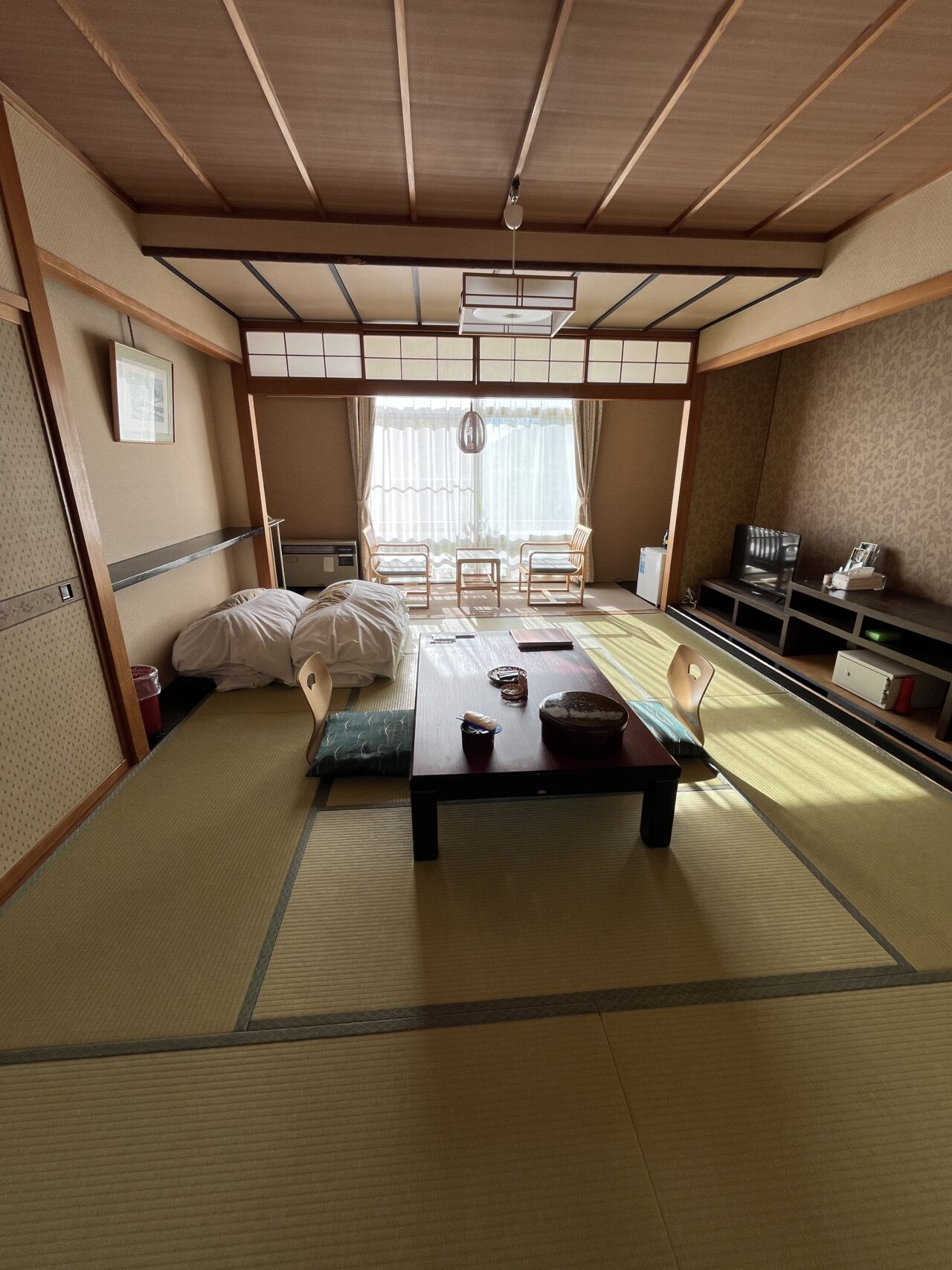
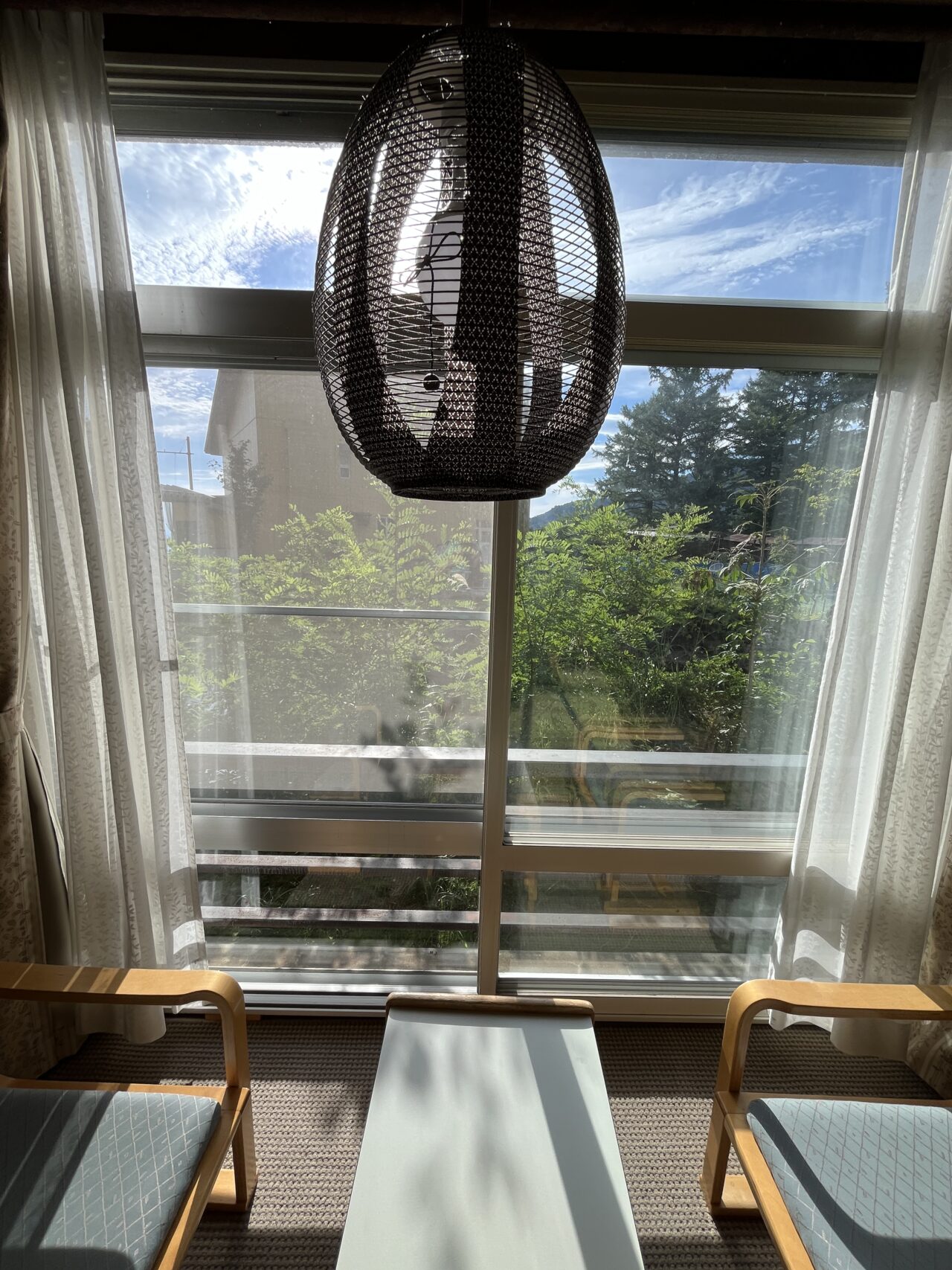
A bright, spacious Japanese-style room — the view looks onto another wing of the inn rather than the mountains, but the room itself is comfortable and well-equipped.
Rooms are straightforward Japanese-style tatami rooms with all the essentials covered — television, refrigerator, and separately controlled air conditioning and heating.
A small basket is provided for carrying towels and belongings to and from the private baths, a genuinely useful detail given how many baths there are to try.
The Hot Springs — pH 1.5, and Baths to Match
Zenshichinoyu’s defining feature is its sheer number of bathing options: a gender-separated indoor bath, a mixed-gender outdoor bath, five private outdoor baths, and even a private bath reserved for dogs.
With five private baths on offer, there’s a good chance of finding one open whenever you’d like to soak.
♨ Just How Acidic Is pH 1.5?
For comparison, pH 7 is neutral and lemon juice sits around pH 2. Zao Onsen’s water is grouped with Fukushima’s Takayu Onsen and Akita’s Tamagawa Onsen as one of Japan’s most acidic hot springs. This level of acidity gives it a strong antibacterial reputation, but it can also sting cuts, grazes, and eyes — bathers should take care.
Indoor Bath & Mixed-Gender Outdoor Bath
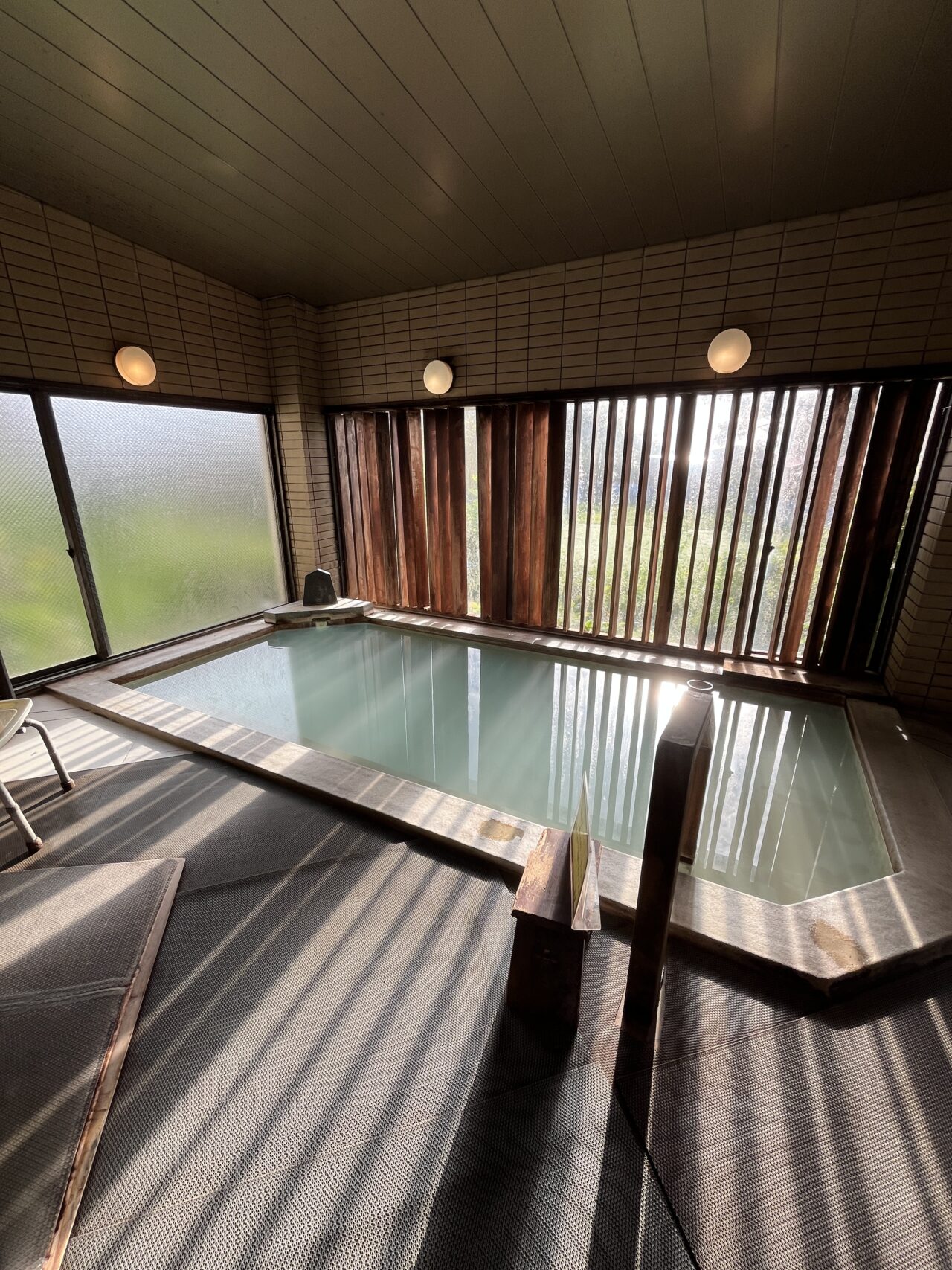
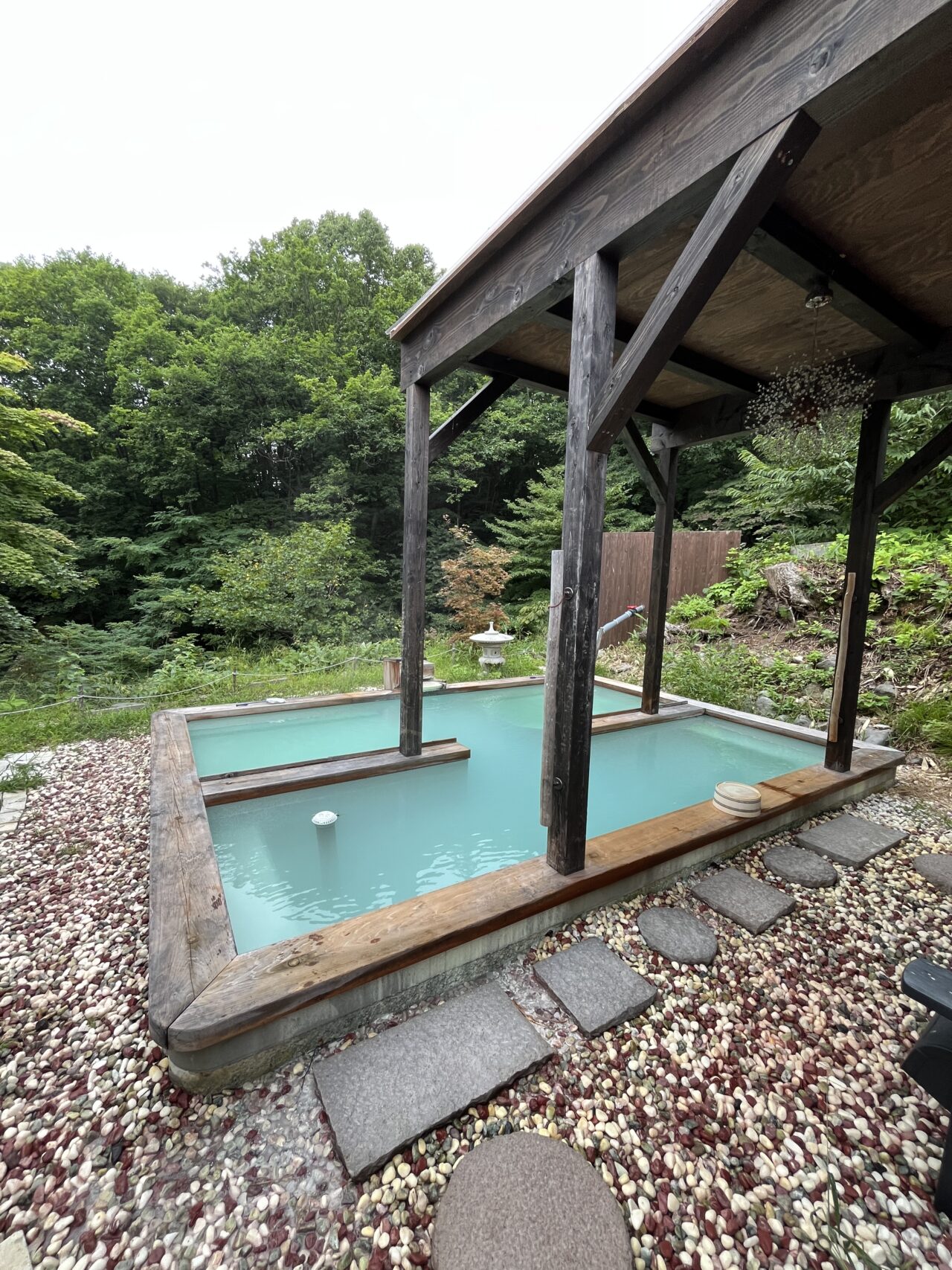
Left: The indoor bath, its floor dusted with settled sulfur deposits (yu-no-hana). Right: The mixed-gender outdoor bath, noticeably cloudier and more distinctly white than the indoor water.
The indoor bath runs a comfortable 41–42°C, with white mineral deposits visibly collecting around the tap and along the tub floor — a clear sign of the water’s mineral density.
Through a door at the back, the mixed-gender outdoor bath draws on the same source but appears noticeably cloudier and more classically milky-white.
It has designated women-only hours, and during mixed-bathing hours a bathing wrap is required for all guests.
Five Private Outdoor Baths, Five Different Moods
Reservations for the private baths run 10:00–21:00 via the front desk; from 21:00 to 10:00 the next morning, any bath without an “in use” tag on the door is free to enter on a first-come basis.
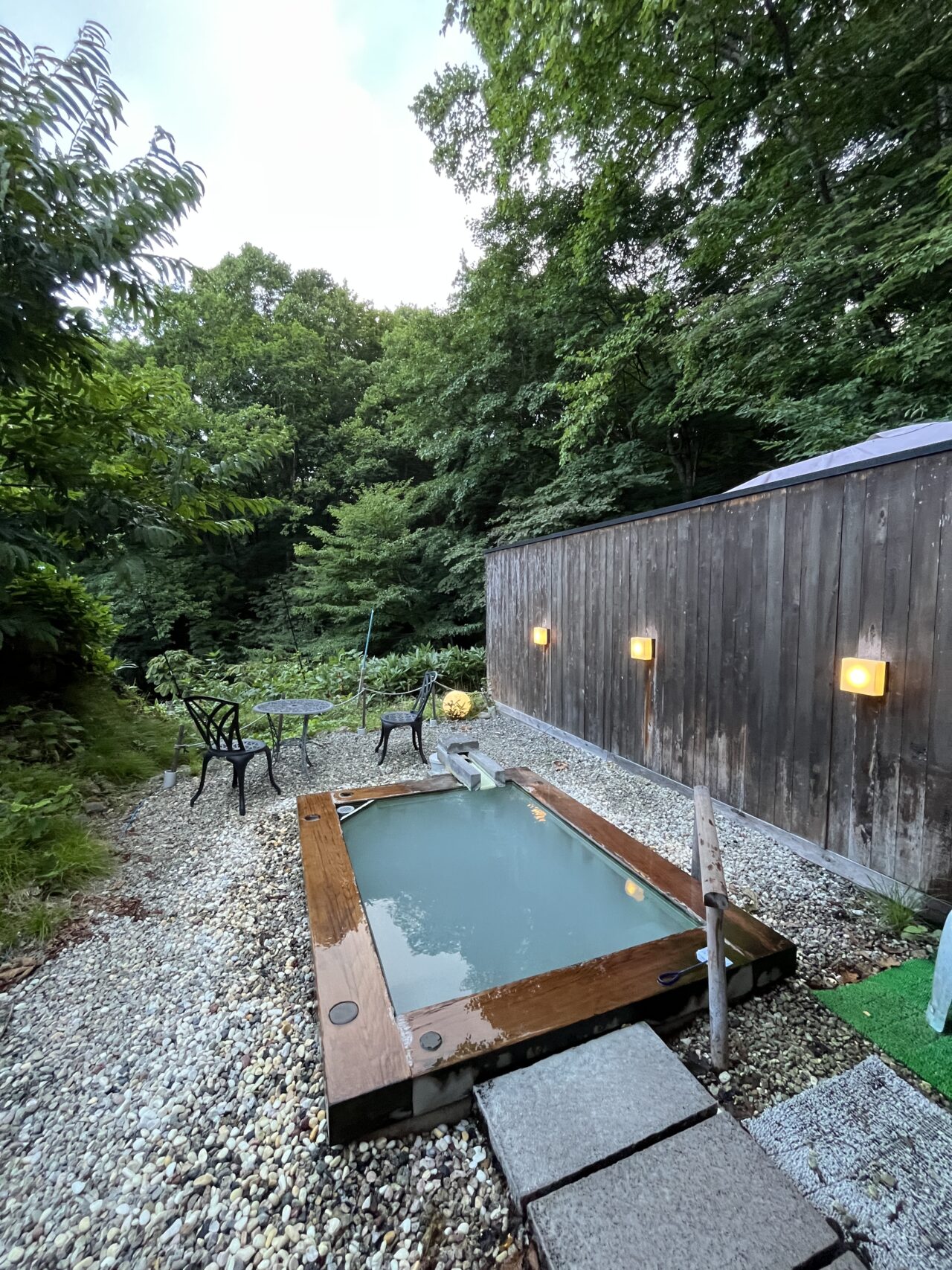
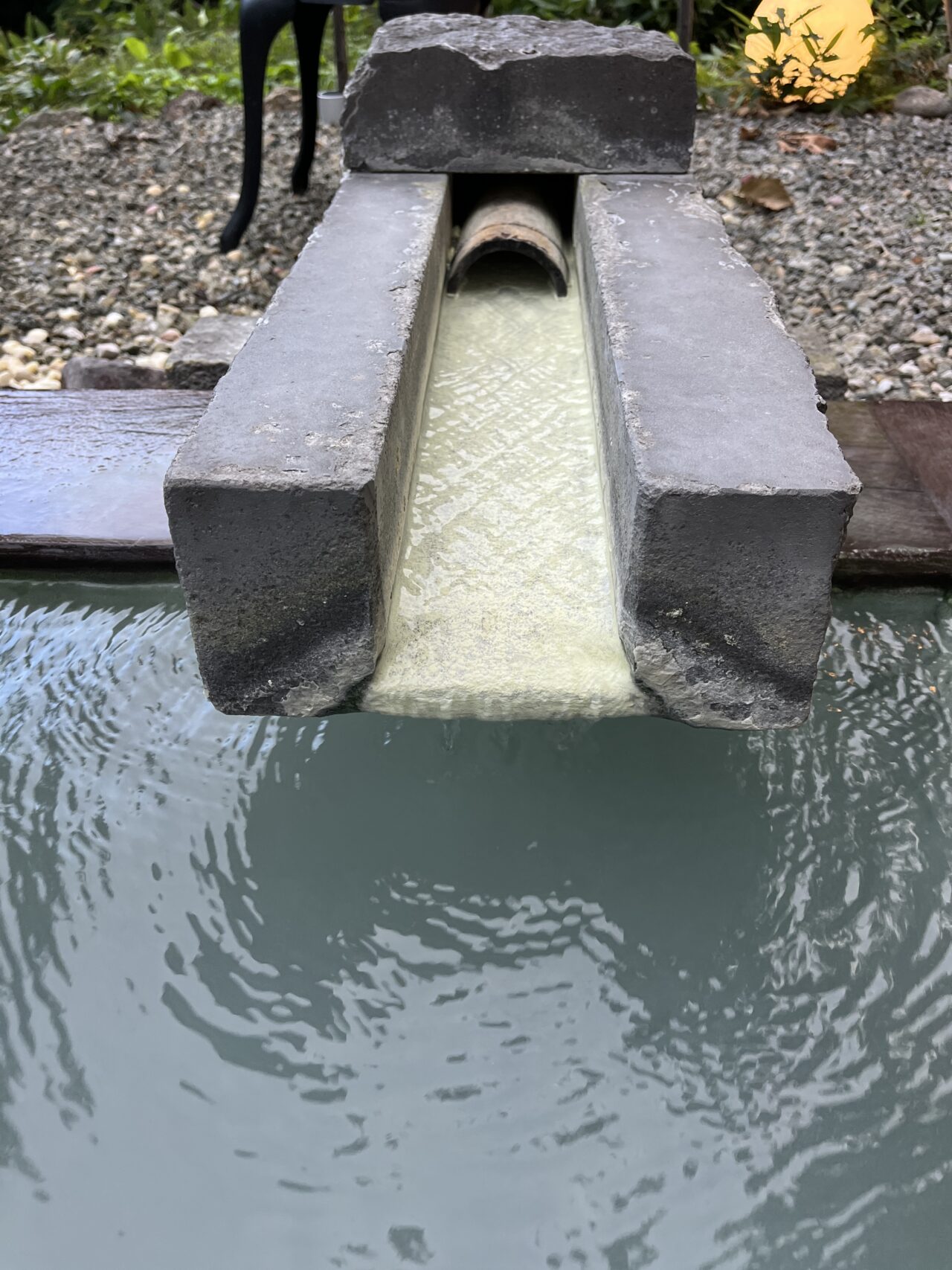
Daikokuten — a small, intimate tub with a strongly sulfurous aroma and thick white deposits at the spring inlet. The water carries a distinct sourness; take care of cuts and eyes.
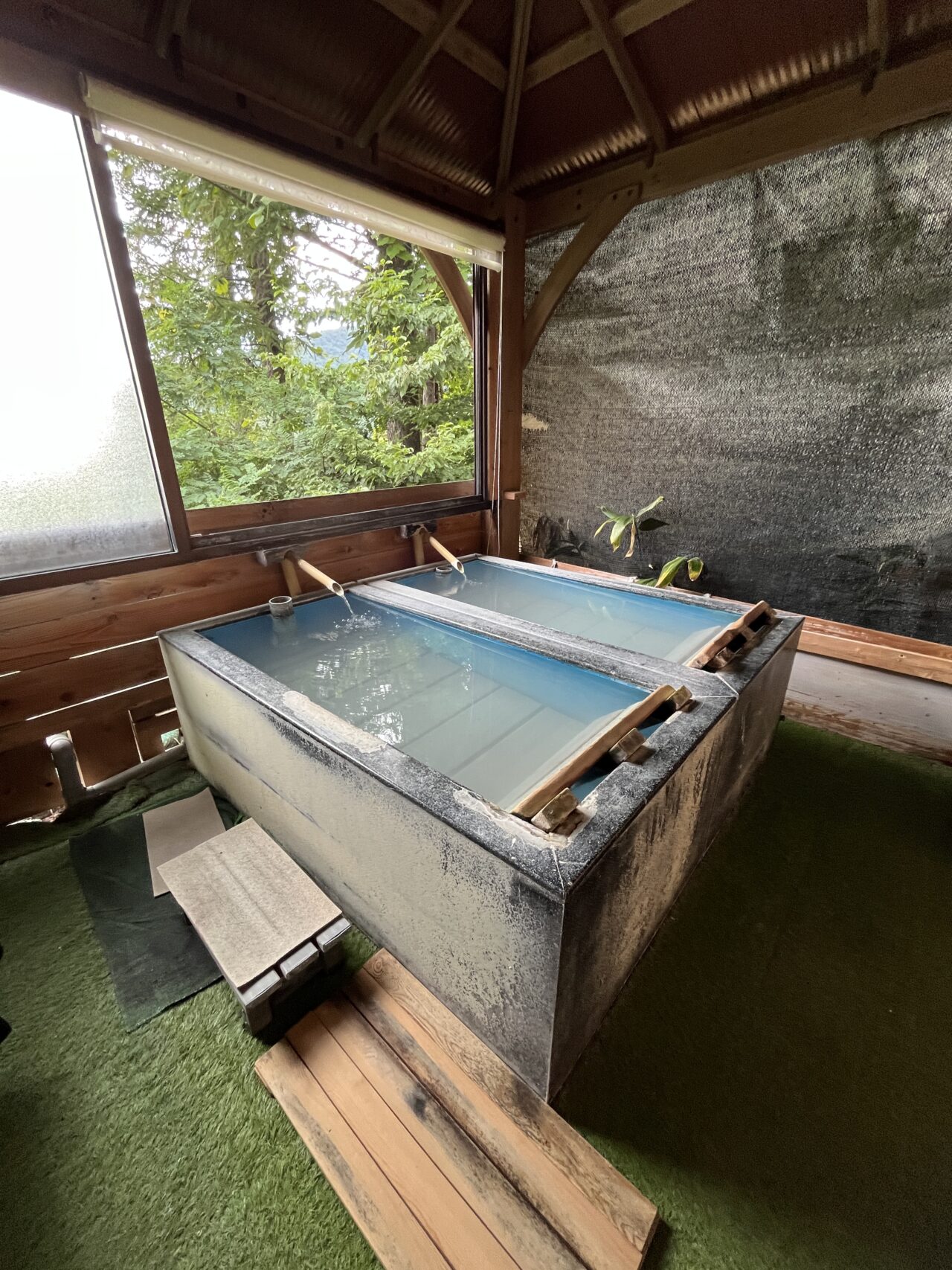
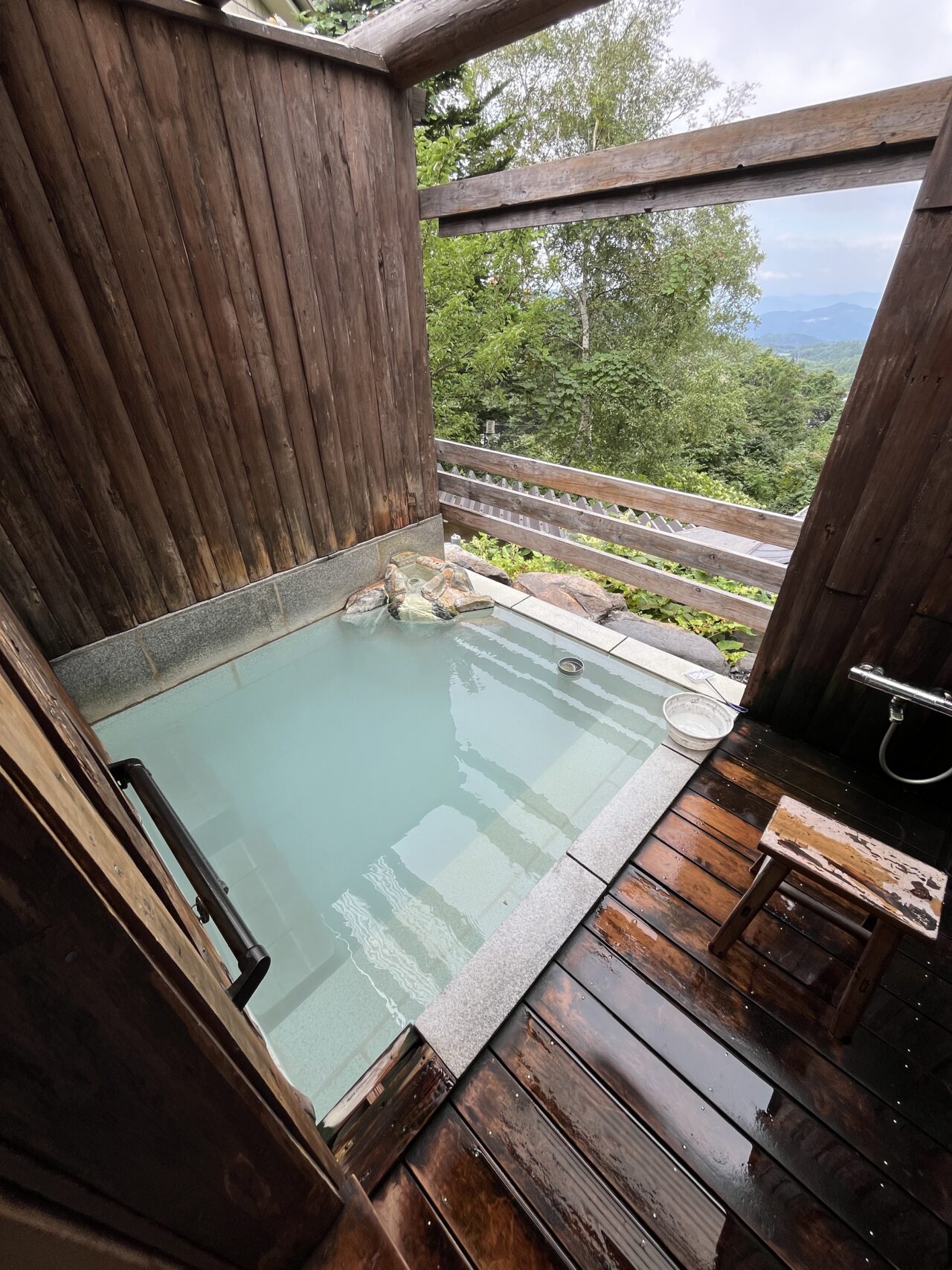
Left: Ebisuten, a stylish half-outdoor bath with two tubs and a faint blue tint, though it runs a little hot. Right: Hoteison, with a view toward the distant hills and the same richly mineral-crusted spring inlet.
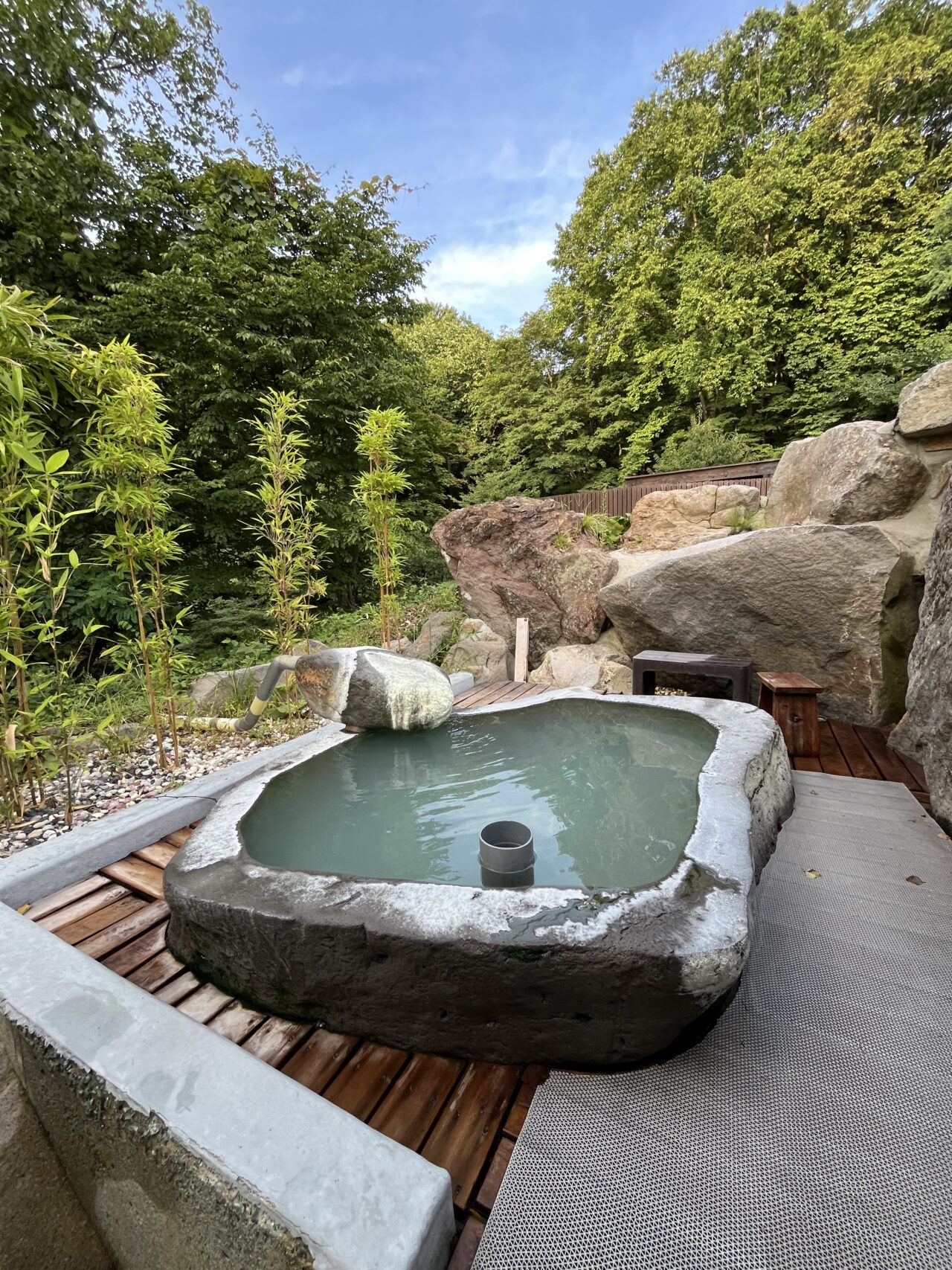
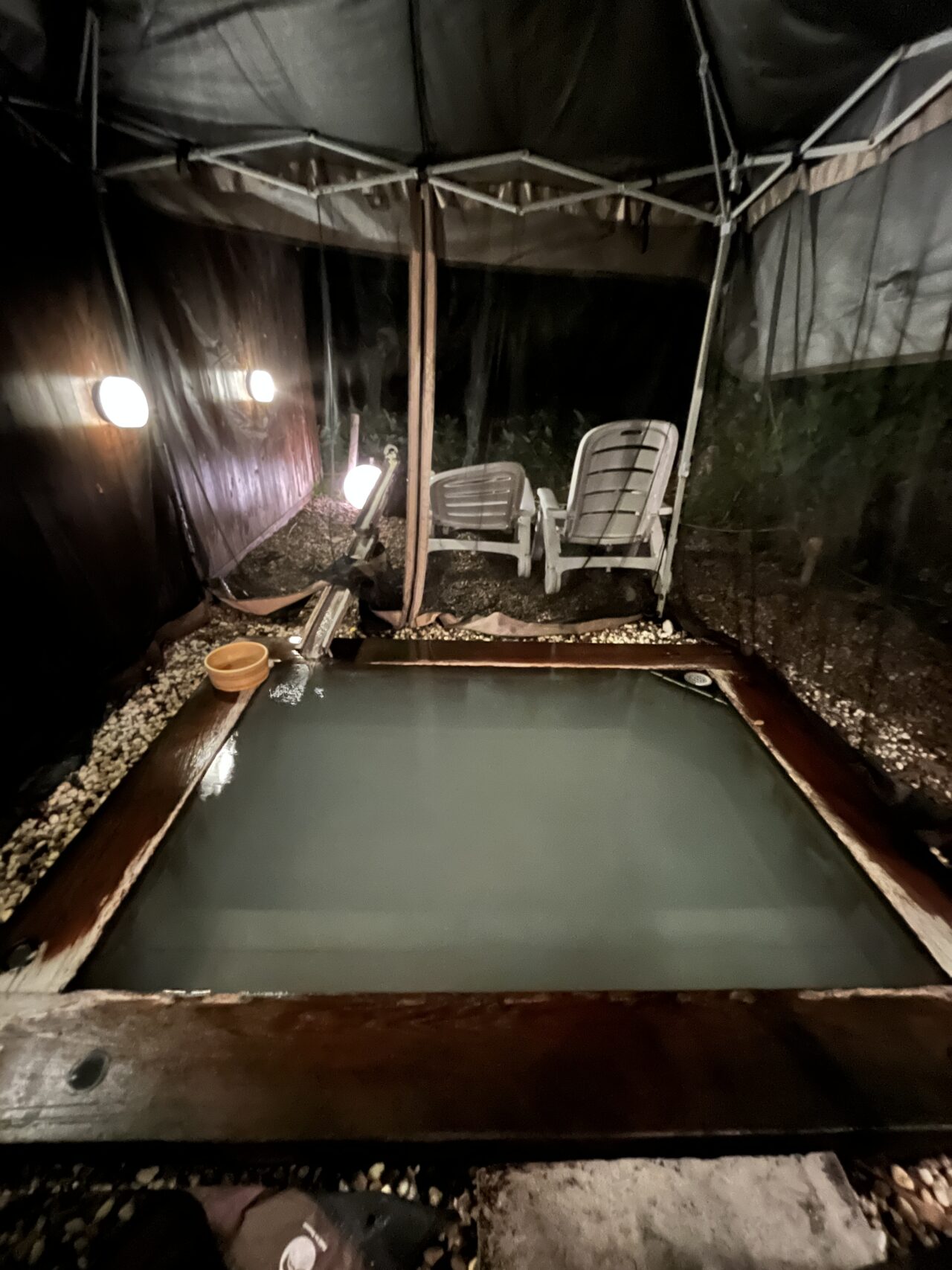
Left: Fukurokuju, carved directly into rock — a wilder-feeling bath, and comparatively cooler than the others. Right: Jurojin, screened with fine netting to keep insects out, one of the few tubs where a shower can be angled in to adjust the temperature.
Each of the five — Daikokuten, Jurojin, Ebisuten, Hoteison, and Fukurokuju — is named for one of Japan’s Seven Lucky Gods, and each has a genuinely different feel: some more enclosed and private, others open to distant mountain views, with temperatures ranging from pleasantly warm to properly hot.
Most come with a shower and amenities; a posted temperature reading near the entrance area makes it easy to pick the one that suits your preference on a given day.
A Private Bath for Dogs
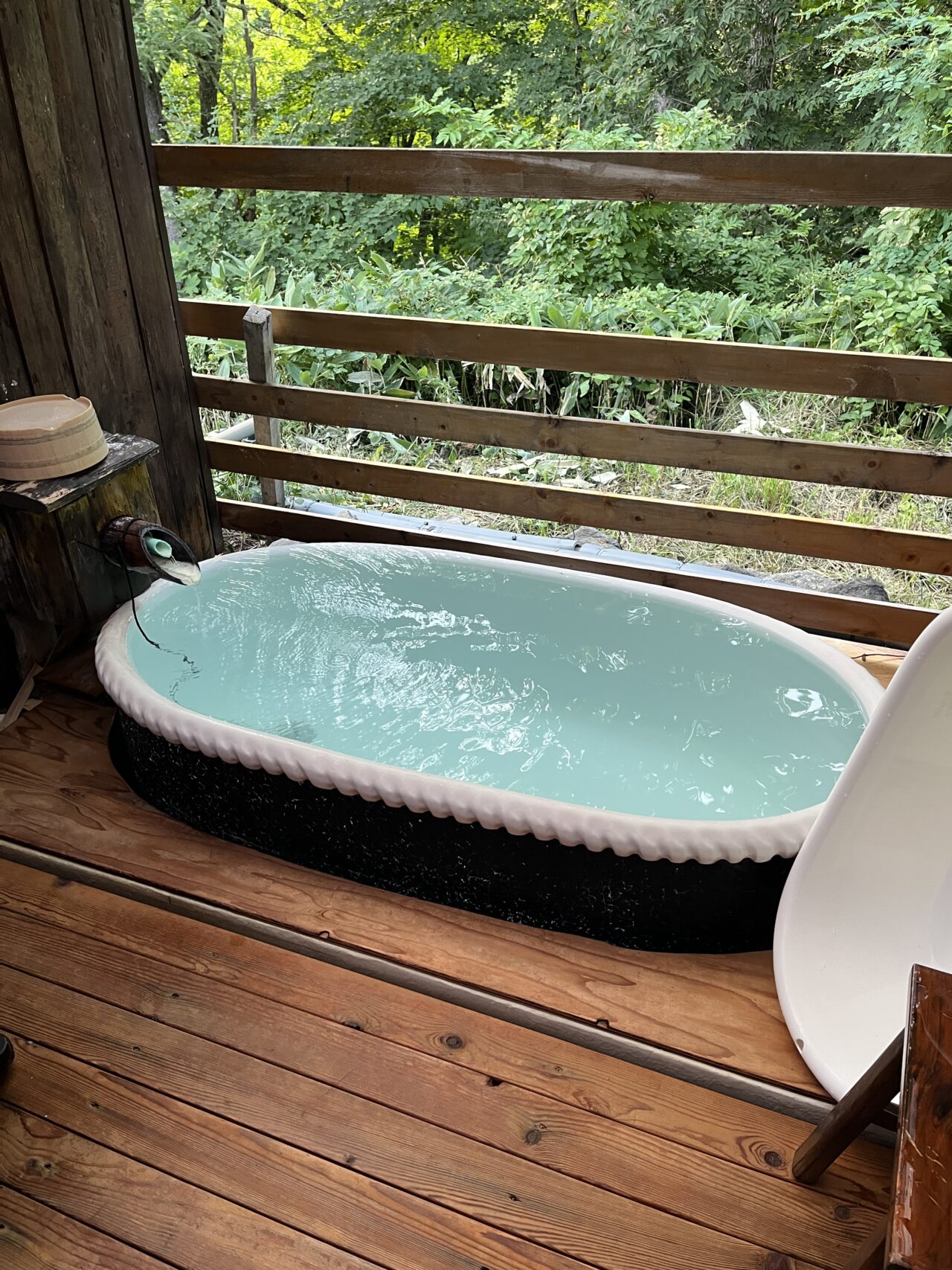
Zenshichinoyu offers pet-friendly rooms, and dog-owning guests get their own small private bath kept at a milder 35°C — a surprising and rather charming detail for a hot spring inn this deep in sulfur country.
Dining — An Elevated, East-Meets-West Menu
Meals are served in a private dining room, with a menu that blends Japanese and Western dishes rather than sticking to a traditional kaiseki format.
Dinner — All-You-Can-Drink Done Right
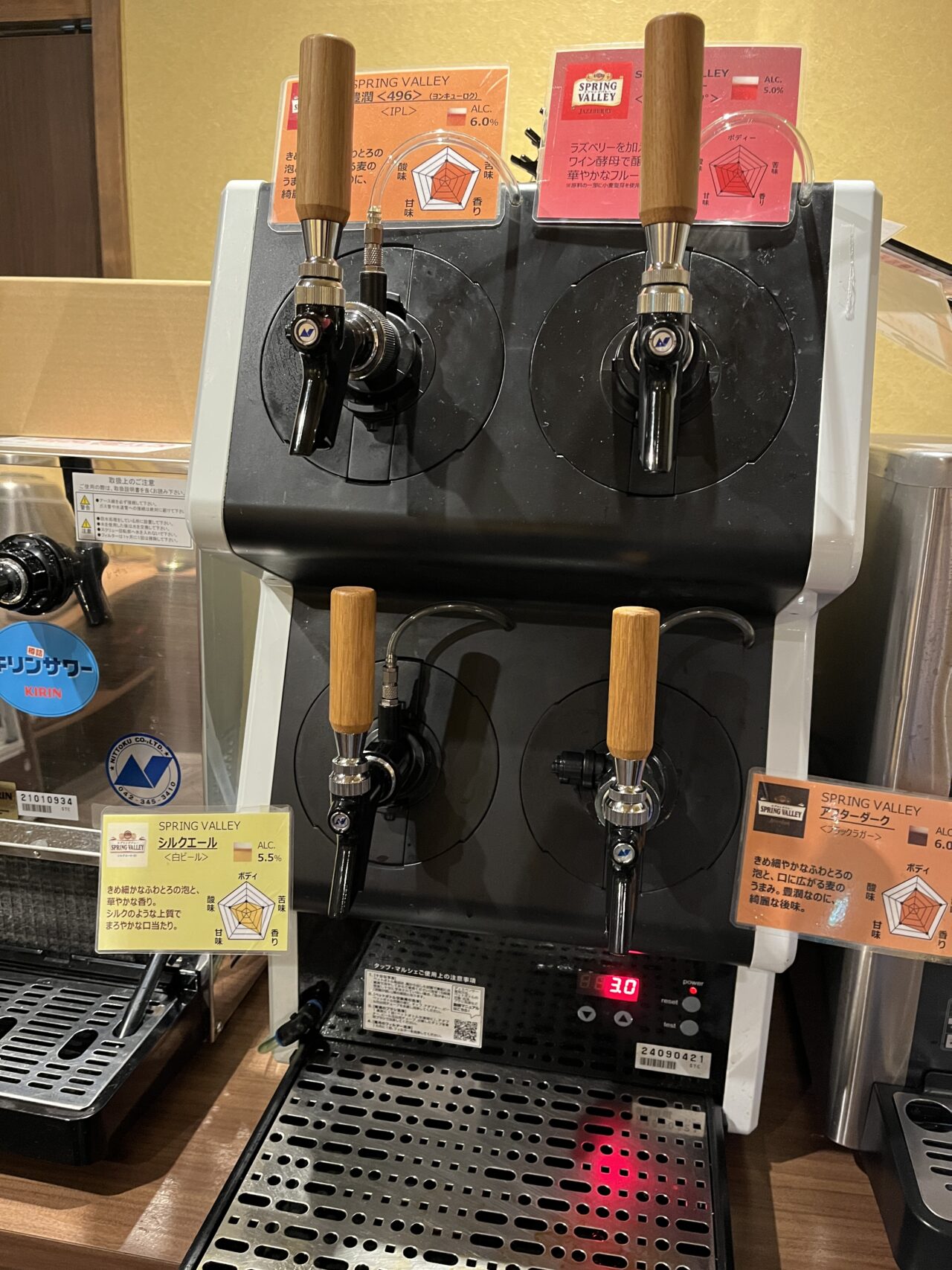
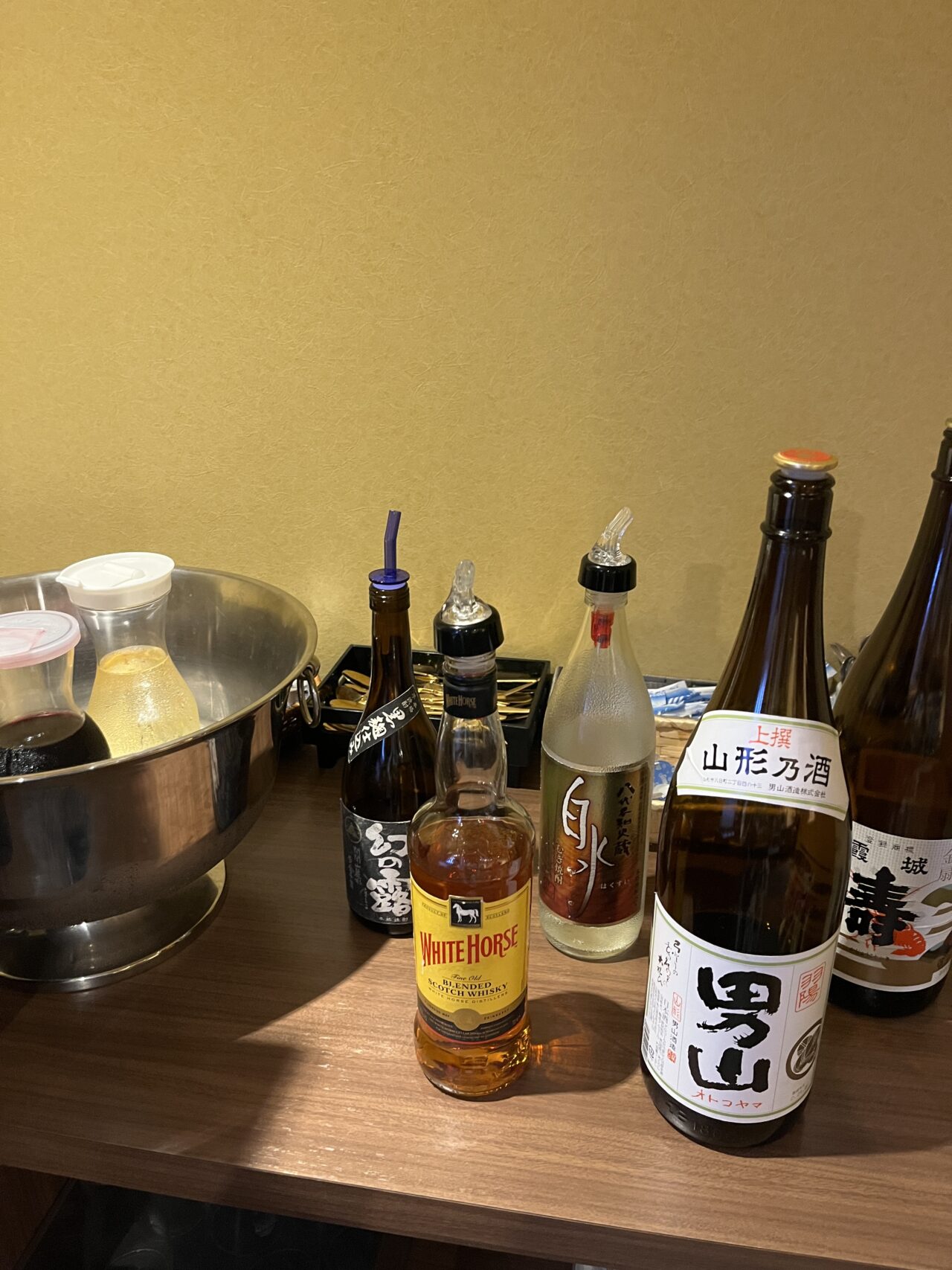
Left: A self-serve tabletop draft beer dispenser, part of the optional all-you-can-drink plan. Right: Sake and shochu, mixed to your own preferred strength.
We chose the all-you-can-drink dinner plan, and it’s a genuine highlight — a tabletop tap pours draft beer (regular and fruit-flavored varieties) fresh at the table, alongside sake, shochu, and sours you can mix yourself.
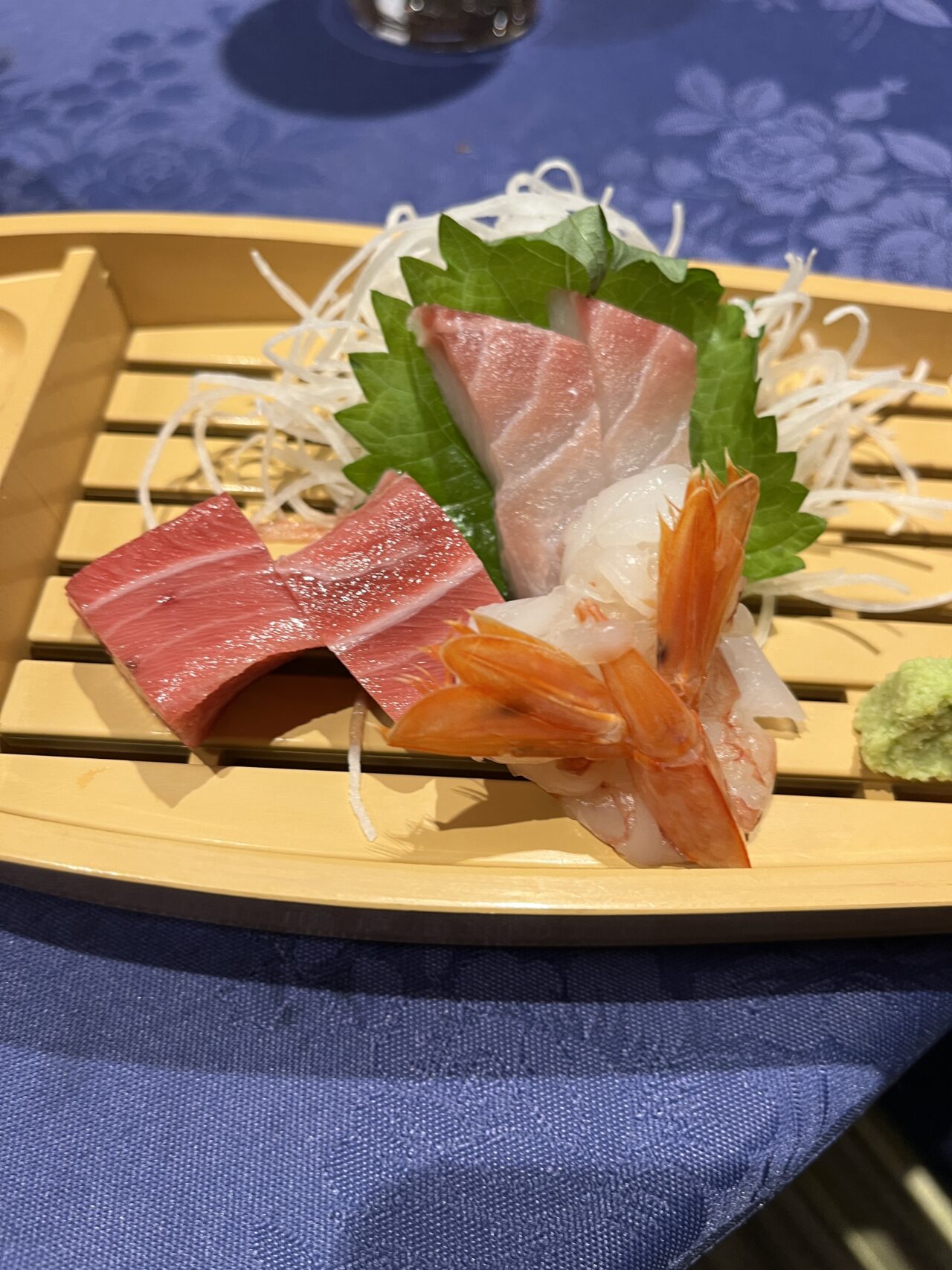
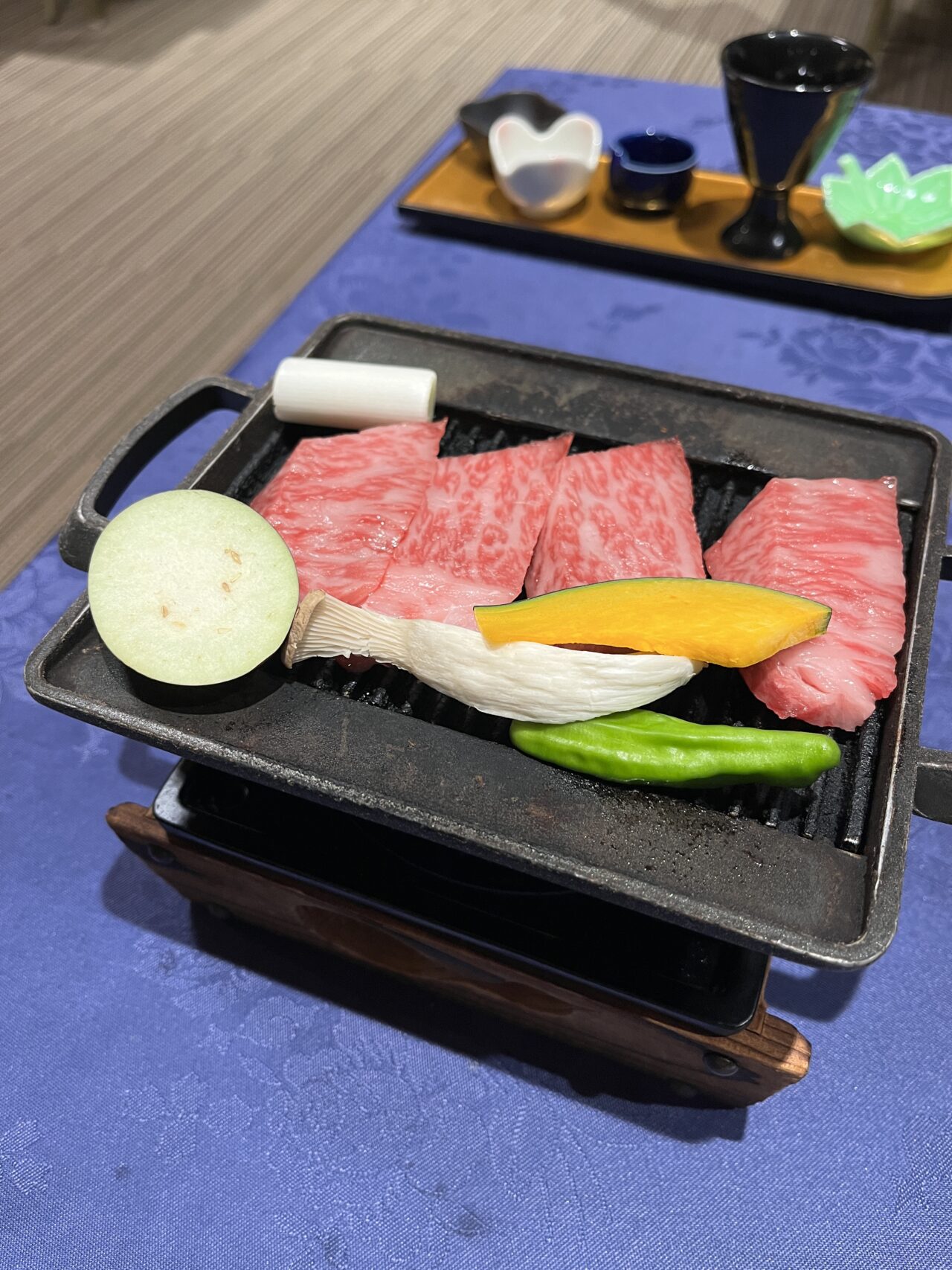
Left: Fresh sashimi, part of the East-meets-West spread. Right: A well-marbled Yamagata beef steak — reliably excellent.
The food itself pairs well with the drinks: Fresh sashimi, vegetable tempura, and a well‑marbled Yamagata beef steak are served.
Rice comes with imoni, a taro and vegetable stew that’s a signature Yamagata comfort food, and dinner finishes with a light jelly and fresh grapes.
Breakfast — A Generous Buffet
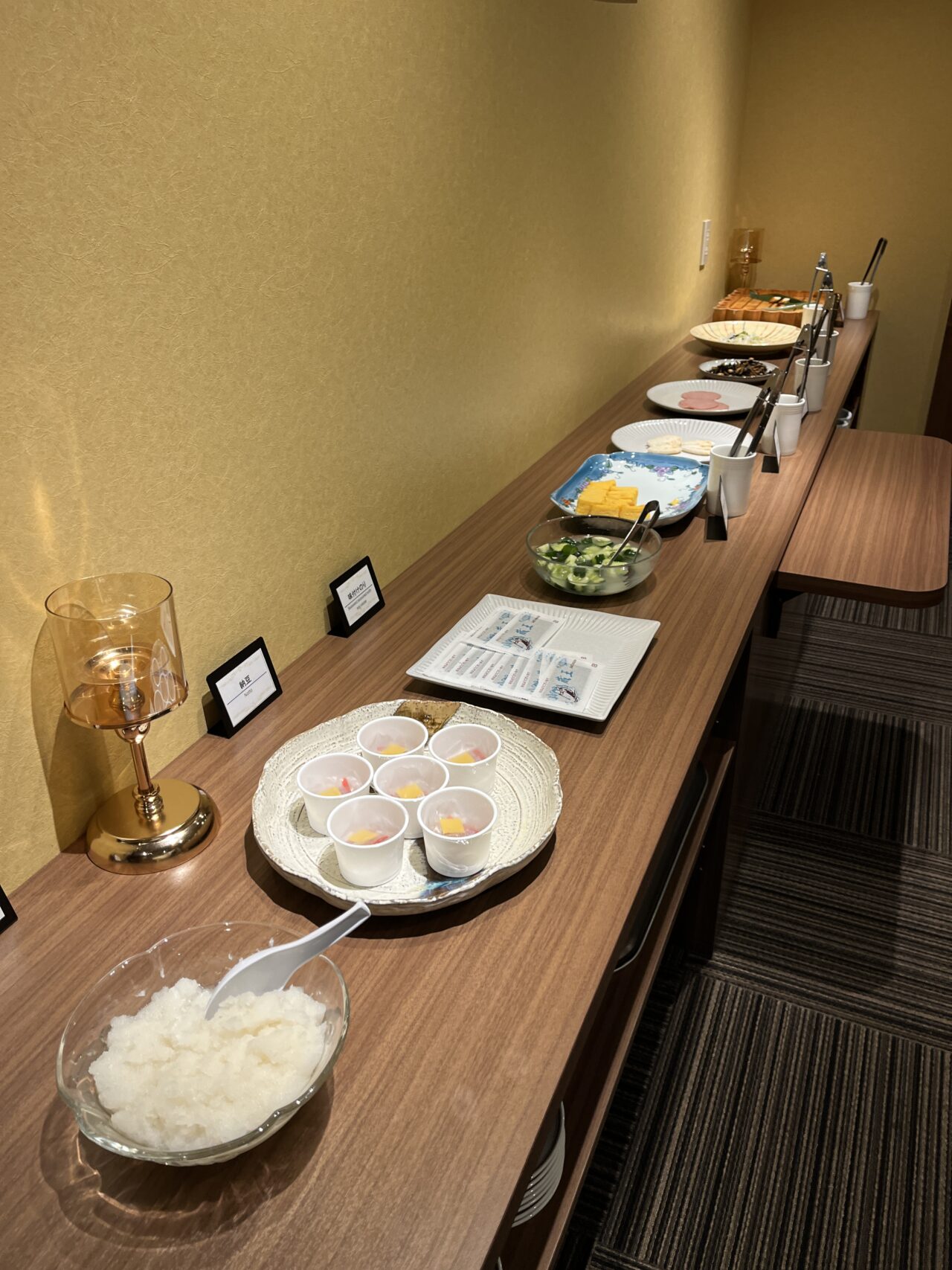
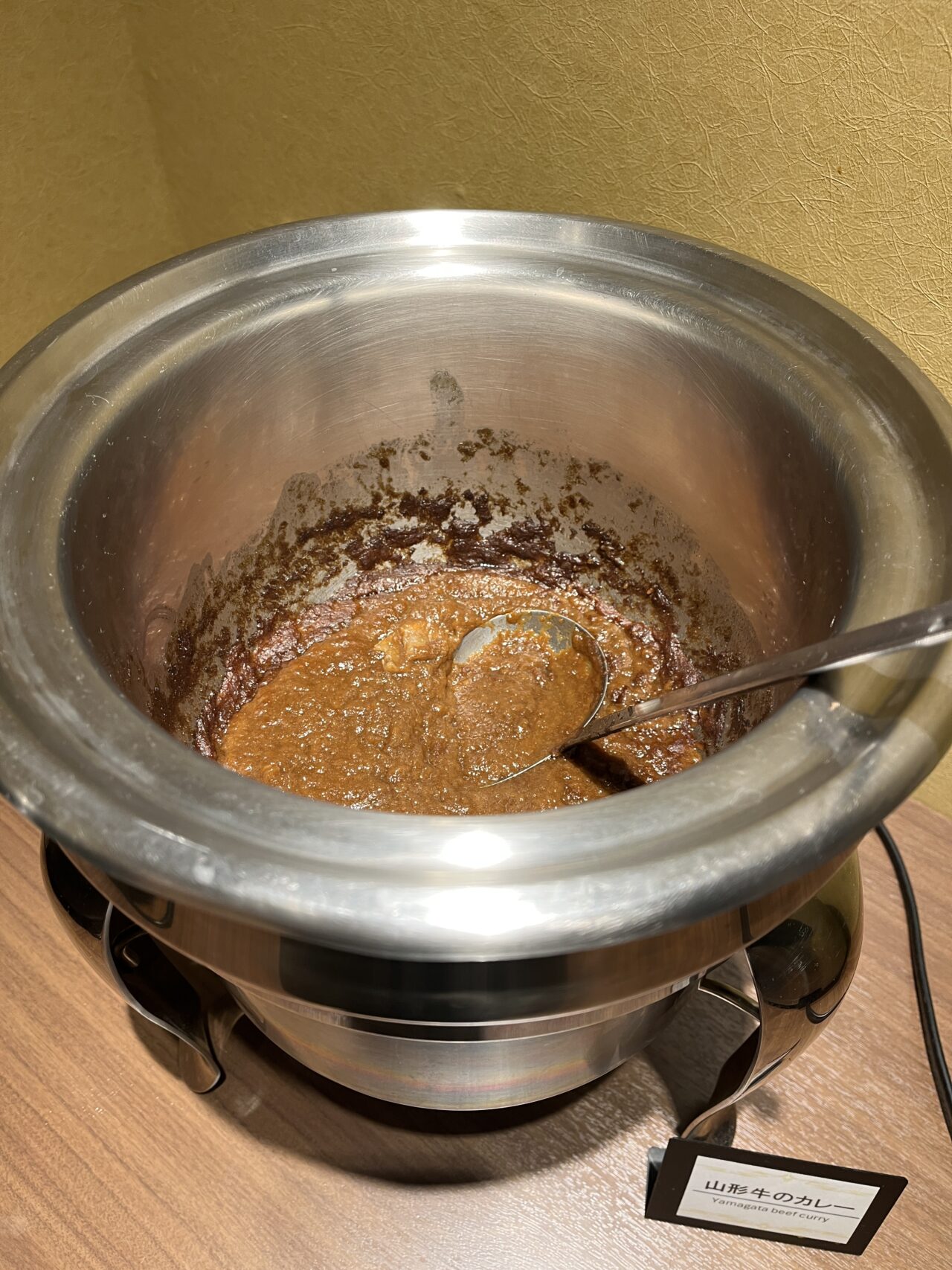
Left: A wide buffet spread of vegetables, natto, tamagoyaki, and other breakfast staples. Right: A surprisingly good curry — a slightly unconventional but very welcome breakfast option.
Breakfast is a genuinely well-stocked buffet: natto, rolled omelet, ham, and vegetable sides alongside both rice and bread, plus a notably good curry. Zao’s own regional specialty, karakara-jiru — a vegetable-packed miso soup — and udon noodles with a choice of toppings round out a substantial spread.
Evening Events — A Playful Extra Touch
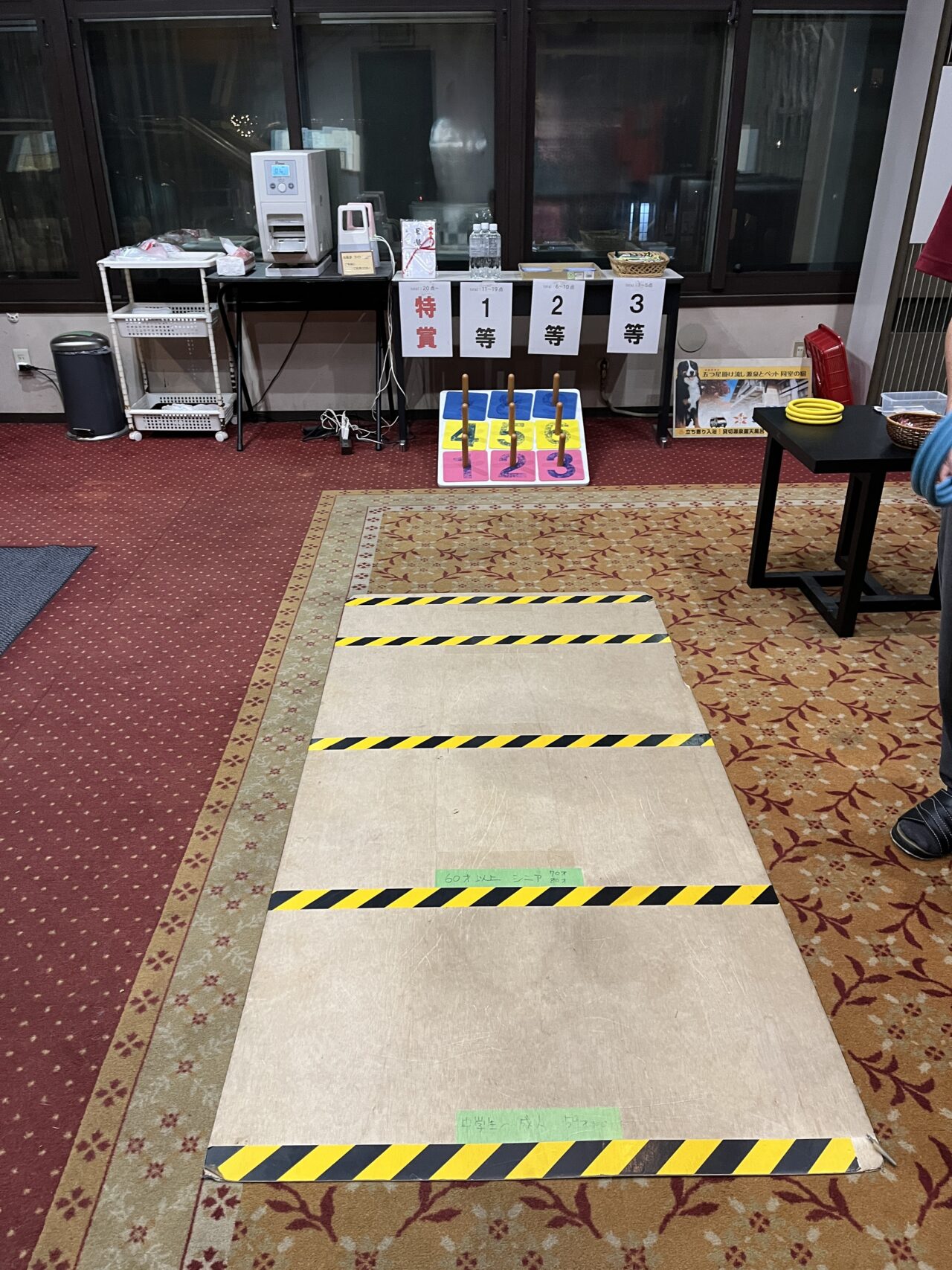
Zenshichinoyu runs a couple of evening activities that go beyond the usual bath-and-dinner routine. A ring-toss game with small prizes is set up in the lobby most evenings — a lighthearted, easy-to-join activity that works regardless of language, and a nice way to pass some time with family or a partner before or after a soak.
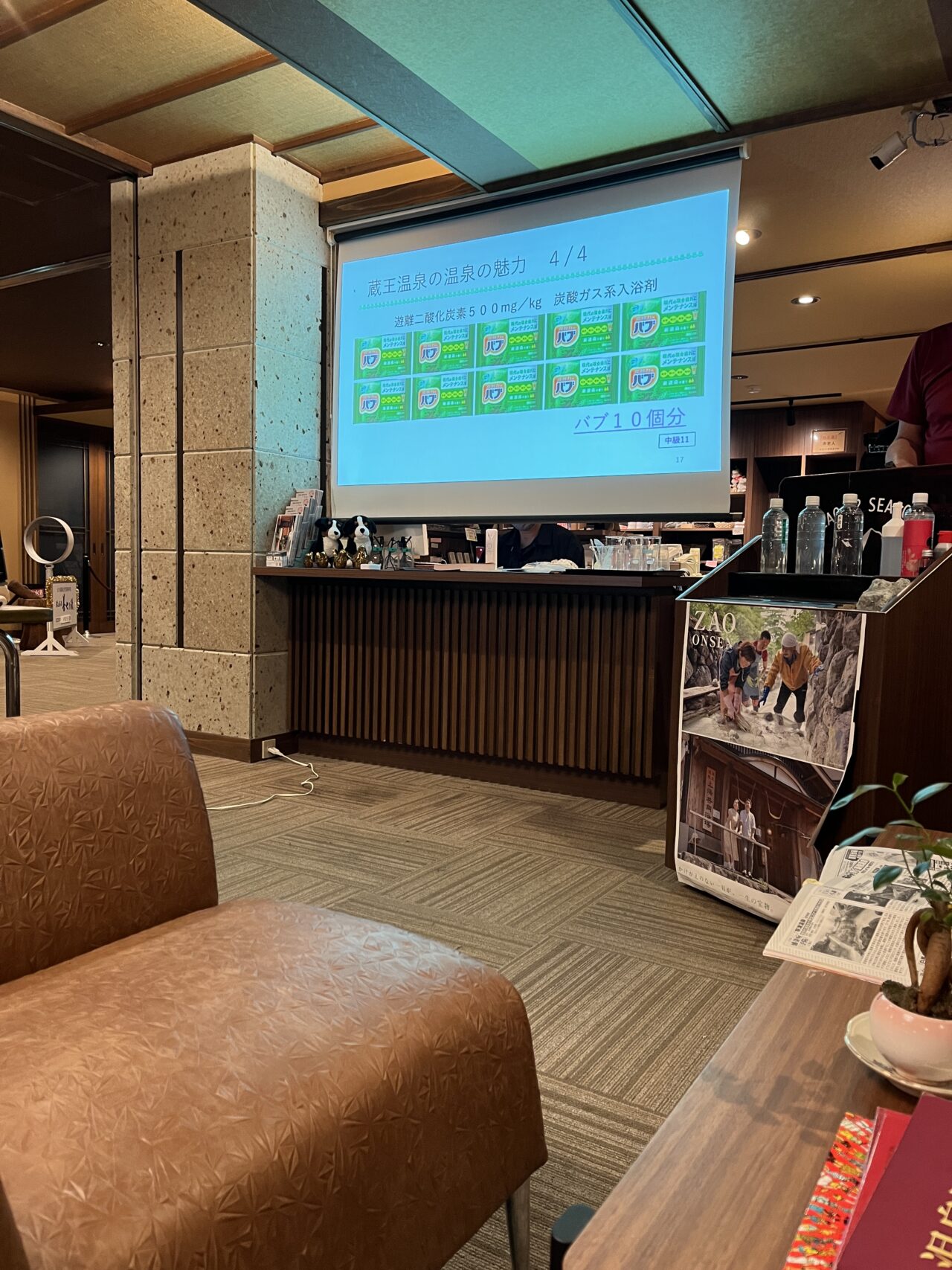
The inn also holds a short “hot spring science” session, where a staff member explains what makes Zao Onsen’s water chemically unusual, followed by a quiz with small prizes for a perfect score. It’s conducted in Japanese and there’s no indication of an English-language version, so it may be of limited use if you don’t speak Japanese — but it’s worth knowing about as a sign of how much this inn invests in guest experience beyond the baths themselves.
Final Thoughts
Zenshichinoyu makes the most of one of Japan’s most powerful hot springs, spreading its pH 1.5 water across five genuinely different private baths so that almost any guest can find one that suits their mood. Add an all-you-can-drink dinner, a generous breakfast buffet, and a hotel that clearly enjoys entertaining its guests, and this is a stay built for slowing down, trying several baths, and simply having fun.
Zenshichinoyu is ideal for visitors who:
- Want to experience one of Japan’s most acidic hot springs first-hand
- Enjoy trying several different private baths in one stay
- Appreciate a good all-you-can-drink dinner with quality food
- Are traveling as a couple or family and enjoy a bit of lighthearted fun on the side, like an evening game
- Are traveling with a dog and want pet-friendly rooms and bathing
▼Book your stay▼