
This article contains advertisements
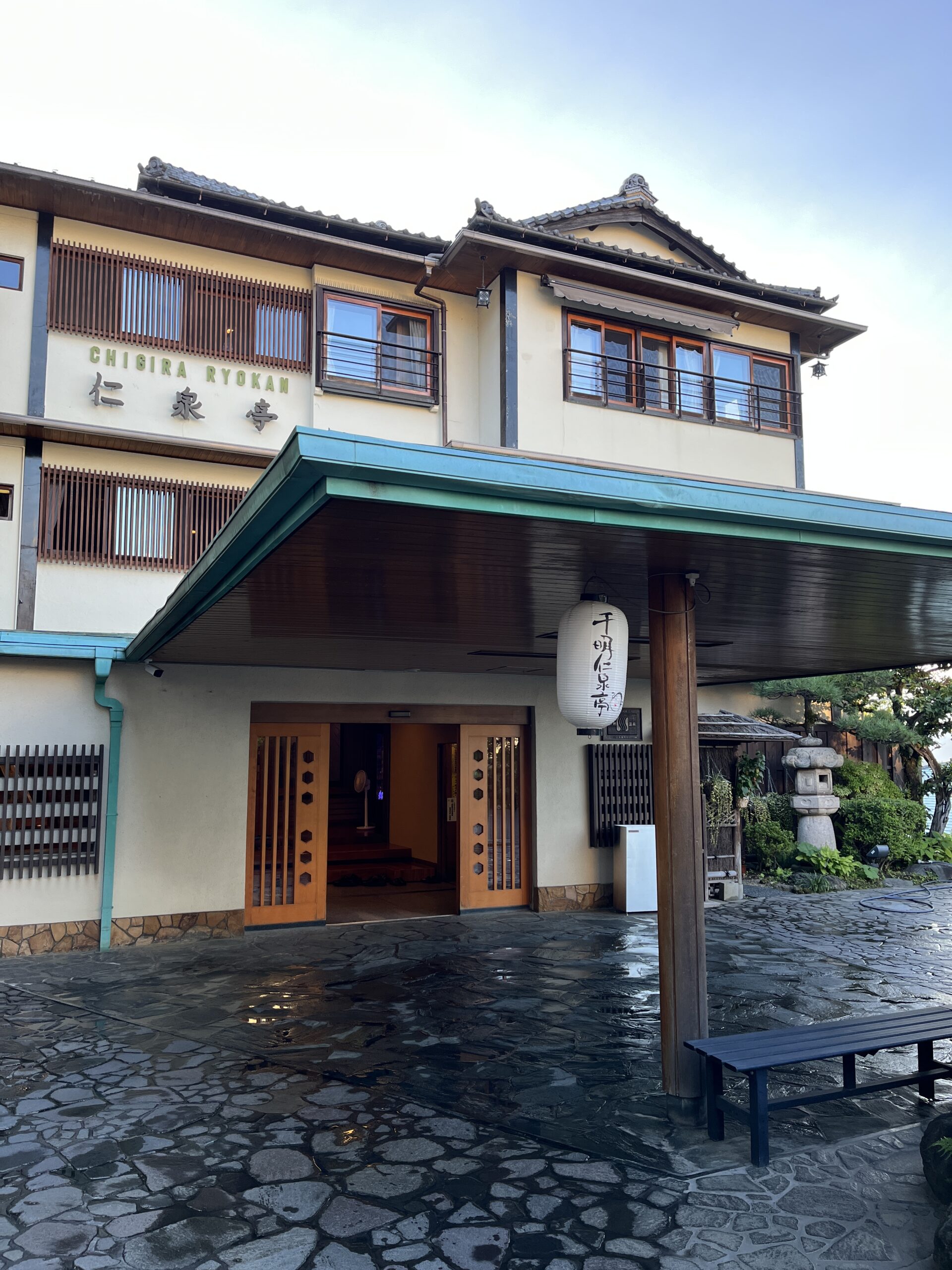
Ikaho Onsen in Gunma Prefecture is one of Japan’s most historic hot spring towns, with records of its waters dating back nearly 2,000 years. At its heart is the Ishidan-gai — a famous stone stairway lined with shops, food stalls, and the kind of nostalgic atmosphere that’s increasingly rare in Japan. And right beside it stands Jinsentei, an inn that has been welcoming guests since 1502.
Why Jinsentei stands out:
- Over 500 years of history — one of the oldest continuously operating inns in Japan
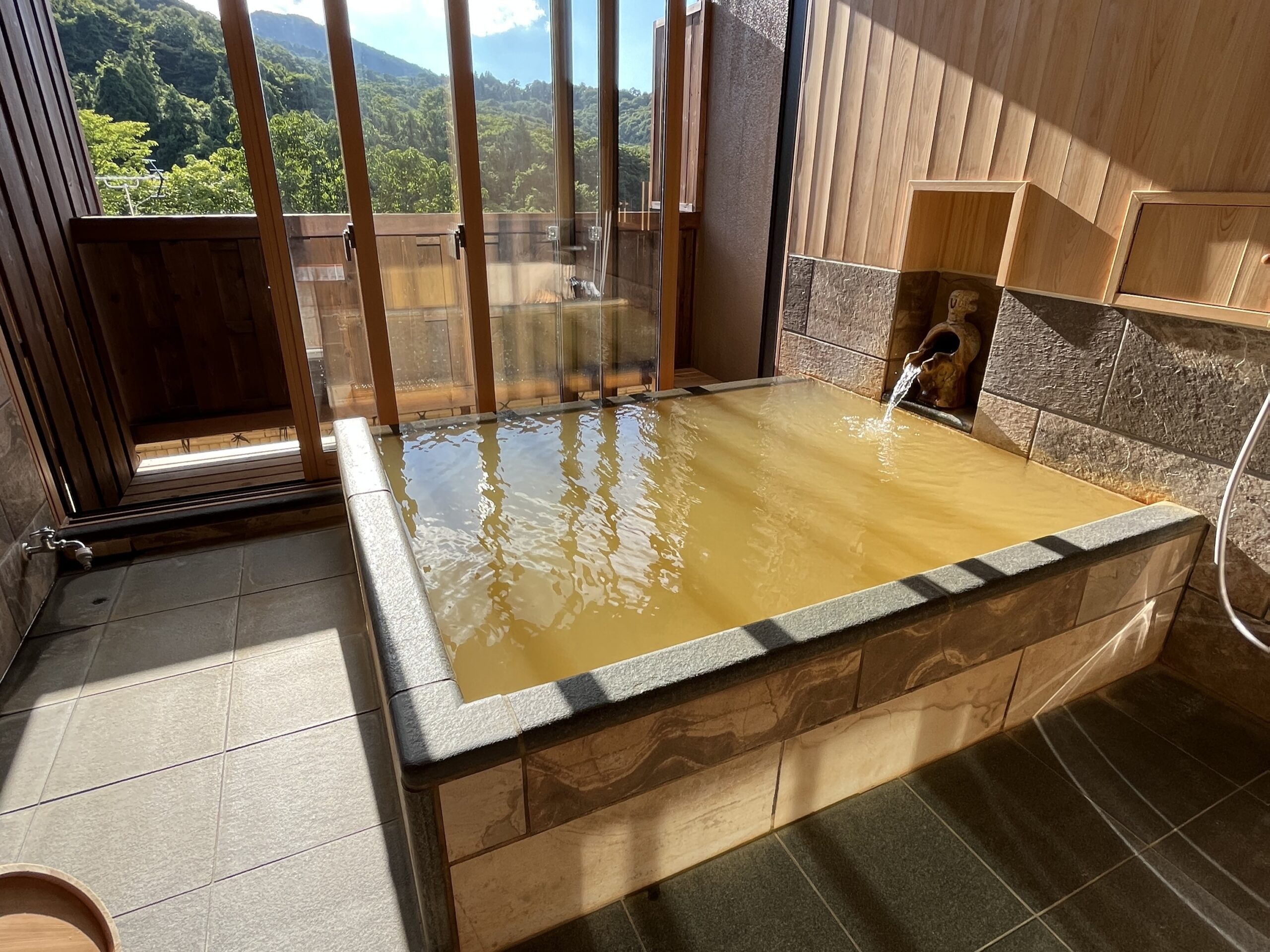
- The famous “Kogane-no-yu” (Golden Spring) — Ikaho’s iron-rich amber water, rare even within the town
- Seven baths in total, including four private baths available any time at no extra charge
Of the inns along Ikaho’s main street, only a handful have access to the golden spring water — and Jinsentei is one of them. (This review is based on a 2022 stay.)
Ikaho Onsen “Jinsentei”
Inn Details
| Address | 45 Ikaho-machi, Shibukawa, Gunma |
|---|---|
| Phone | 0279-72-3355 |
| Official Website | jinsentei.com |
| Day-use Bathing | Not available (overnight guests only) |
| Check-in / Check-out | From 15:00 / By 10:00 ※ Rooms with private in-room bath: by 11:00 |
| Credit Cards | Accepted (VISA, Mastercard, AMEX, Diners and others) |
▼Book your stay▼
Getting There — Easily Accessible from Tokyo
Ikaho Onsen is one of the more accessible hot spring towns from Tokyo, making it a strong option for a one- or two-night trip without a long journey.
🚄 From Tokyo
Take the Joetsu Shinkansen from Tokyo Station to Takasaki (~50 min), then a local train or bus to Shibukawa Station (~25 min), followed by a bus up to Ikaho Onsen (~25 min). Total: around 1.5–2 hours from Tokyo. A direct highway bus from Shinjuku is also available (~2.5 hours).
🚗 By car
Take the Kan-Etsu Expressway to Shibukawa-Ikaho IC. The inn has its own parking lot on the opposite side from the stone stairway — spacious and easy to use.
The Ishidan-gai — A Stairway Worth Wandering
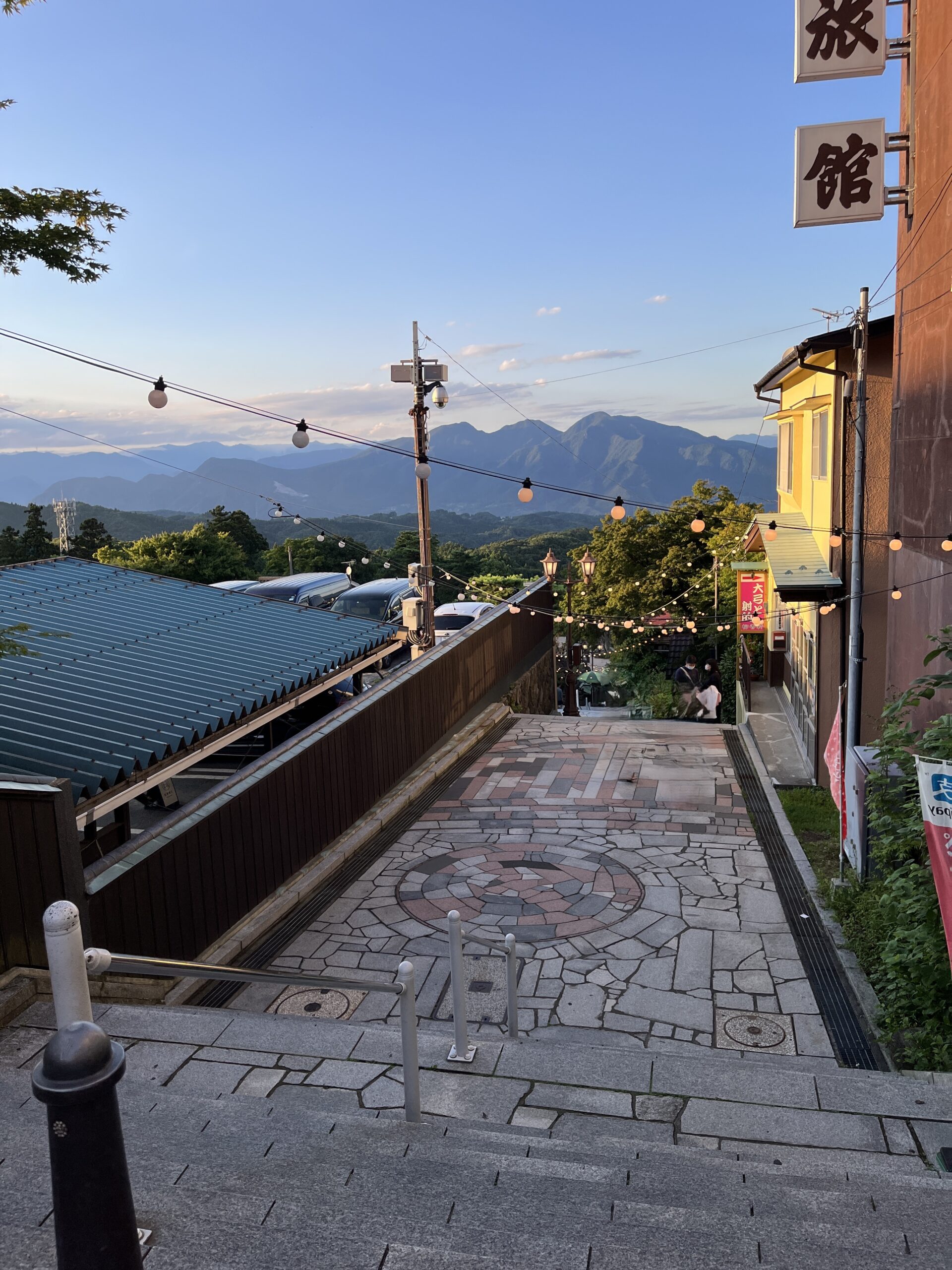
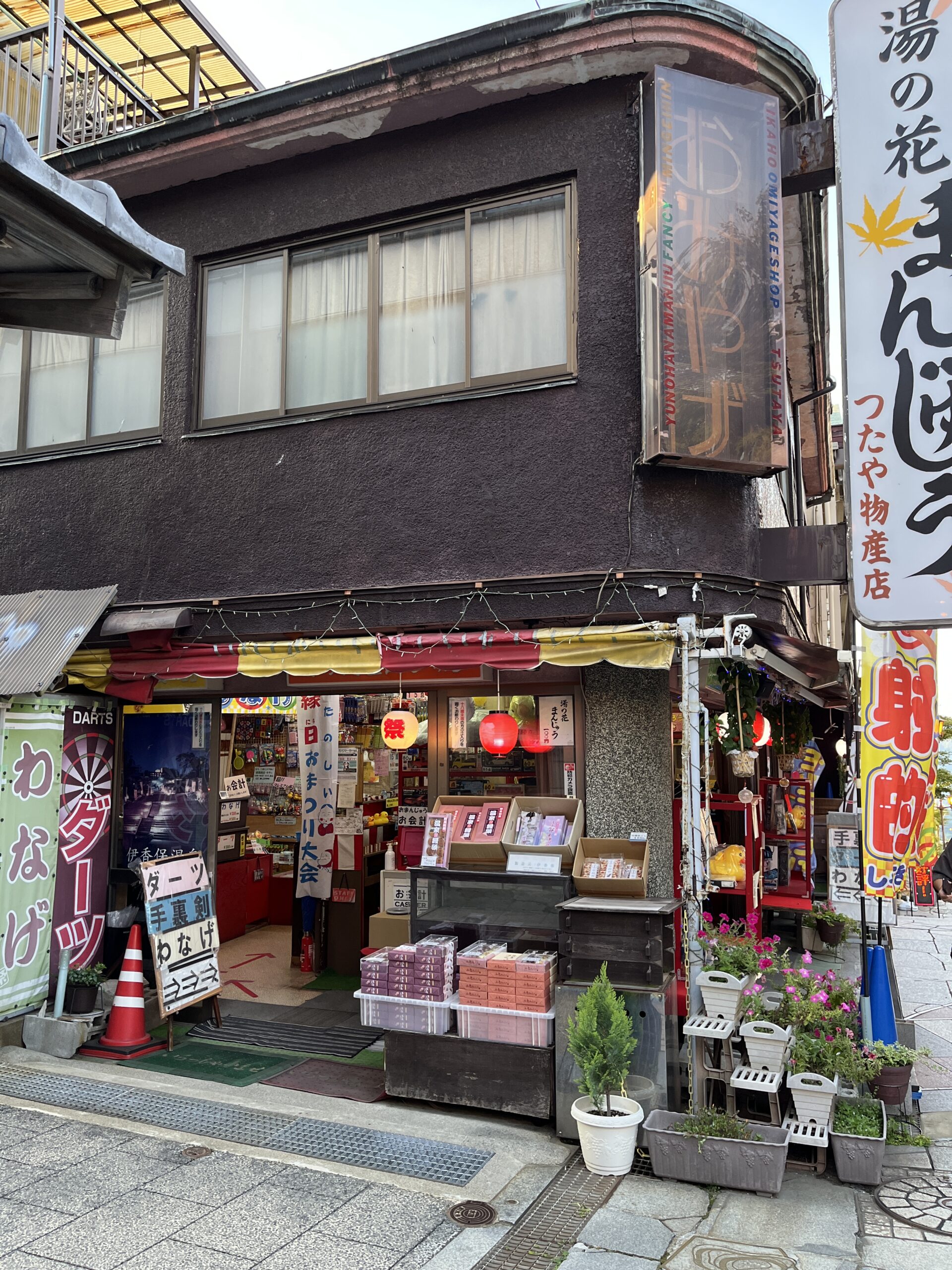
Left: The view from the stairway toward Mt. Haruna — a sweeping backdrop on a clear day. Right: Retro souvenir shops and game stalls lining the steps.
Step outside Jinsentei and you’re immediately on the Ikaho stone stairway — a long, gently rising street lined with retro shops, food stalls, and traditional amusements like ring toss and darts. At the top sits Ikaho Shrine, well worth the climb. Along the way, look out for a small shrine entirely surrounded by ducks — one of those unexpectedly charming details unique to this town.
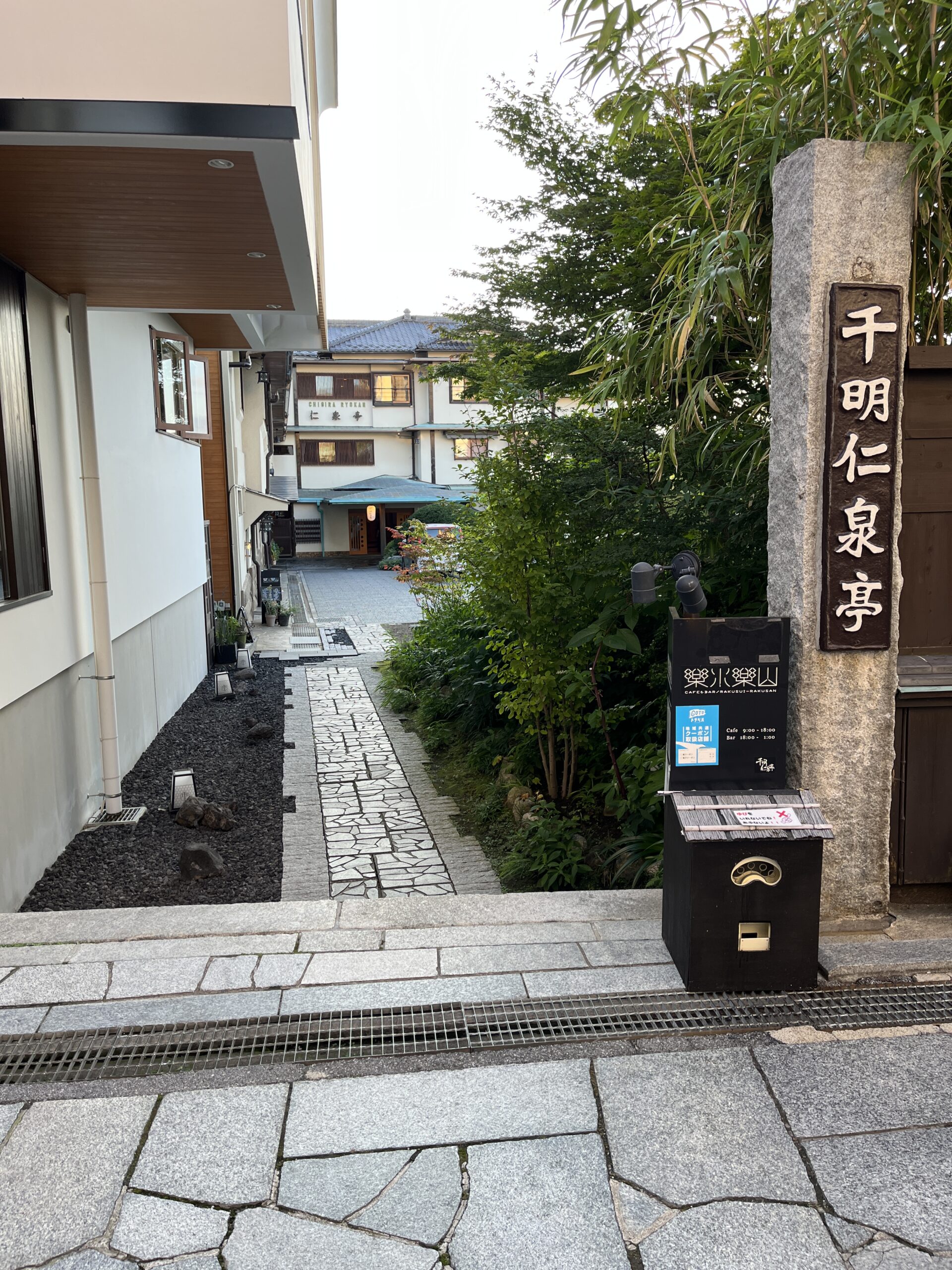
The Inn and the Room
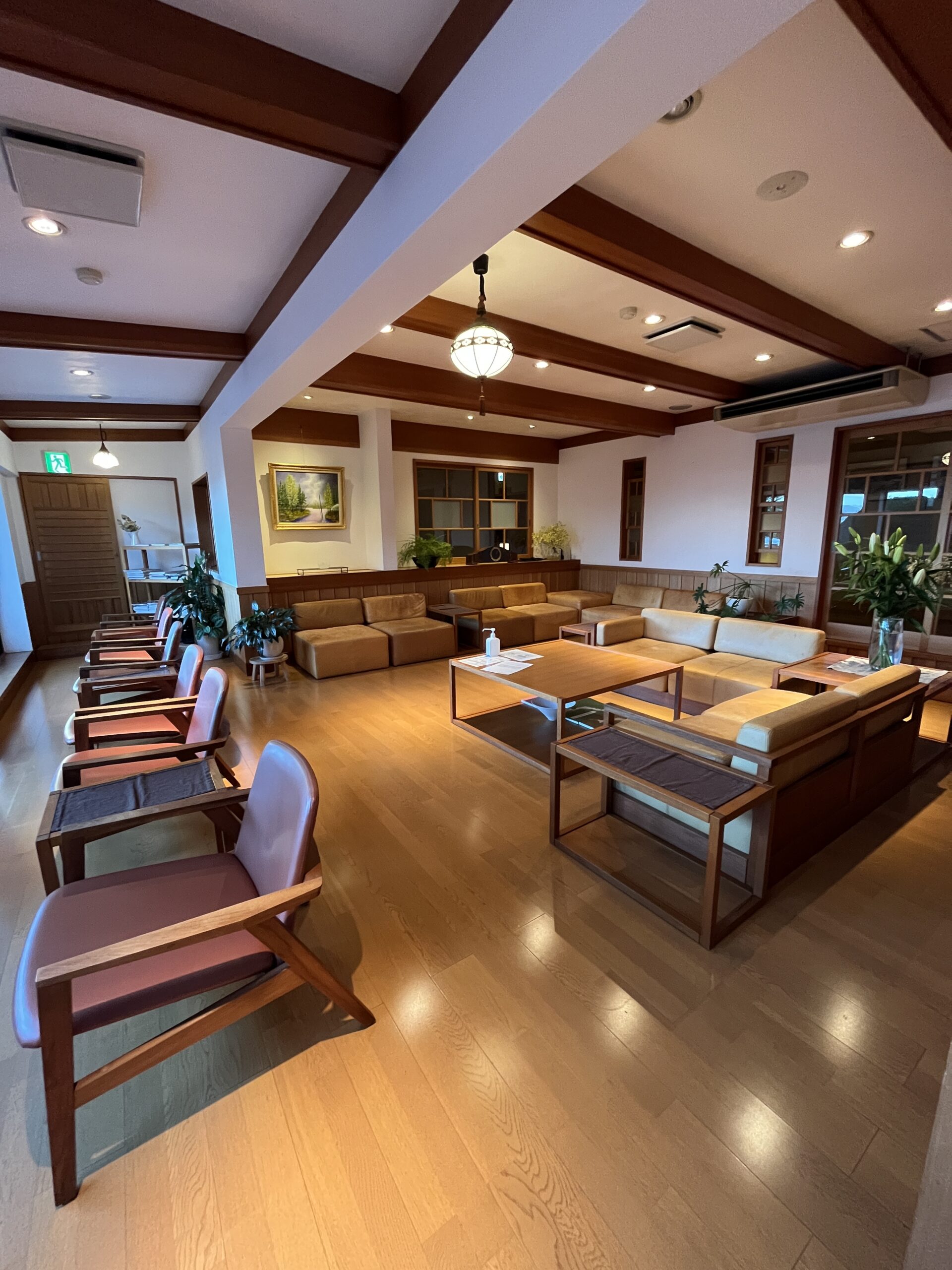
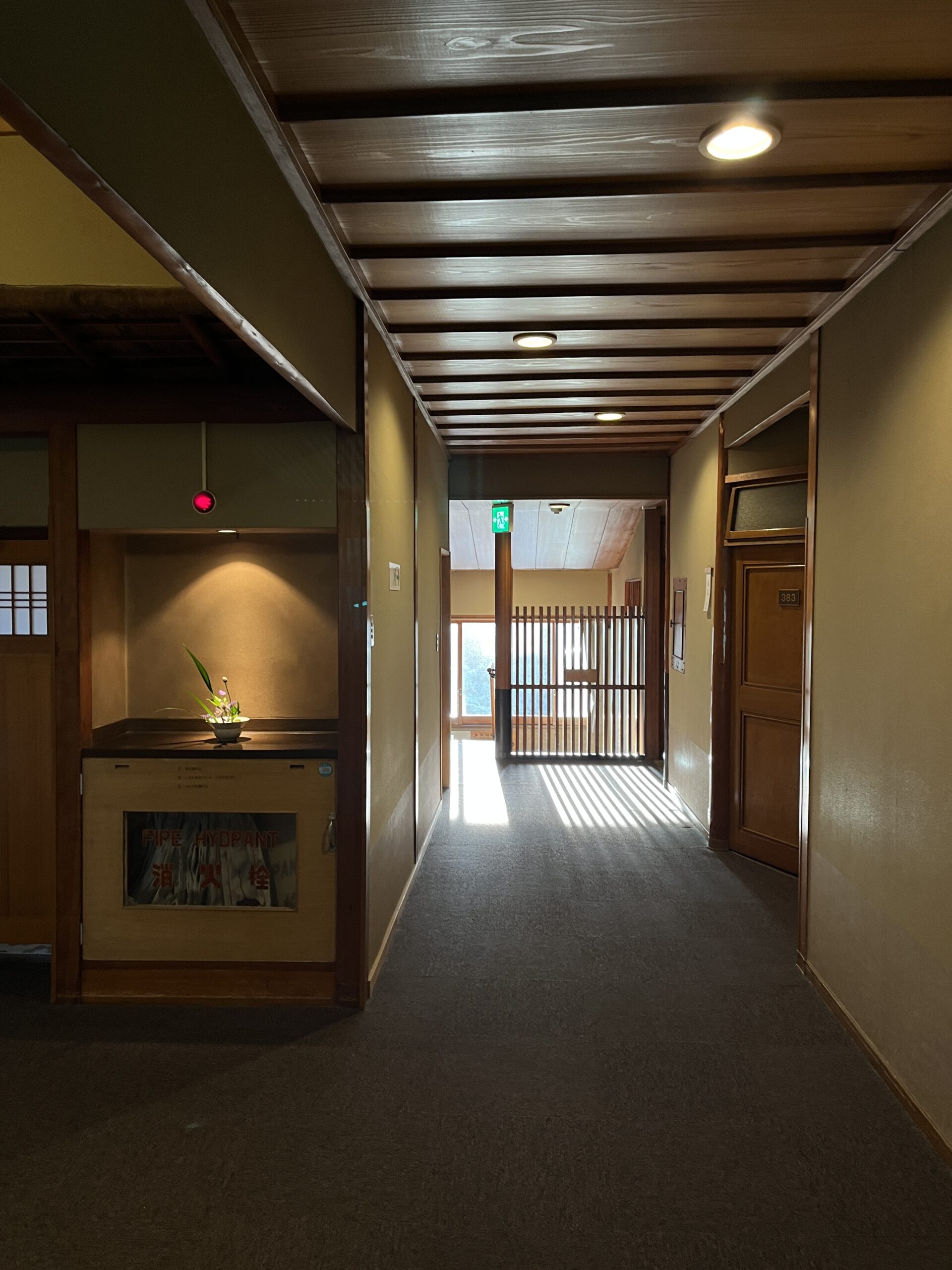
The spacious lobby, and the traditional-style corridor running through the inn. Comfortable and characterful without being stuffy.
| Toilet | Private (en suite) |
|---|---|
| Refrigerator | Available |
| Air Conditioning | Available |
| Wi-Fi | Available |
| TV | Available |
| Towels, Yukata & Tabi socks | Provided |
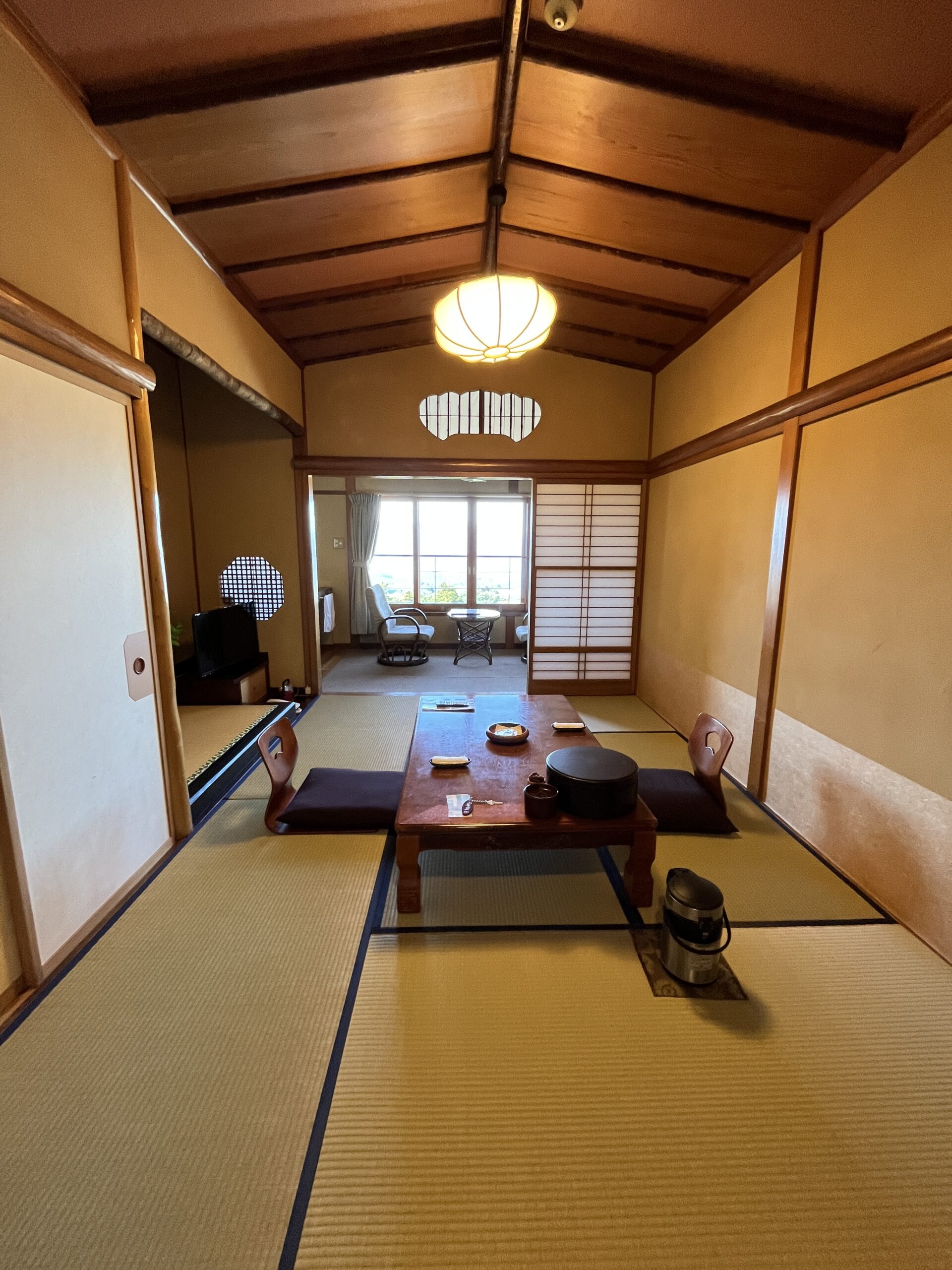
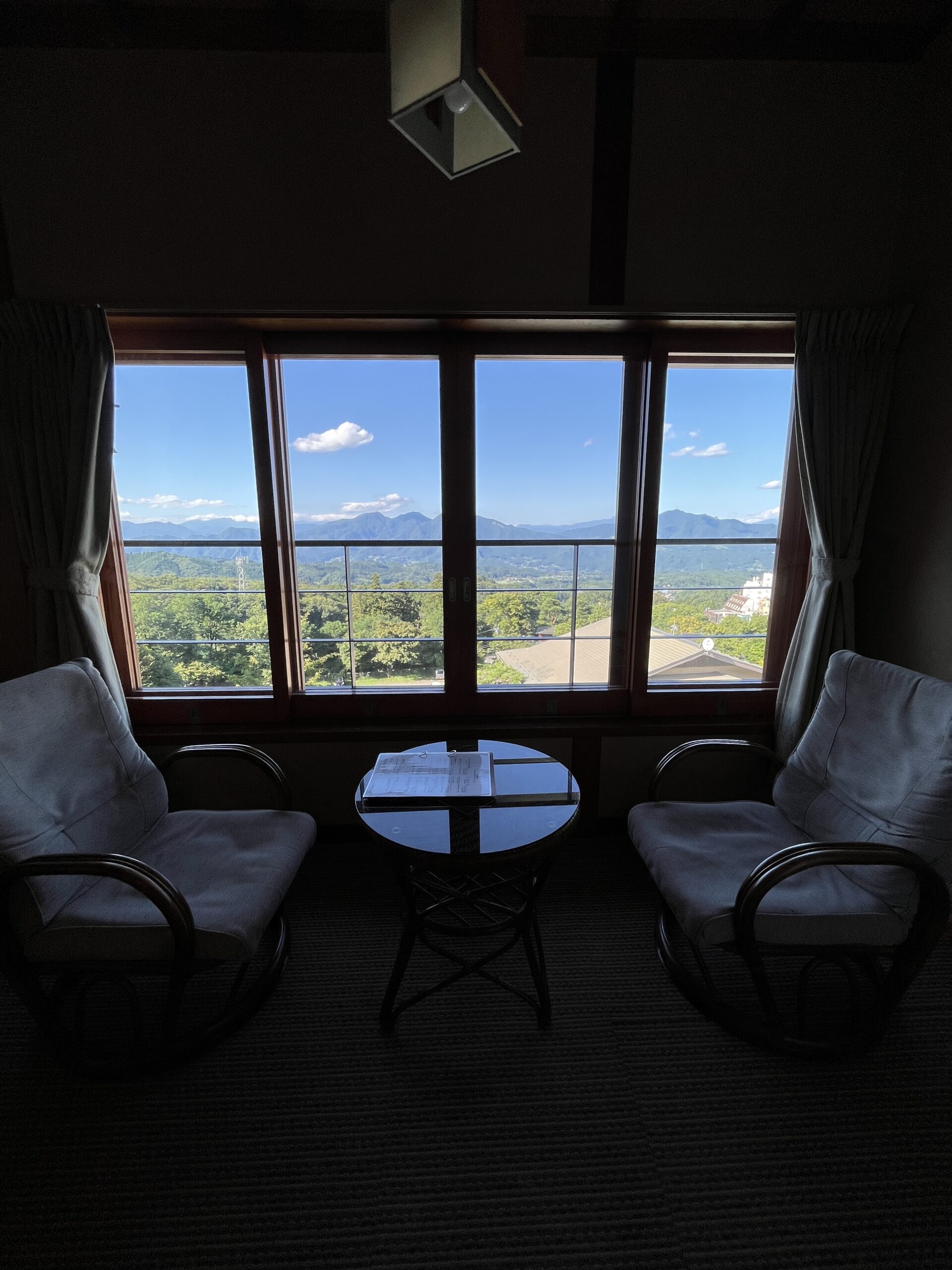
A deep, well-proportioned tatami room with warm lighting, and the view from the window — Mt. Haruna visible in the distance.
Rooms are spacious traditional tatami style, with warm lighting and a window seat overlooking Mt. Haruna. The in-room amenities are complete — including tabi socks (traditional Japanese split-toe socks), which let you walk the corridors in proper style. Everything is well-maintained and clean; this is a comfortable base even for first-time ryokan visitors.
The Hot Springs — Seven Baths, All Golden
Ikaho Onsen has two distinct spring types: the colorless “Shirogane-no-yu” (Silver Spring) and the famous amber-colored “Kogane-no-yu” (Golden Spring). All seven baths at Jinsentei use the golden spring water — a rarity even within the town.
♨ What is “Kogane-no-yu” (Golden Spring)?
The golden colour comes from iron. When the spring water is exposed to air, the iron oxidizes and turns the water a warm, rusty amber. Rich in minerals, it leaves skin feeling noticeably soft — and on the main street of Ikaho, only a handful of inns have access to it. Jinsentei is one of them.
| Spring Name | Ikaho General Spring (blended source) |
|---|---|
| Water Type | Calcium-Sodium Sulfate-Bicarbonate-Chloride Spring |
| Source Temperature | 41.2°C / 106.2°F |
| pH | 6.4 (near neutral) |
| Color / Scent | Amber / faint iron scent — slightly reddish-brown deposits around the tap |
| Large Bath “Megumiyu” | 15:00–9:30 (gender rotated around 1:00am) |
|---|---|
| Large Bath “Takiyu” | 15:00–9:30 (gender rotated around 1:00am) |
| Outdoor Bath | 15:00–21:00 / 6:00–9:30 |
| Private Baths ×4 | 15:00–9:30 (first-come, first-served) |
① “Megumiyu” Large Bath — 1 Metre Deep ★
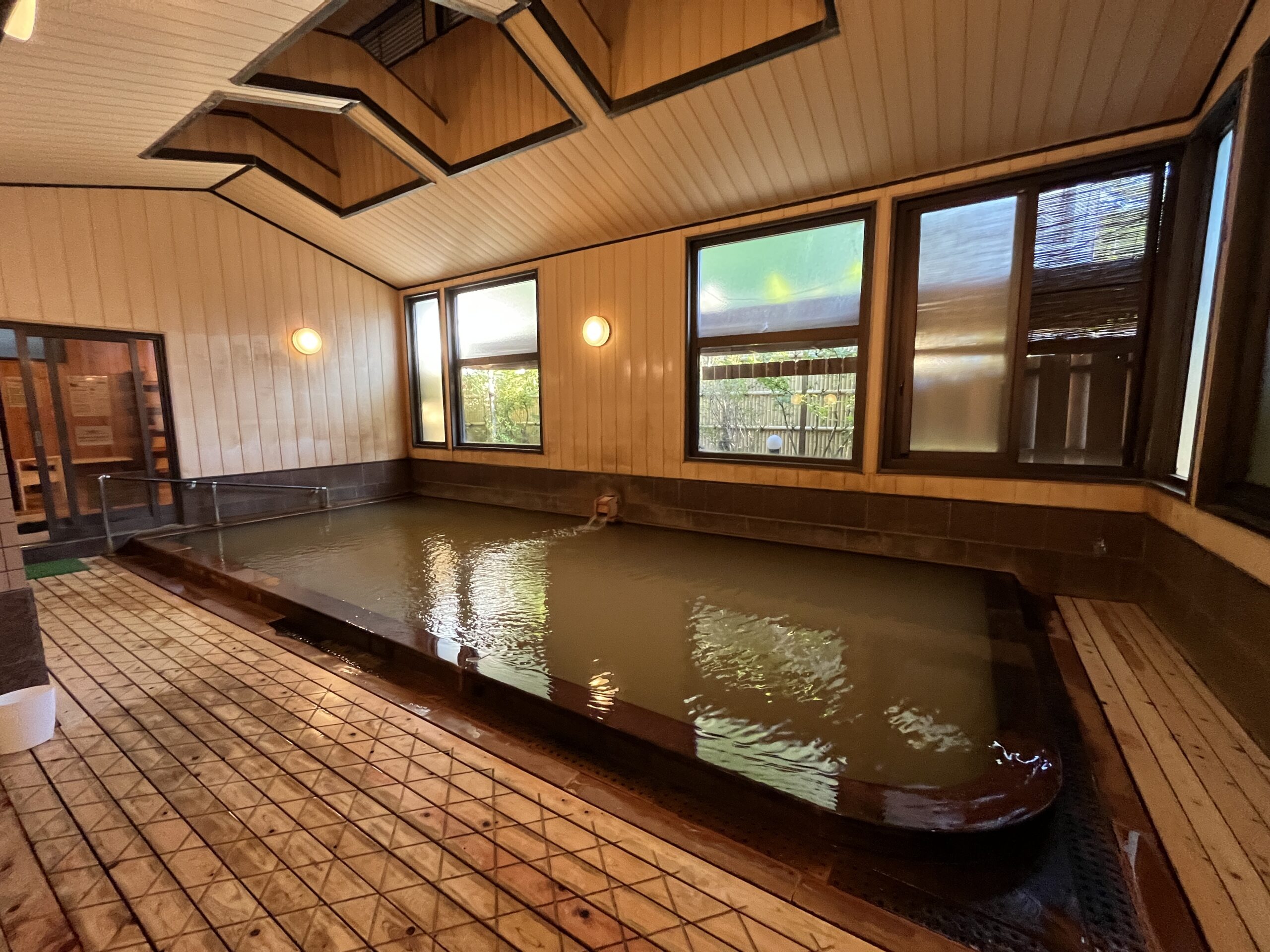
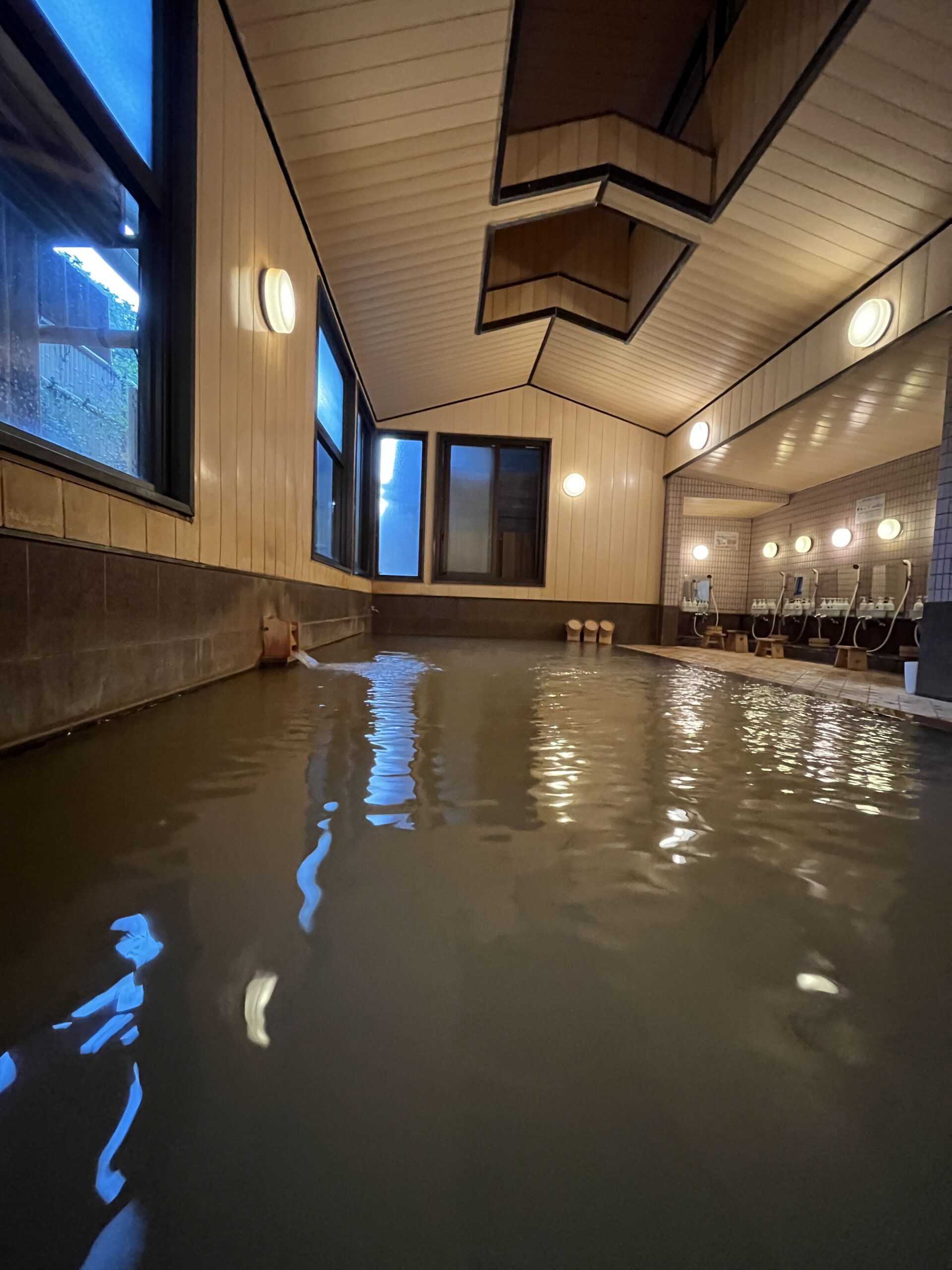
The Megumiyu — wide, generous, and notably deep. The constantly overflowing fresh spring water is a beautiful sight.
The standout feature of this bath is its depth — a full 1 metre, enough to submerge up to chest height on a 160cm person. Standing in a hot spring bath is an unusual and oddly satisfying experience. The water runs slightly cooler than the private baths due to the larger volume, making it ideal for a longer, more relaxed soak. Fresh spring water flows in continuously and overflows at the edges — a reassuring sign of quality and freshness.
② “Takiyu” Large Bath — Waterfall-Style
The second communal bath features golden spring water cascading down in a waterfall flow into the tub — a dramatic visual that makes the bathing experience feel more dynamic. Accessible as the gender rotation switches with the Megumiyu overnight. Full details and photos are available on the official website.
③ Outdoor Bath — Garden Views
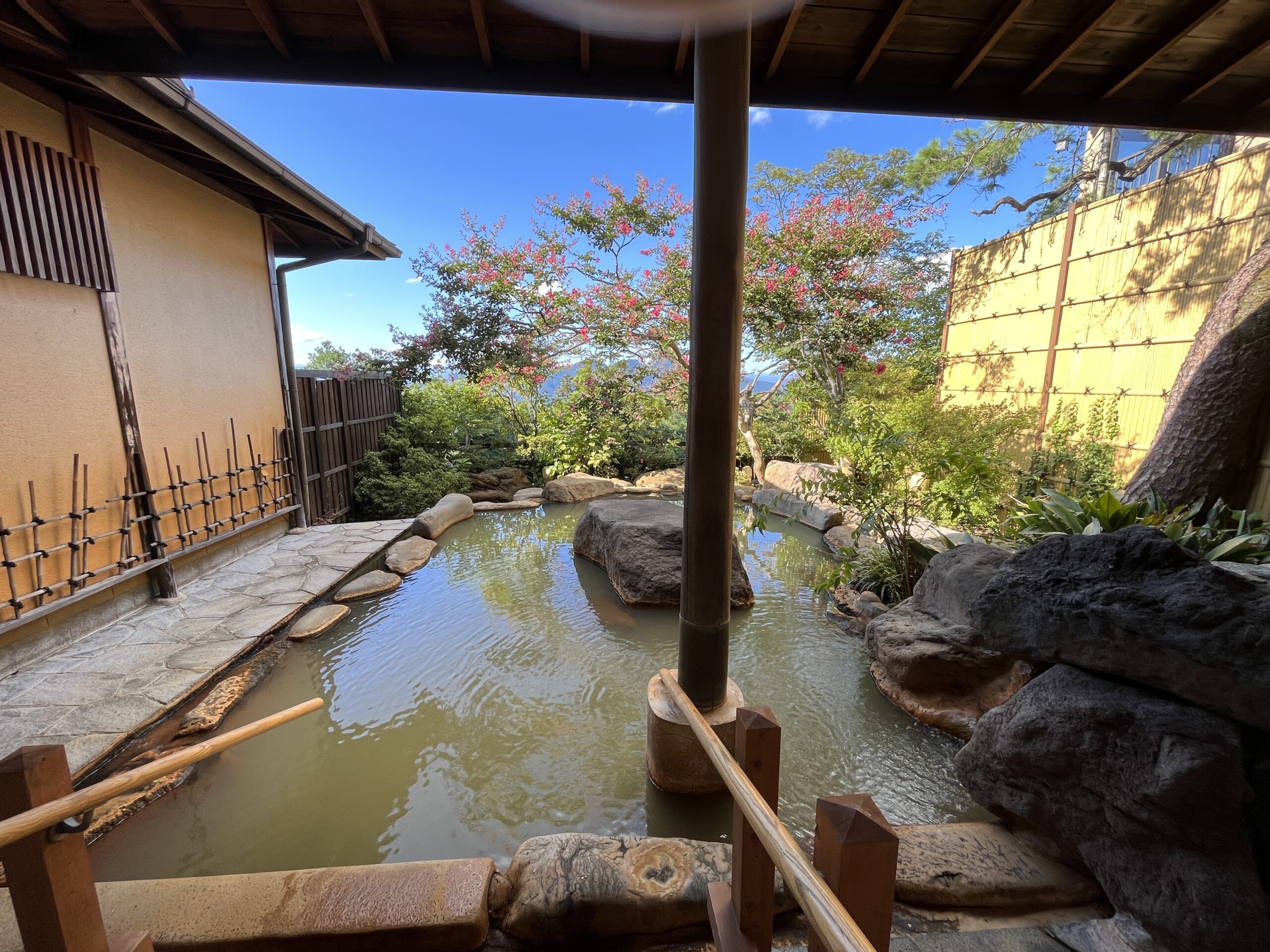
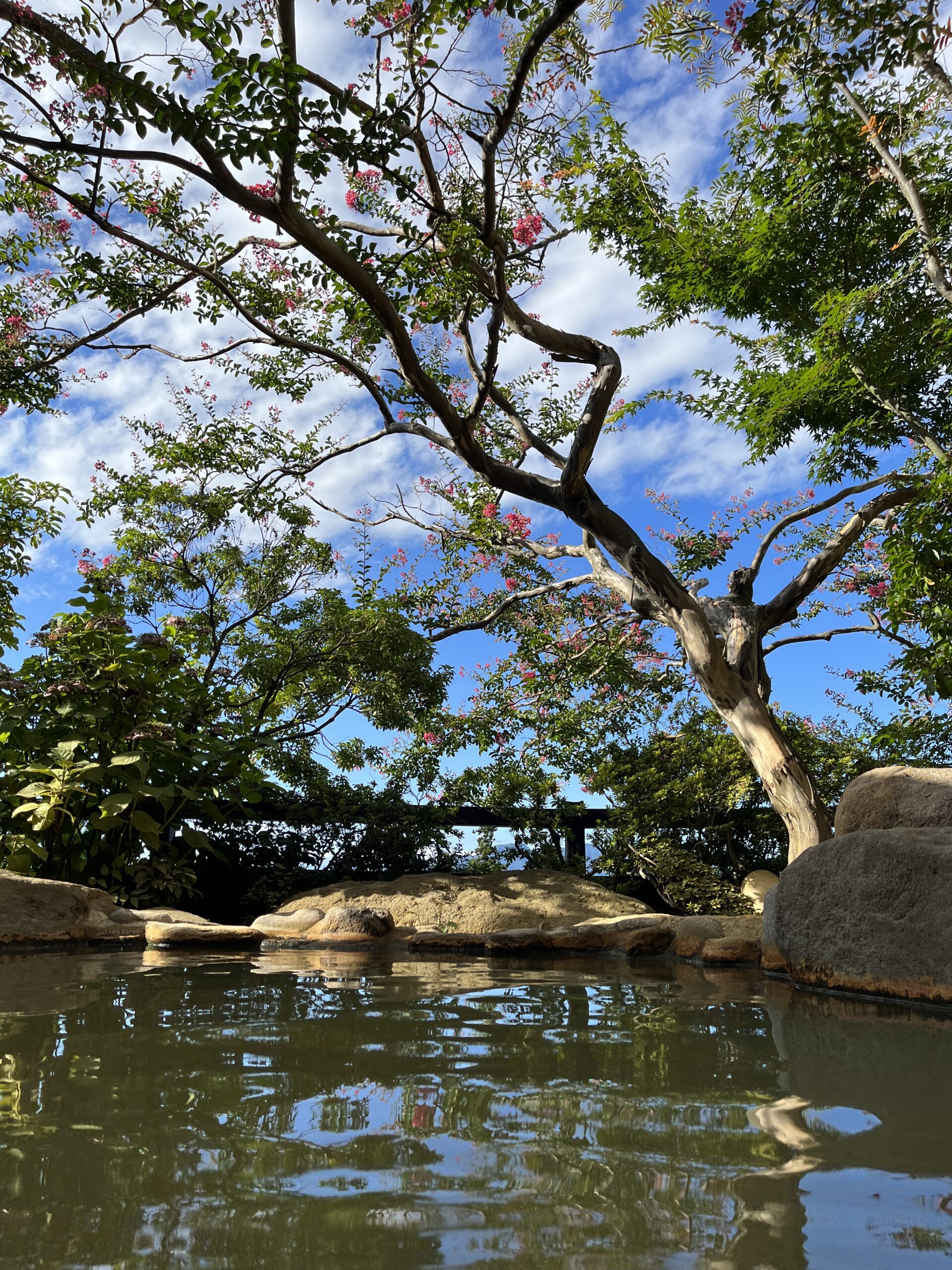
The outdoor bath — open, generous, and surrounded by greenery. In late summer, a flowering tree adds an extra layer of beauty to the scene.
Spacious and open, with views of the surrounding trees and, in the right season, flowering branches overhead. A small indoor tub is attached for warming up between outdoor soaks. The mineral deposits forming around the tap are a visible reminder of the water’s iron-rich content. The sense of complete privacy when you have this bath to yourself is hard to match.
④ Four Private Baths — “Jin”, “Sei”, “Ikoi”, “Izumi”
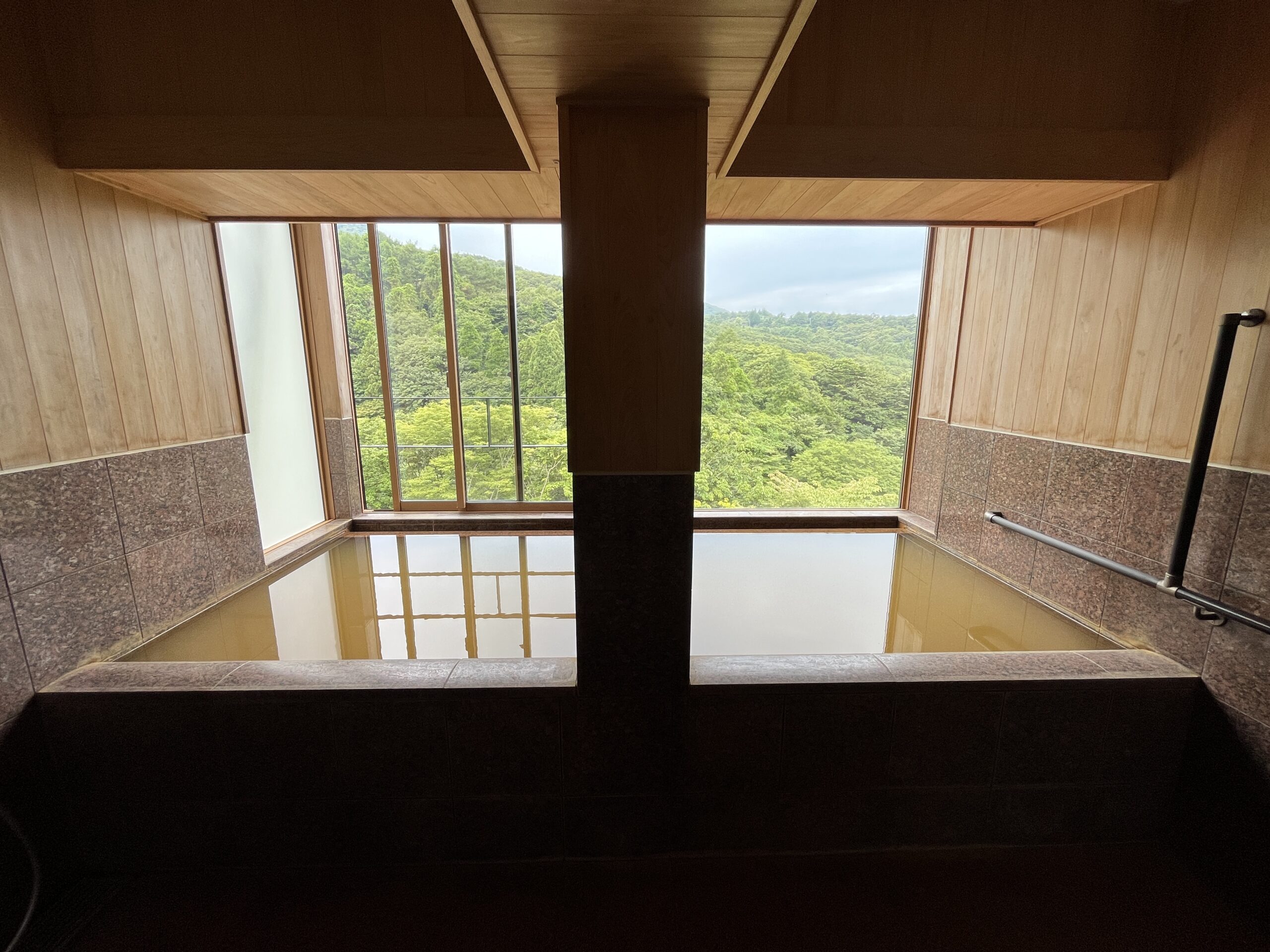
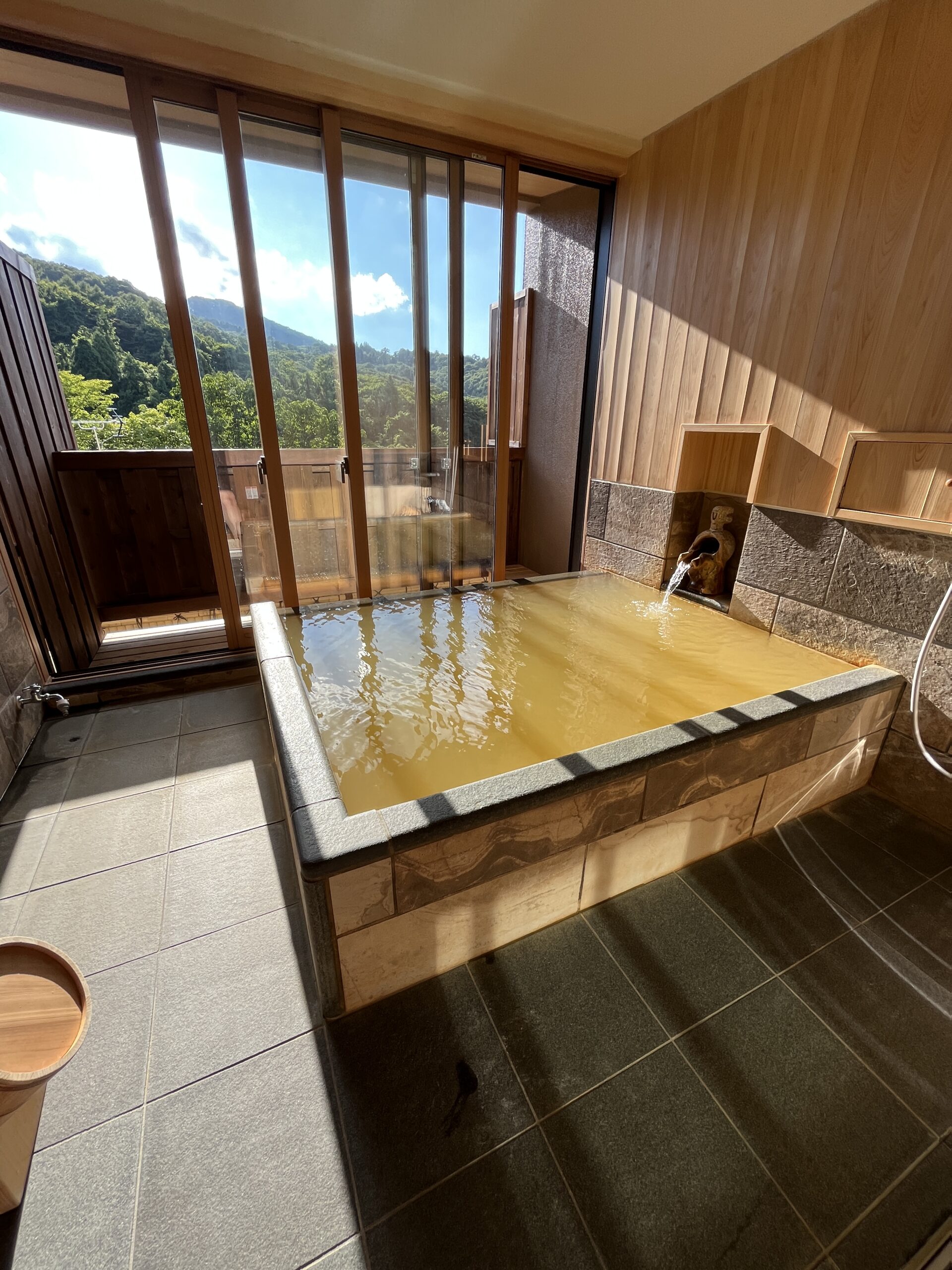
Left: “Sei” — the largest of the four private baths, on the 3rd floor with good views. Right: “Ikoi” — the sunniest of the four, where the golden colour of the water is most vivid.
Four private baths are available at any time, no reservation or extra charge needed. All are clean and well-maintained. “Sei” (3F) is the largest and most open. “Ikoi” (2F) catches the most sunlight — on a bright day, the amber water glows vividly. “Jin” (3F) is smaller and calmer. “Izumi” (2F) is similar in feel to “Jin.” The water runs a touch hotter in the private baths — adjust with the shower if needed.
Dinner & Breakfast — Refined and Served in Your Room
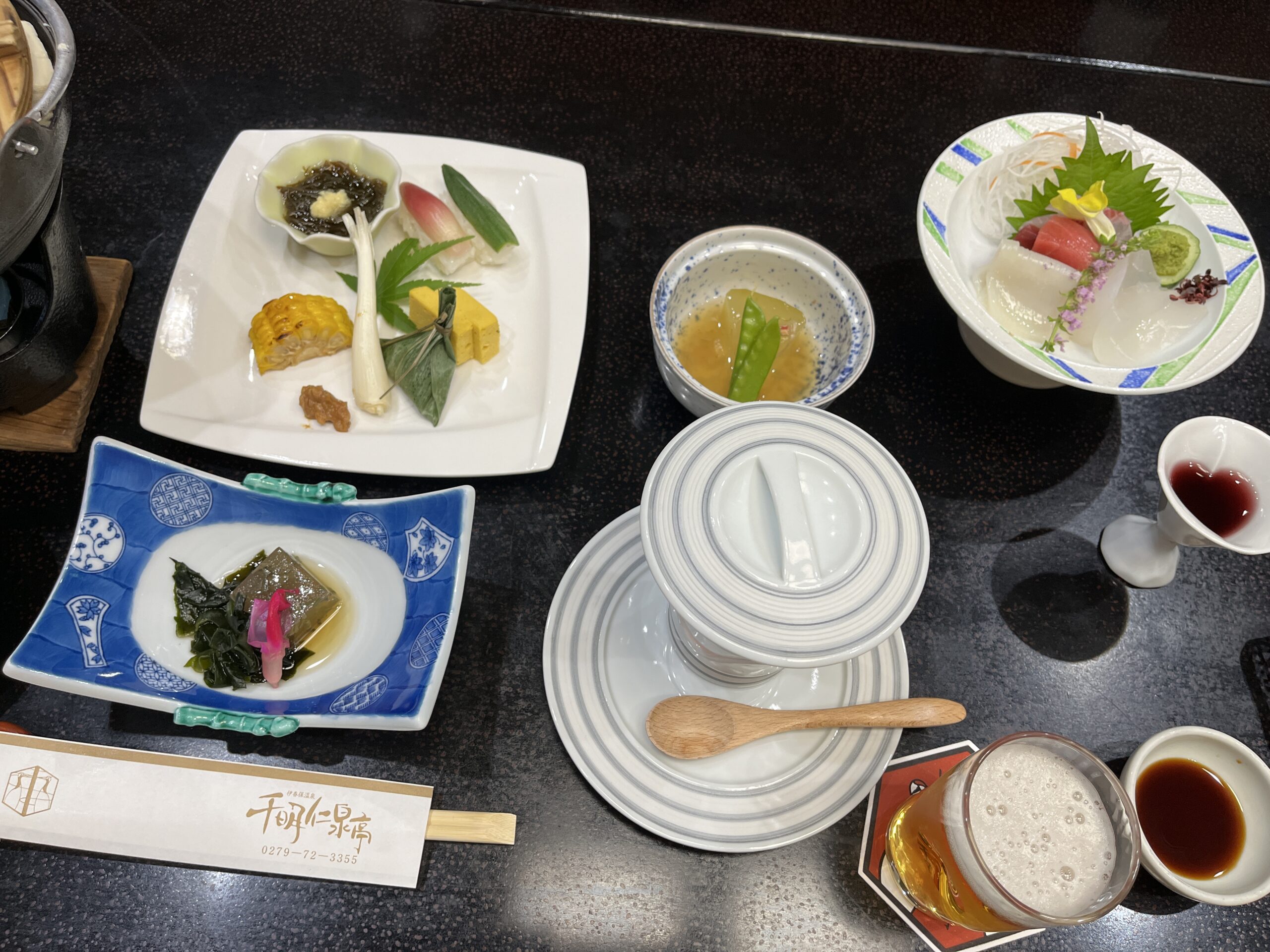
Both meals are served in-room, with courses arriving in sequence. The overall feel is refined and considered — not flashy, but unmistakably high quality.
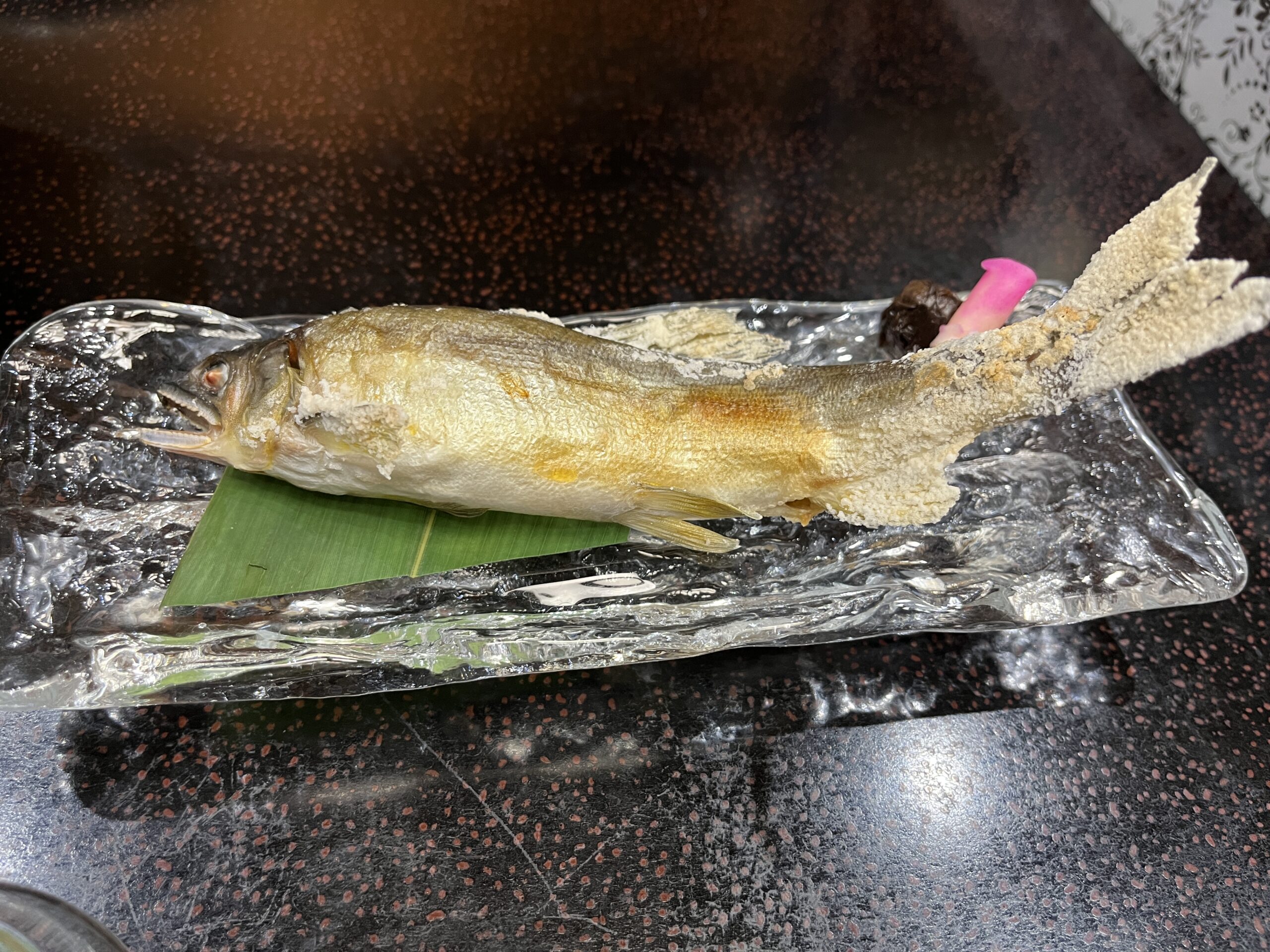
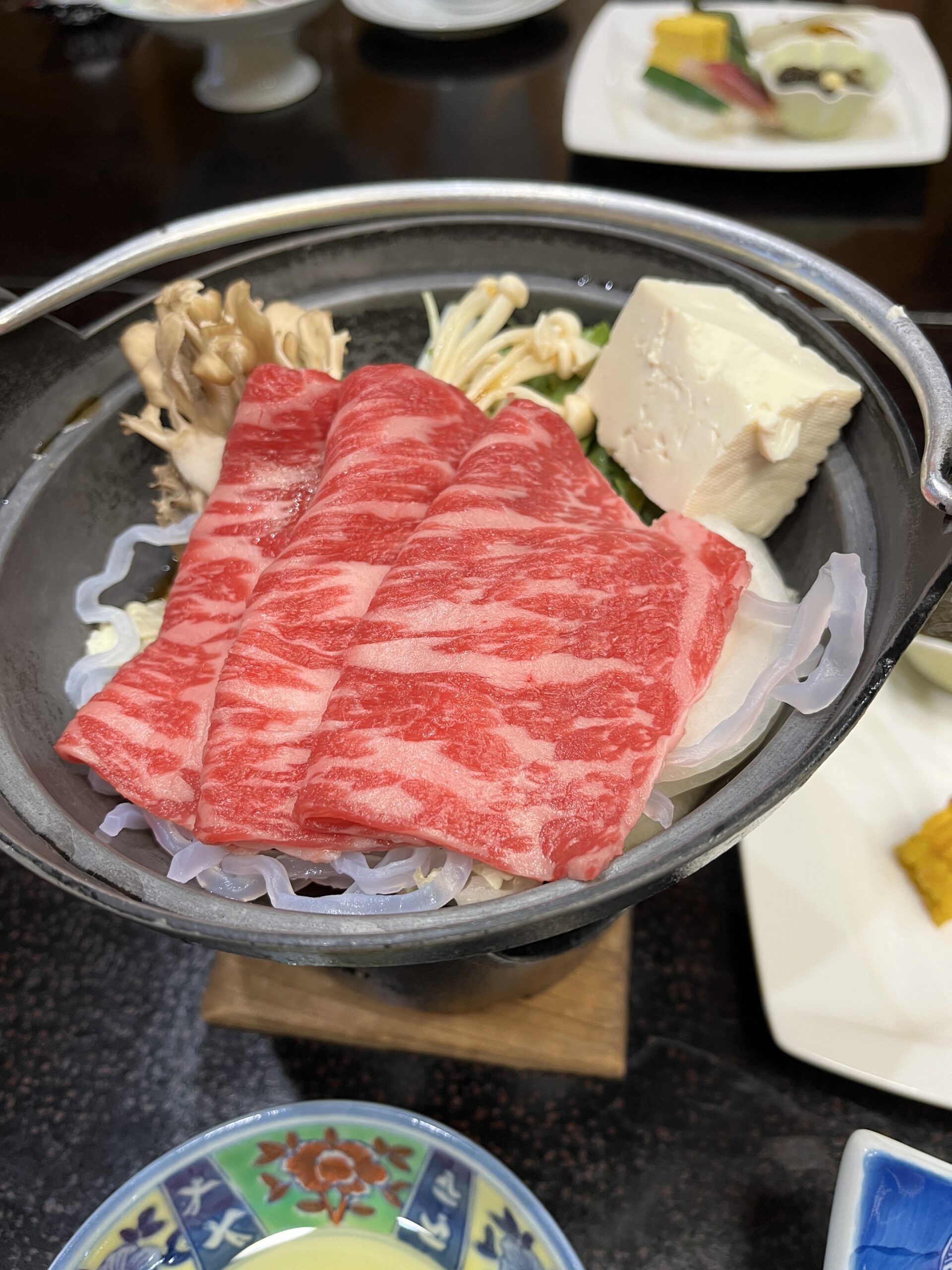
Left: Grilled river fish — simply seasoned and served hot. Right: Joshu beef sukiyaki, the undisputed highlight of the evening.
The dinner highlight is the Joshu beef sukiyaki. Joshu beef (Jōshū-gyu) is a premium wagyu variety raised in Gunma Prefecture — tender, well-marbled, and slow-cooked in a sweet soy broth until the flavour fully develops. Alongside it: fresh sashimi, grilled river fish, crispy tempura served with salt, and a rich warm soup. Dessert is a generous plate of watermelon and melon — a luxurious finish.
🥩 What is Joshu Beef?
Joshu beef (上州牛) is a regional wagyu brand from Gunma Prefecture, raised on clean mountain water and local feed. Known for its fine marbling and clean, rich flavour — less widely known internationally than Kobe or Hida beef, but very much in the same tier of quality.
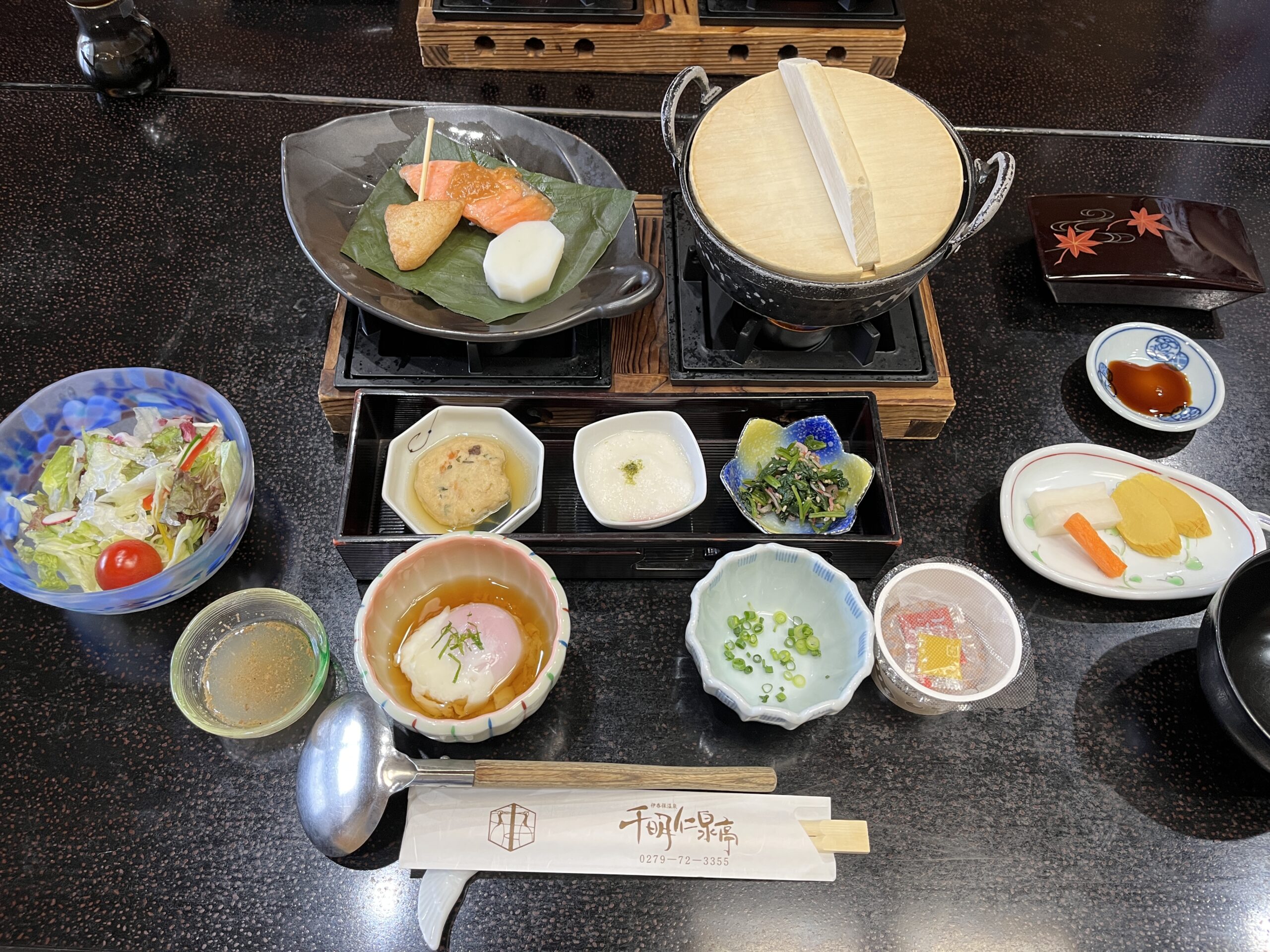
Breakfast is gentler — onsen tamago (hot spring egg), pickled vegetables, grilled fish, and rice. The nameko mushroom miso soup is served in a small pot to stay warm, a small detail that reflects the inn’s overall attention to care. Easy to finish, and exactly the right start before a final bath and checkout.
Final Thoughts
Jinsentei is the kind of inn that earns its reputation quietly. The location beside the stone stairway is excellent, the golden spring water is genuinely special, and the overall level of hospitality — from the room presentation to the in-room dining — is consistently above expectations. For a first taste of traditional ryokan culture within easy reach of Tokyo, it’s hard to do better.
This inn is a great fit if you:
- Want an easy onsen escape from Tokyo — under 2 hours away
- Are curious about the rare amber-colored “Golden Spring” of Ikaho
- Want multiple private baths available at any time during your stay
- Are looking for a traditional ryokan with a lively historic town on the doorstep
Don’t leave without walking the full length of the stone stairway — and save time for the Ikaho Shrine at the top. The view of Mt. Haruna on a clear day is worth every step.
▼Book your stay▼