
This article contains advertisements
Nozawa Onsen, in northern Nagano Prefecture, has been a hot spring village since the Edo period.
Tucked into the high ground at the back of its old town, Nozawa Grand Hotel offers something the village’s small family inns generally don’t: a polished, hotel-style stay built around two different spring sources — one for the indoor bath, one for the open-air bath.
Why Nozawa Grand Hotel stands out:
- Two different springs — a clear one indoors and a milky, weather-sensitive one outdoors
- A huge communal bath with a tatami-mat floor and several tubs at different temperatures
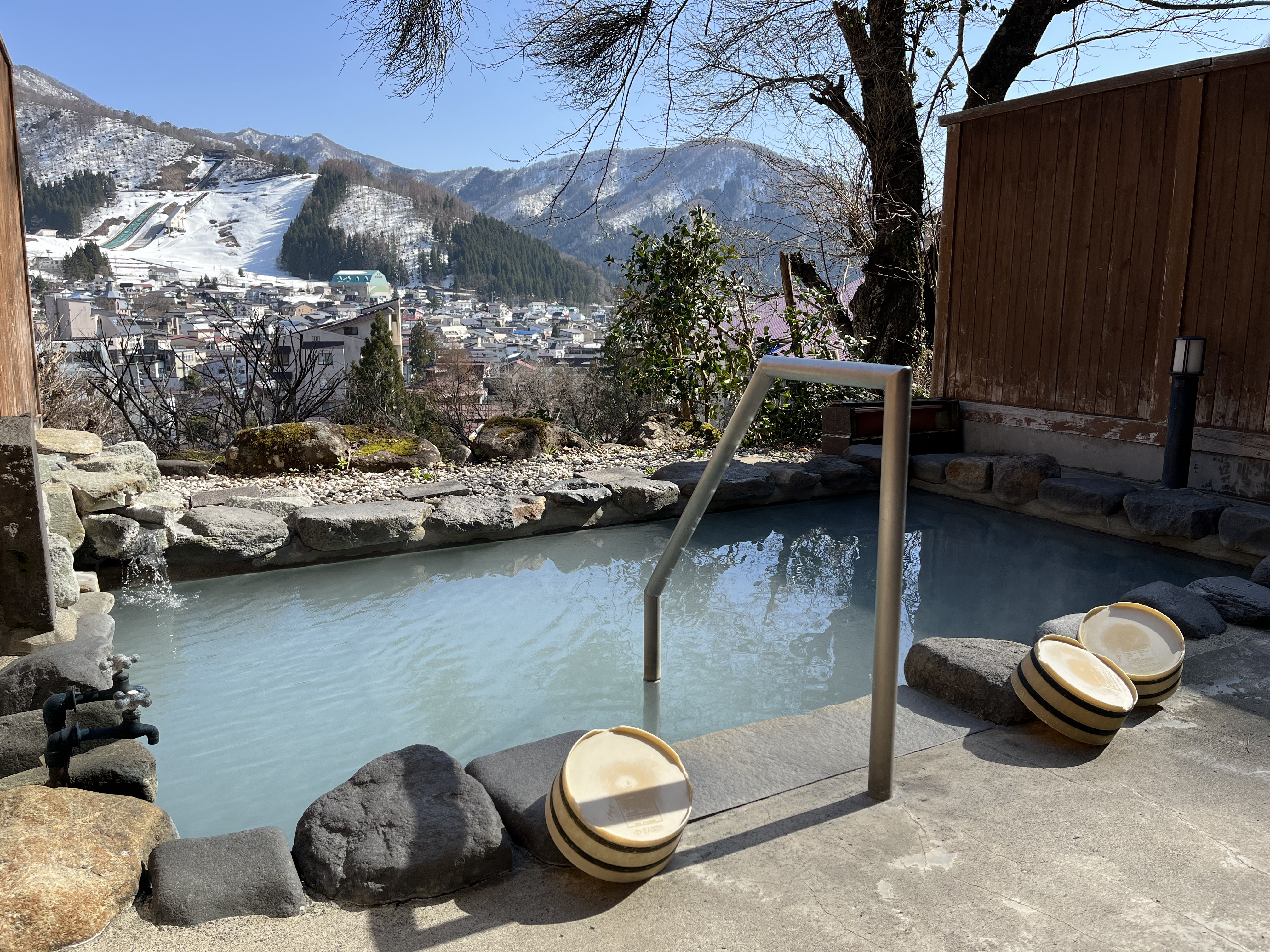
- A hilltop open-air bath looking over the village rooftops to the mountains
- Small, carefully made Shinshu regional meals that favor quality over quantity
Nozawa Grand Hotel,
| Address | 8888 Toyosato, Nozawaonsen-mura, Shimotakai-gun, Nagano 389-2502, Japan |
|---|---|
| Phone | +81-269-85-3151 |
| Official Website | nozawagrand.com |
| Day-use Bathing | Adults ¥800 / 13:00–18:00 — irregular closures, so confirm in advance |
| Check-in / Check-out | From 15:00 (notify the inn if arriving after 17:00) / By 11:00 |
| Overnight Rate | Approx. ¥13,200–¥40,400 per person, 2 meals included (based on 2 guests per room; bath tax extra) |
| Credit Cards | Accepted (VISA / Mastercard / JCB / AMEX / Diners Club) |
▼Book your stay▼
Getting There from Tokyo — Access Guide
Nozawa Onsen has no station of its own. Every public-transport route runs through Iiyama Station on the Hokuriku Shinkansen, followed by a short bus ride.
🚄By Train + Bus (Recommended)
Take the Hokuriku Shinkansen from Tokyo (or Ueno) to Iiyama Station (roughly 100–120 minutes). From Iiyama, board the “Nozawa Onsen Liner” bus (about 25 minutes, ¥600) to the village. Bus times don’t line up with every train, so check the timetable before booking your Shinkansen. The hotel sits uphill at the back of the village, so ask the inn about transfers from the bus stop.
🚗 By Car
Take the Joshin-etsu Expressway to Toyoda-Iiyama IC; the hotel is about 30 minutes from there.
| Route | Tokyo → Iiyama Station → Nozawa Onsen Liner → Nozawa Grand Hotel |
|---|---|
| Total from Tokyo | Approx. 2.5–3 hours including the bus transfer |
| JR Pass | ✅ Shinkansen portion covered (Nozawa Onsen Liner bus not included) |
| Nearest Station | Iiyama Station (Hokuriku Shinkansen) |
A Polished Hilltop Hotel Above the Village
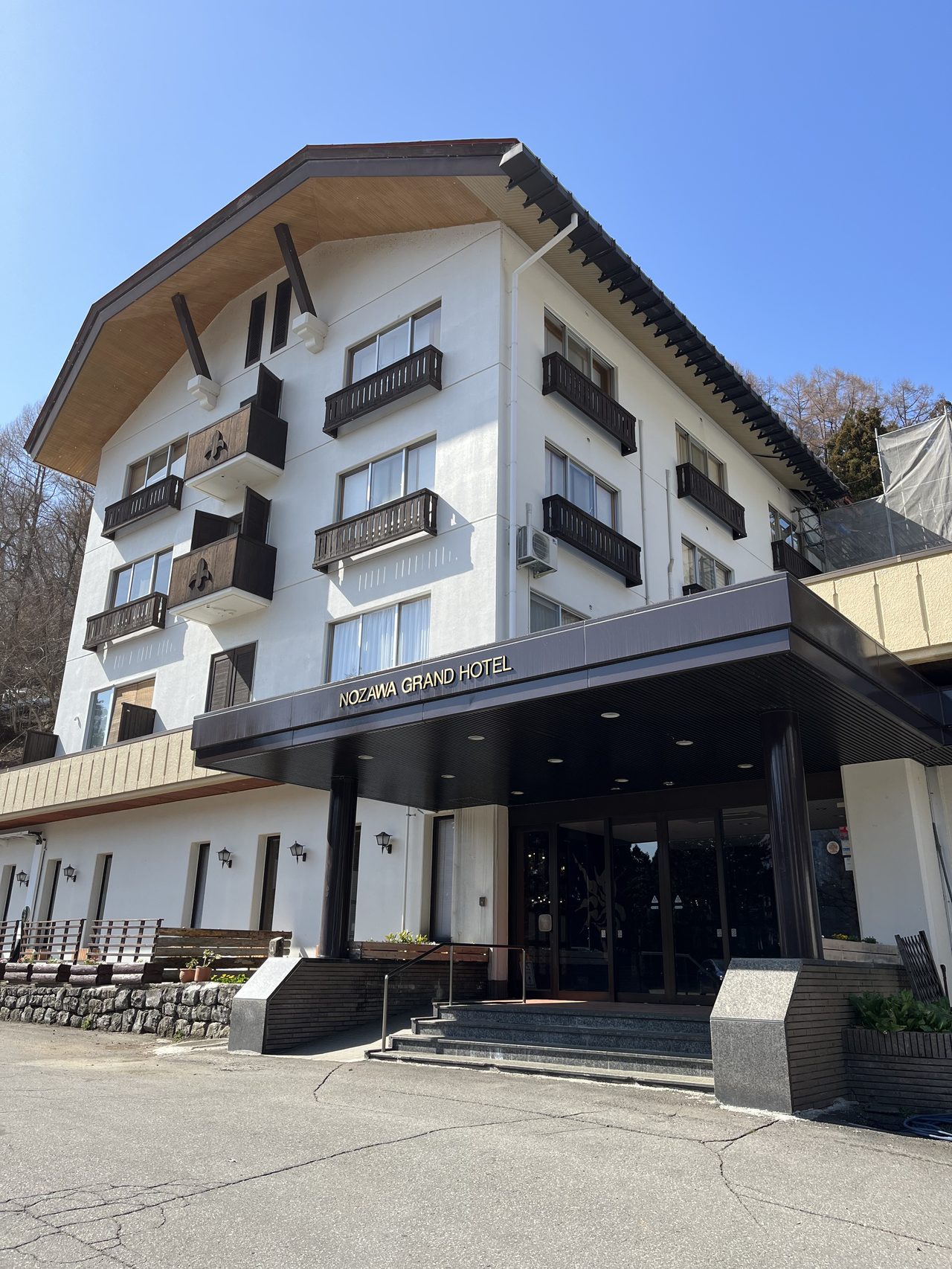
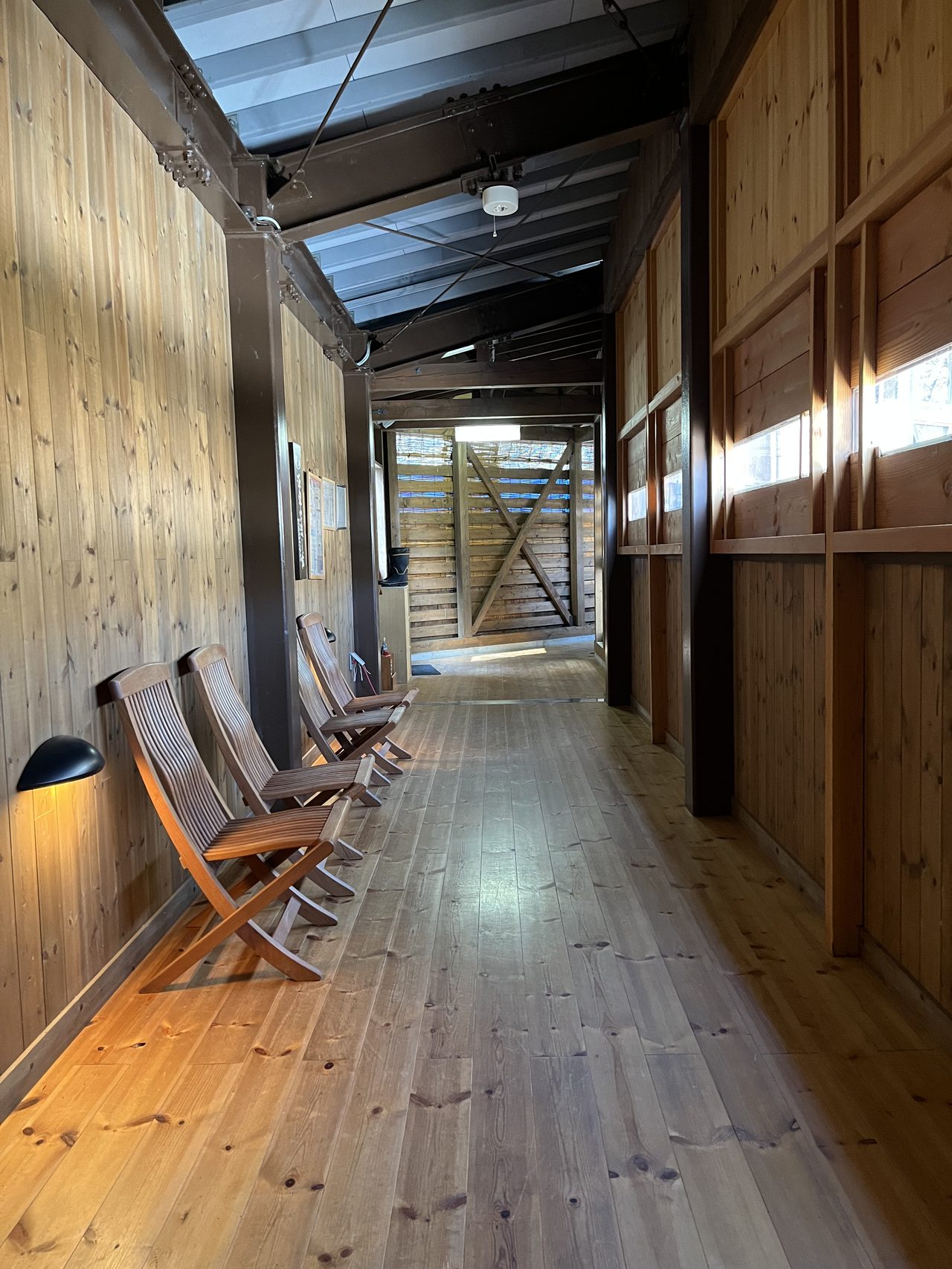
The hotel’s high position keeps things quiet, and the contemporary building feels more like a resort hotel than a traditional ryokan.
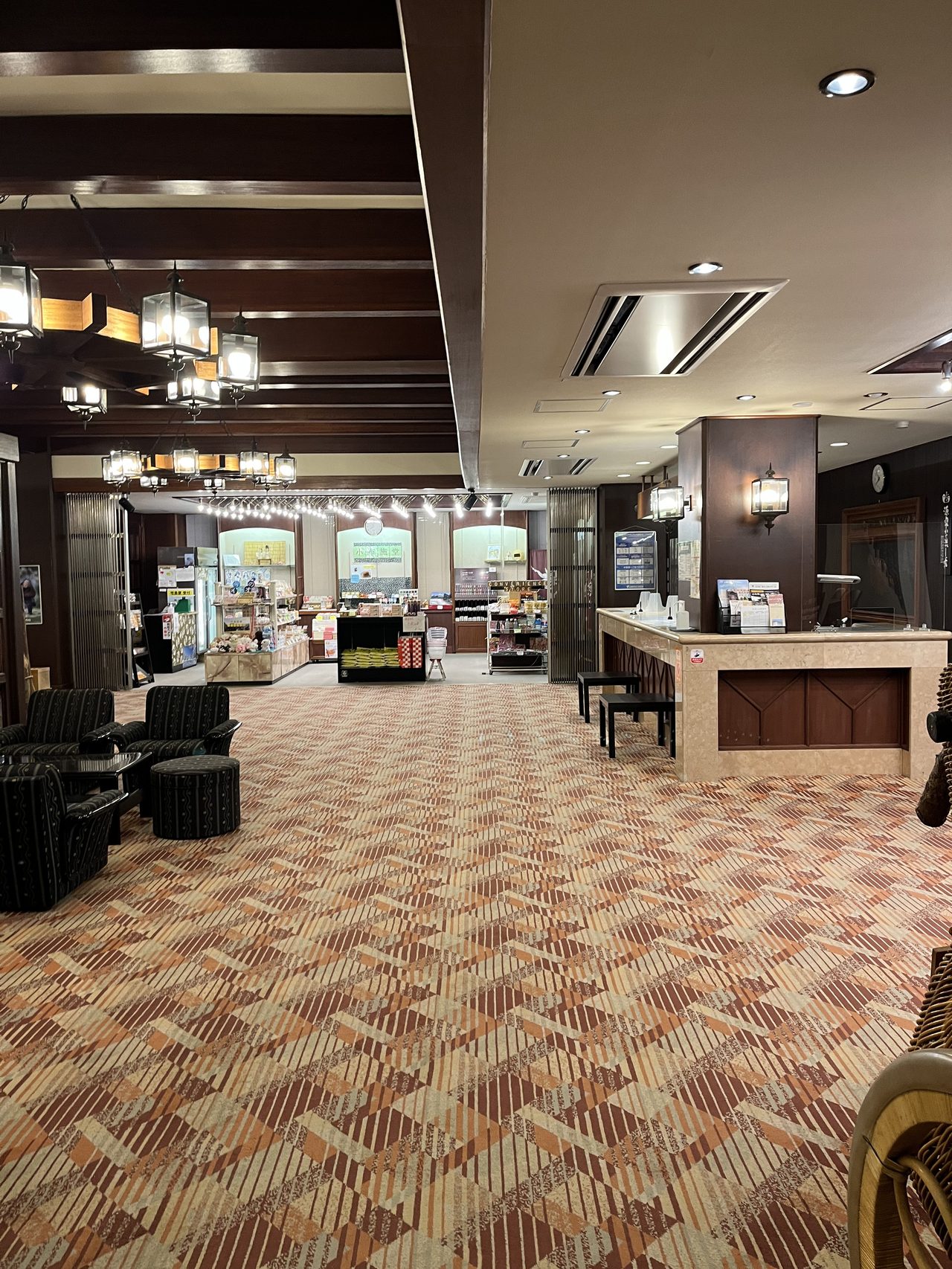
The lobby is bright and well kept, with a good souvenir shop — the whole place gives off a faintly upscale air.
♨ Nozawa Onsen’s “Soto-yu” Public Baths
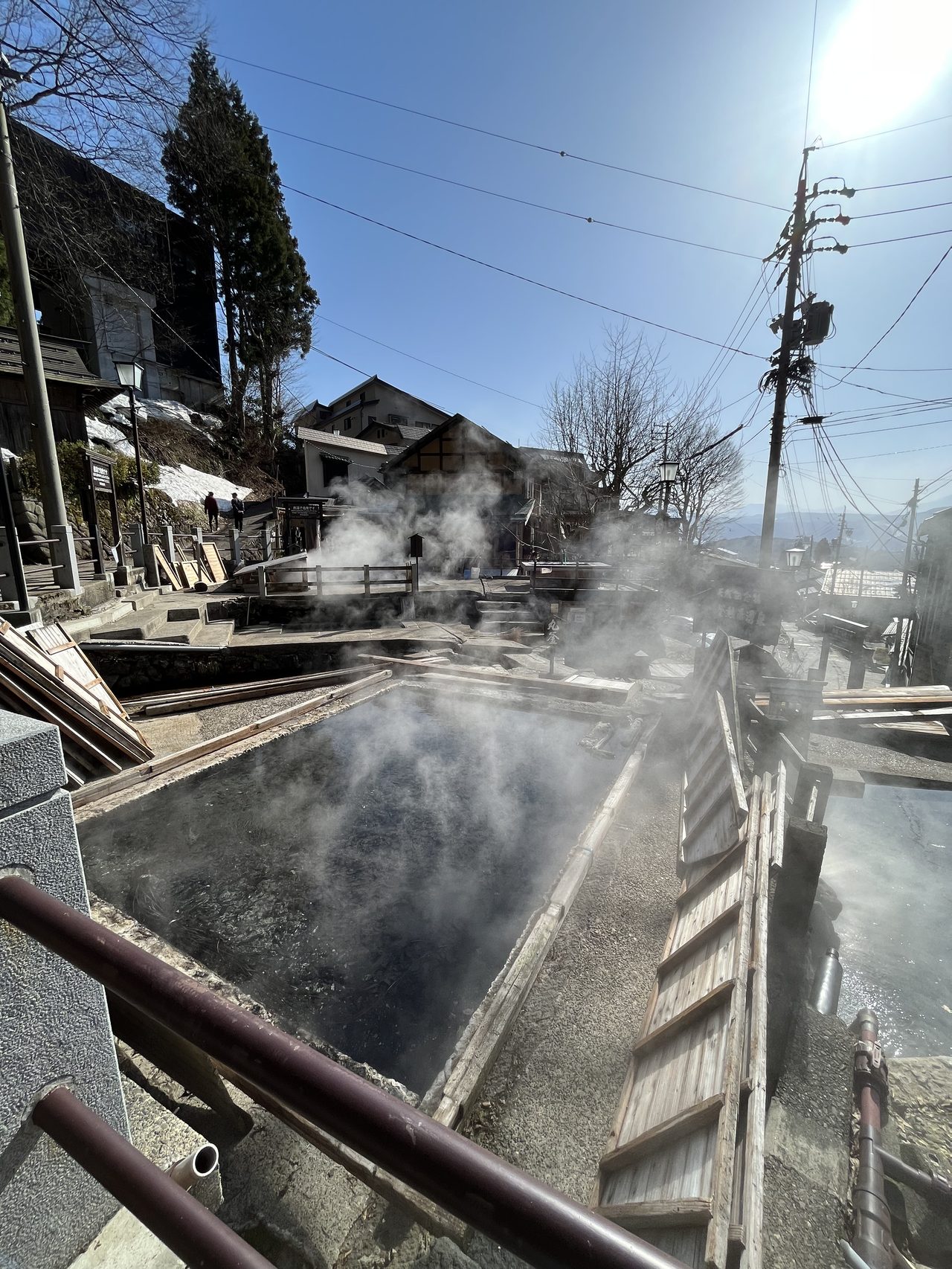
The village is famous for its soto-yu — 13 community bathhouses scattered through the old town, historically maintained by the residents themselves. Visiting several in one trip is the classic Nozawa experience, and most are within walking distance of town. Nearby, the steaming Ogama source pools, near 100°C, are still used by locals to boil vegetables and eggs.
The Rooms
| Toilet | En suite (in-room) |
|---|---|
| Refrigerator | Available |
| Air Conditioning | Available |
| Wi-Fi | Available |
| Television | Available |
| Towels & Yukata | Provided |
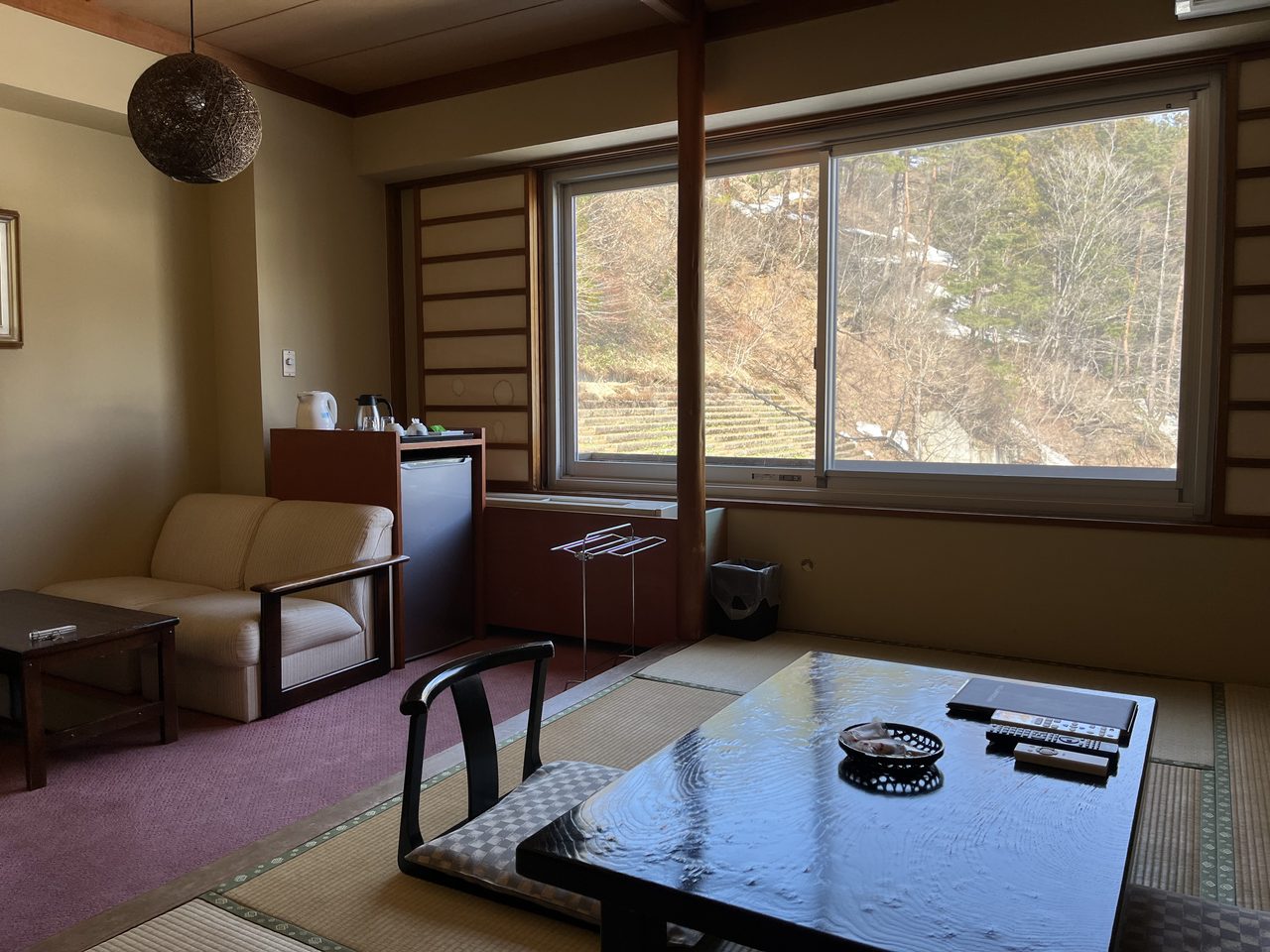
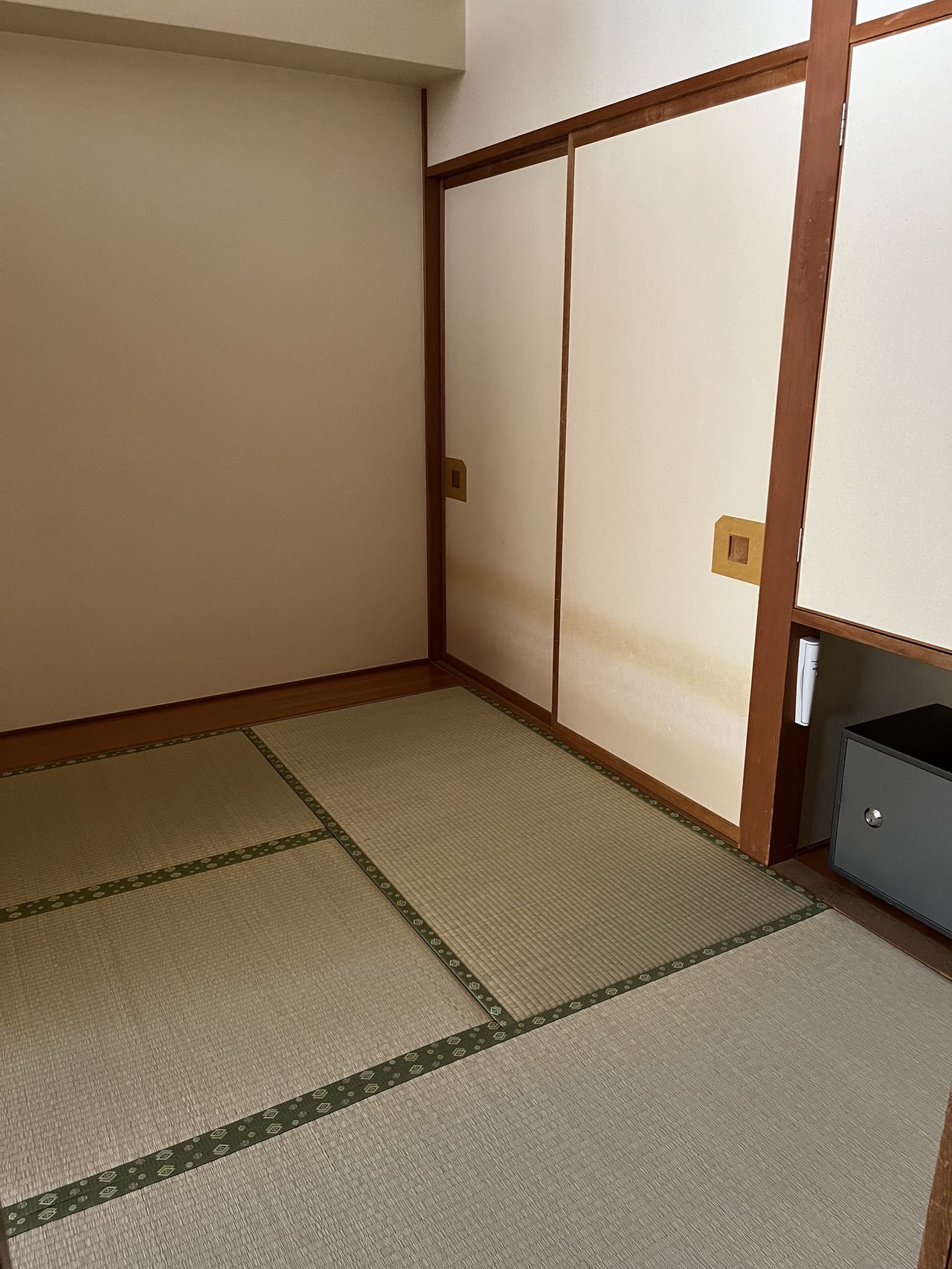
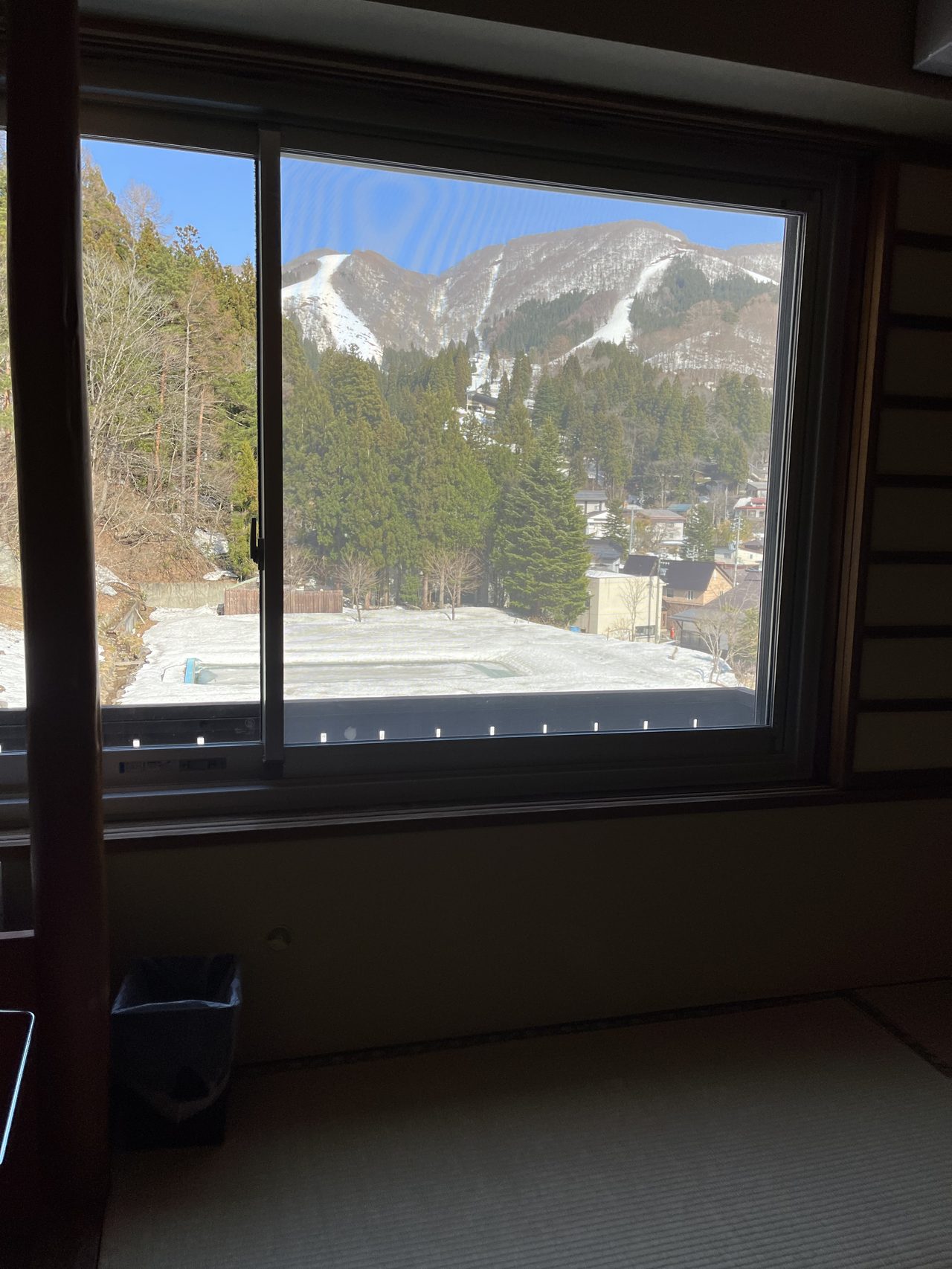
Left: The room is deeper than it first looks, with space to stretch out on the tatami. Right: Mountains fill the window.
The room was comfortable and spotlessly clean, with a sofa for watching TV and a window facing the mountains.
The refrigerator held a small local sweet: moriringo, which combines Nagano apple with a milky white bean paste.
The Hot Springs — Two Sources, Two Personalities
Nozawa Grand Hotel has a large indoor bath and a scenic open-air bath, each fed by a different source.
Both are simple sulfur springs with a weakly alkaline pH (8.7 and 8.3), but they look very different in the tub.
The indoor water is clear; the open-air water is milky. A private open-air bath also exists, but it was closed during my early-April visit (it’s unavailable from November 1 to mid-April).
The two main baths are in different parts of the building, so expect a short walk between them.
The Tatami-Floored Main Bath ★
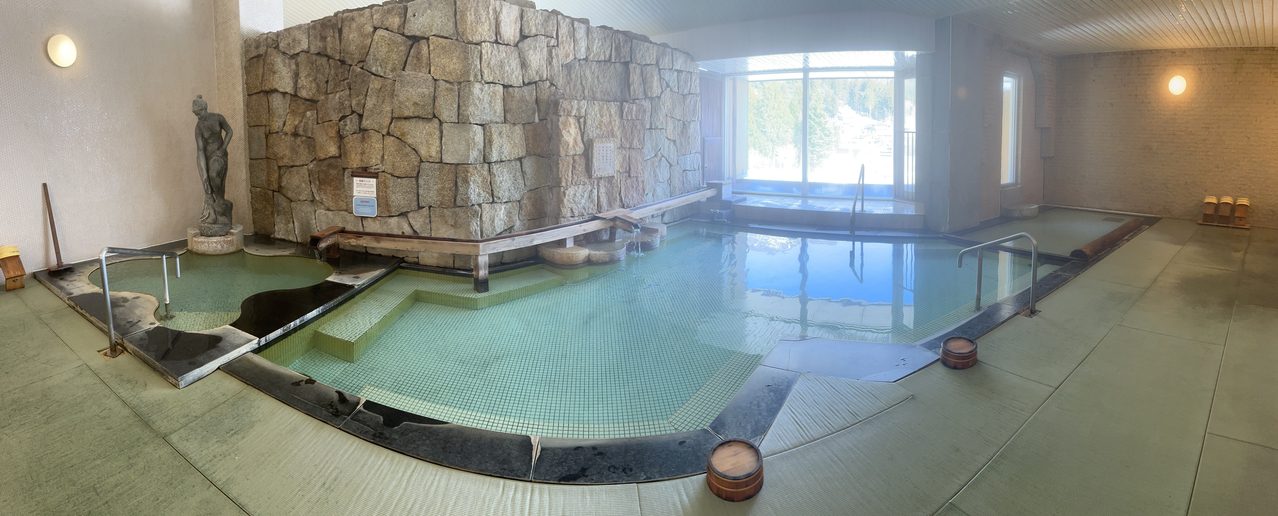
The size of the indoor bath is the first surprise.
The second is the floor: it’s covered in tatami mats, not stone or tile. Walking barefoot on it is soft and grippy, and I haven’t seen the idea elsewhere — it’s both comfortable and clever.
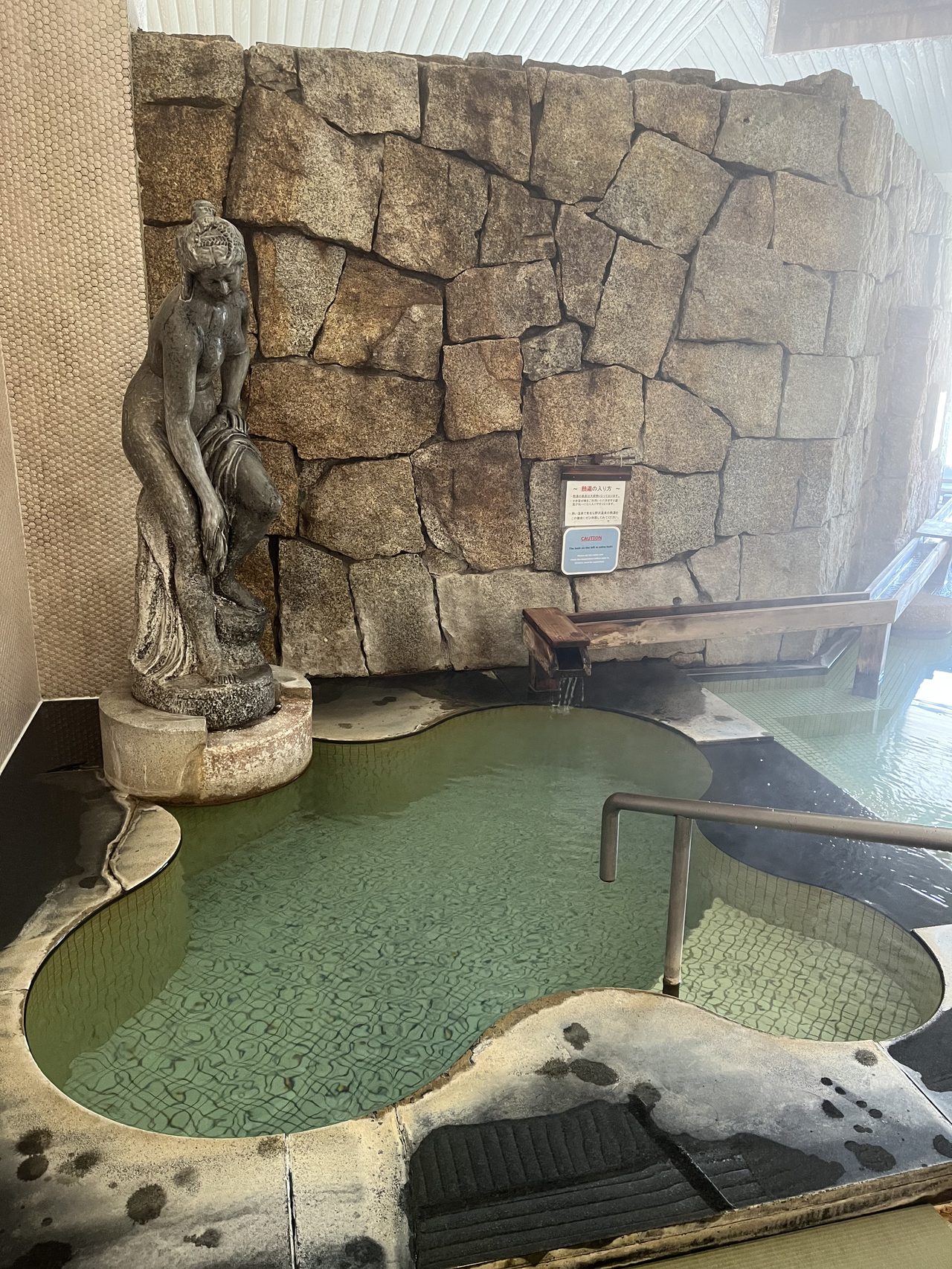
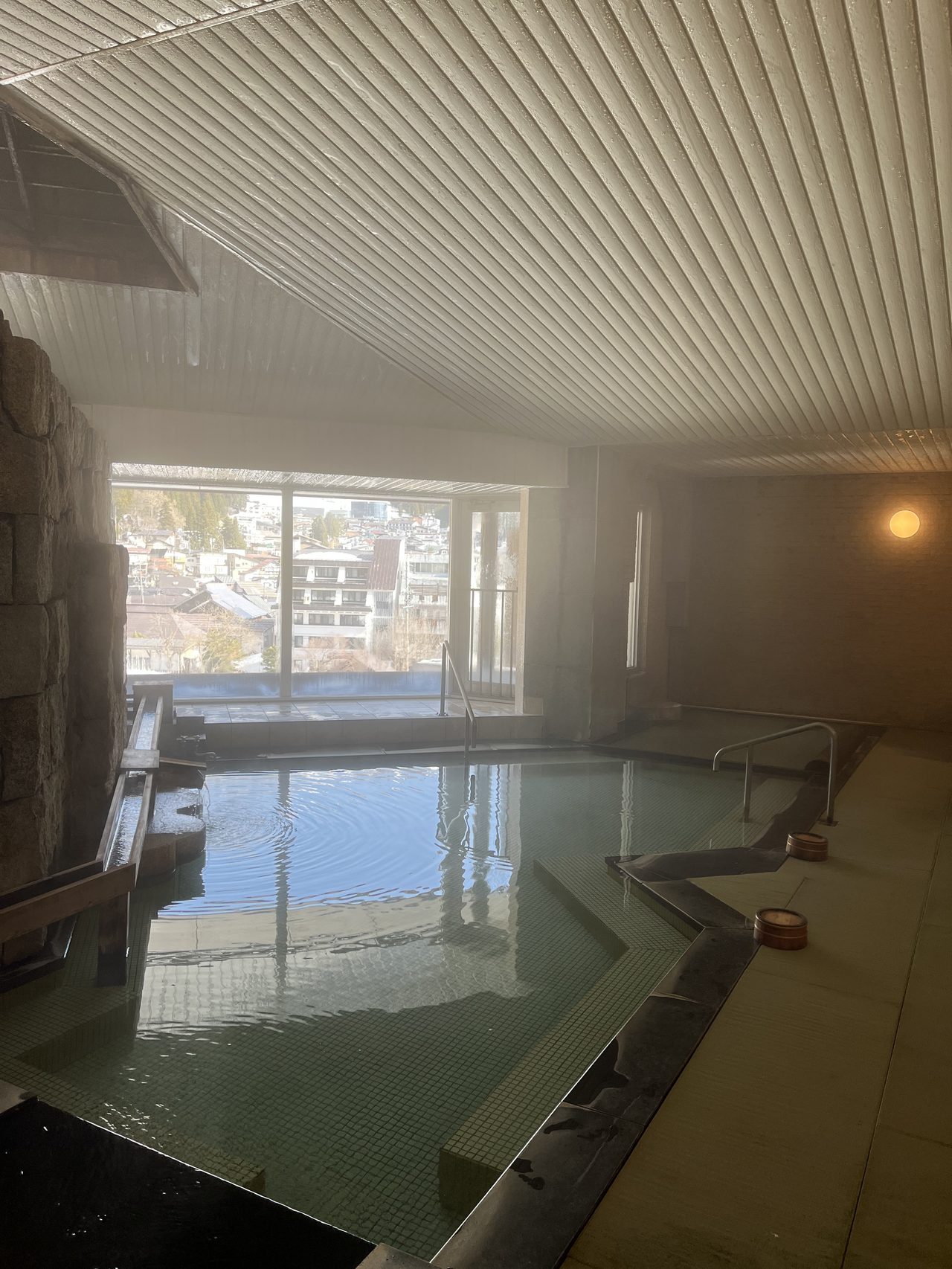
Left: The small, hottest tub, where fresh water flows in beside a graceful statue. Right: The large central tub at about 41°C.
The tubs run from hot to gentle. The small one on the left receives the spring water first and is the hottest — one for people who like a proper scalding soak. The big central tub is easier to settle into, at around 41°C.
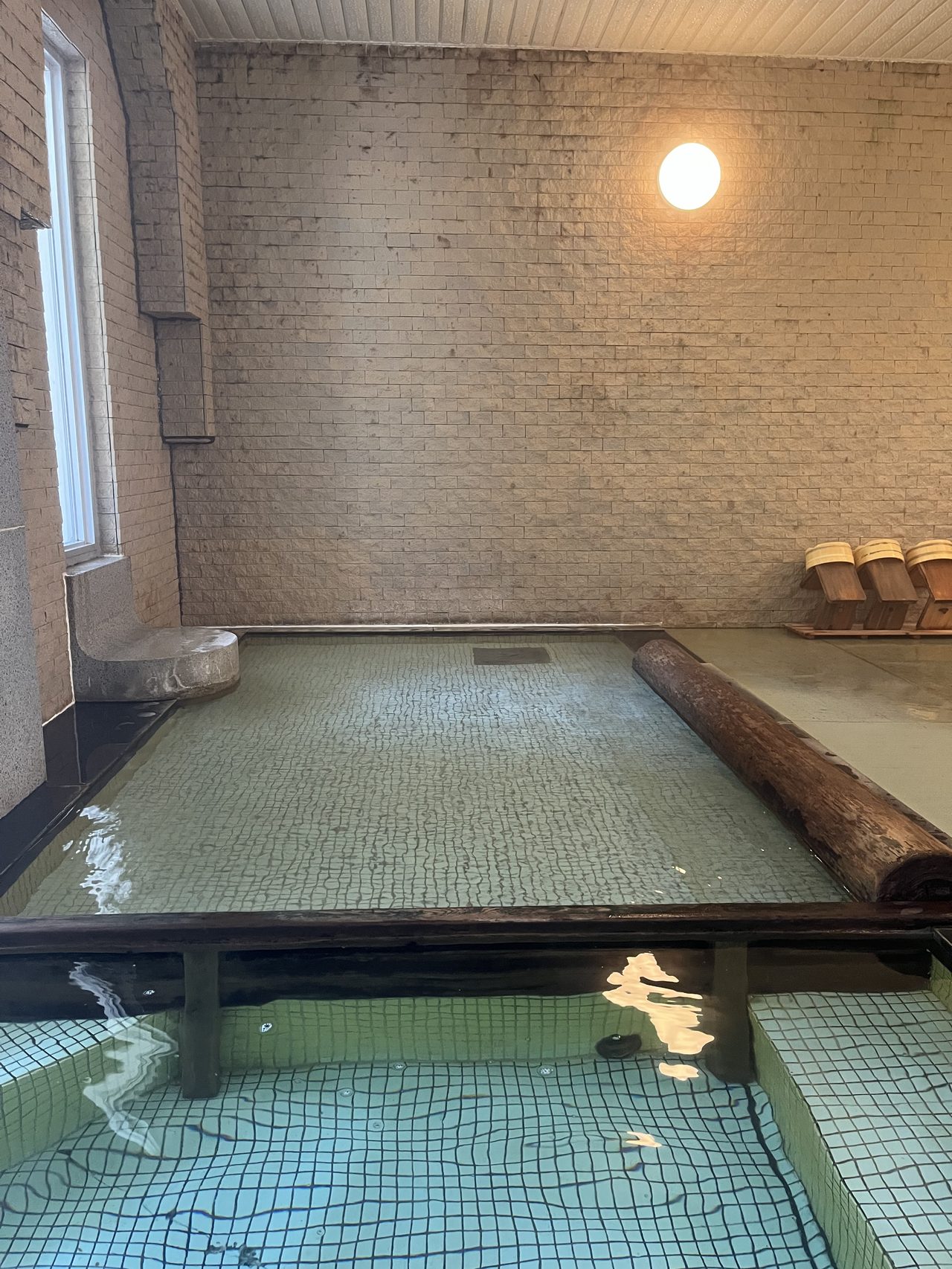
My pick is the shallow, lukewarm tub in the back right corner.
Rest your head on the wooden rim, lie back, and stay as long as you like. The water was clear and had little scent here, but the gentle temperature made it ideal for a long, slow soak.
The Open-Air Bath — Lukewarm, with Views
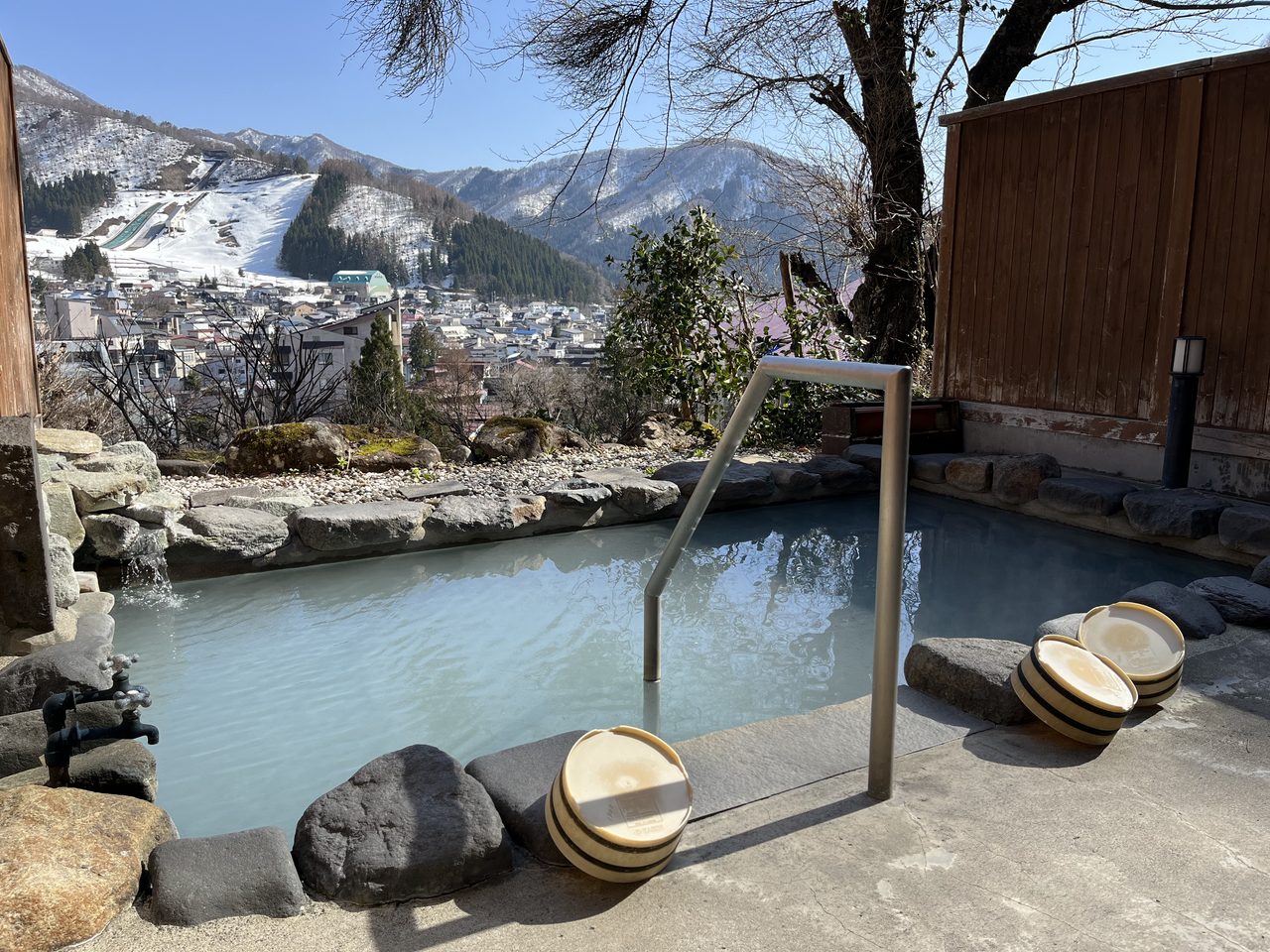
The open-air bath is a short walk from the main bath and has a nice lounge area beside it for cooling off afterward. Because the hotel stands on a hill, the bath overlooks the village and sweeps out to the surrounding mountains; there was still plenty of snow in early April.
The water was slightly white when I visited, with a light sulfur scent and bracing mountain air. It’s noticeably cooler than the indoor bath — right in the range where you can stay in for a long time. The “Mayu” source is reputed to change color with the weather and temperature, so it may look different each time you visit.
Dining — Small Portions, Careful Cooking
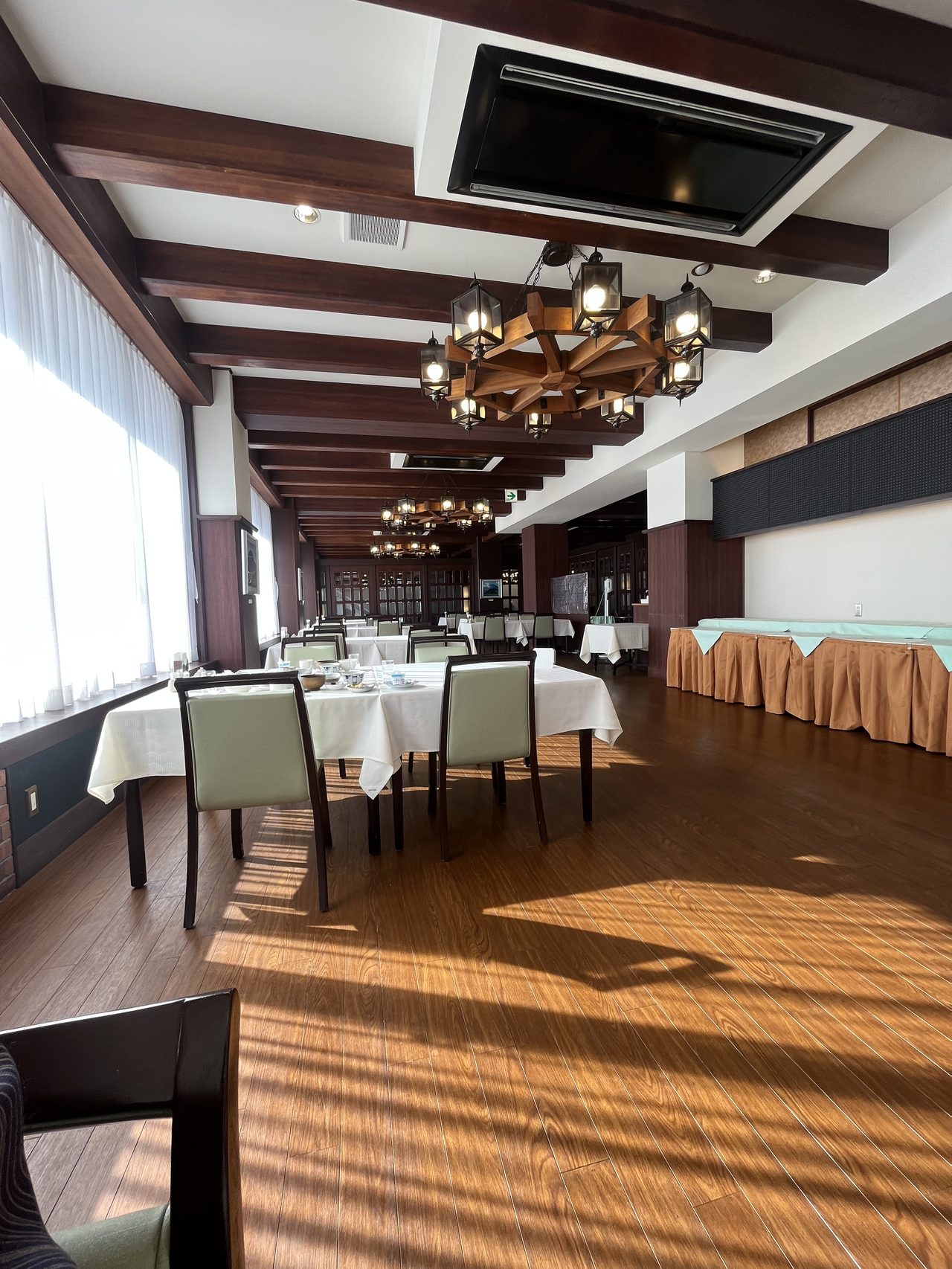
Meals are served in an elegant dining room with the feel of a high-end hotel. Portions are modest, but every dish is neat and delicious. It’s a refreshing change from the quantity-focused spreads at many hot spring inns.
Dinner
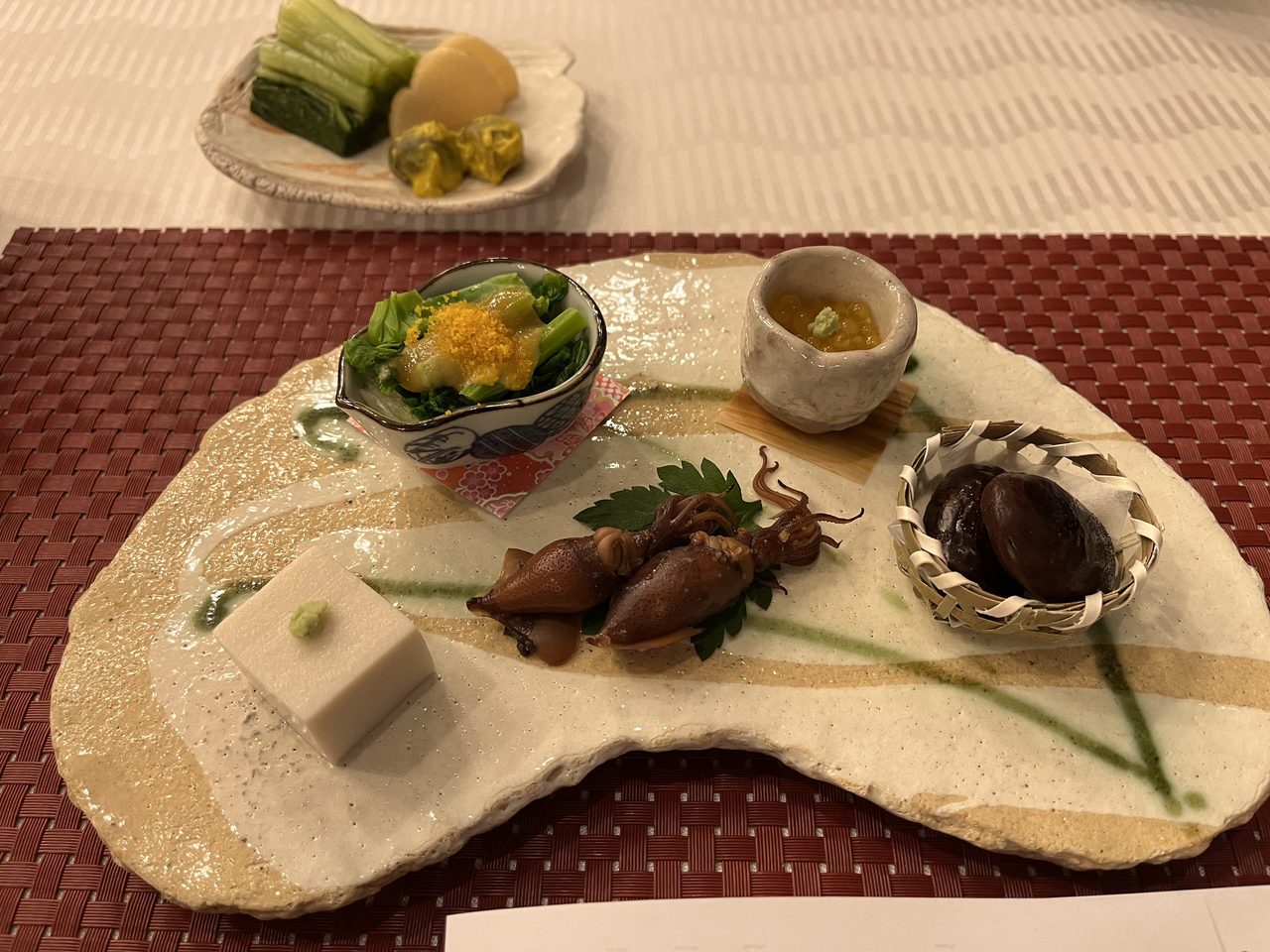
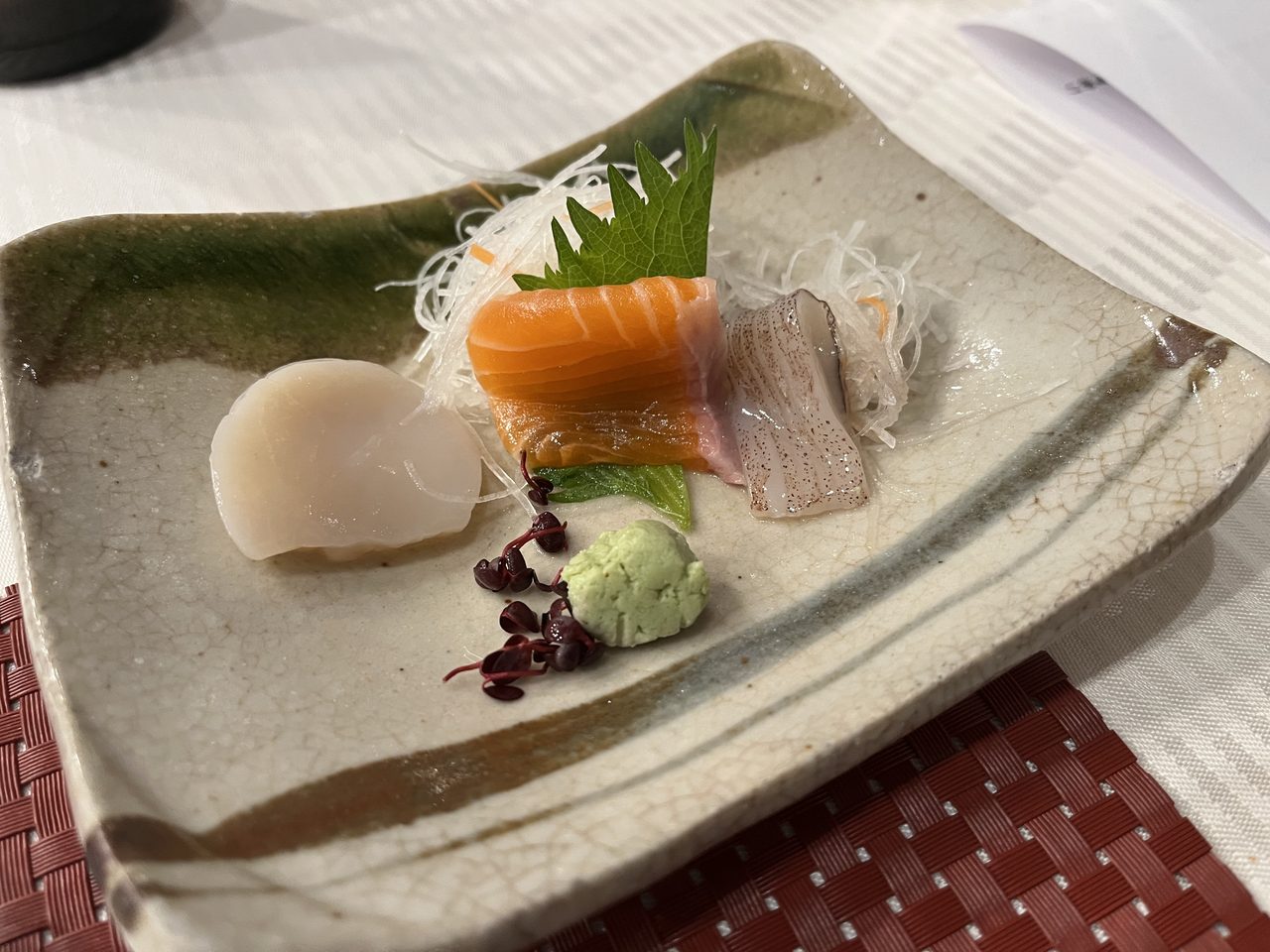
Left: Bite-sized appetizers. Right: Fresh sashimi in a small, elegant portion.
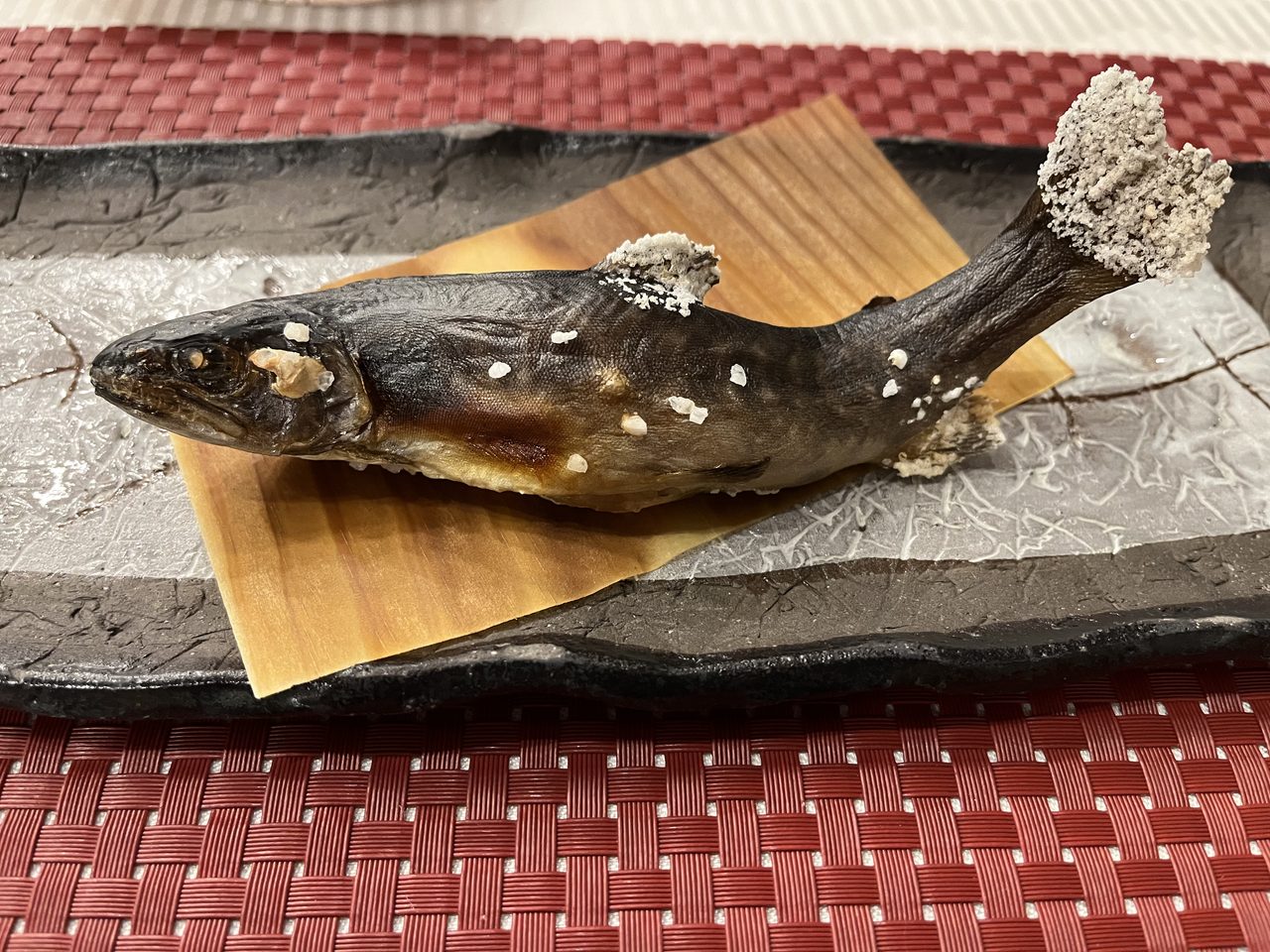
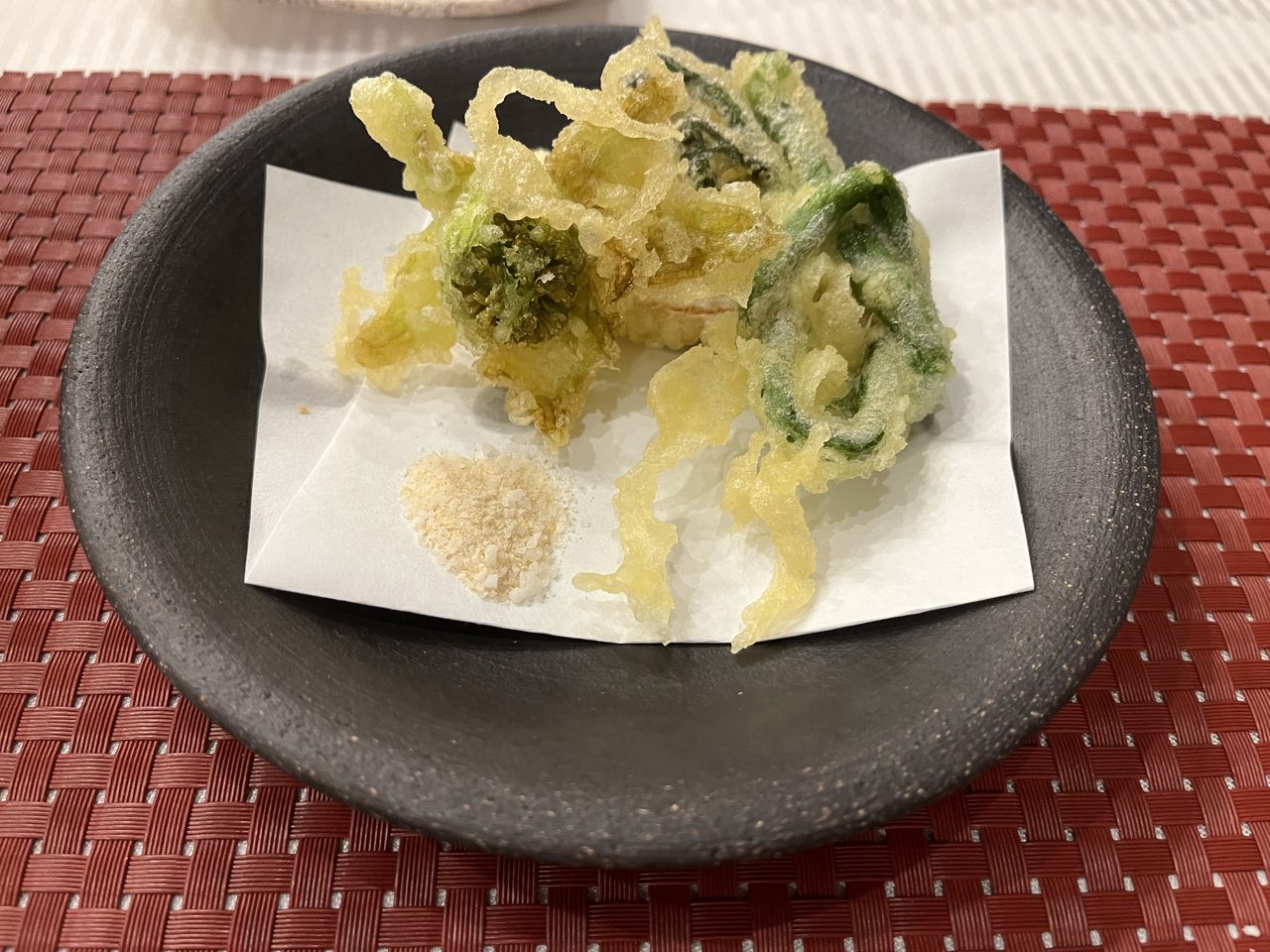
Left: Salt-grilled iwana (mountain char). Right: Crisp tempura of wild mountain vegetables.
The sashimi was fresh, and a soft grated-radish dish with meat miso was understated and elegant. The salt-grilled iwana was fluffy and fragrant, and the mountain-vegetable tempura (sansai) was light and crunchy, ideal with a pinch of plain salt.
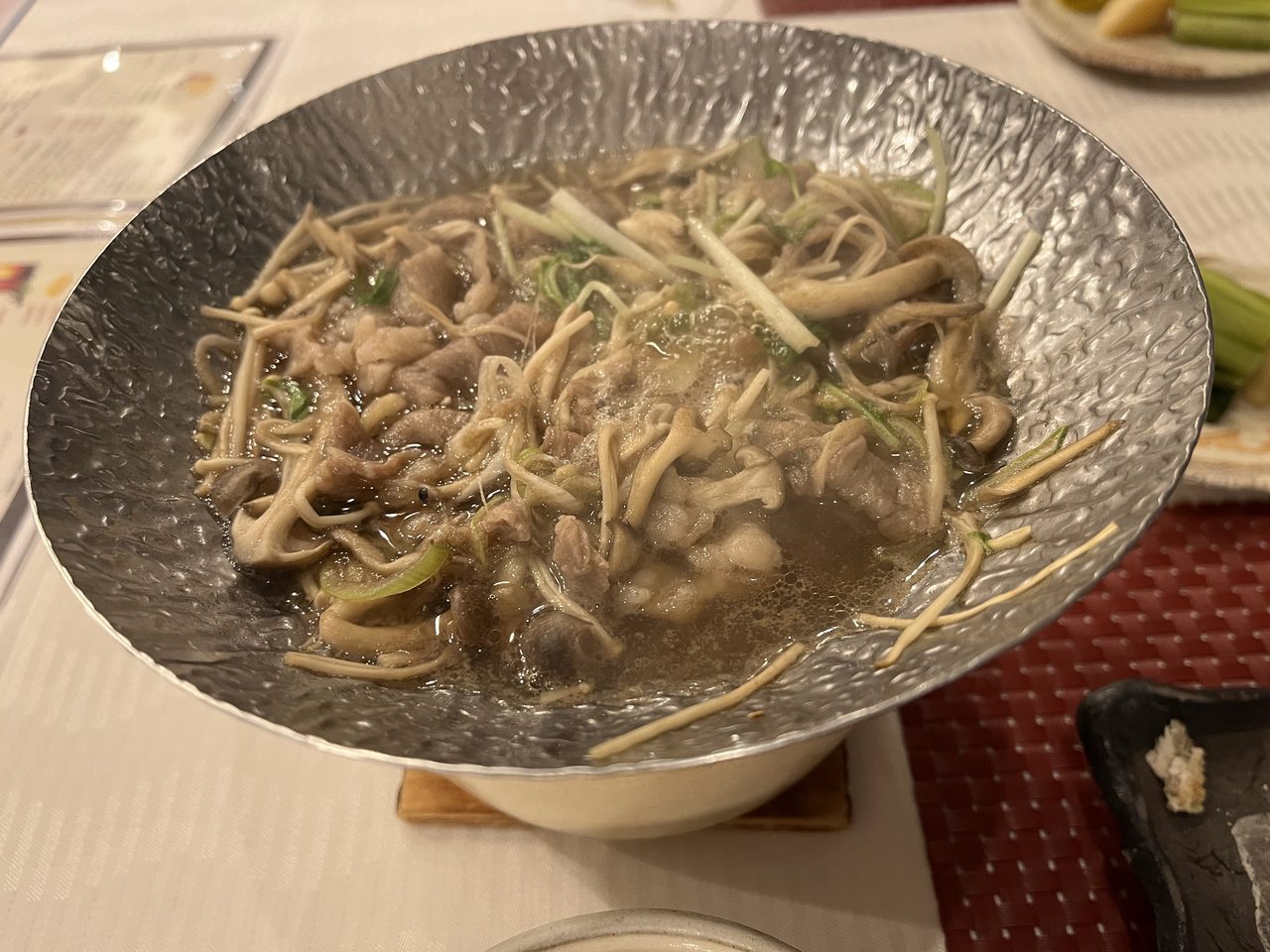
The meal finished with rice and miso soup, then a stylish dessert.
Breakfast
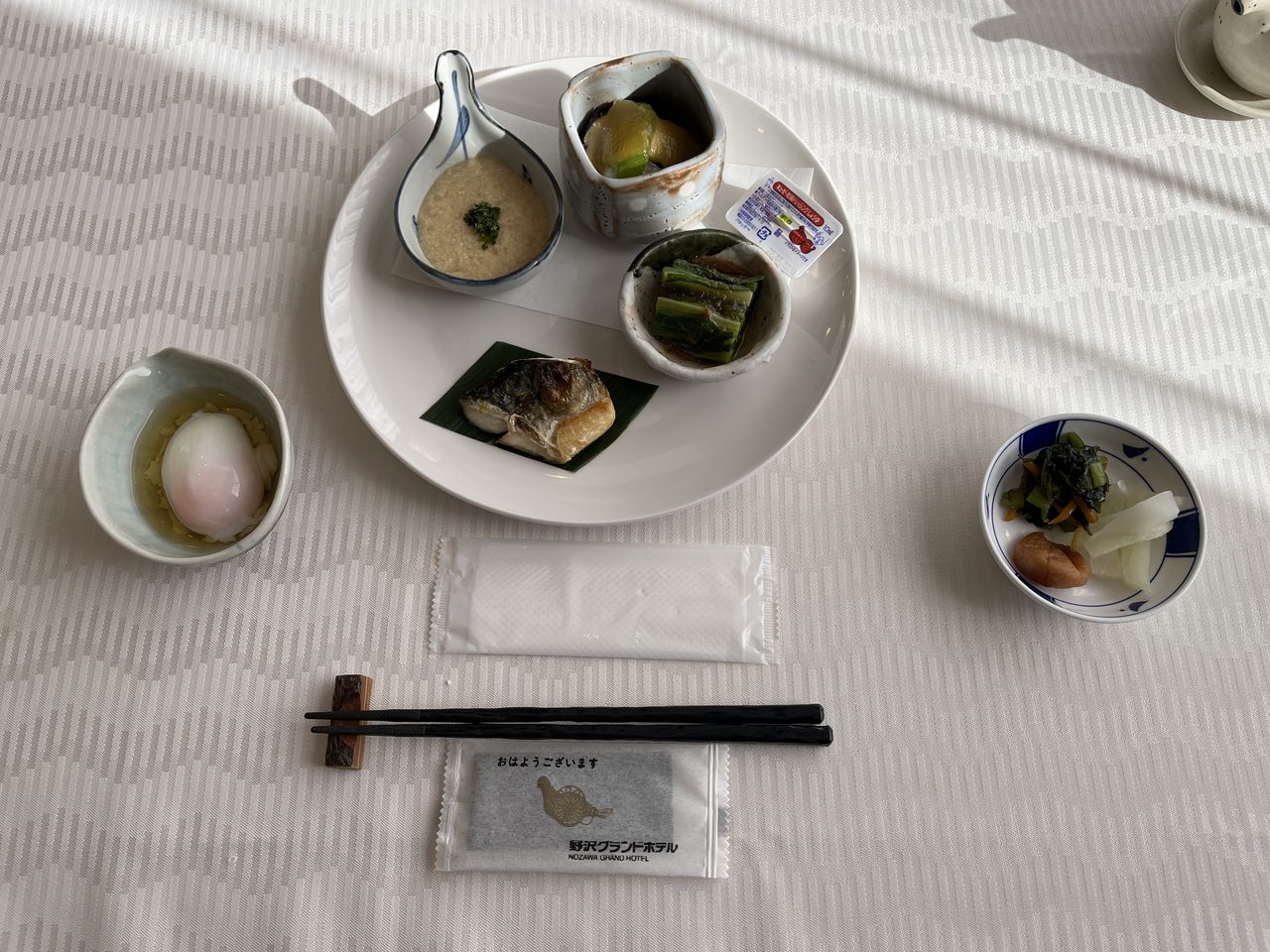
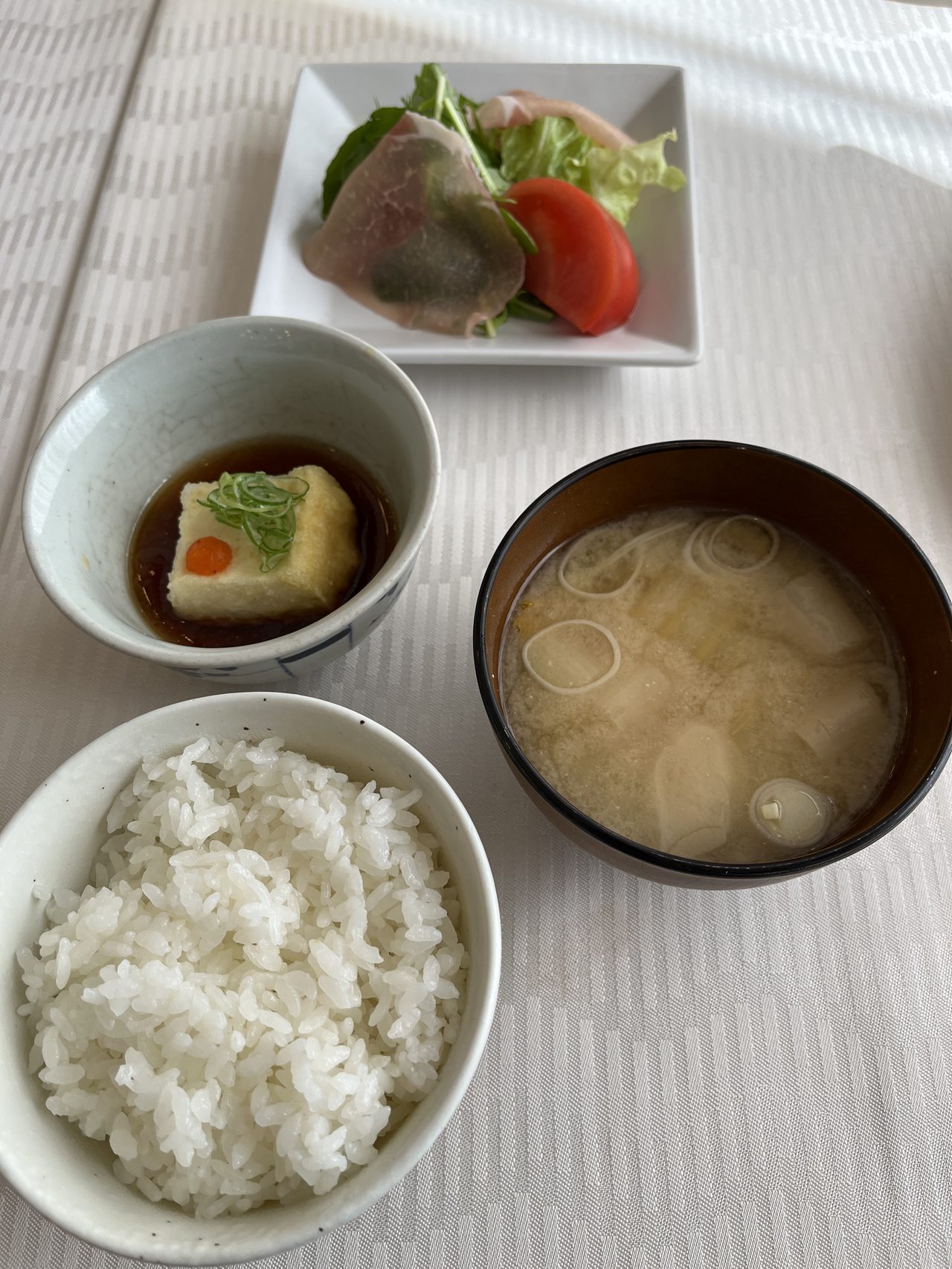
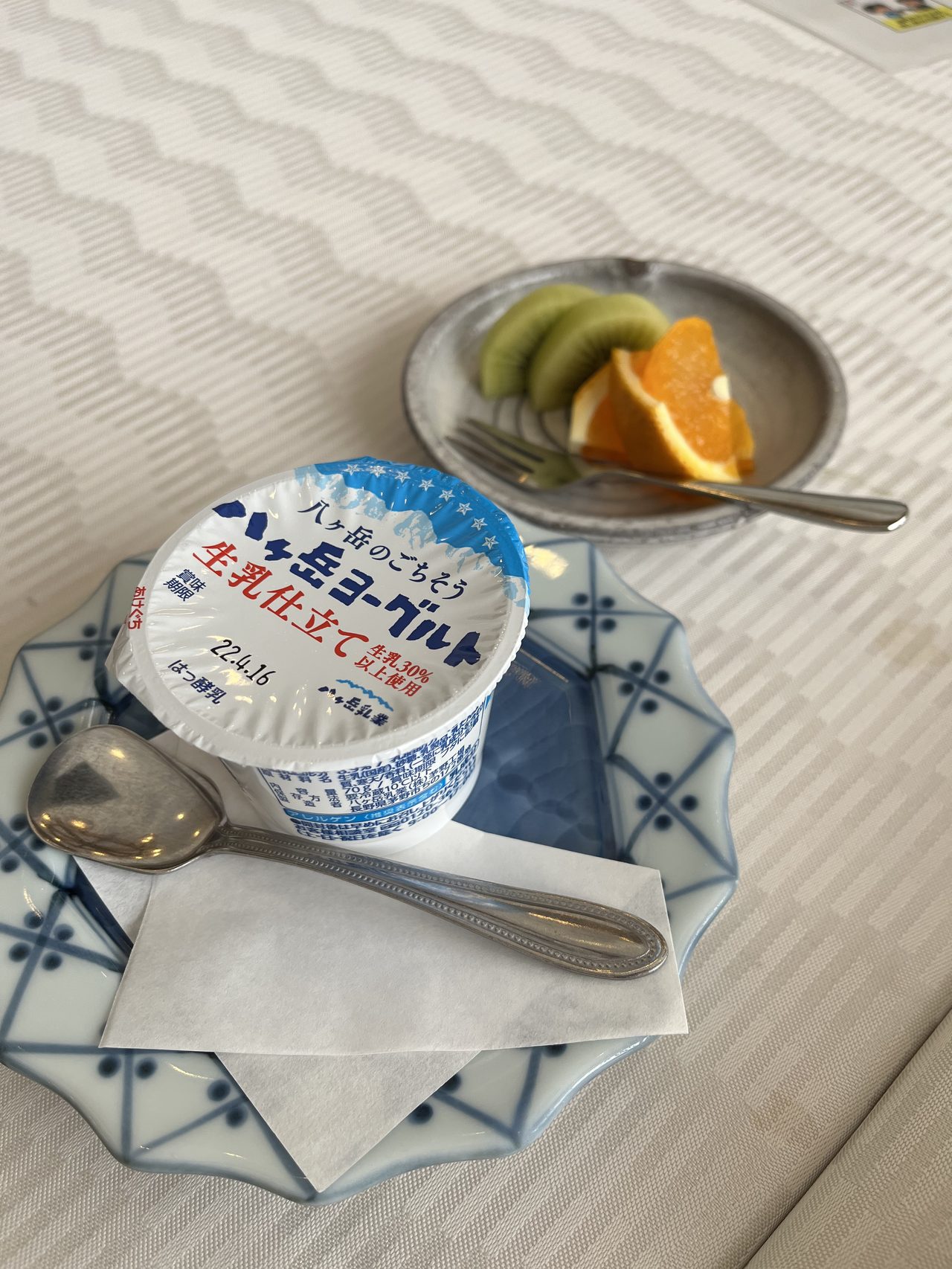
Left: Salad and agedashi tofu. Right: Yogurt and fruit to finish.
Breakfast had fewer dishes than usual but was graceful in the same way as dinner.
The tororo (grated mountain yam) was addictive over rice — light, refreshing, and appetite-boosting. Then came salad, fried tofu in broth, and a light finish of yogurt and fruit.
Final Thoughts
Nozawa Grand Hotel pairs two distinct sulfur springs with the comfort and service of a well-run hotel.
The tatami-floored bath, with its choice of temperatures, makes long soaks easy, and the open-air bath’s view and ever-changing water give you a reason to come back.
With thoughtful food and a comfortable room, the overall experience is hard to fault — a smart choice for a Nozawa Onsen stay.
Nozawa Grand Hotel is ideal for visitors who:
- Want a large bath for a long, unhurried soak
- Like open-air bathing with mountain views
- Value quality dining as much as the hot spring
▼Book your stay▼