
This article contains advertisements
Nagano Prefecture is home to dozens of hot spring towns, but few are as instantly recognizable as Shirahone Onsen — a name that translates literally to “white bones,” a nod to the milky, mineral-laden water that has drawn bathers here for centuries.
Tucked into the far end of the valley, reached only by crossing a private suspension bridge, sits Sansuikan Yugawaso, a quiet ryokan built around several free-to-use private baths and a genuinely secluded setting.
Why Yugawaso stands out:
- Multiple private outdoor and indoor baths, included at no extra charge
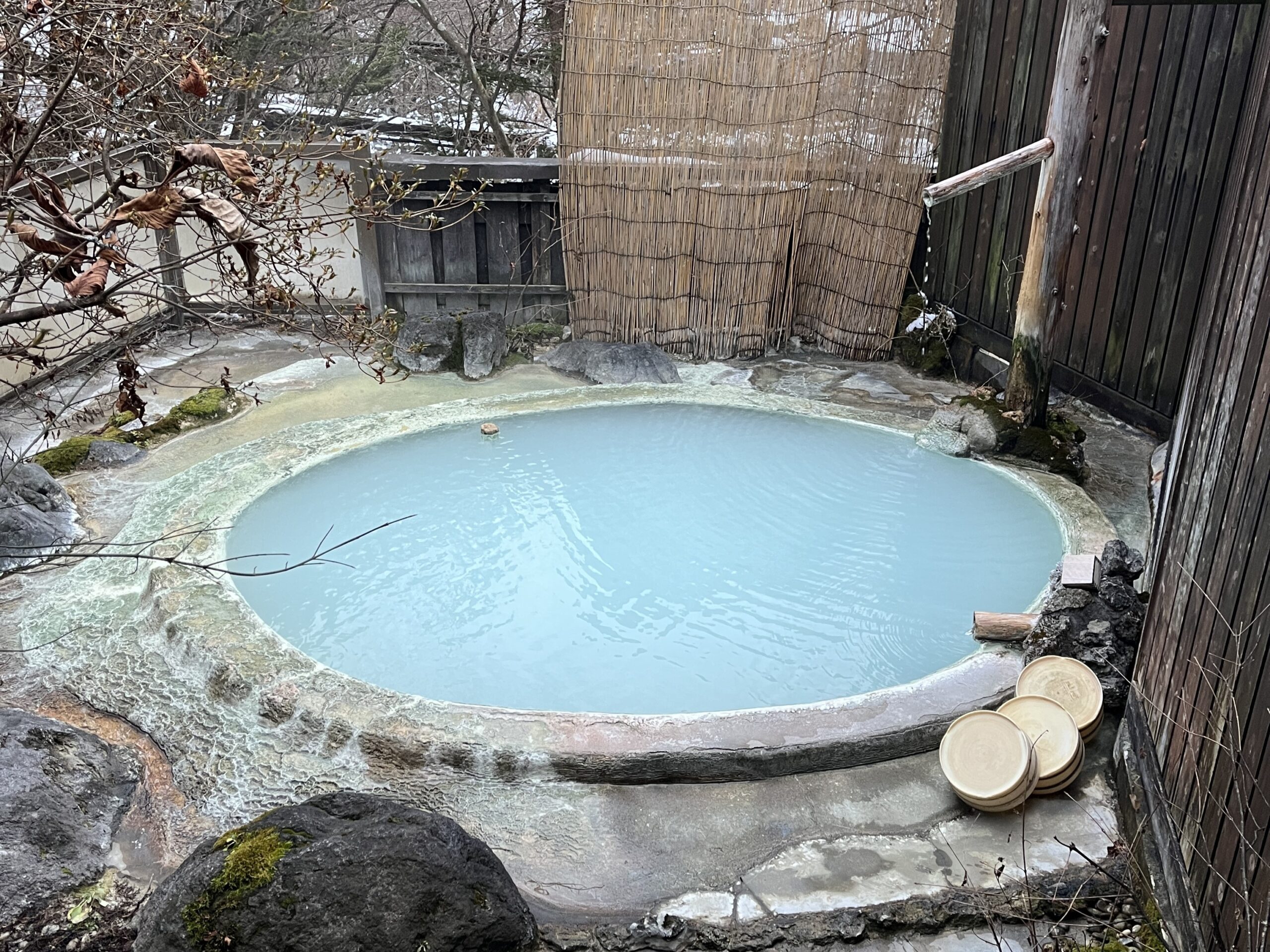
- Beautifully milky sulfur spring water, drawn from two natural sources
- A genuinely remote, silent setting reached by crossing a suspension bridge
- Wooden bathtubs coated in decades of natural mineral deposits — living works of art
- A milky white hot pot made with local beef, onsen water, and Shinshu miso
If you’re after private, mineral-crusted baths and genuine silence at the end of a suspension bridge, this is exactly that kind of ryokan.
Yugawaso, Shirahone Onsen
| Address | 4196 Shirahone Onsen, Azumi, Matsumoto-shi, Nagano 390-1515, Japan |
|---|---|
| Phone | +81-263-93-2226 |
| Official Website | sansuikan-yu.com |
| Day-use Bathing | Not available — overnight guests only |
| Check-in / Check-out | 15:00–18:00 / By 10:00 |
| Credit Cards | Accepted (VISA / MasterCard / JCB / AMEX) |
| Number of Rooms | 10 |
| Overnight Rate | From approx. ¥22,000 per person (2 meals included) |
▼Book your stay▼
Getting There from Tokyo — Access Guide
Shirahone Onsen sits deep in the mountains above Matsumoto, on the edge of the Japanese Alps. It’s reachable by public transport, but the final stretch — a transfer at Shinshimashima and a mountain bus ride — takes some planning, especially outside the summer season.
🚄 By Train + Bus (Recommended)
Take the JR Chuo Line Limited Express “Azusa” from Tokyo (Shinjuku) to Matsumoto Station (approx. 2.5–3 hours). Transfer to the Matsumoto Dentetsu Kamikochi Line to Shinshimashima Station (~30 min), then an Alpico Kotsu bus to Shirahone Onsen (~60 min), alighting near the “Yugawaso” stop. Total travel time: approximately 4–4.5 hours. Bus schedules are reduced in winter, so check timetables in advance.
🚗 By Car
Exit at Matsumoto IC on the Nagano Expressway, then follow signs south toward Shirahone Onsen (~60 min). The inn sits below the main road, across a suspension bridge.Studded winter tires (ideally 4WD) are strongly recommended from November through March— the approach road can ice over quickly, and the final descent to the inn is steep.
| Route | Tokyo (Shinjuku) → Matsumoto Station → Shinshimashima → Shirahone Onsen |
|---|---|
| Train | JR Chuo Line Ltd. Express “Azusa” to Matsumoto (~2.5–3 hrs) |
| From Matsumoto | Kamikochi Line to Shinshimashima (~30 min) + local bus (~60 min) |
| JR Pass | ✅ Azusa portion covered (Kamikochi Line and local bus not included) |
| Winter Driving | ⚠️ Studded tires/chains strongly advised Nov–Mar; roads can be icy and steep |
Across the Suspension Bridge, Into the Silence
Shirahone Onsen’s history stretches back to the Sengoku period, when the springs are said to have been used as a hidden bathing site for wounded soldiers and miners recovering from injury — a quiet healing spot long before it became a tourist destination.
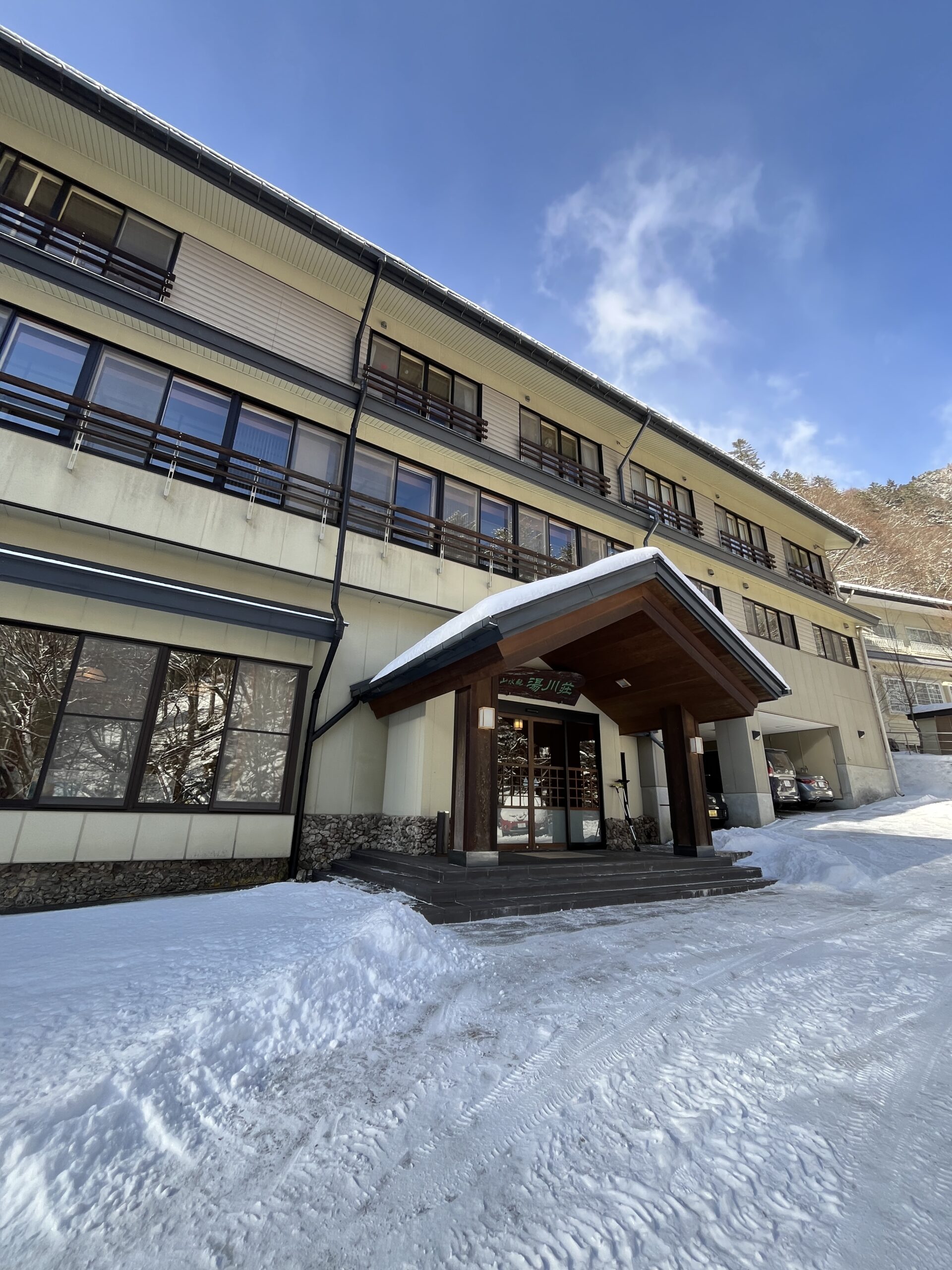
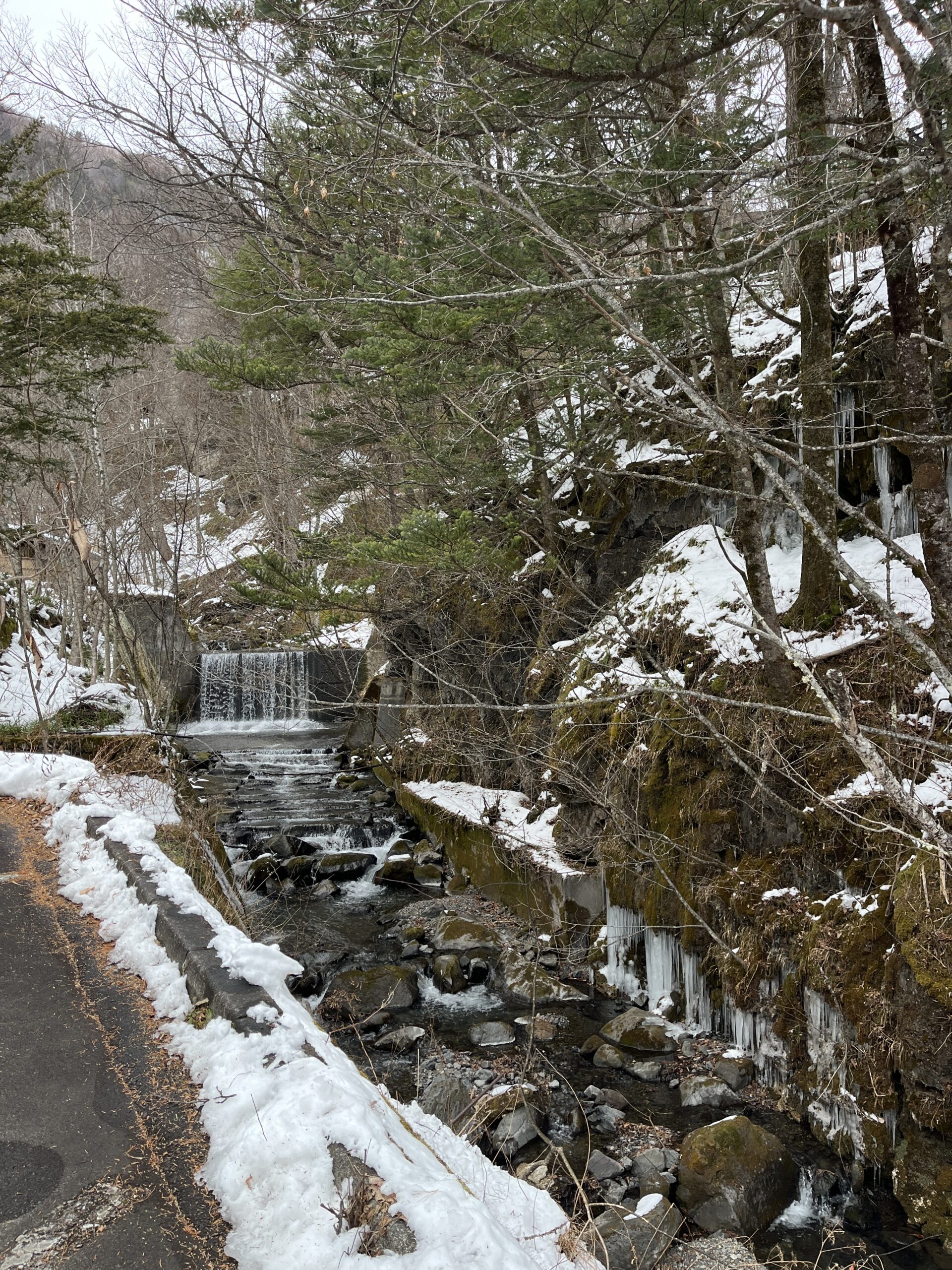
Left: The inn’s long, low exterior. Right: A river runs just beside the property, with nothing but forest in every direction.
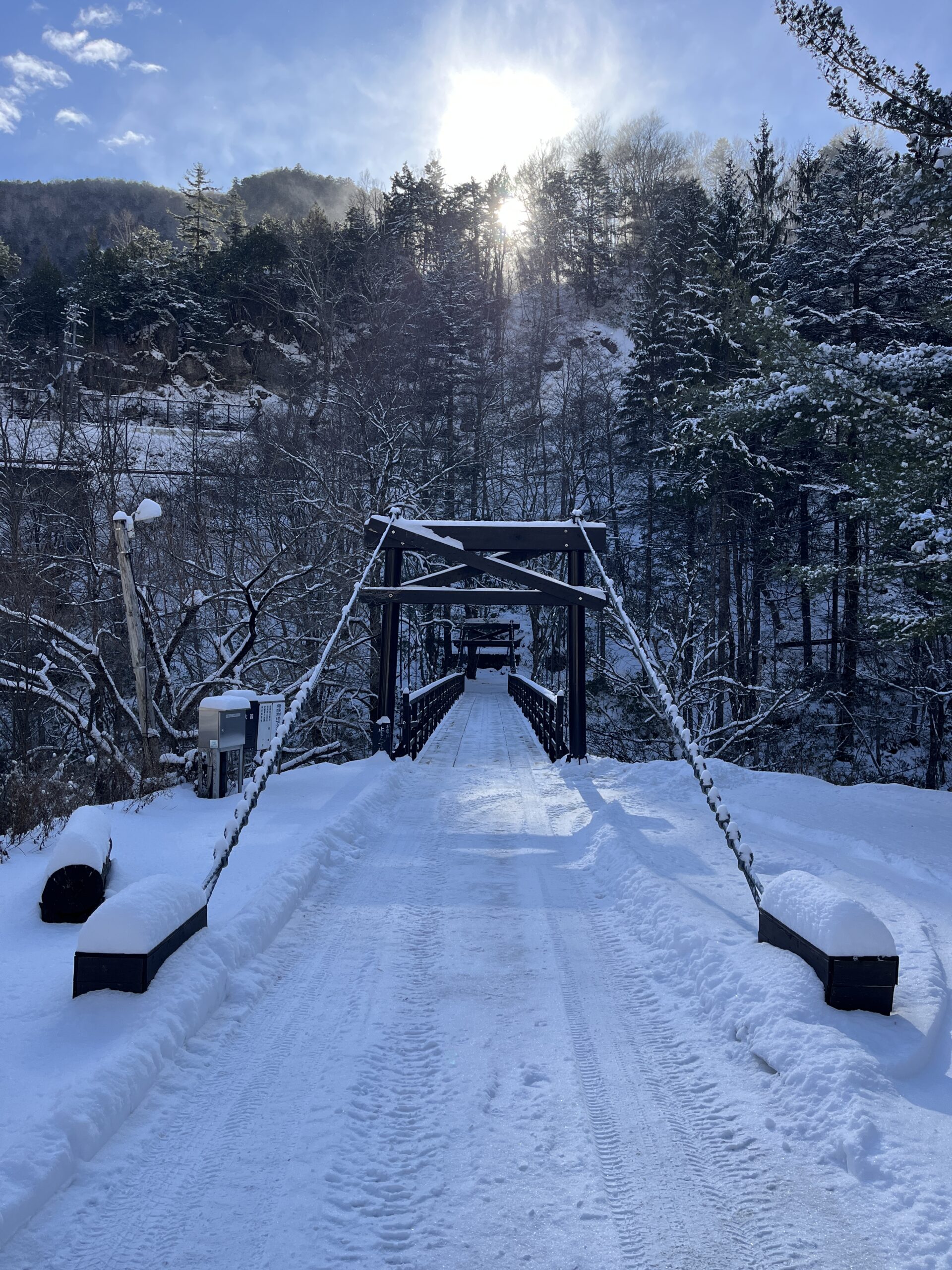
Yugawaso sits at the far edge of Shirahone Onsen, set apart from the rest of the village — down a slope from the road and across a large private suspension bridge.
It’s a striking approach, and in winter, an especially memorable one, with the bridge and surrounding forest often blanketed in snow.
The access road down to the inn is steep and can become treacherous after heavy snowfall, so winter visitors driving themselves should come well prepared and allow extra time.

The Rooms — Simple, and Deliberately TV-Free
| Toilet | En suite (in-room) |
|---|---|
| Refrigerator | Available |
| Air Conditioning / Heating | Not available / Heating provided |
| Wi-Fi | Available |
| Television | Not provided |
| Towels & Yukata | Provided |

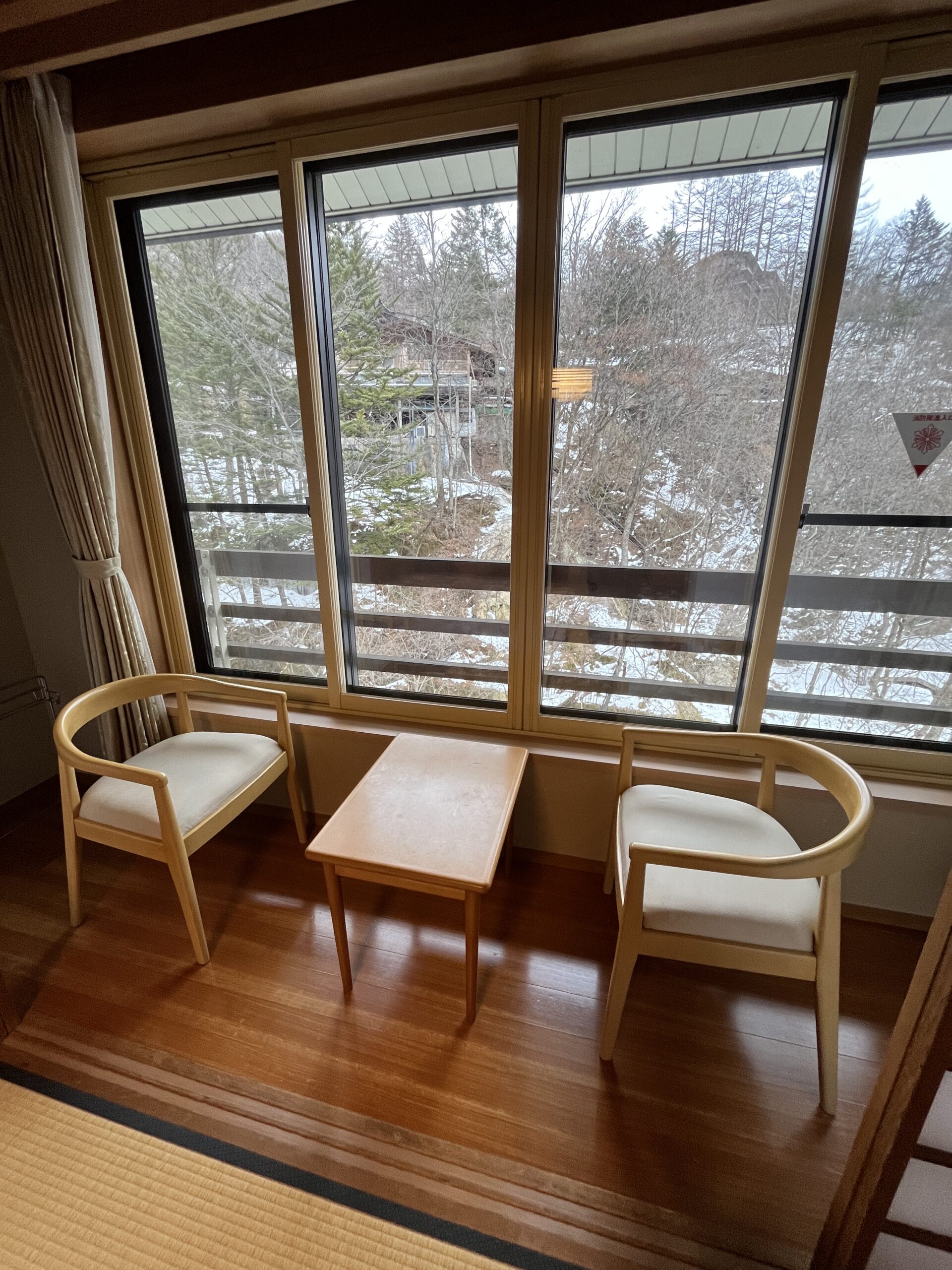
Left: A simple 8-mat tatami room, futon already laid out on arrival. Right: With no neighboring buildings, the window view opens onto forest and mountain.
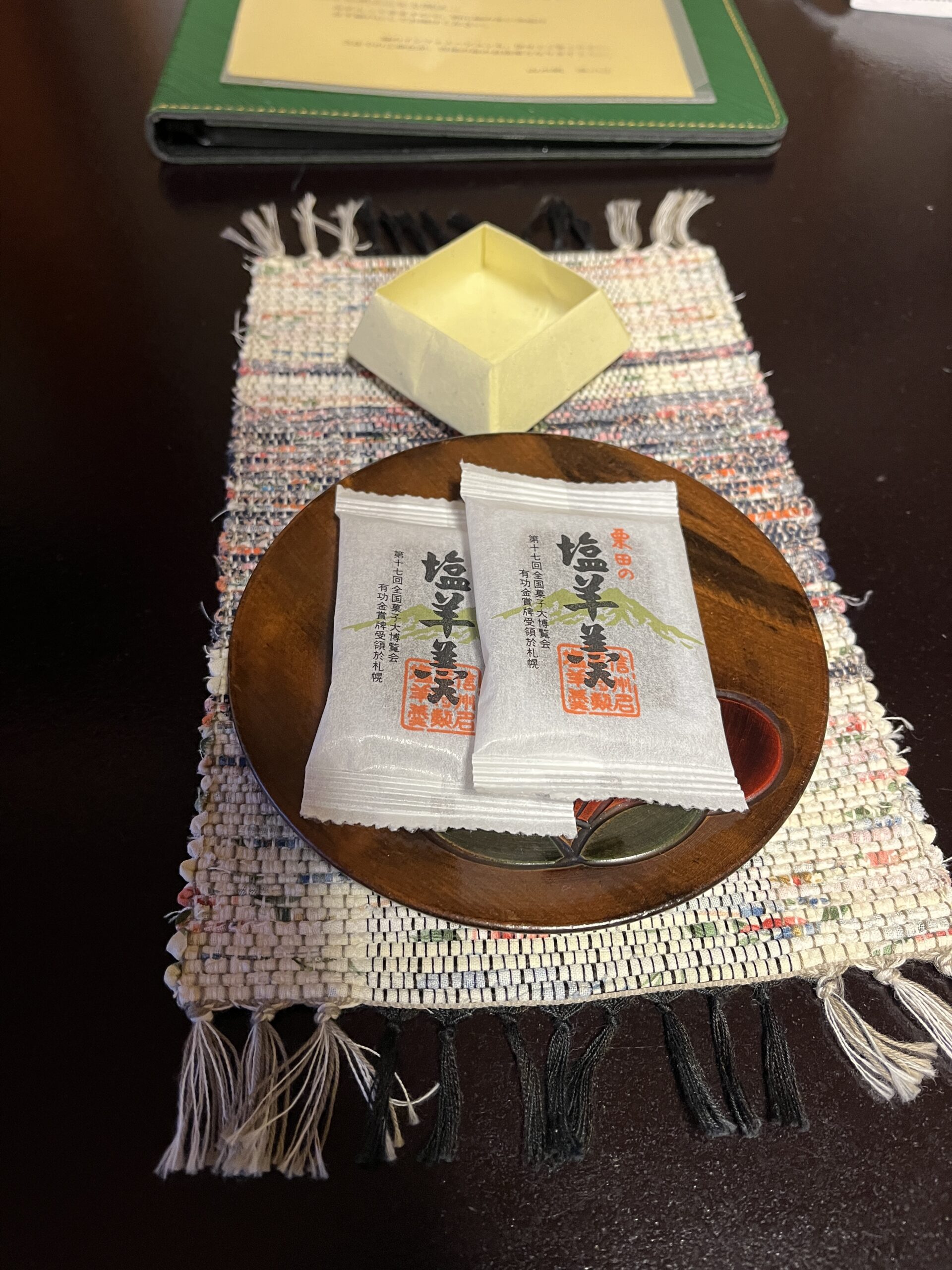
Rooms are unfussy but comfortable, each with its own toilet, refrigerator, and adjustable heater.
There’s no television by design — the inn removed them from every room in October 2023 to encourage guests to slow down and disconnect.
Air conditioning isn’t provided either, though the elevation keeps rooms naturally cool even in summer.
The Hot Springs — Milky Sulfur Water, Decades in the Making
Yugawaso draws from two natural sulfur springs, split across one shared indoor bath, one private indoor bath, and three private outdoor baths (one open only from mid-May through mid-October).
All bathing is free and included in the room rate — a rare setup even by Shirahone’s standards.
♨ Living Wooden Bathtubs
The wooden tubs at Yugawaso have been in continuous use since 1968. Over more than 50 years, dissolved minerals from the spring water have slowly built up along the wood, coating the tubs in thick white deposits that keep growing to this day — a natural, ever-changing artifact of decades of bathing.
Main Indoor Bath
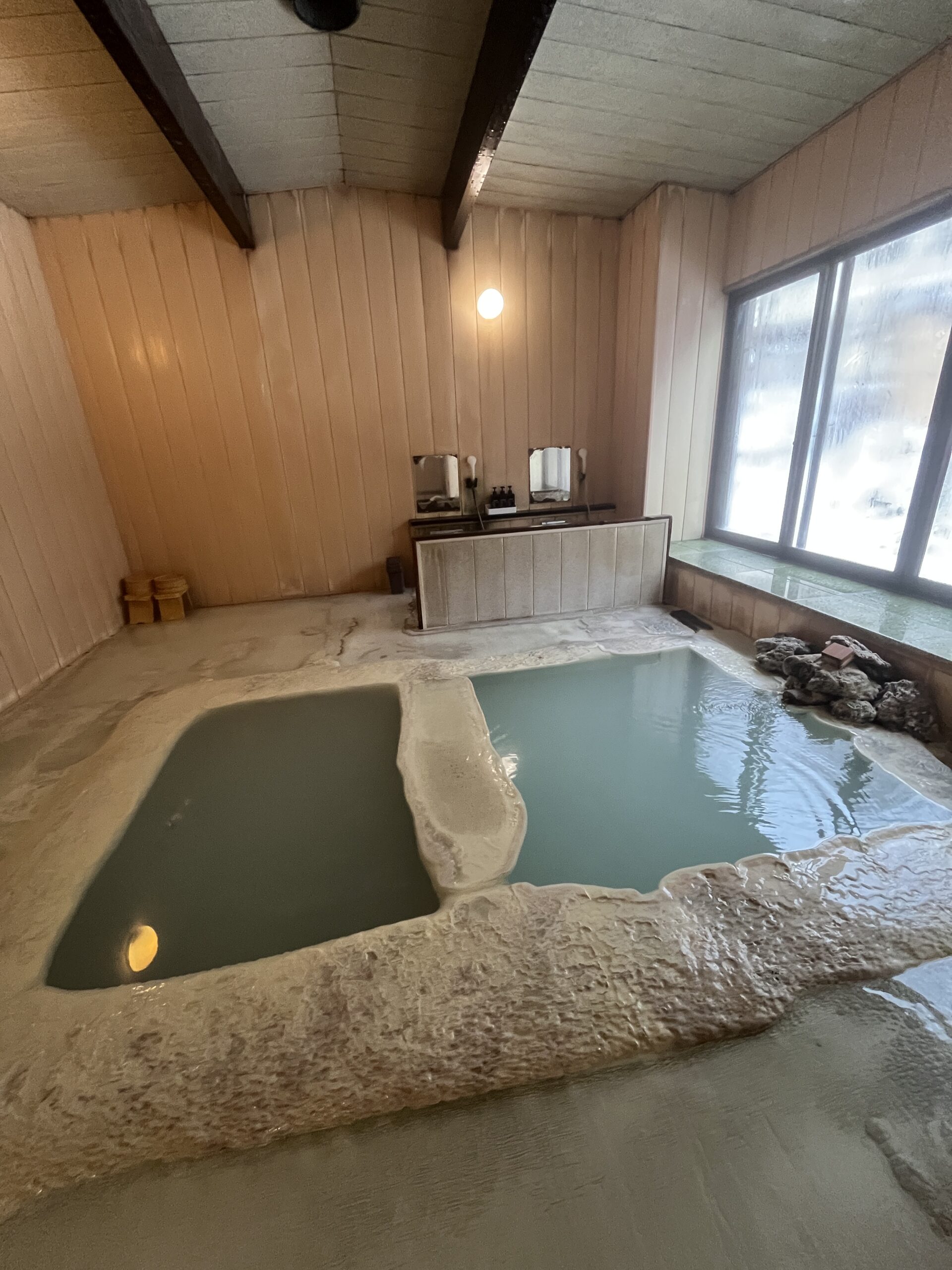
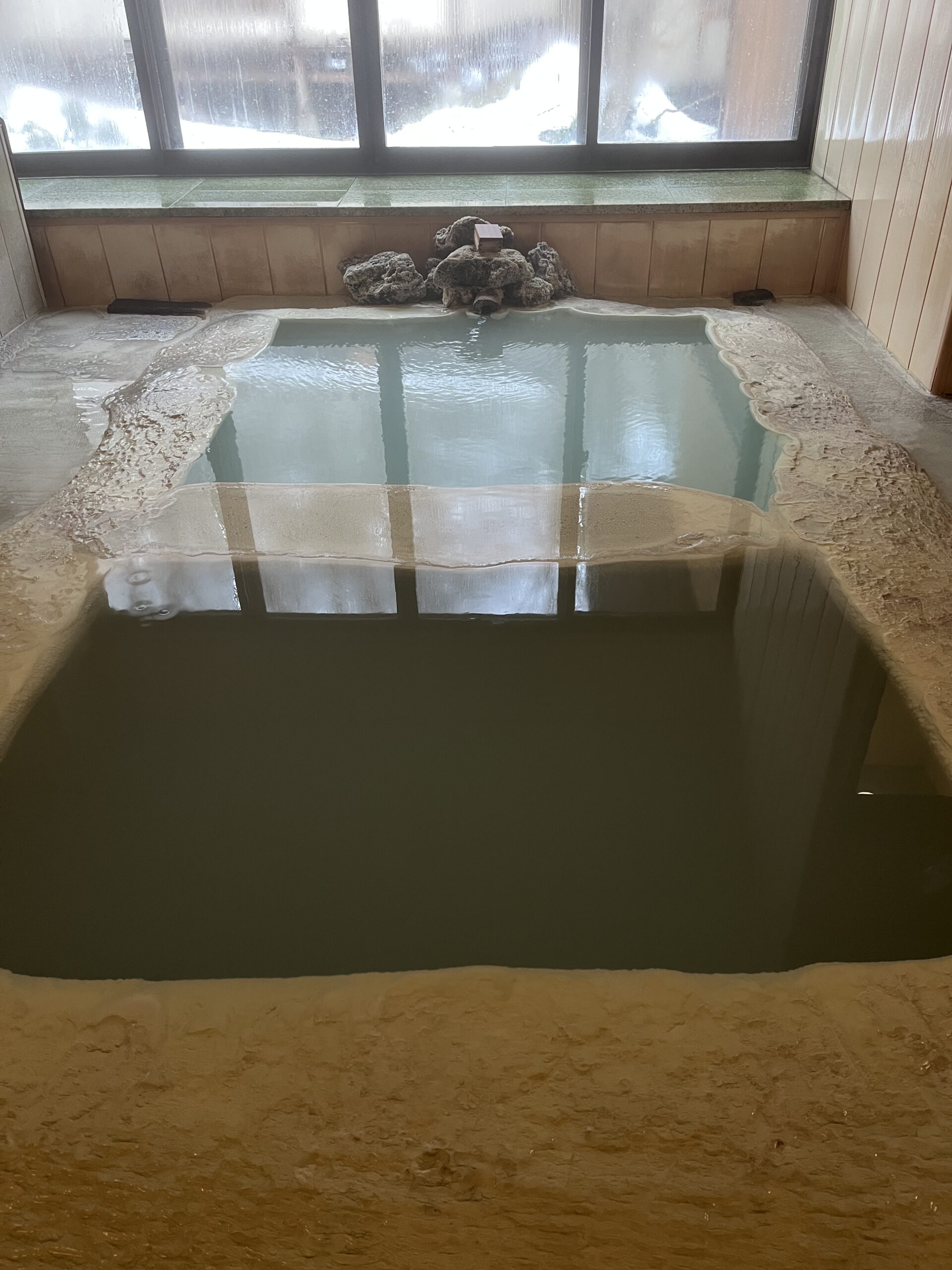
Decades of mineral buildup have coated this wooden tub in a thick white crust, exactly the look that gave Shirahone Onsen its name.
The shared indoor bath is where Yugawaso’s springs are shown off at their best. Spring water flows in from one side and runs noticeably hotter, while the far side sits several degrees cooler — enough of a gap to move back and forth between the two temperatures.
The water carries a gentle, mildly milky tint with a distinct sulfur aroma, and at a neutral pH of around 6.4–6.5, it’s kind to the skin even after a long soak.
There are only two washing stations, and the mineral-crusted floor is noticeably uneven underfoot — a small but telling sign of just how concentrated this water is.
Private Indoor Bath
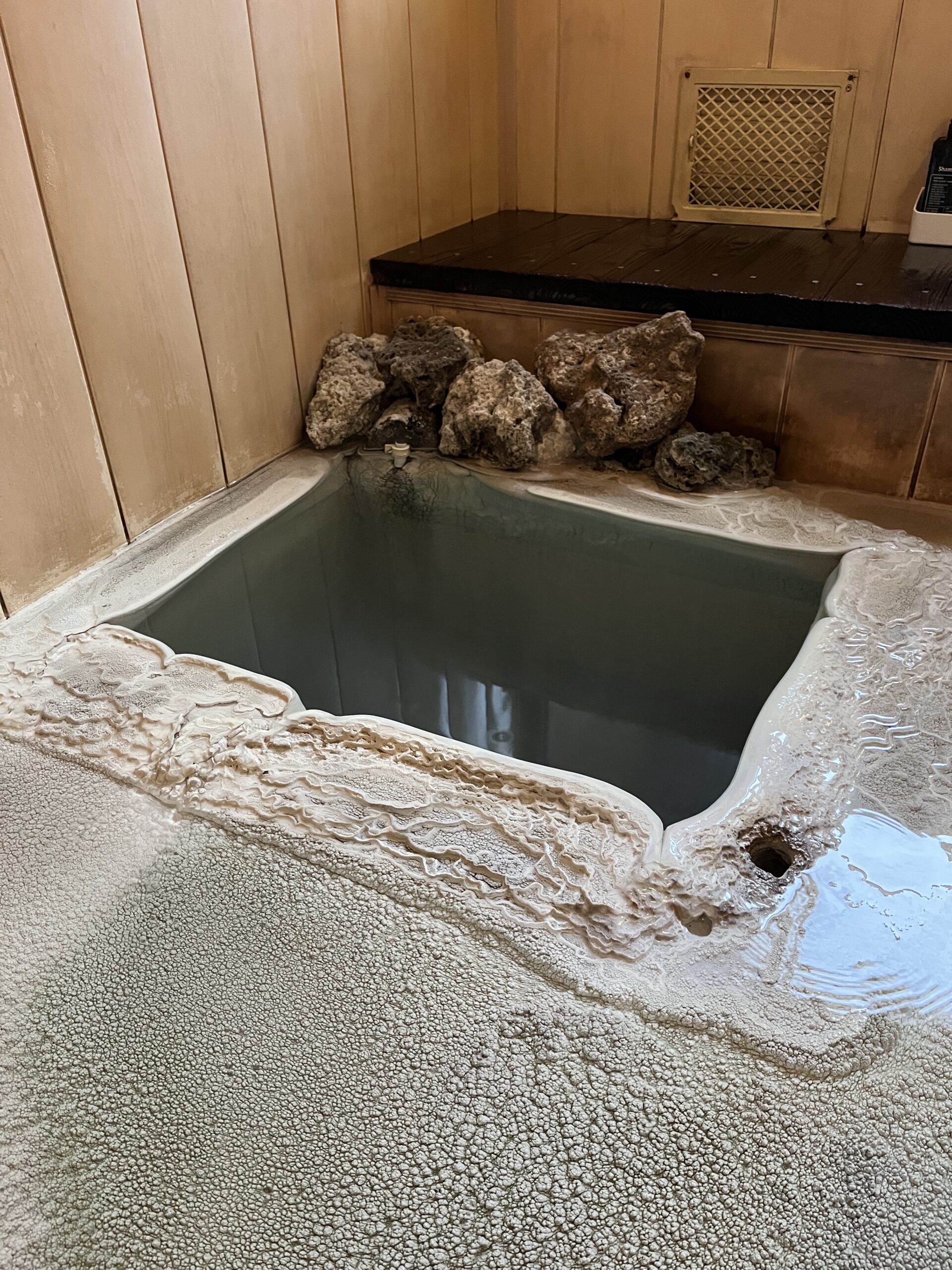
Sized for one person, this small private bath was built alongside the main indoor bath and shows the same decades of mineral buildup in miniature — a good option when the shared bath is occupied, or simply for a few minutes of fresh spring water to yourself.
Private Outdoor Bath “Hoo” — Best Views ★
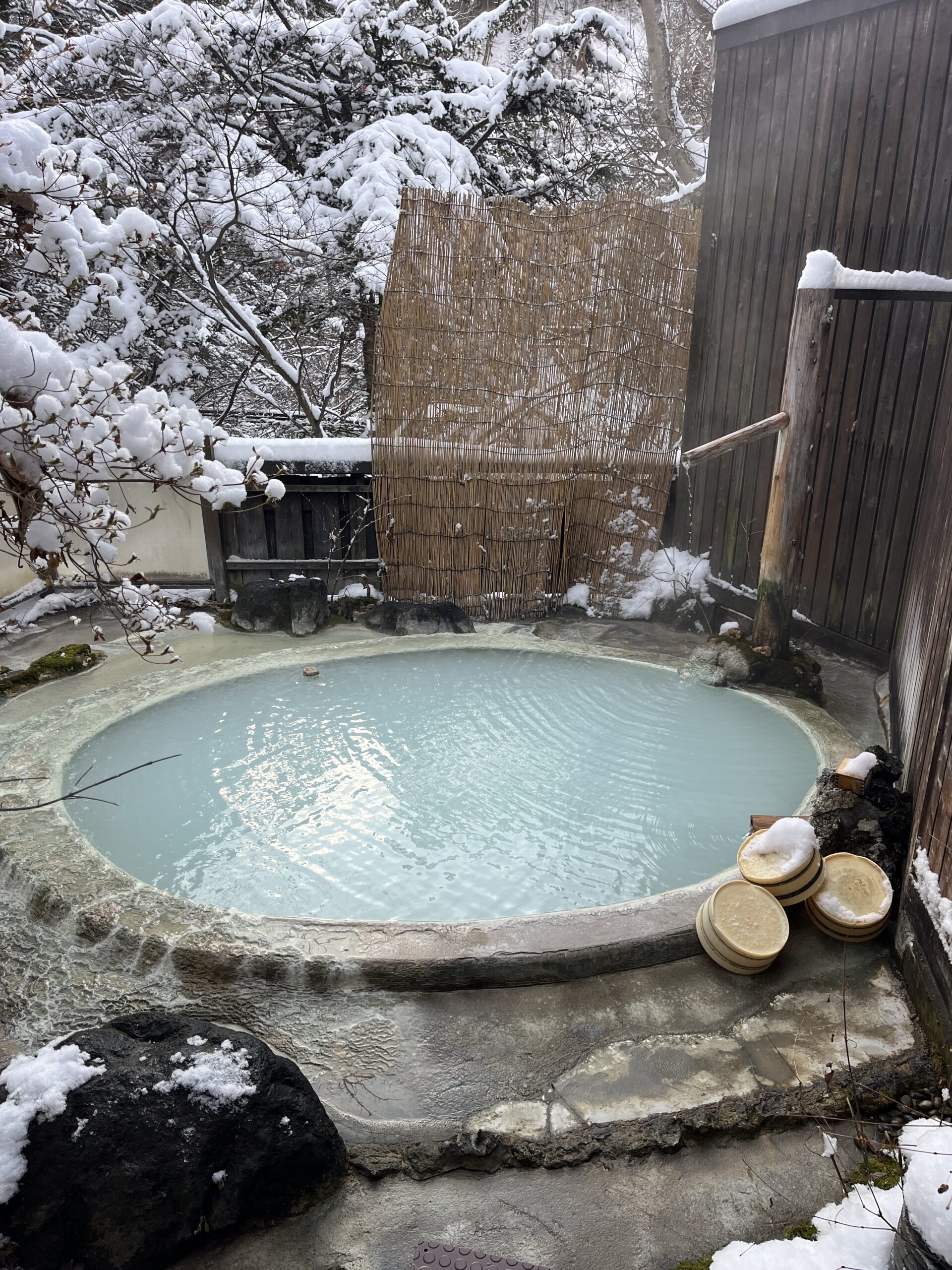
This is the pick of Yugawaso’s private baths — large enough that it feels almost extravagant to have entirely to yourself. The water runs on the cool side, around 38°C, gentle enough for a very long soak, though it can feel slow to warm you through on a cold winter night. Wake up after fresh overnight snow and the whole scene changes, every branch outlined in white — a proper “yukimi-buro” (snow-viewing bath) moment.
Private Outdoor Bath “Uriga” — Freshest Water
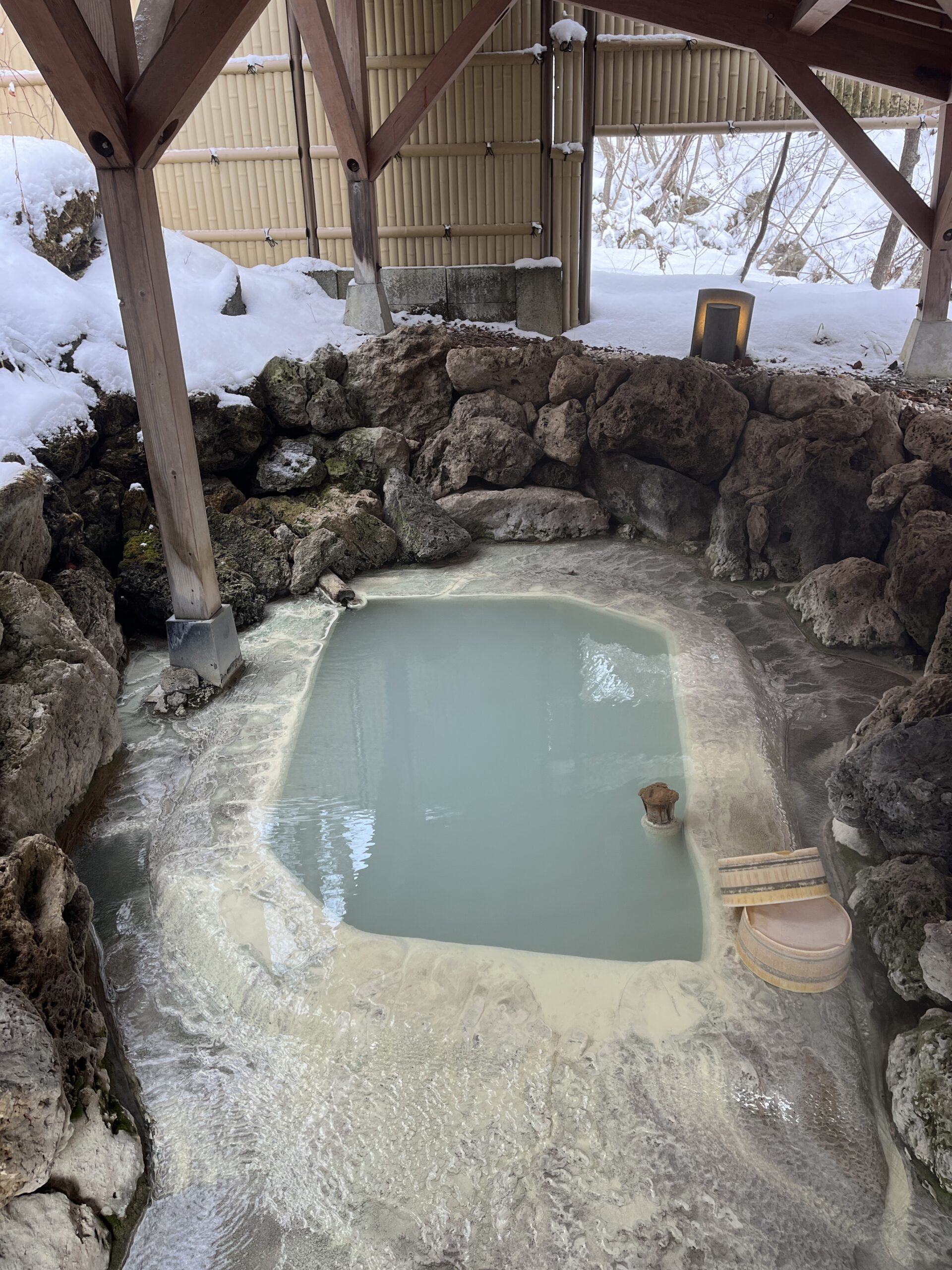
Smaller and covered by a partial roof, this bath trades some of Hoo’s scenery for water that feels noticeably fresher, thanks to its smaller volume and steady inflow. At around 40–41°C, it’s a touch warmer — welcome on a cold night.
🔑 A Note on Bathing Access
Yugawaso keeps three private outdoor baths in the warmer months (mid-May to mid-October) and two through the colder season, when one is closed. All private baths are free to use and unreserved — simply check for an “occupied” sign before entering.
Dining — The Region’s Onsen-Fed “Milky White Hot Pot”
Both dinner and breakfast make deliberate use of the spring water itself, alongside ingredients sourced from the surrounding Nagano countryside.
Dinner
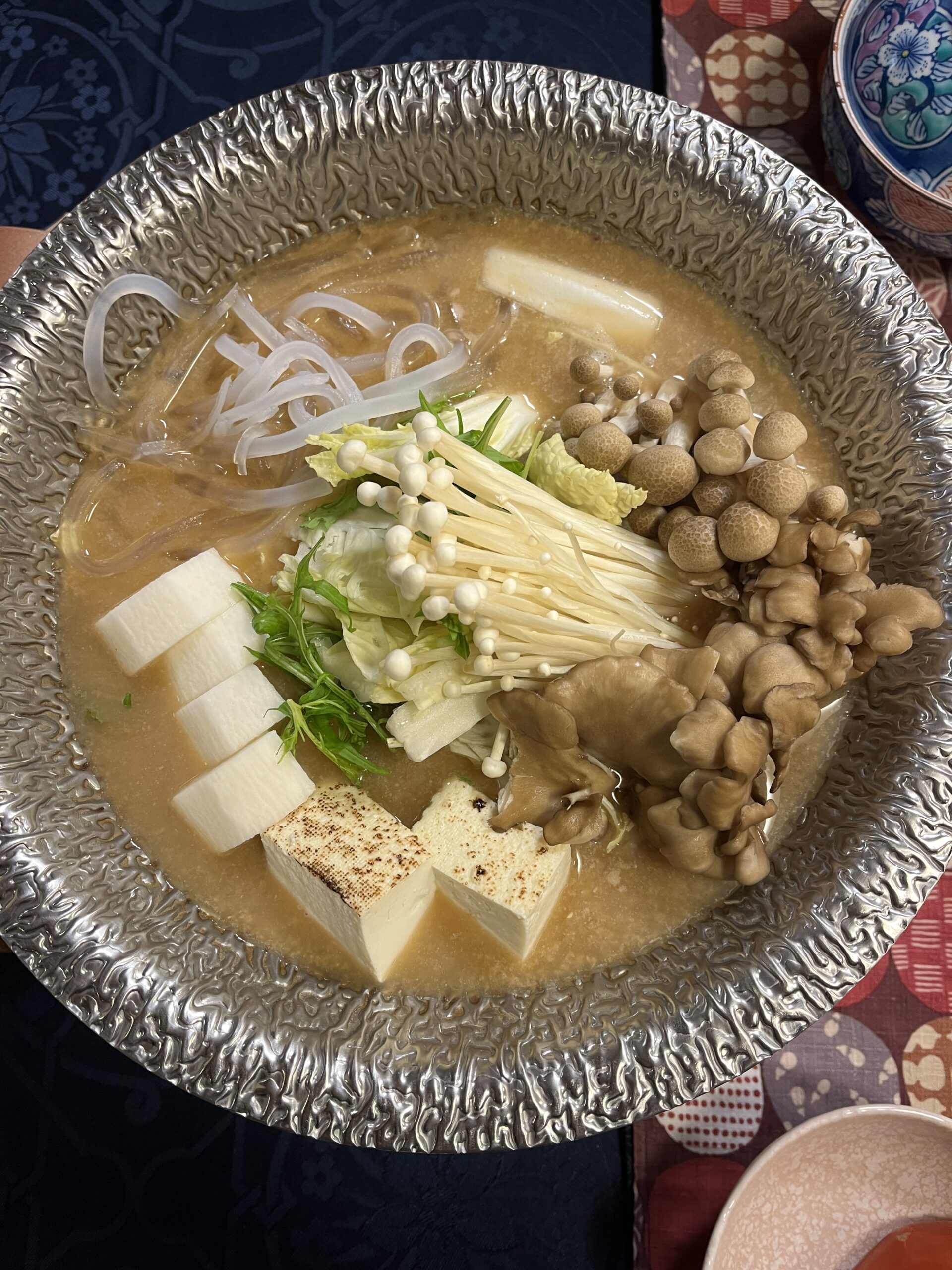
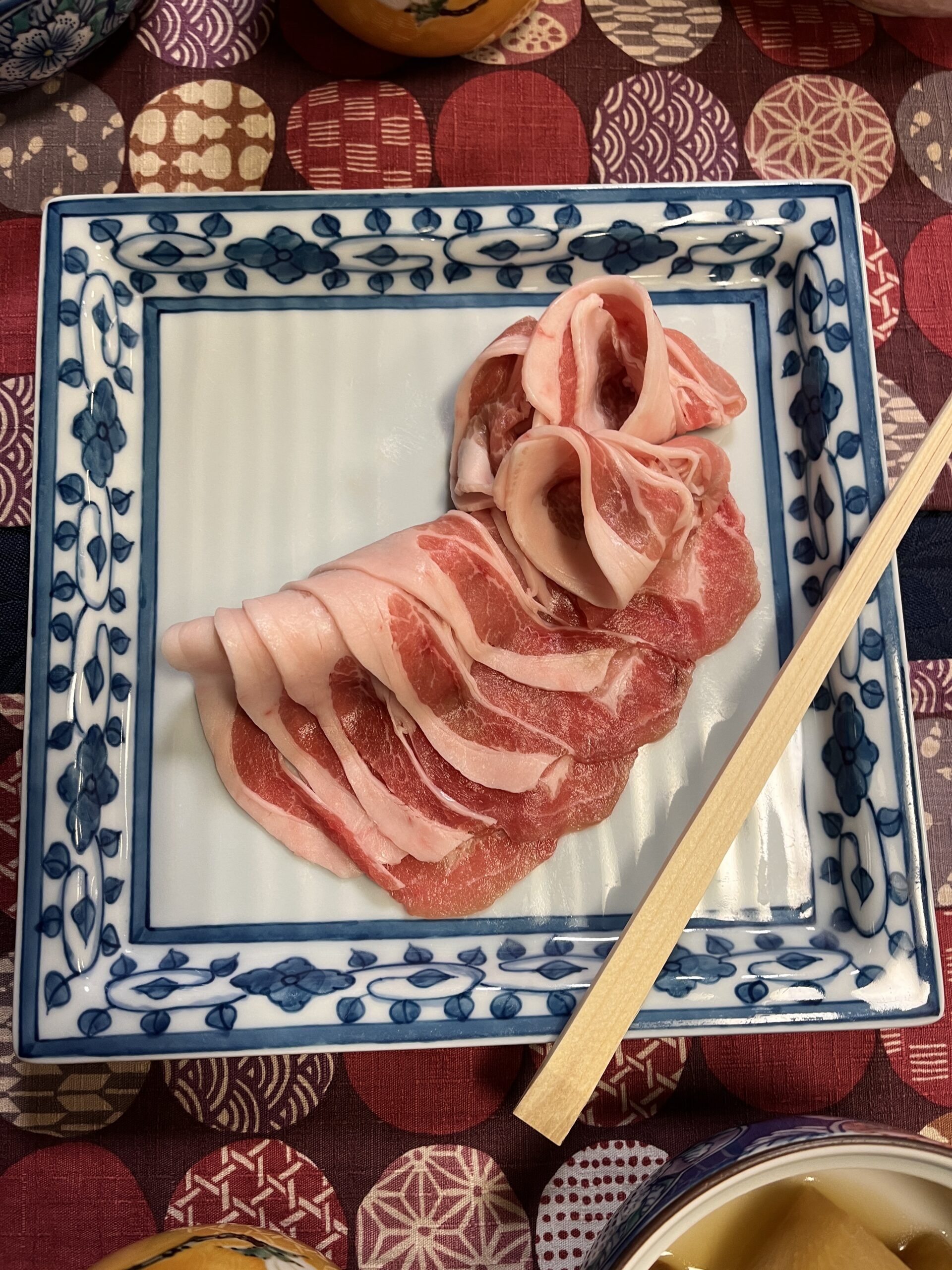
Left: The house specialty: a “milky white hot pot” simmered from onsen water, Swiss Brown cow’s milk, and Shinshu miso. Right: Tender, well-marbled beef for the hot pot.
Yugawaso’s signature dish combines the inn’s own sulfur spring water with milk from local Swiss Brown cattle and Shinshu miso (a regional Nagano miso), simmered together with beef and vegetables into a broth that’s noticeably creamy and mild — a clever way of putting the onsen itself on the dinner table.
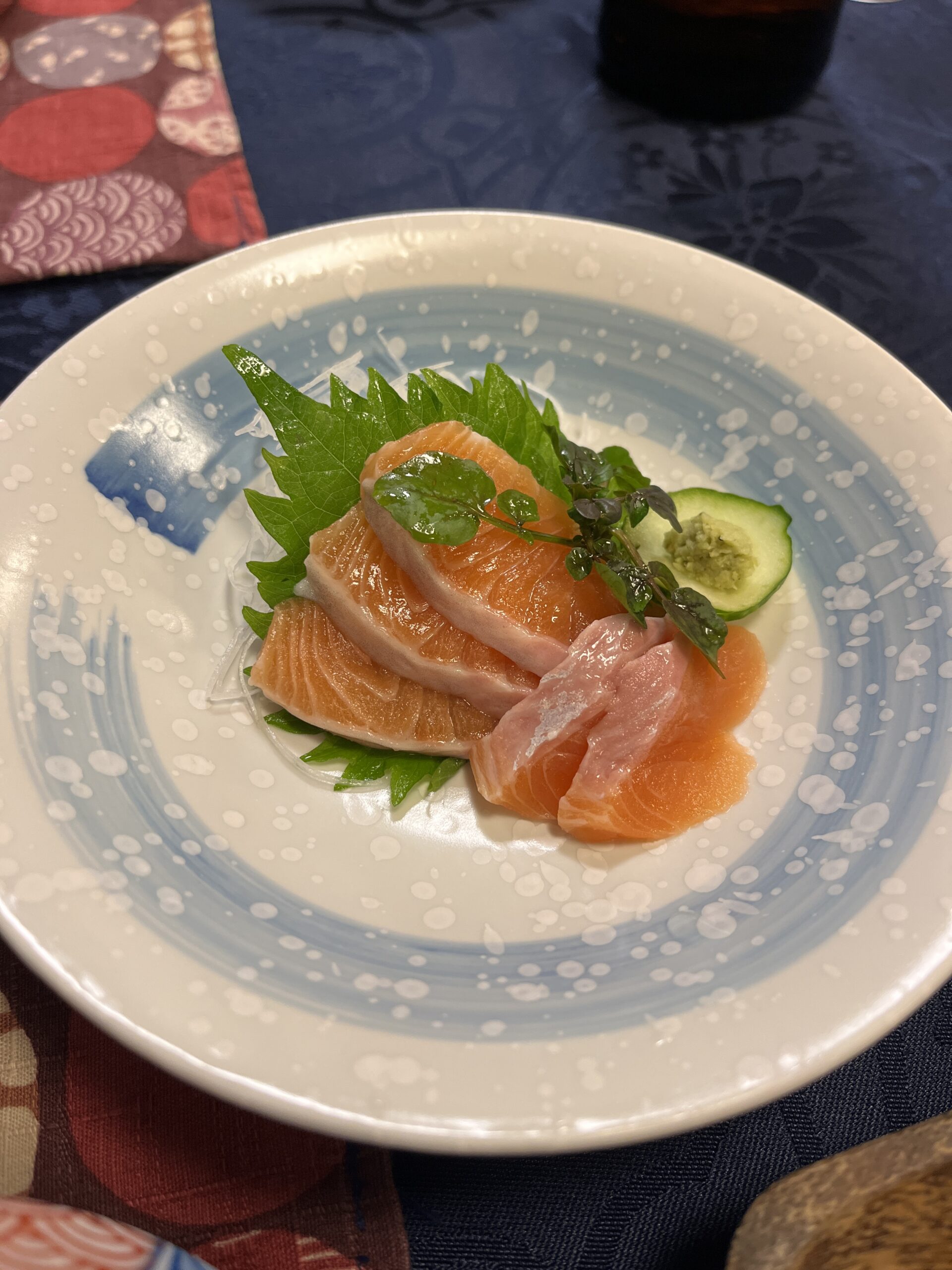
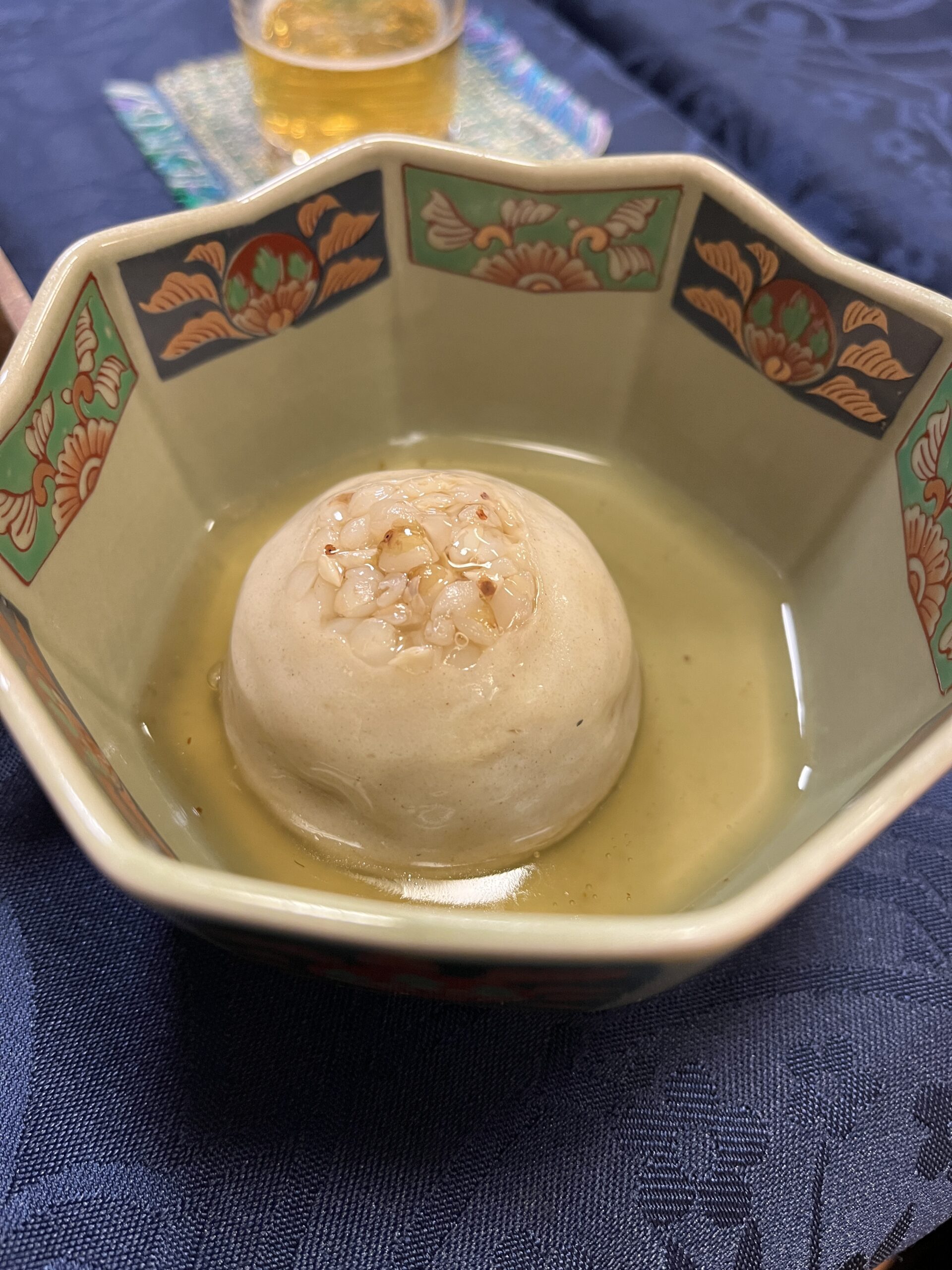
Left: Shinshu salmon sashimi. Right: A soba-flour dumpling under sweet bean sauce.
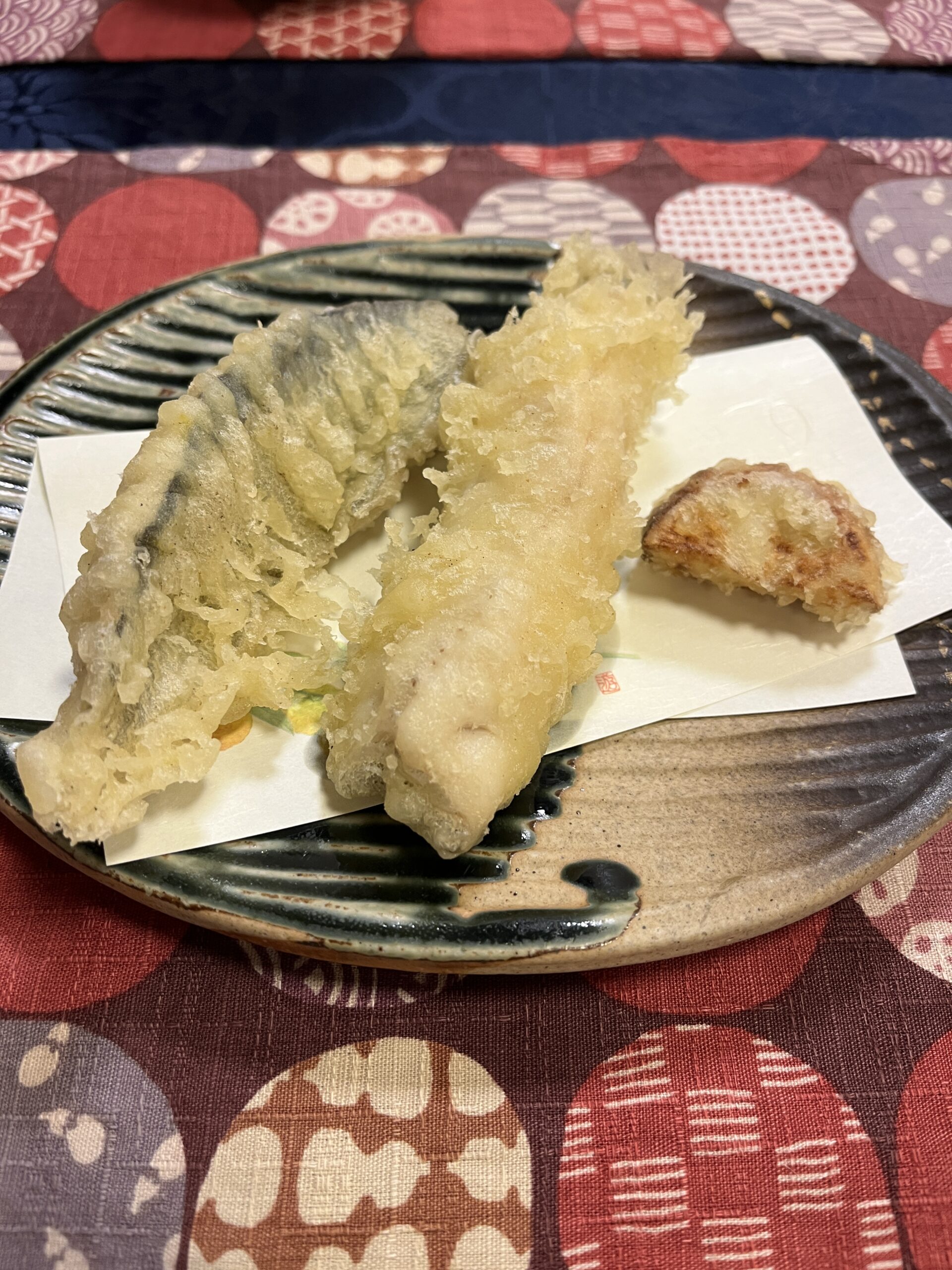
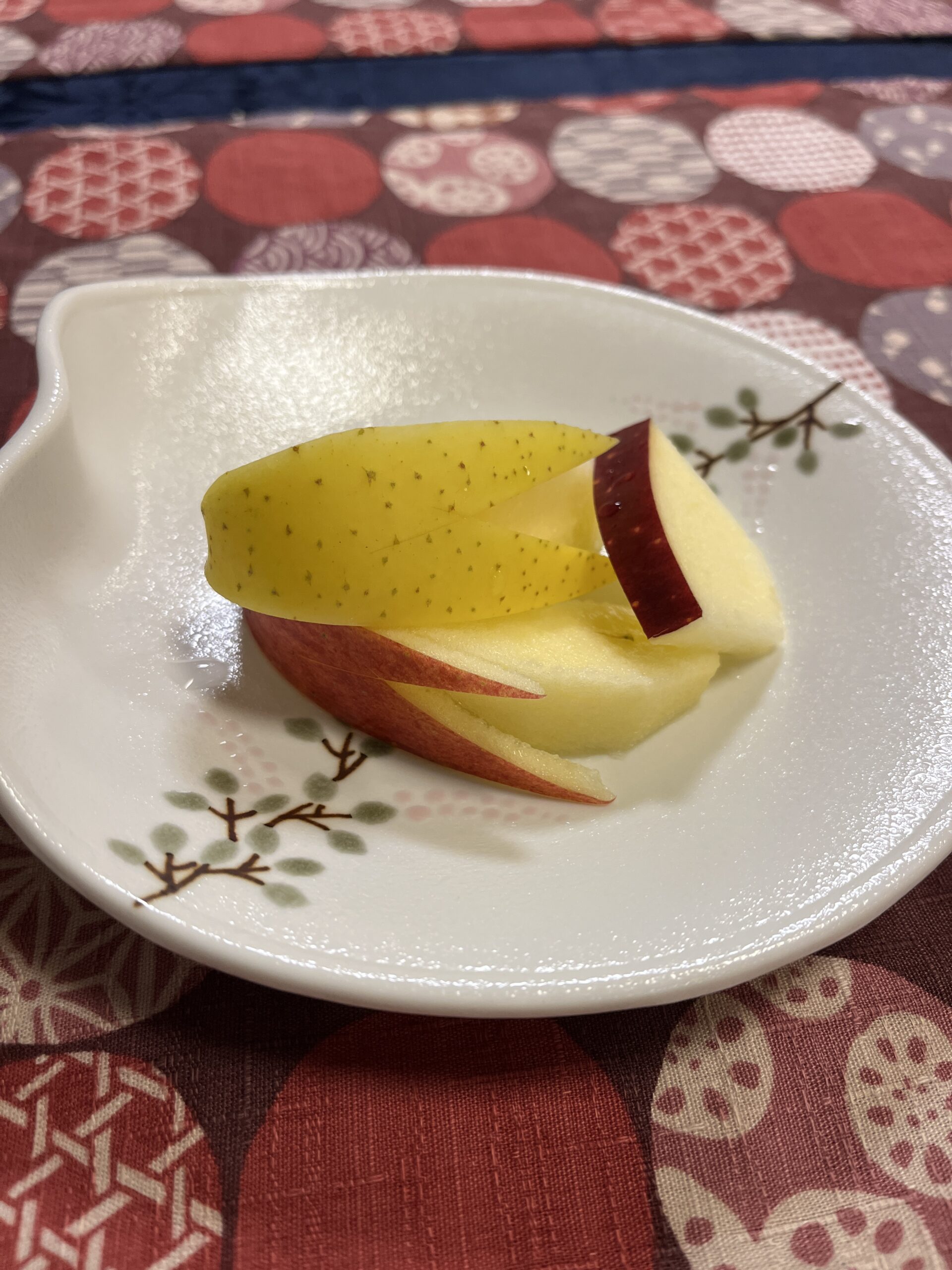
Left: Crisp tempura featuring iwana (river trout). Right: Dinner closes with a Shinshu apple — a fitting Nagano dessert, alongside house pickles served earlier in the meal.
Dinner leans heavily on local produce — river fish, mountain vegetables, and Nagano’s well-known apples all appear alongside the signature hot pot.
It’s a simple, unpretentious menu rather than an elaborate kaiseki spread, but the quality of the ingredients carries it well.
Breakfast
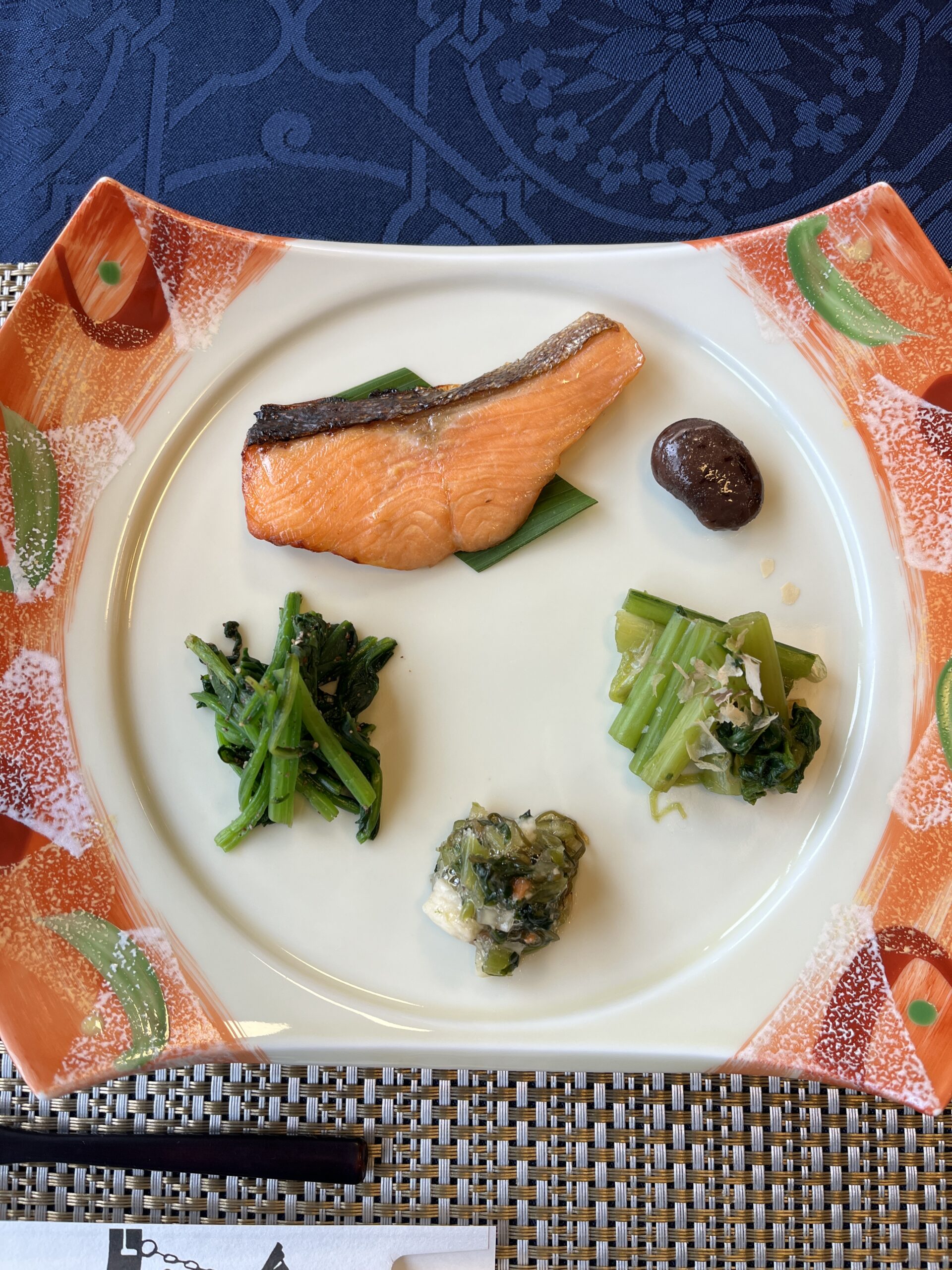
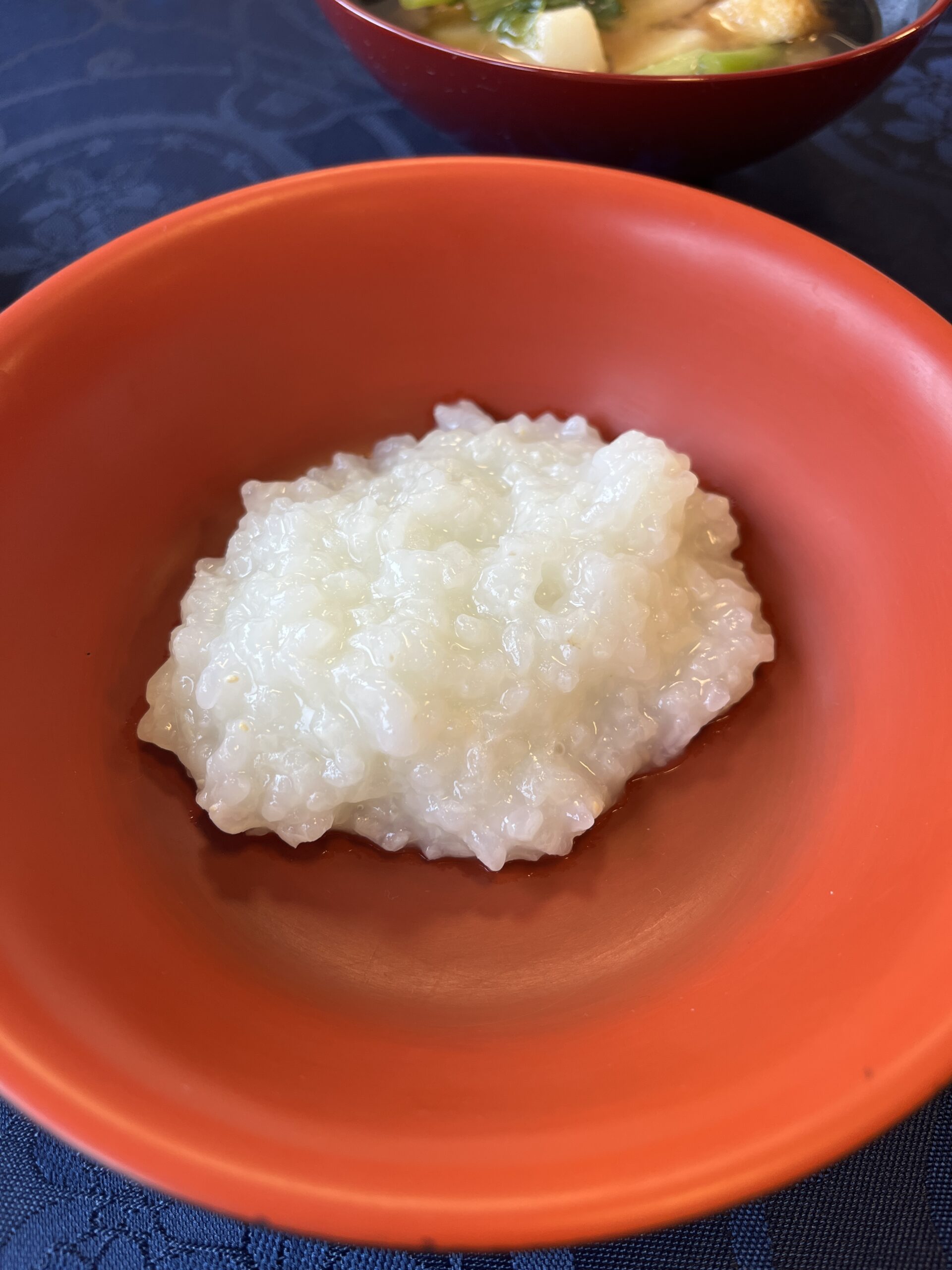
🍚 What is Onsen-gayu?
Onsen-gayu is rice porridge cooked using mineral-rich hot spring water instead of plain water. The minerals are said to bring out a slightly deeper flavor in the rice, and the dish is a common specialty at ryokan built around a strong natural spring — Yugawaso’s version is smooth, mild, and easy on the stomach after a soak.
Breakfast keeps things simple — grilled salmon, a soft-cooked onsen egg, miso soup, and the porridge — exactly the kind of unfussy morning meal that suits a quiet mountain stay.
Final Thoughts
Yugawaso delivers something increasingly rare: genuine seclusion, reached by crossing a private suspension bridge into a valley with almost no other buildings in sight.
The decades-old mineral-crusted tubs are worth the trip on their own, and having several private baths included at no extra cost makes it easy to soak again and again throughout the stay.
Winter, with snow settling over the outdoor baths and the surrounding forest, is when the inn is at its most memorable — just come prepared for the drive.
Yugawaso is ideal for visitors who:
- Want to soak in private baths repeatedly, without booking or paying extra
- Are drawn to the milky white sulfur springs Shirahone Onsen is famous for
- Want a genuinely quiet, secluded mountain stay with almost no other guests in sight
- Are celebrating a special occasion and don’t mind paying a bit more for it
Few inns deliver seclusion this complete — it’s well worth the journey.
▼Book your stay▼