
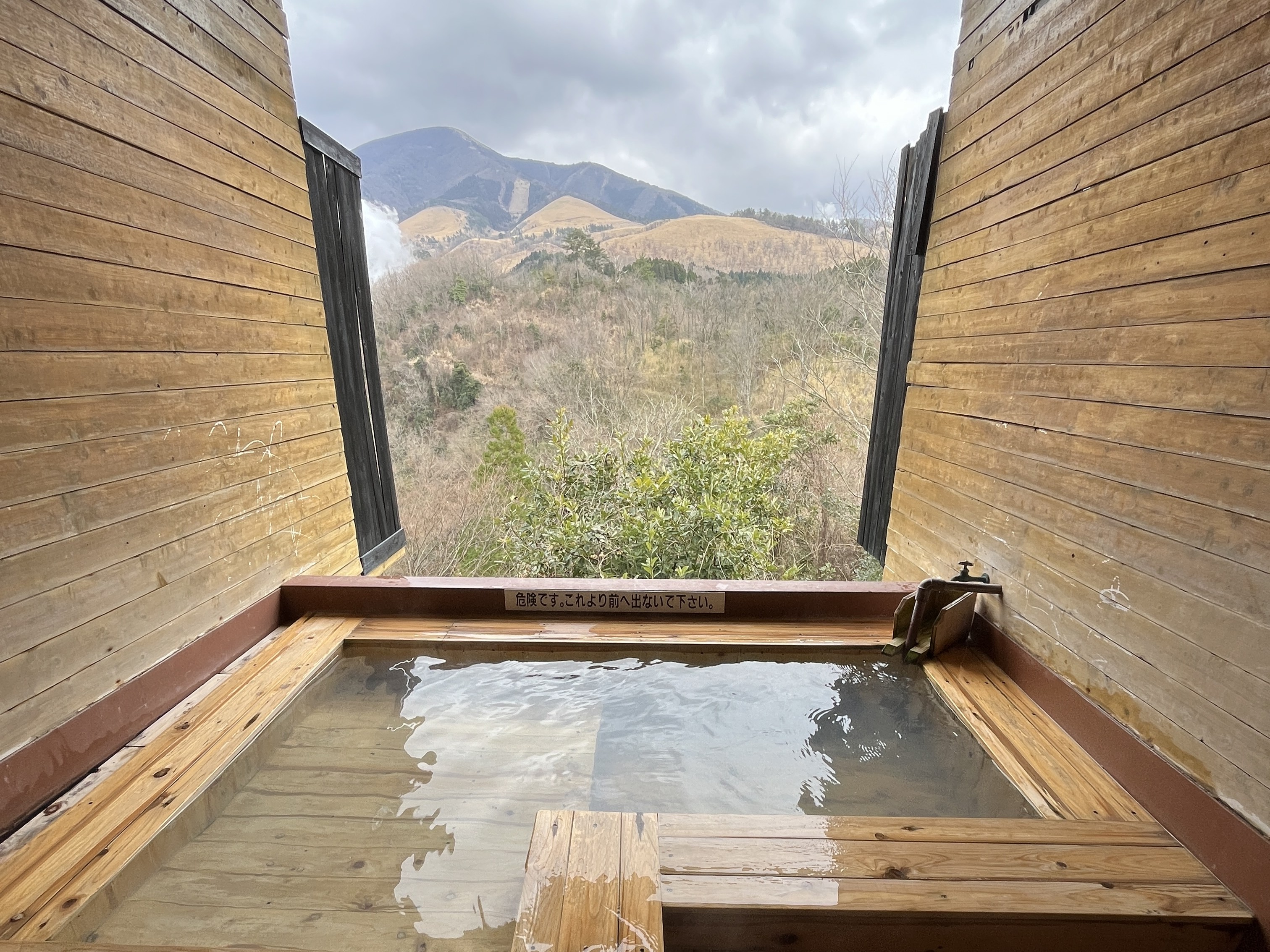
In the mountainous reaches of northern Kumamoto, Waita Onsen Village spreads across the slopes of Mt. Waita, nicknamed “Oguni Fuji” for its neat, conical shape.
Steam rises straight out of the ground here, in a geothermal landscape with more in common with Beppu’s Kannawa district than a typical countryside bathhouse. Scattered among the village’s small hot spring hamlets, Hourei no Yu stands out for one distinctive quirk: its private baths start out completely empty, and a single coin is what brings the spring water rushing in.
Why Hourei no Yu stands out:
- A genuine “first bath” experience — private baths are drained after every use, and a 500-yen coin fills yours from scratch
- A dramatic mountain-view soak at the foot of Mt. Waita, with steam visibly rising from the surrounding hillsides
- Spring water that can turn a striking, milky blue depending on the day’s conditions — part of Kumamoto’s celebrated “white-blue” onsen
- Plenty of privacy: 17 private bath rooms plus a gender-separated outdoor bathhouse, all self-service and low-key
Hourei no Yu
| Address | 2917 Nishisato, Oguni-machi, Aso-gun, Kumamoto 869-2504, Japan |
|---|---|
| Phone | +81-967-46-5525 |
| Official Website | houreinoyuyado.com |
| Outdoor Bathhouse | ¥600 (mixed facility, separated by gender) |
| Private Bath – Hinoki (Cypress) | ¥2,000 per hour |
| Private Bath – Rock, Outdoor | ¥1,500 per hour |
| Private Bath – Rock, Indoor | ¥1,000 per hour |
| Hours | Outdoor bathhouse & hinoki private bath: 8:00–19:00 · Rock private baths (outdoor & indoor): open 24 hours |
| Reservations | Not accepted by phone or email for any private bath — first-come, first-served only |
Getting There from Tokyo — Access Guide
Waita Onsen Village sits in a remote corner of Oguni-machi, close to the Oita border, and has no train station of its own — reaching it always involves a bus or a car for the final stretch. Flying into Kumamoto is the most practical route from Tokyo.
| By Air (Recommended) | Haneda → Aso Kumamoto Airport, roughly 1h45m by air (ANA, JAL, Solaseed Air). From the airport, either rent a car for the ~1h20m mountain drive, or take the Kyushu Odan (Trans-Kyushu) highway bus toward Kurokawa Onsen (~2.5 hours) to “Minami-Oguni Yakuba-mae,” followed by a taxi (~15–20 minutes). |
|---|---|
| By Shinkansen + Bus | Tokyo → Hakata Station via the Tokaido/Sanyo Shinkansen (~5 hours). From Hakata Station or Fukuoka Airport, a reserved highway bus runs toward Kurokawa Onsen (~2.5 hours) to “Yu Station” (Yu Sutēshon), followed by a short taxi ride (~15 minutes). |
| JR Pass Coverage | A nationwide JR Pass covers the Shinkansen leg to Hakata, but the rest of the journey is entirely by highway bus and taxi, which JR passes don’t cover. Renting a car from Kumamoto Airport is the simplest way to reach this onsen village directly. |
A Remote, Mountain-Ringed Setting
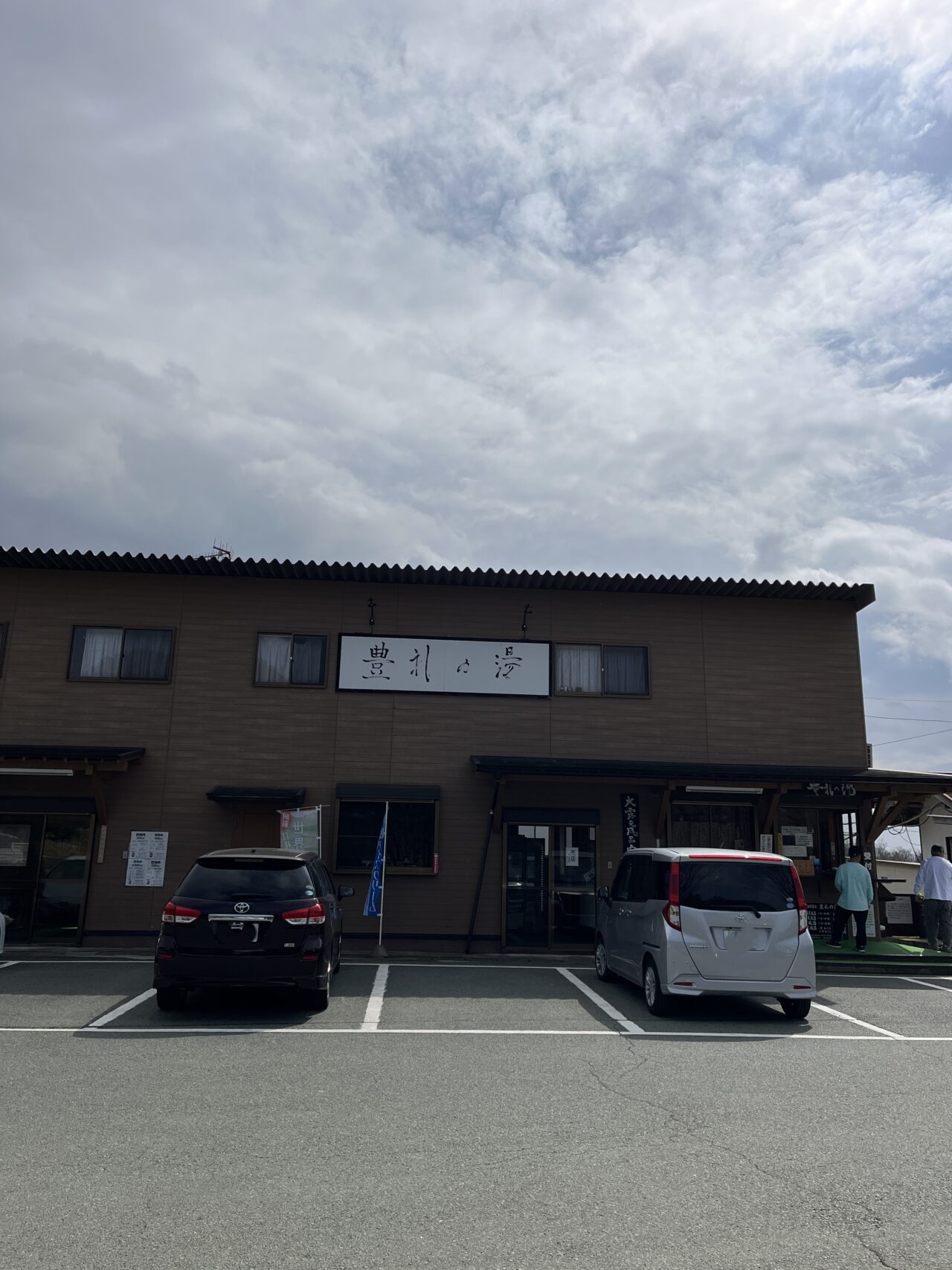
Hourei no Yu sits partway up the slopes of Mt. Waita, surrounded on all sides by rolling highland scenery.
The view from the facility is genuinely striking — bathing here feels a world away from a typical city day-spa, closer to soaking directly in the landscape.
The wider Waita Onsen Village has an unmistakable “hot spring hamlet” atmosphere, with steam drifting up between the trees, making it a good base for exploring several small bathhouses in the area.
The Hot Springs
A Coin-Operated “First Bath” System
We chose one of the hinoki (Japanese cypress) private baths — a row of partitioned, fully private rooms entered without ever crossing paths with other guests.
What makes Hourei no Yu unusual is what greets you inside: an empty tub. Pay the fee at reception and you’ll be handed a 500-yen coin, which you drop into a slot to release the spring water.
There’s something quietly satisfying about filling your own bath from scratch.
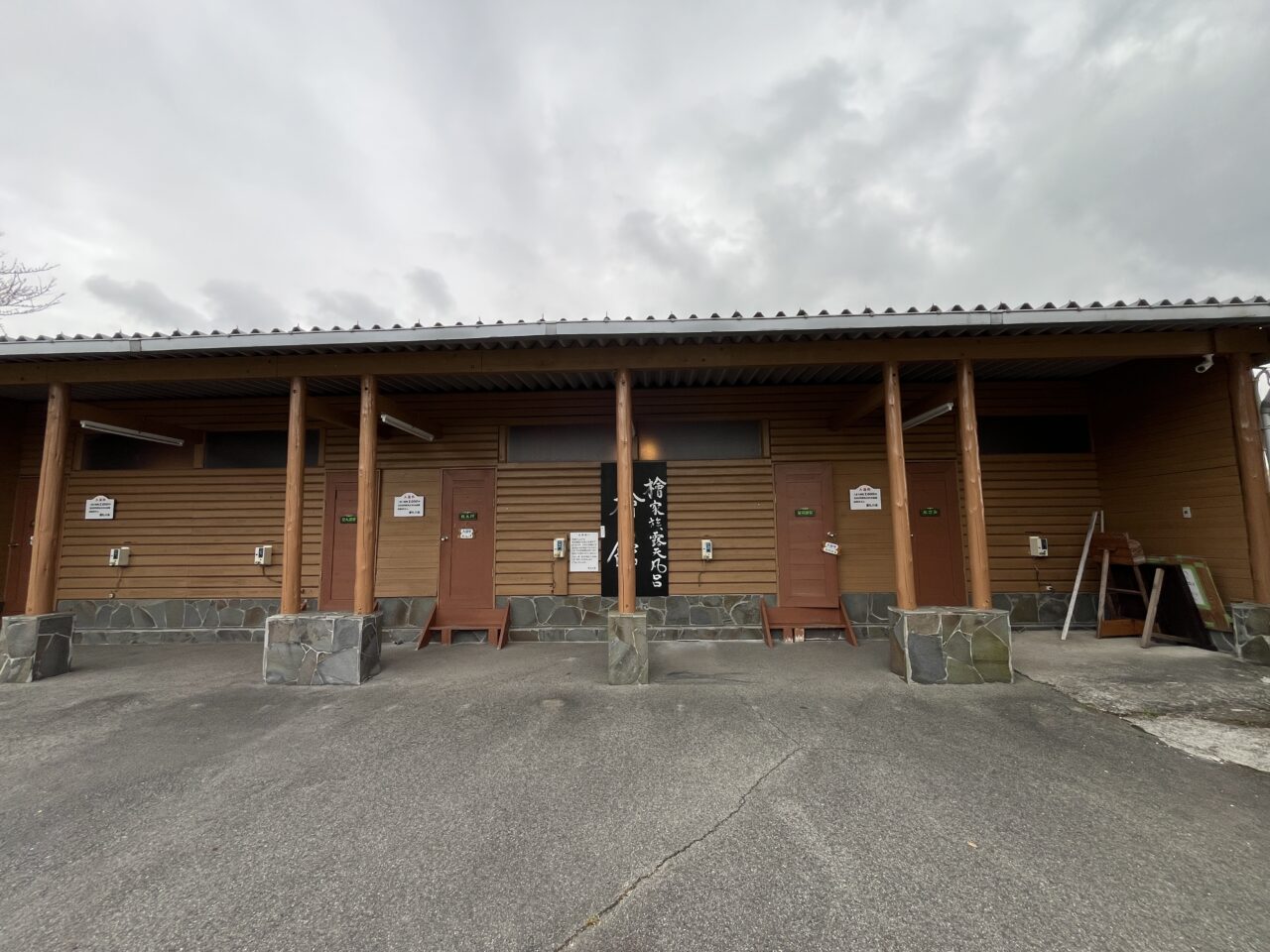
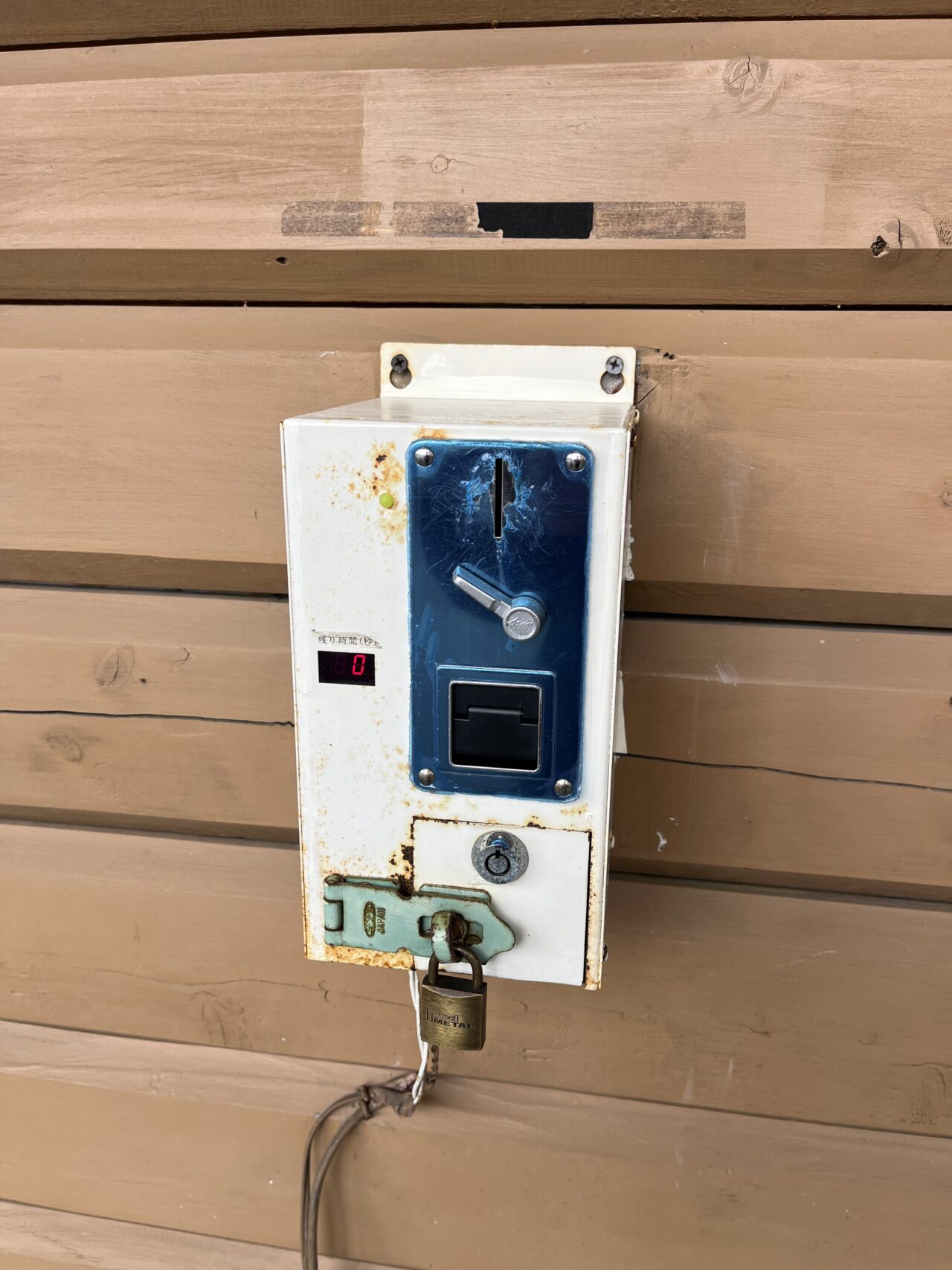
Left: One of the partitioned hinoki private bath rooms. Right: Insert a 500-yen coin here to release the spring water.
The tub starts bone dry, and water gushes generously from the spout the moment the coin drops.
With flow that strong, it only takes around five or six minutes to fill — worth the short wait, since it means you’re the very first person into that water.
In Japanese bathing culture, spring water is considered to lose some of its quality the moment someone else has soaked in it, so a true ichiban-buro (“first bath”) is something of a luxury.
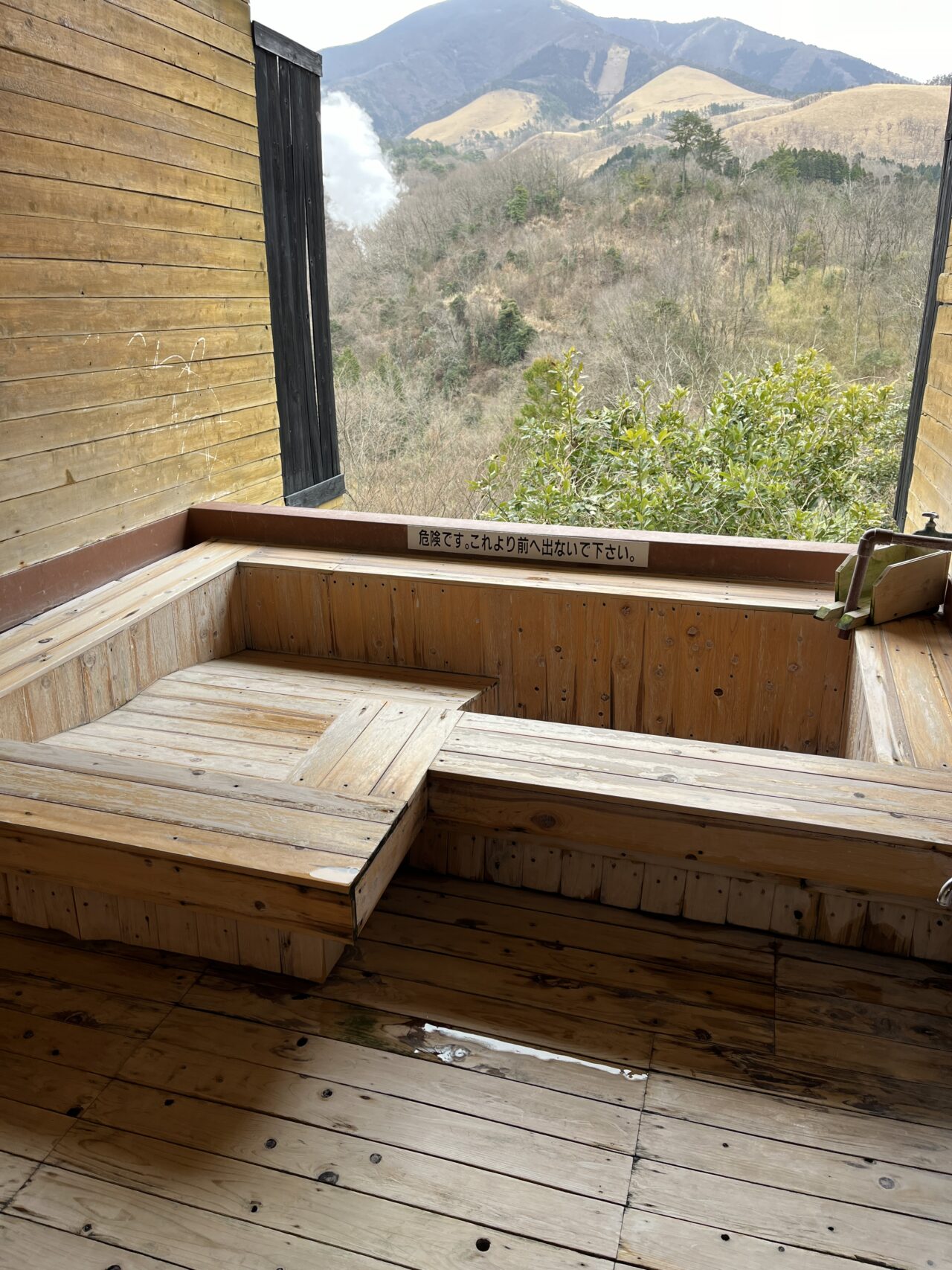
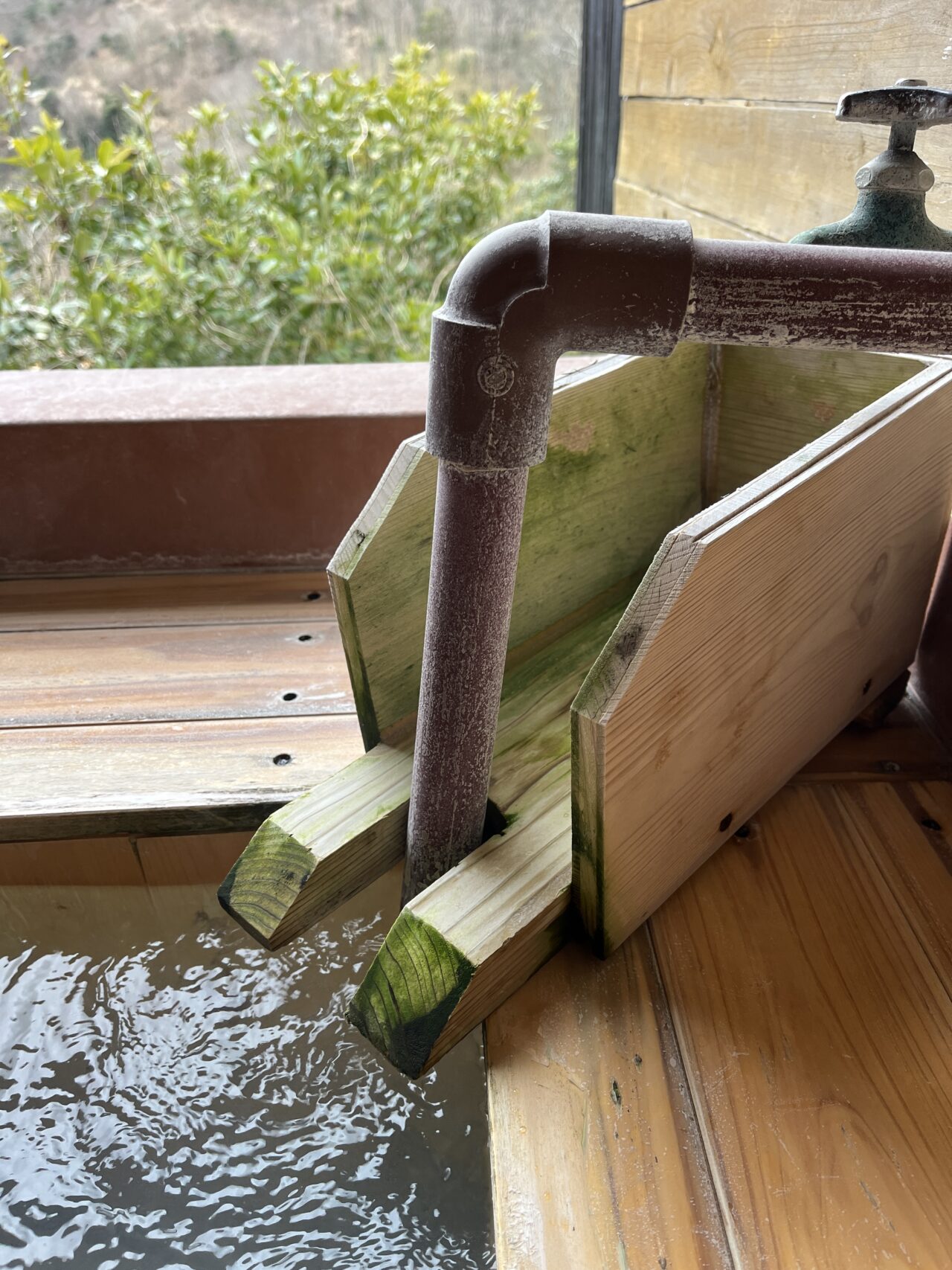
The tub starts completely empty (left) before the spring water rushes in from the spout (right).
♨ About Kashikiri-buro (Private Baths) in Japan
A kashikiri-buro is a private bath reserved for one party at a time, rented by the hour rather than shared with other guests. They’re especially popular at rural onsen villages like Waita, where dozens of small, family-run baths let visitors soak in complete privacy — no bathing suit or wrap required, unlike mixed-gender baths.
A Milky Blue Soak, Weather Permitting
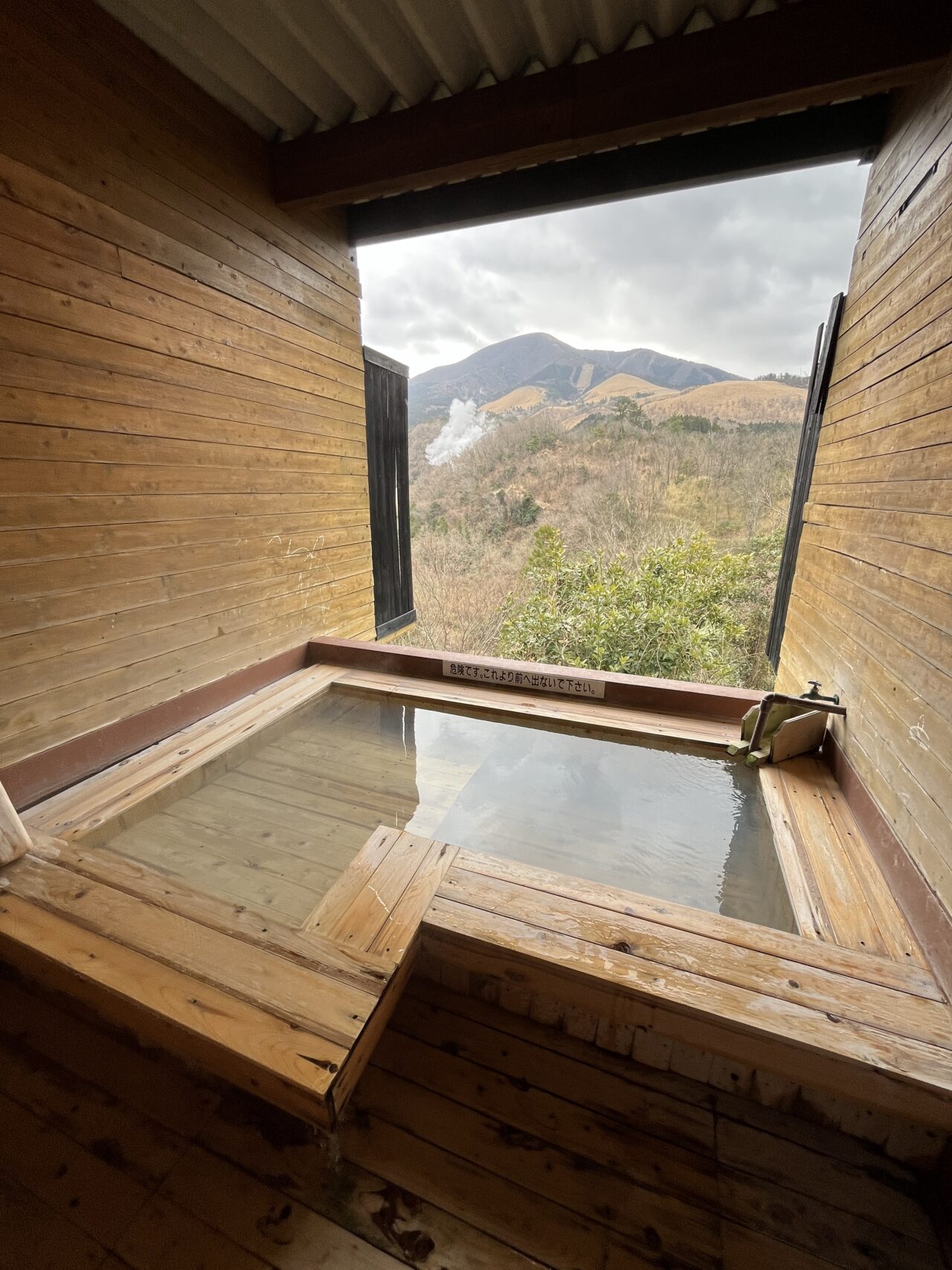
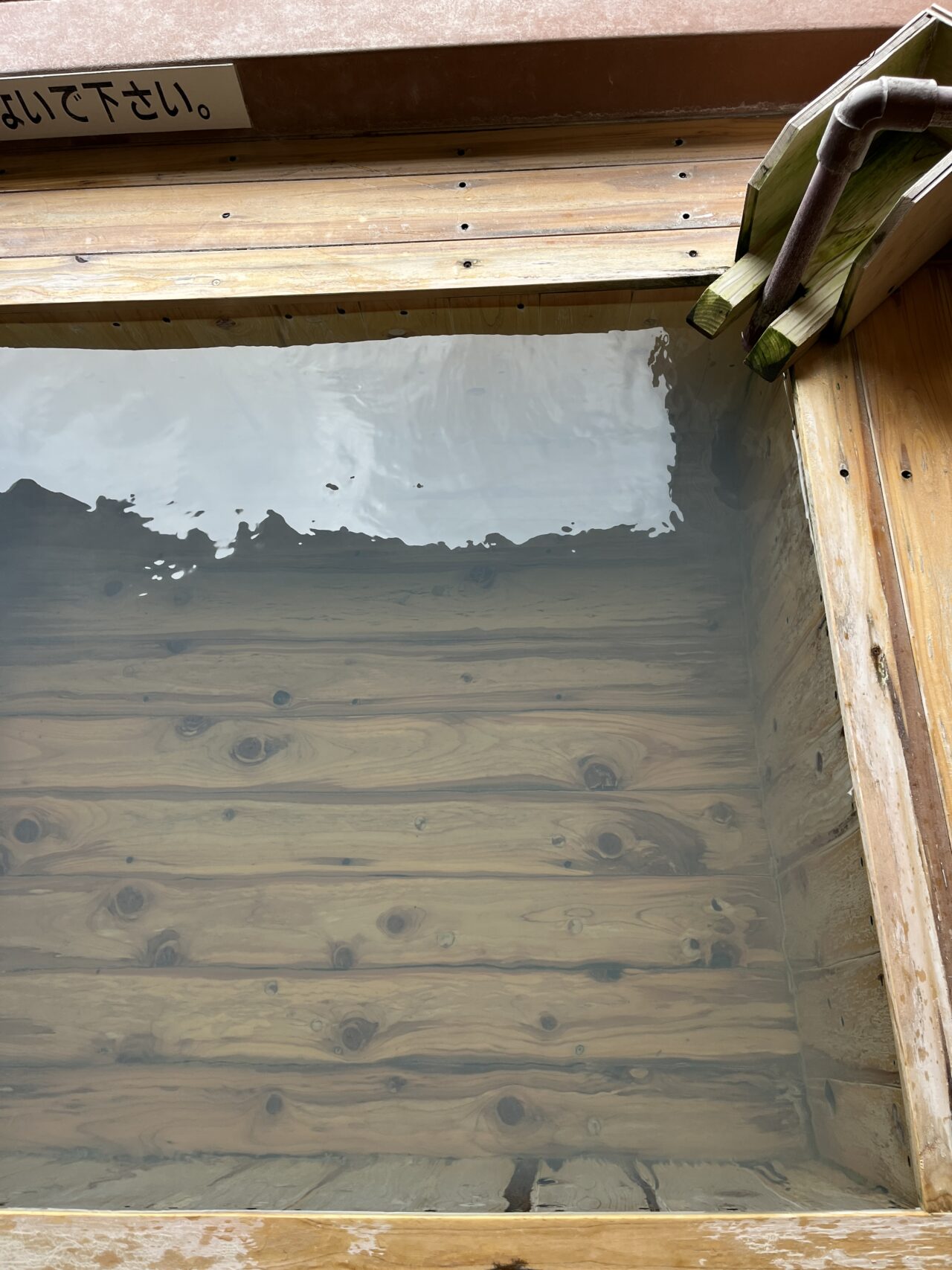
On the day we visited, the water settled into a soft, pale blue haze rather than a vivid turquoise — the intensity of Hourei no Yu’s famous “white-blue” color shifts with the day’s mineral concentration and temperature, so catching it at its best is partly a matter of luck. Even a muted version of the color is a distinctive sight for a sodium chloride spring.
The surrounding view more than makes up for any color disappointment: a wide sweep of mountains, with wisps of steam rising visibly from the hillside in places.
A cold-water tap next to the tub lets you fine-tune the temperature, so you can settle in and soak for as long as you like without ever feeling rushed.
Dining Nearby — Yukemuri Chaya
There’s no restaurant on-site at Hourei no Yu, but a short two-minute drive brings you to Yukemuri Chaya, a small dining complex elsewhere in the onsen village.
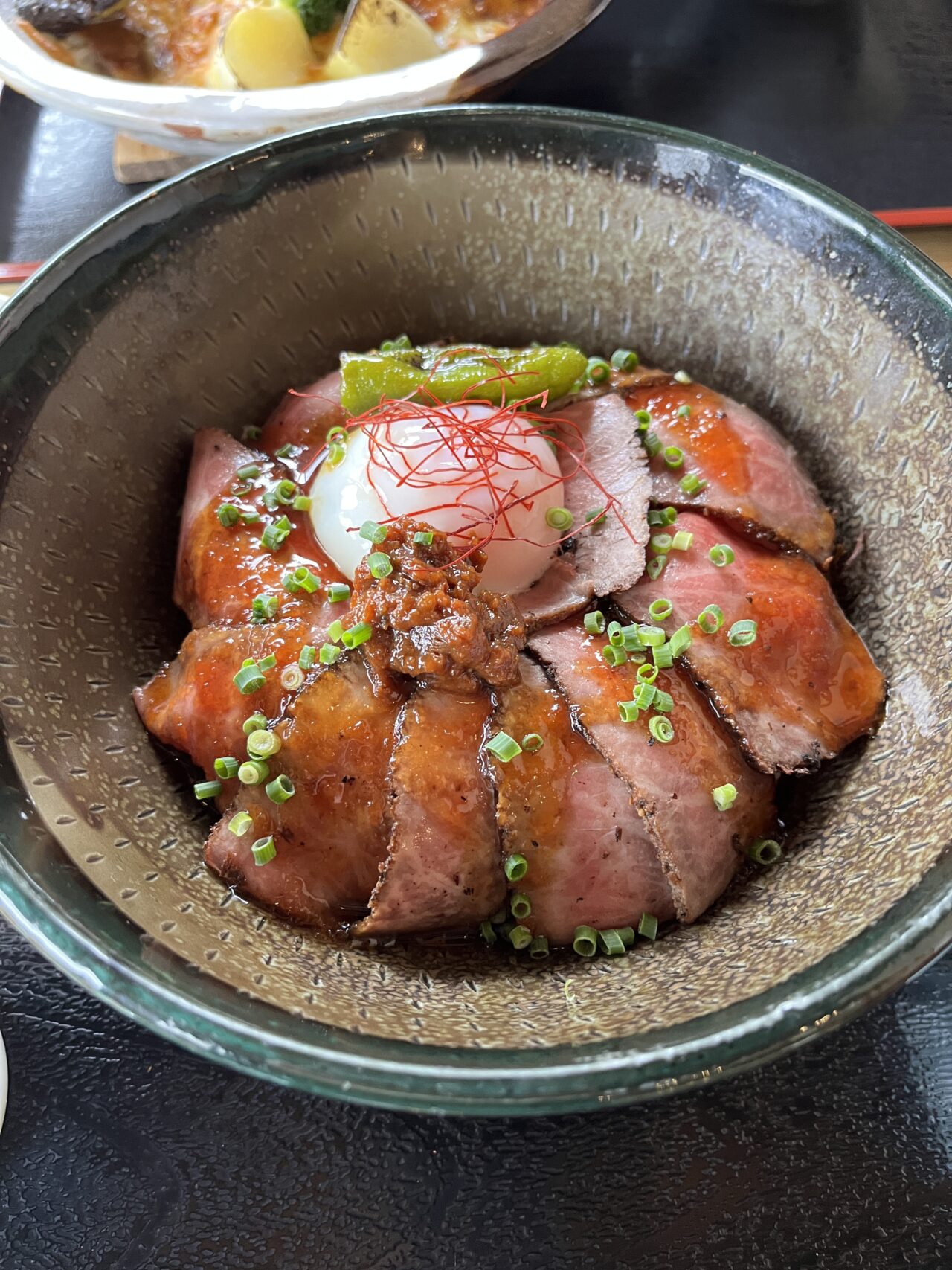
Inside, the restaurant Tenku no Mamebatake (“Sky Bean Field”) serves a simple, hearty menu — we ordered a roast beef bowl made with Kumamoto’s prized aka-ushi (red beef), and it did not disappoint.
Outside, steam rises visibly from the ground in several spots around the complex — a small reminder of just how geothermally active this corner of Kumamoto really is.
Final Thoughts
Hourei no Yu isn’t a polished resort experience — it’s something more elemental: a coin, an empty tub, and water that’s genuinely yours first.
Between the self-serve private baths, the sweeping mountain views, and the ever-present drift of steam across the hillside, it’s a distinctly memorable stop in one of Kyushu’s lesser-known onsen villages, and well worth the detour if you’re already exploring the Kurokawa or Aso area.
Hourei no Yu is ideal for visitors who:
- Want a genuinely fresh, first-use soak in their own private bath
- Are exploring Kurokawa Onsen or Aso and want a quieter, off-the-beaten-path stop
- Enjoy dramatic mountain scenery and visible geothermal activity
- Are comfortable navigating a remote onsen village by rental car