
This article contains advertisements
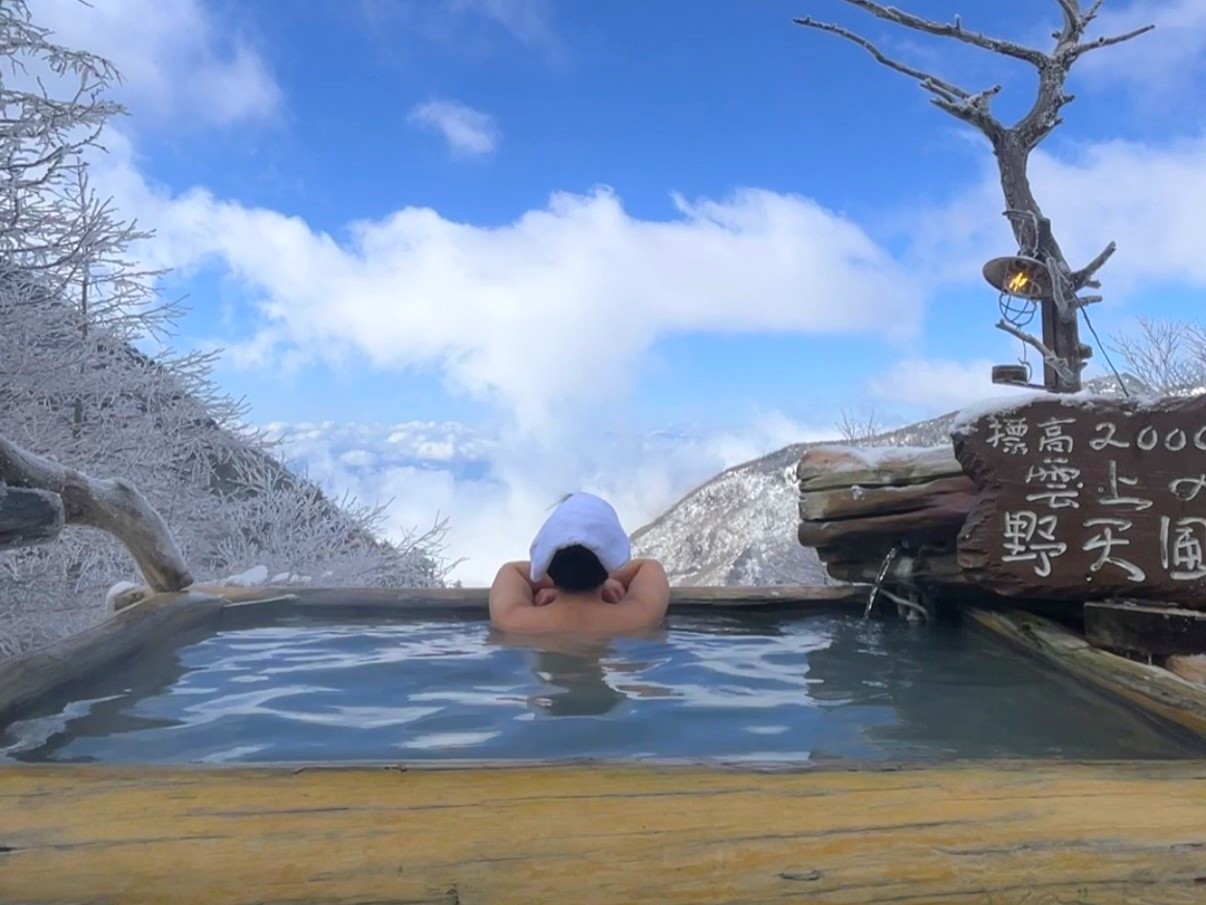
Some hot springs are defined by their water. Others are defined entirely by where they sit. Takamine Onsen in Nagano Prefecture is firmly in the second category — a remote mountain inn perched at 2,000 meters, accessible in winter only by snowcat, with an open-air bath that looks out over the snow-covered peaks below. It’s the kind of place that stays with you.
Why Takamine Onsen stands out:
- An open-air bath above the clouds with sweeping mountain views at 2,000m elevation
- A rare 36°C lukewarm spring perfect for alternating hot and cold bathing
- Rich wildlife — martens, squirrels, and alpine birds visible from the inn
The inn is a member of the Nihon Hikyou wo Mamoru Kai (Japan Secret Hot Springs Association) — a network of remote inns dedicated to preserving authentic hot spring culture. This visit was in February, with deep snow covering everything. (Review based on a February 2025 stay.)
Takamine Onsen
Inn Details
| Address | 704-1 Hishidaira, Komoro, Nagano |
|---|---|
| Phone | 0267-25-2000 |
| Official Website | takamine.co.jp |
| Day-use Bathing | Available (Lamp Bath only) · Adult ¥700 ※ In winter, add snowcat fare: Adult ¥1,700 total |
| Day-use Hours | 11:00 – 16:00 |
| Check-in / Check-out | From 14:00 / By 10:00 |
| Credit Cards | Accepted (VISA, Mastercard, AMEX, JCB, etc.) |
| Price Range | Approx. ¥20,800 per person (dinner & breakfast included) |
▼Book your stay▼
Getting There — Snowcat Required in Winter
Takamine Onsen sits in the mountains above Komoro City in Nagano Prefecture.
In the snow season (mid-November to late April), you cannot drive directly to the inn. Instead, leave your car at the Takamine Kogen Hotel parking lot near the ski resort, and take a snowcat up to the inn.
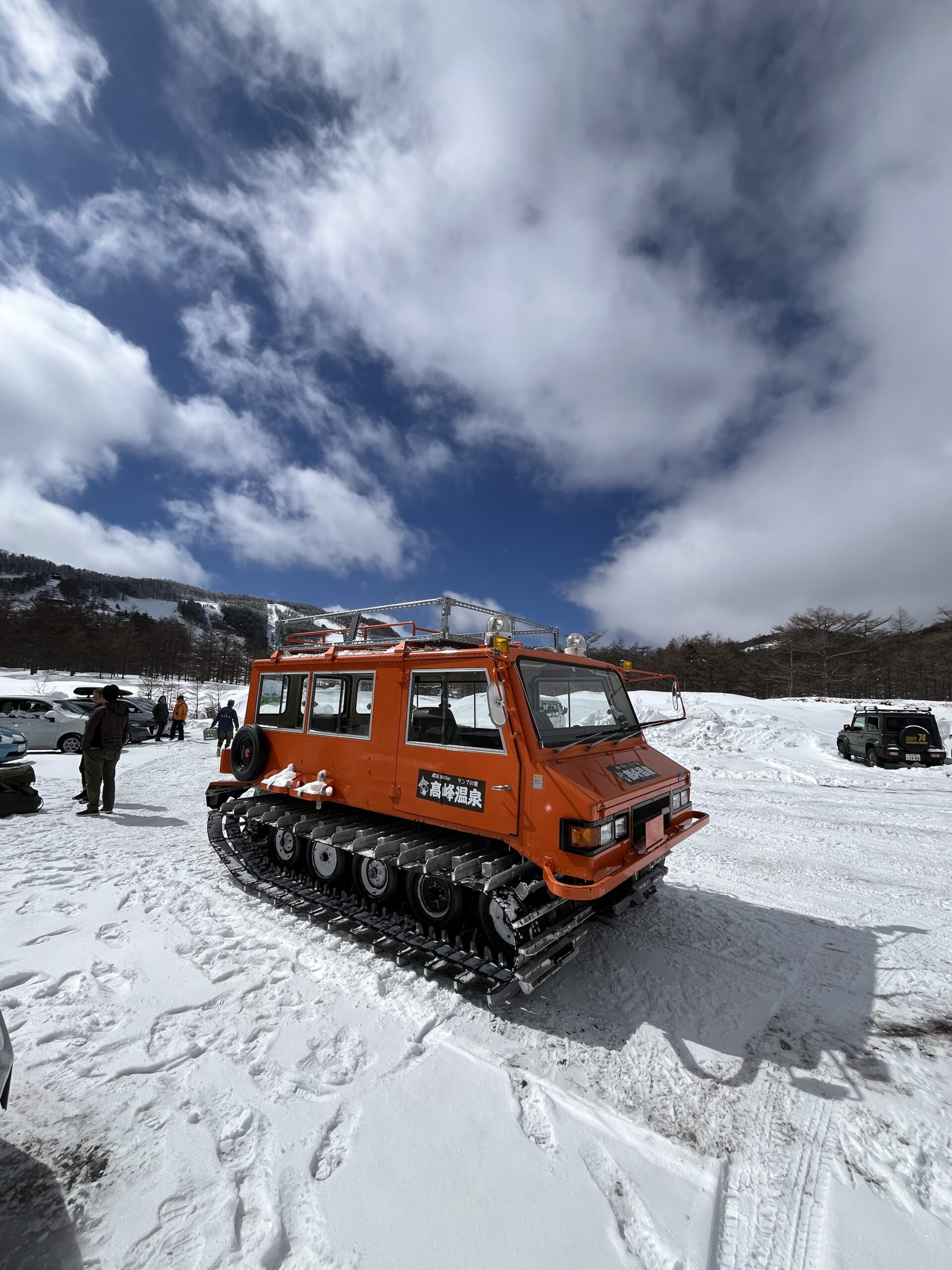
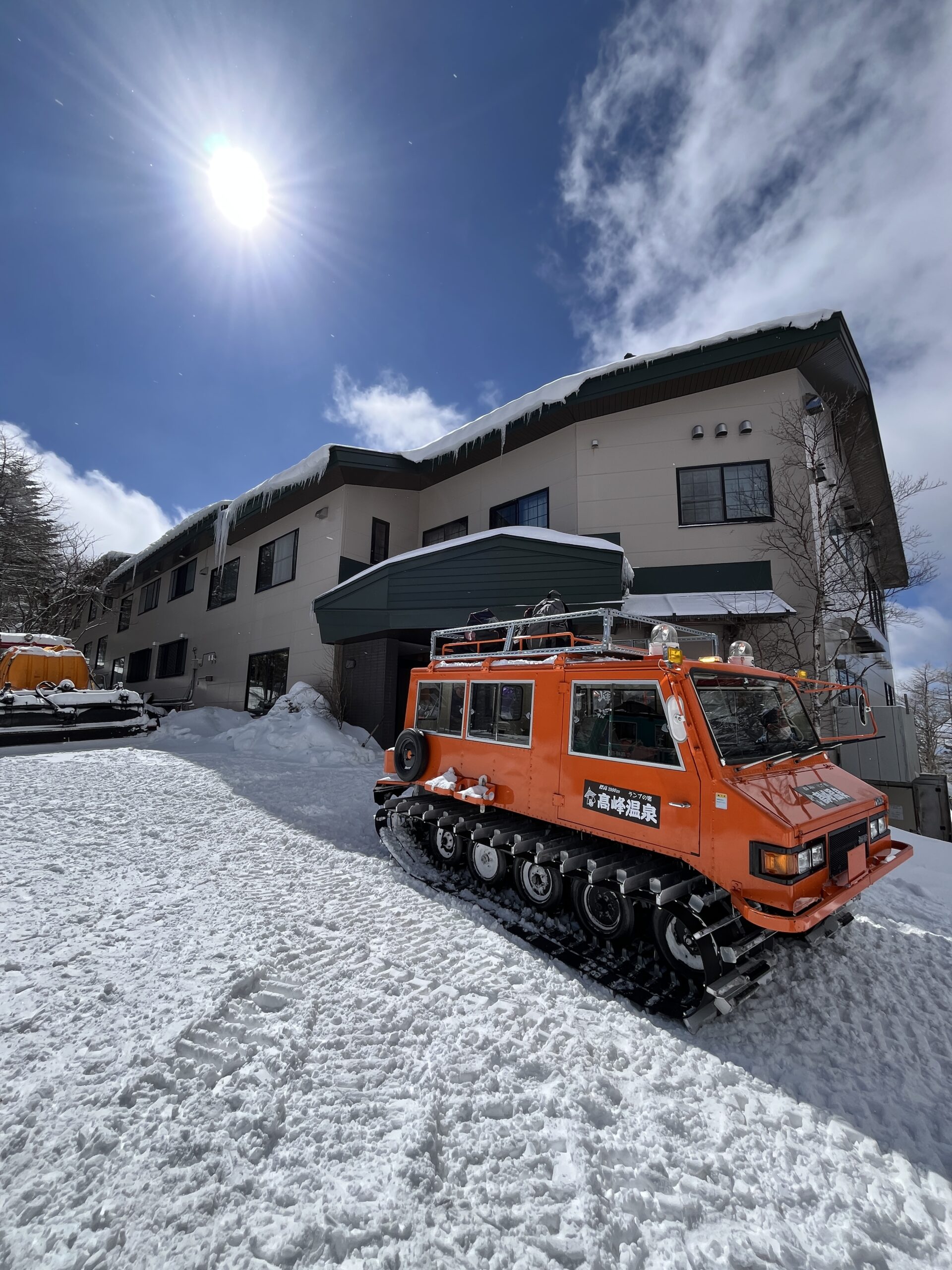
The snowcat that carries guests up to the inn — a hefty, adventure-ready machine. The ride itself, cutting across the ski slopes, is part of the fun.
🚗 By car:The mountain road to the parking lot is steep and often icy — drive with caution. Check the snowcat schedule on the official website and time your arrival accordingly.
🚅 By public transport:Take the Hokuriku Shinkansen to Sakudaira Station, then a local bus or taxi to Takamine Kogen (~50 min). A highway bus from Shinjuku (Tokyo) is also available.
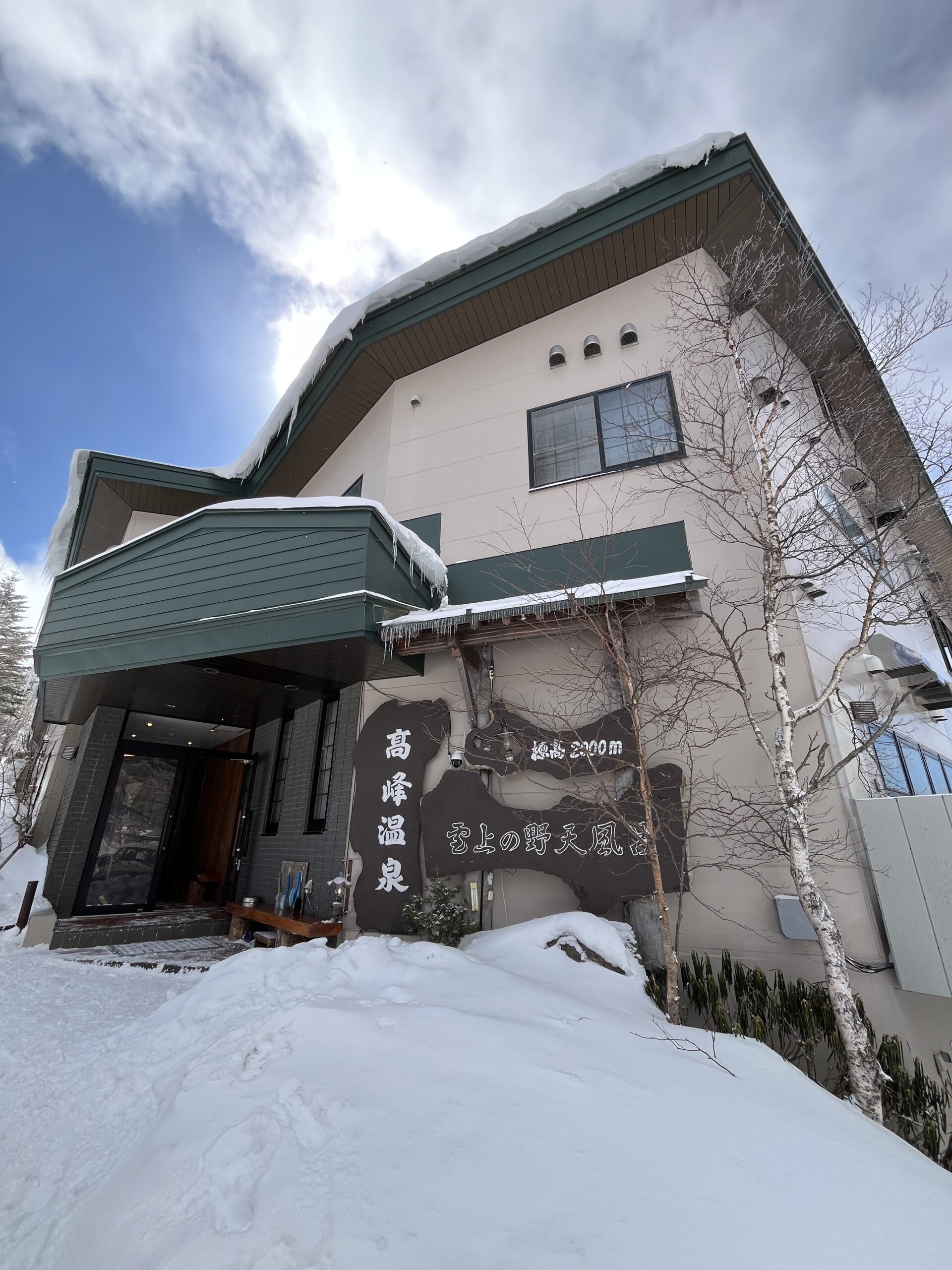
Arriving at the inn. The building is solid and sturdy — it has to be, given the snowfall up here.
Inside: Lamps, Warmth, and Wildlife
The inn is nicknamed “The Lamp Inn” (ランプの宿) — oil lamps are placed throughout the building, and at night their warm glow gives the interior a quietly magical atmosphere unlike anything you’d find at a standard hotel.
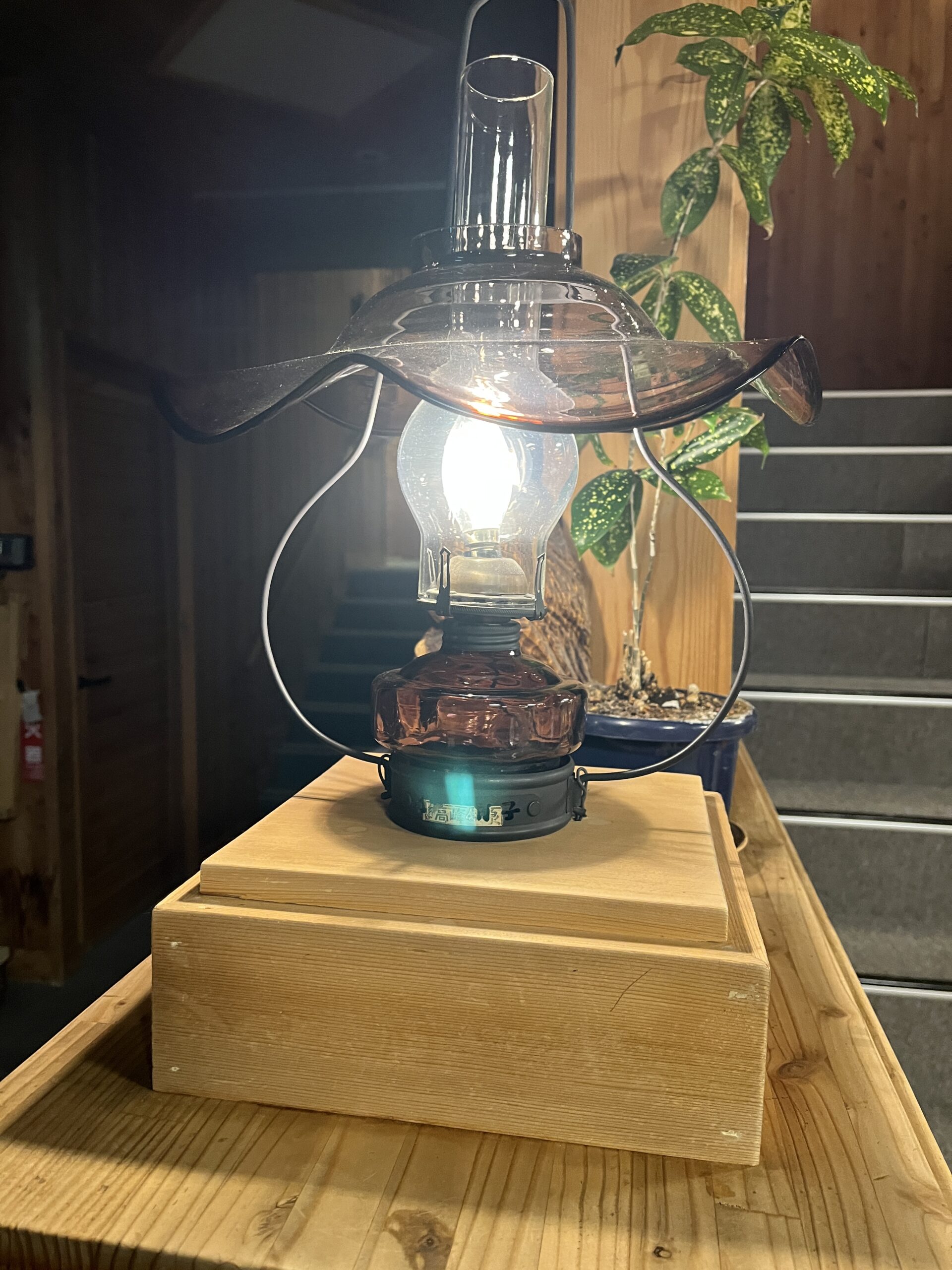
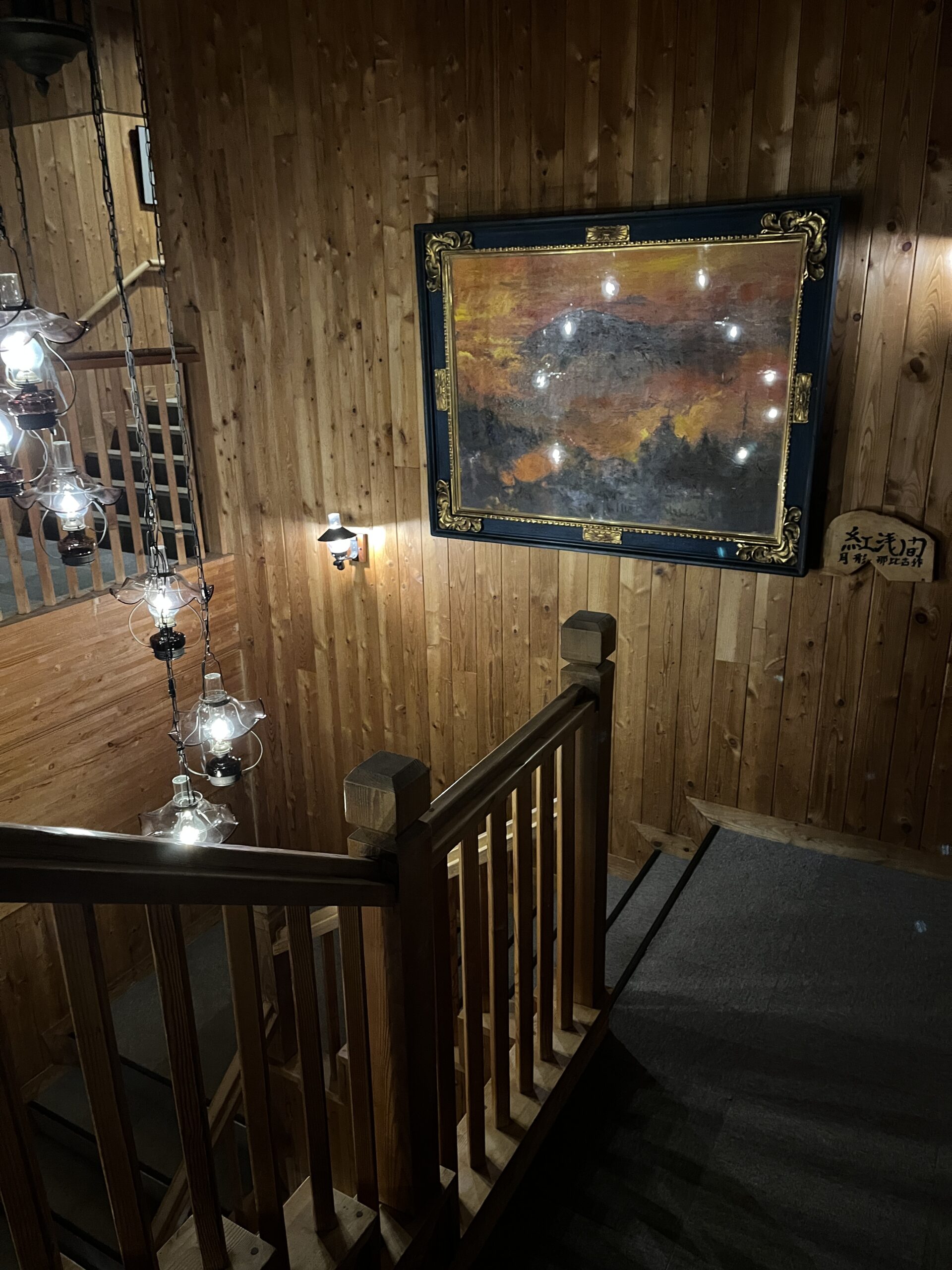
Oil lamps fill the corridors and common areas. After dark, the whole inn takes on a different atmosphere entirely.
Common areas are spacious and warmed by a large fireplace. Complimentary soba tea and gohei mochi (a rice cake grilled with walnut miso) are served on arrival. One unexpected highlight: the rest areas overlook a feeding spot for local wildlife. During my stay I spotted a Japanese marten, a squirrel, and a spotted nutcracker — all within a few meters. Not many inns in Japan can offer that.
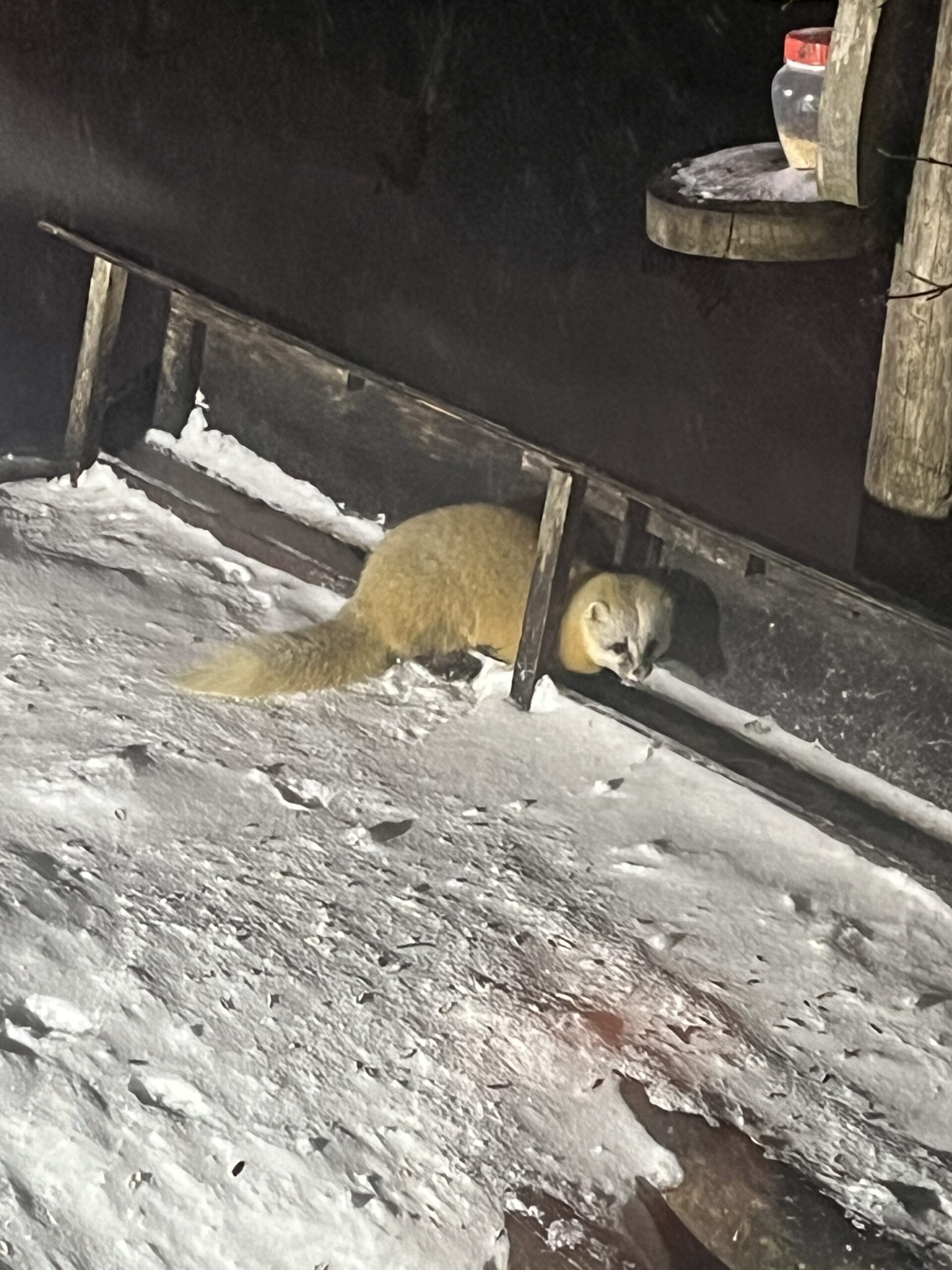
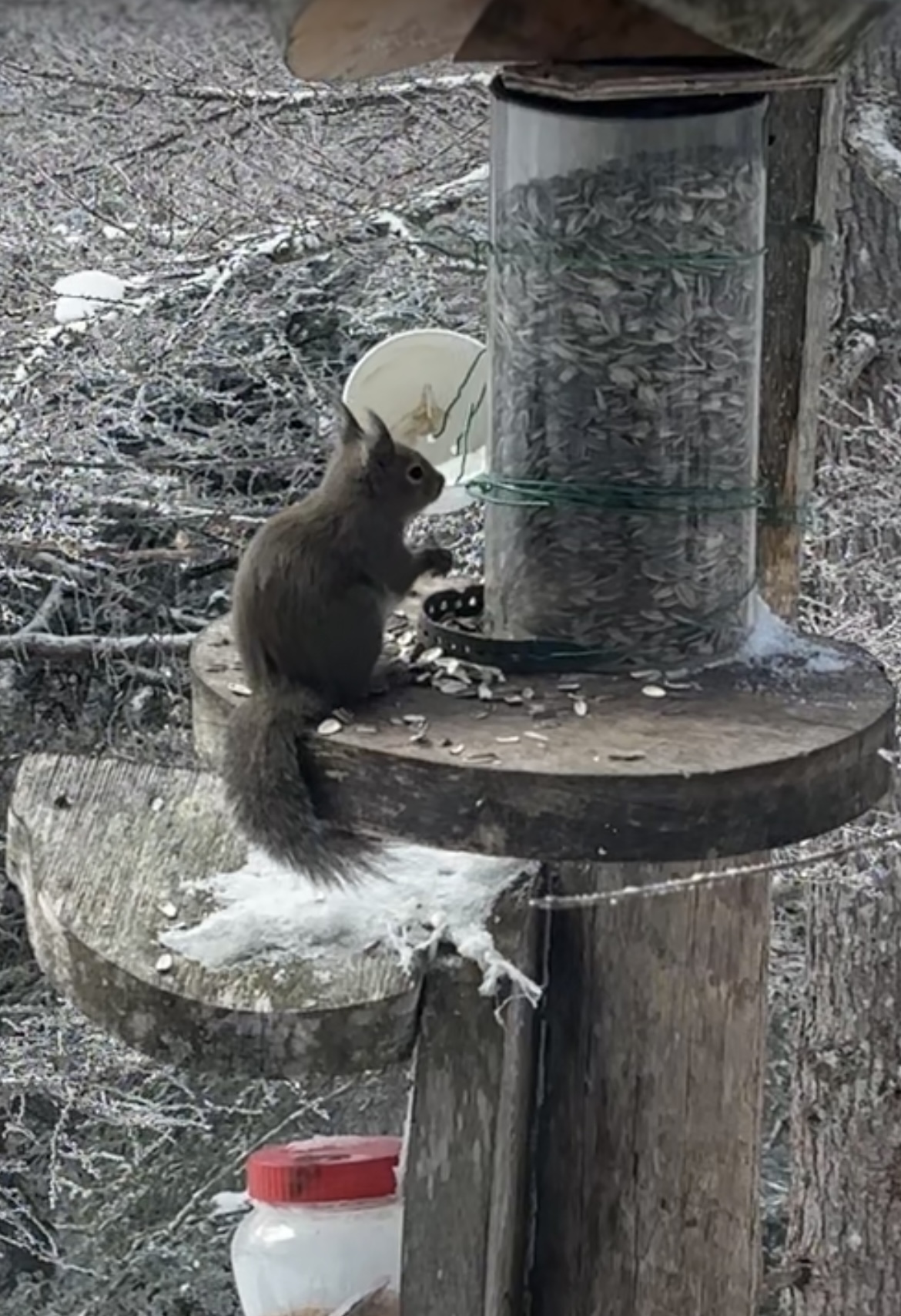
A Japanese marten visiting the feeding area — rarely seen in the wild, let alone this close.
The Room
Rooms are traditional tatami-style with futon bedding. Compact but comfortable — everything you need for a mountain retreat. Notably, the windows are triple-glazed to handle the extreme cold at this altitude, and the heating system keeps things genuinely warm inside even when temperatures outside are well below freezing.
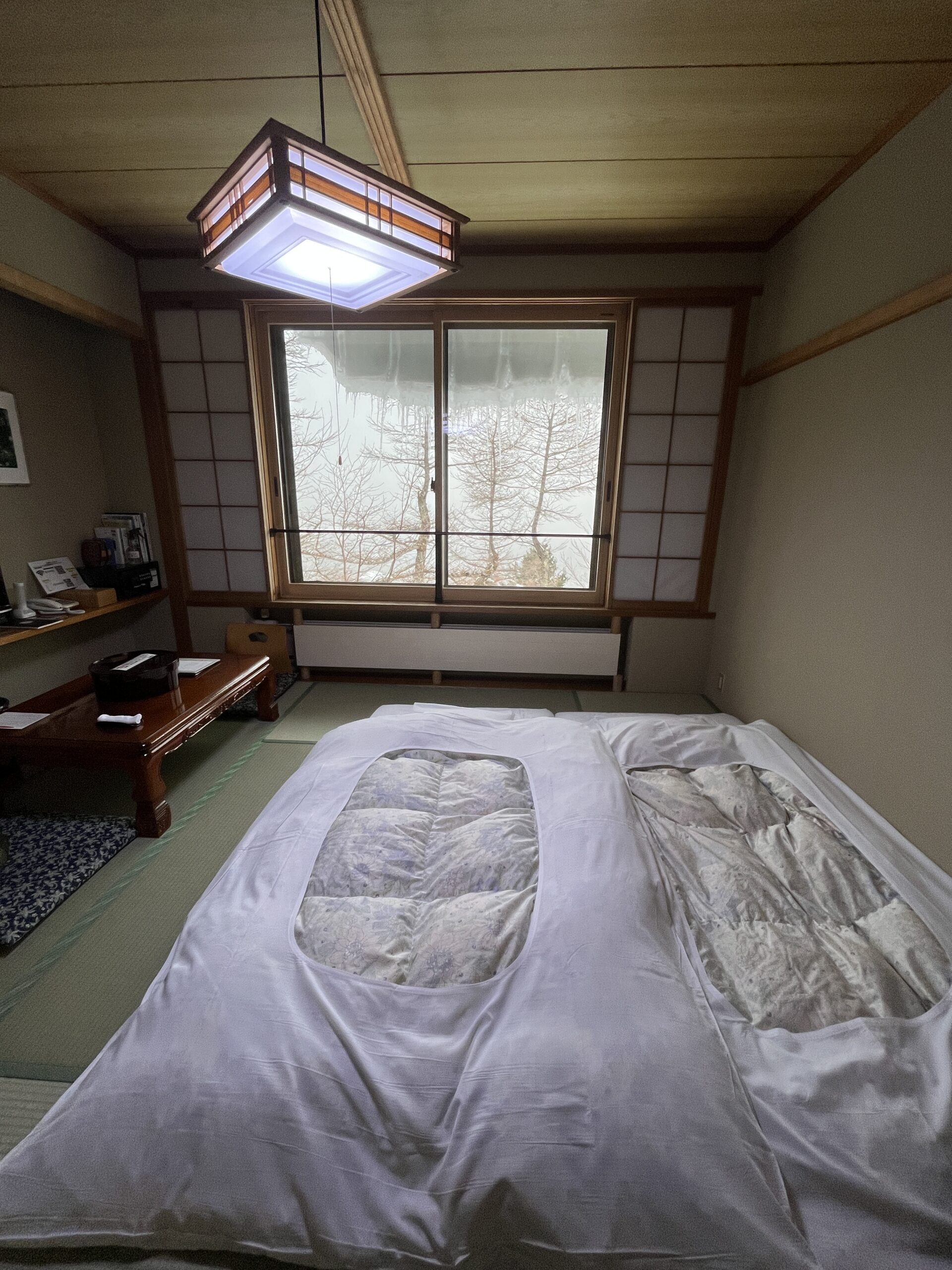
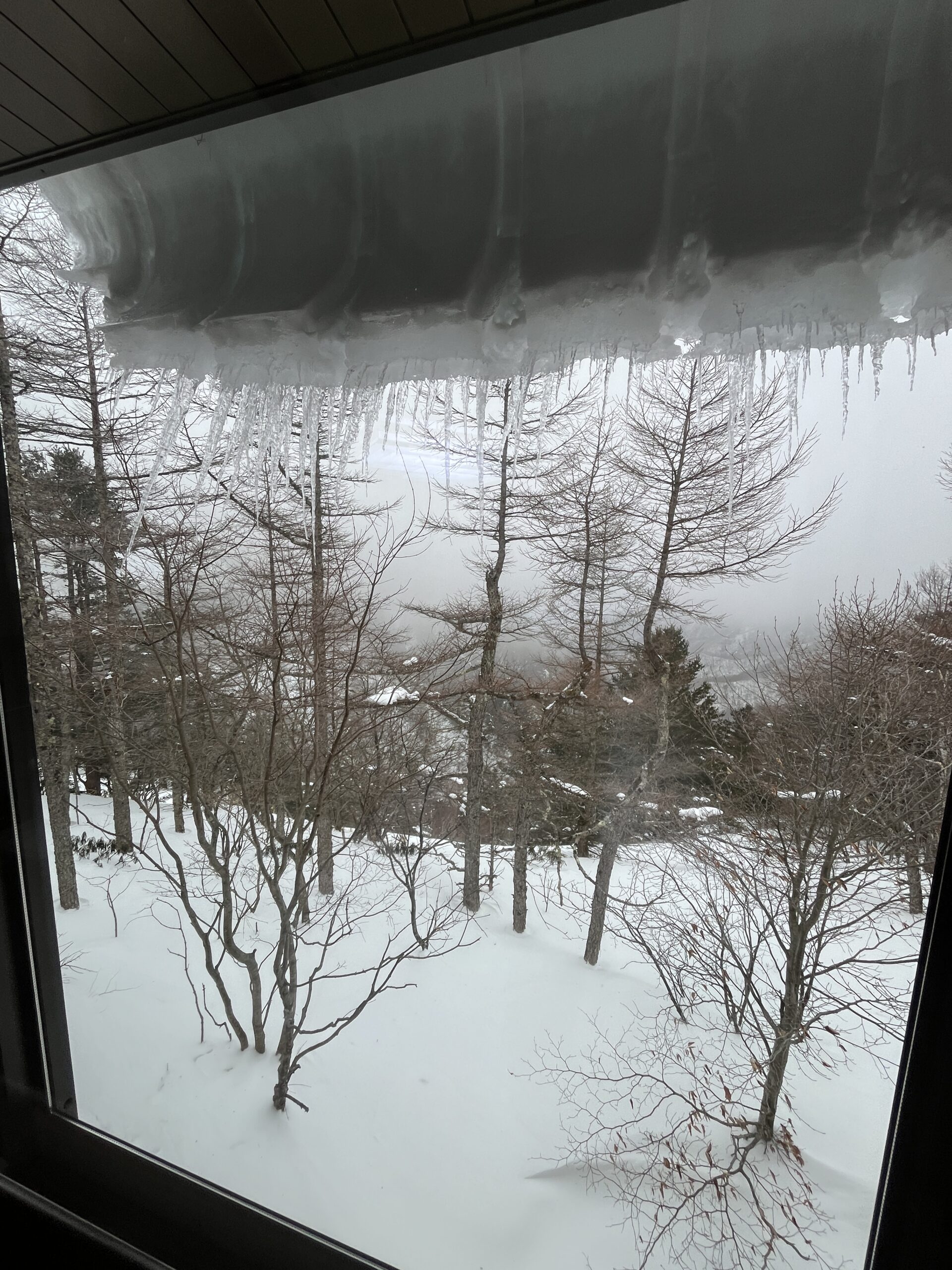
The tatami room and the view from the window — icicles lining the eaves, snow as far as you can see.
The Hot Springs — Three Very Different Baths
There are three baths, each with its own character: the open-air Unjo bath outside, the Lamp Bath (1F indoor), and the Takamine Bath (2F indoor). All use the same gensen kakenagashi source water.
🧴 Important: No soap or shampoo provided
Out of environmental consideration for the mountain ecosystem, Takamine Onsen does not provide soap, shampoo, or body wash in the baths. Bring your own if needed, or simply enjoy the water as-is — the spring water alone leaves skin feeling noticeably smooth.
| Water Type | Sulfur-Calcium-Sodium · Sulfate / Bicarbonate Spring |
|---|---|
| Source Temperature | 36.0°C / 96.8°F (lukewarm / near body temperature) |
| pH | 6.7 (near neutral) |
| Color / Scent | Nearly clear — gentle sulfur aroma |
① Open-Air Bath “Unjo-no-Notenburo” ★ The Highlight
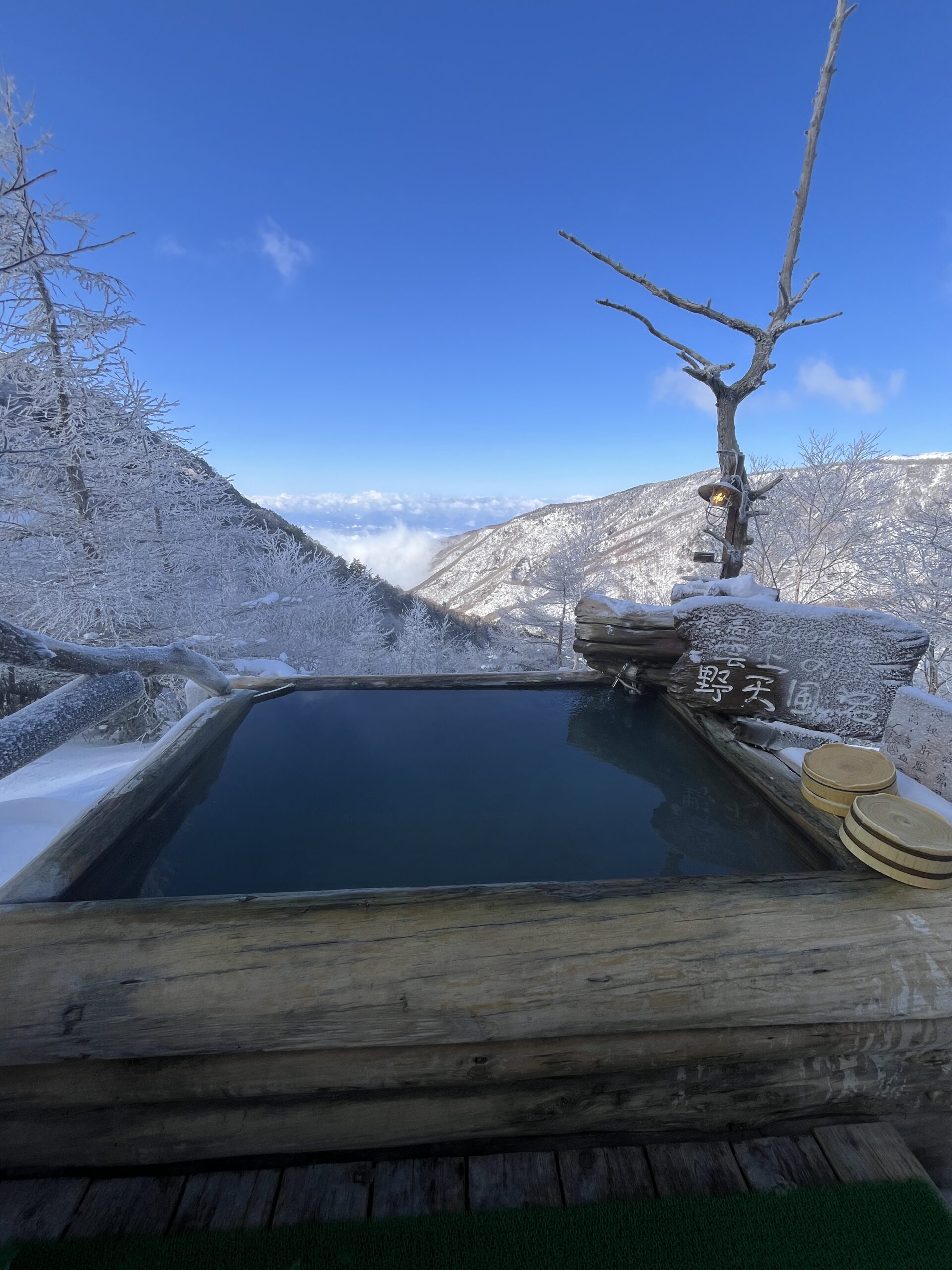
The view from the open-air bath. Snow-covered peaks, open sky, total silence. Extraordinary.
Walk outside through the snow in sandals, grab one of the wooden buckets at the exit, and make your way to a small open tub perched on the mountainside — nothing in front of you but peaks and sky. The far end of the tub is deeper, so you can stand shoulder-deep. On my second morning, a clear sky opened up over the surrounding alps. It’s one of the best moments I’ve experienced at any onsen in Japan.
② Lamp Bath “Ranpu-no-Yu” — Perfect for Alternating Bathing
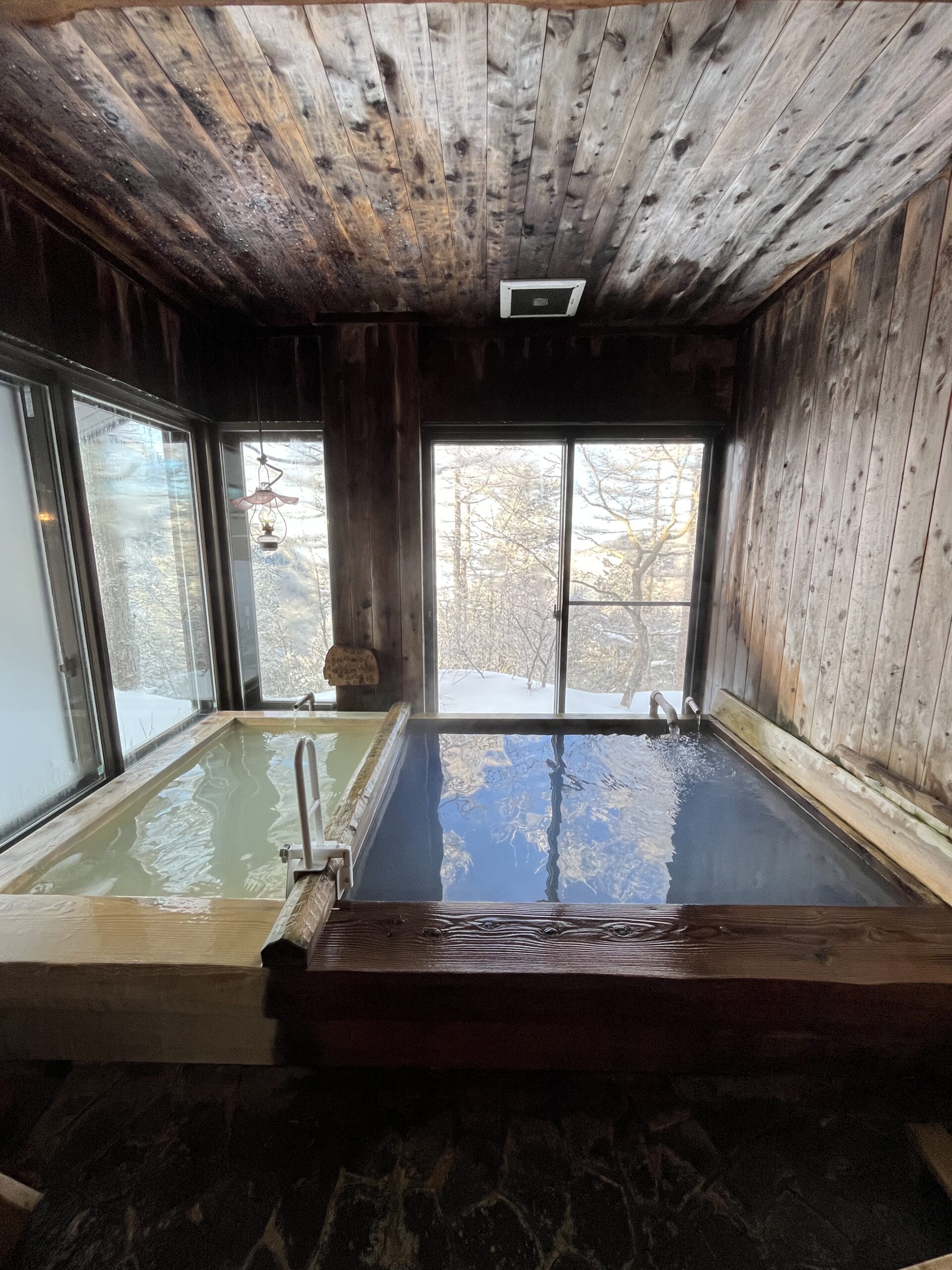
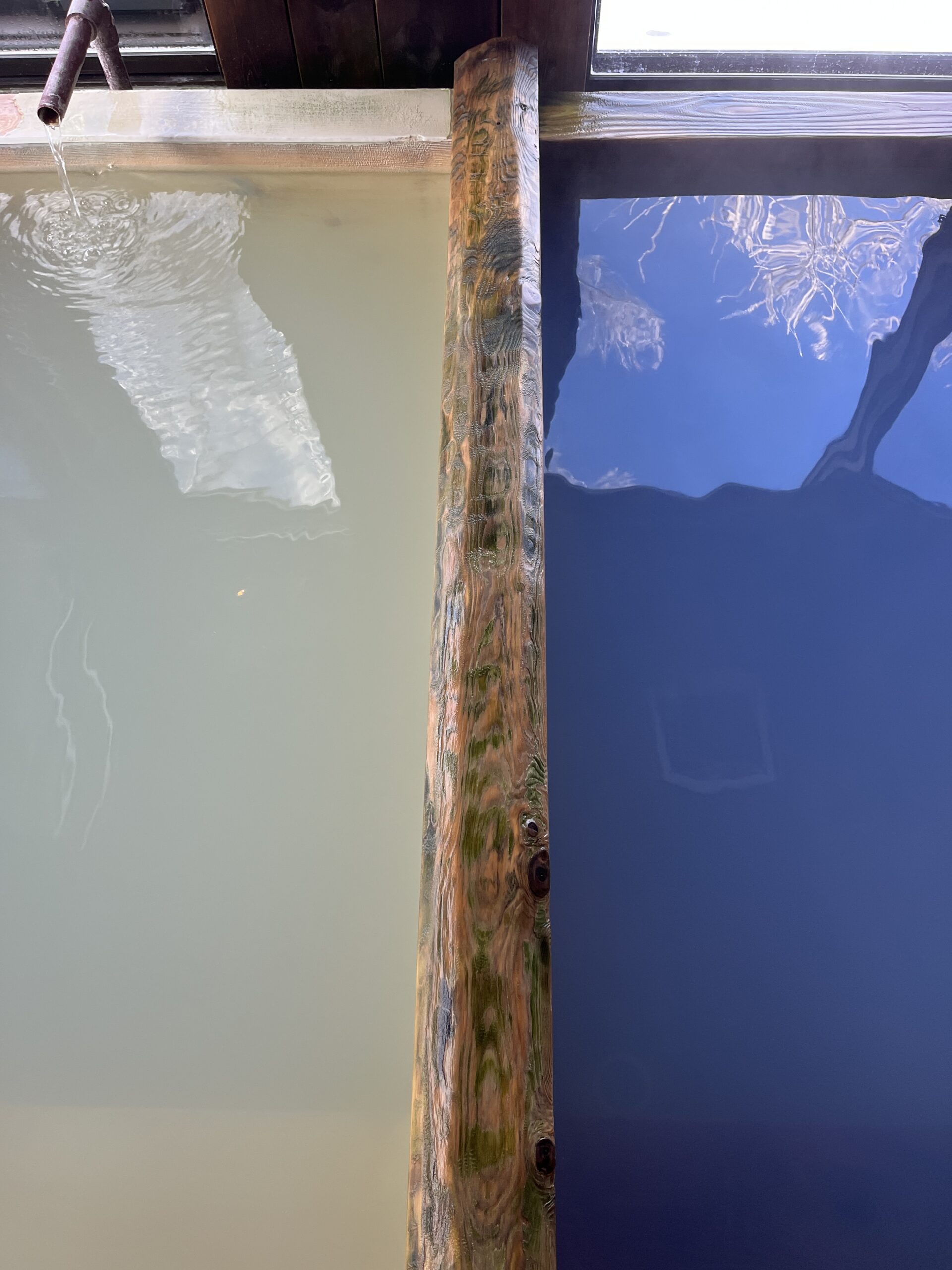
Two tubs side by side — the left is raw spring water at 36°C; the right is heated to ~40°C and, on this day, a striking shade of blue.
This is the only bath available for day-use visitors, and it’s genuinely special. Two tubs sit side by side: one with unheated spring water at 36°C (just below body temperature), the other heated to around 40°C. On the day of my visit, the heated tub had turned a beautiful translucent blue — an unusual color even by hot spring standards.
The alternating bath experience here — warming up in the heated tub, then easing into the cool spring water — is one of the most satisfying I’ve encountered. The mild sulfur scent adds to it perfectly.
💡 What is alternating bathing (kougoyoku)?
A traditional Japanese bathing practice of moving between hot and cool water repeatedly. It promotes circulation, relieves fatigue, and — once you’ve tried it — becomes genuinely addictive. Takamine’s 36°C spring makes it particularly accessible for first-timers.
③ Takamine Bath (2F) — Indoor Views
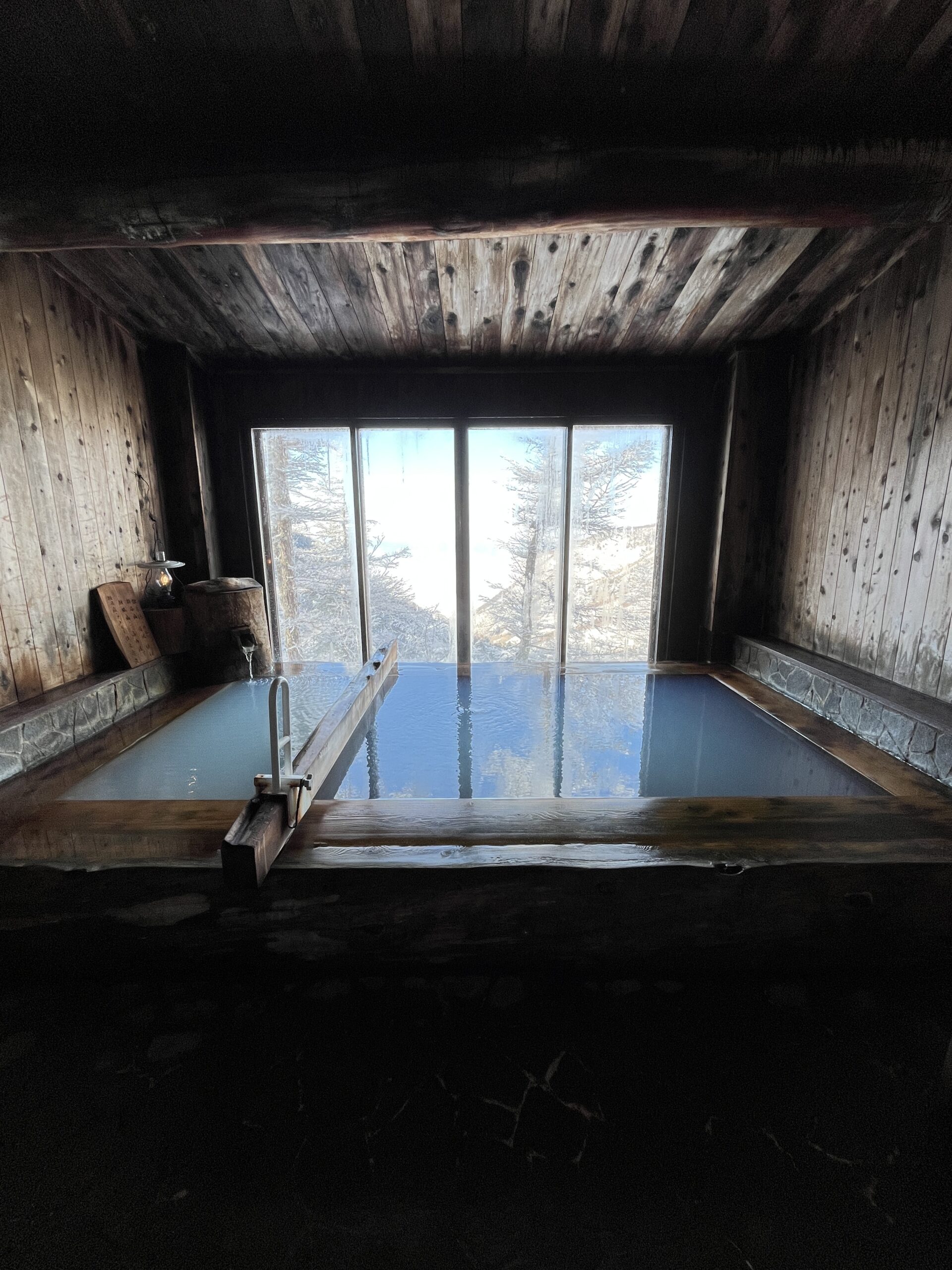
The second-floor bath — also with two tubs, and slightly elevated views of the snow-covered landscape outside.
Also features two tubs for alternating bathing, with a slightly higher vantage point than the Lamp Bath. A good option for early mornings or when the outdoor bath is occupied.
Dinner & Breakfast
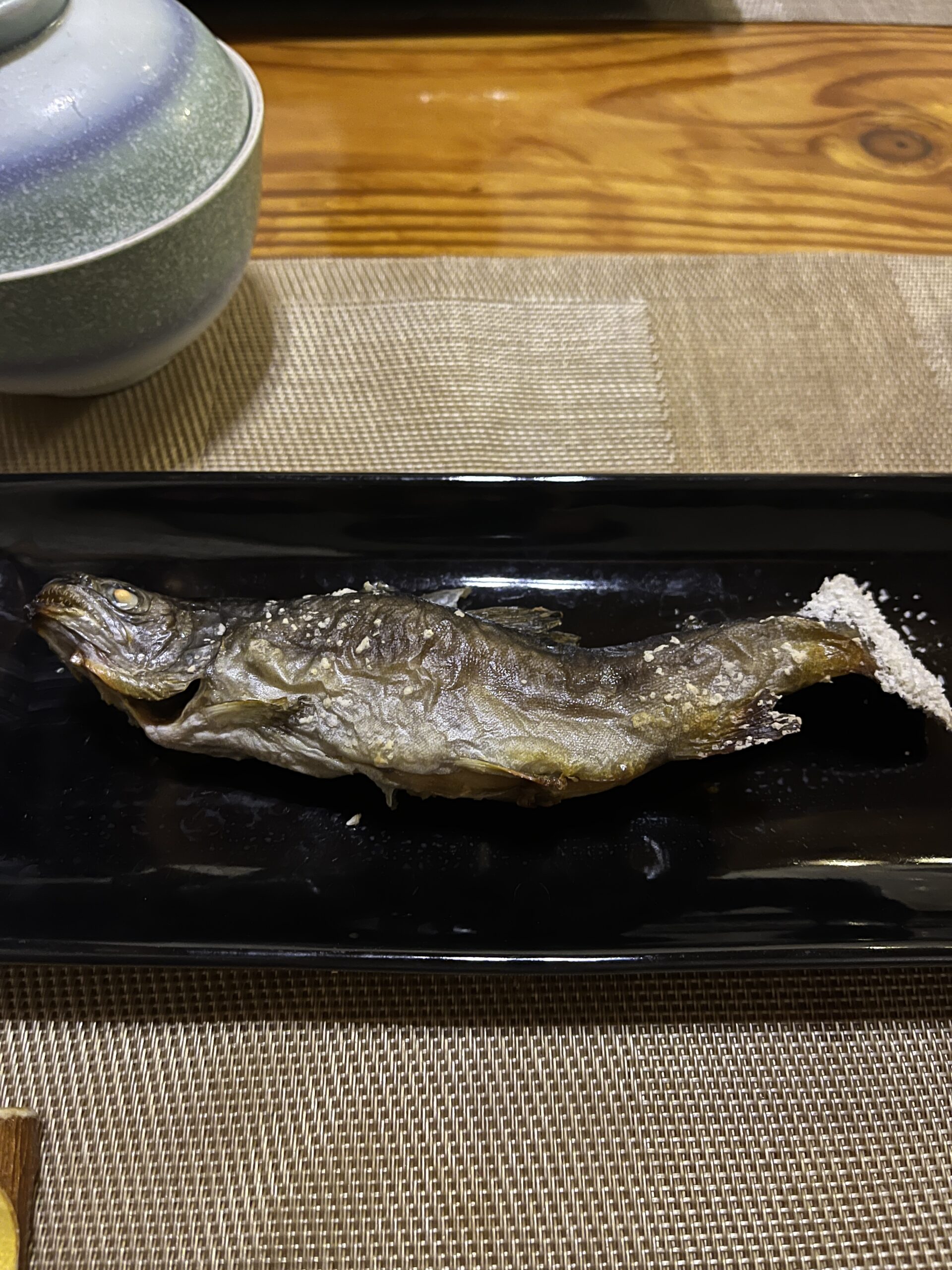
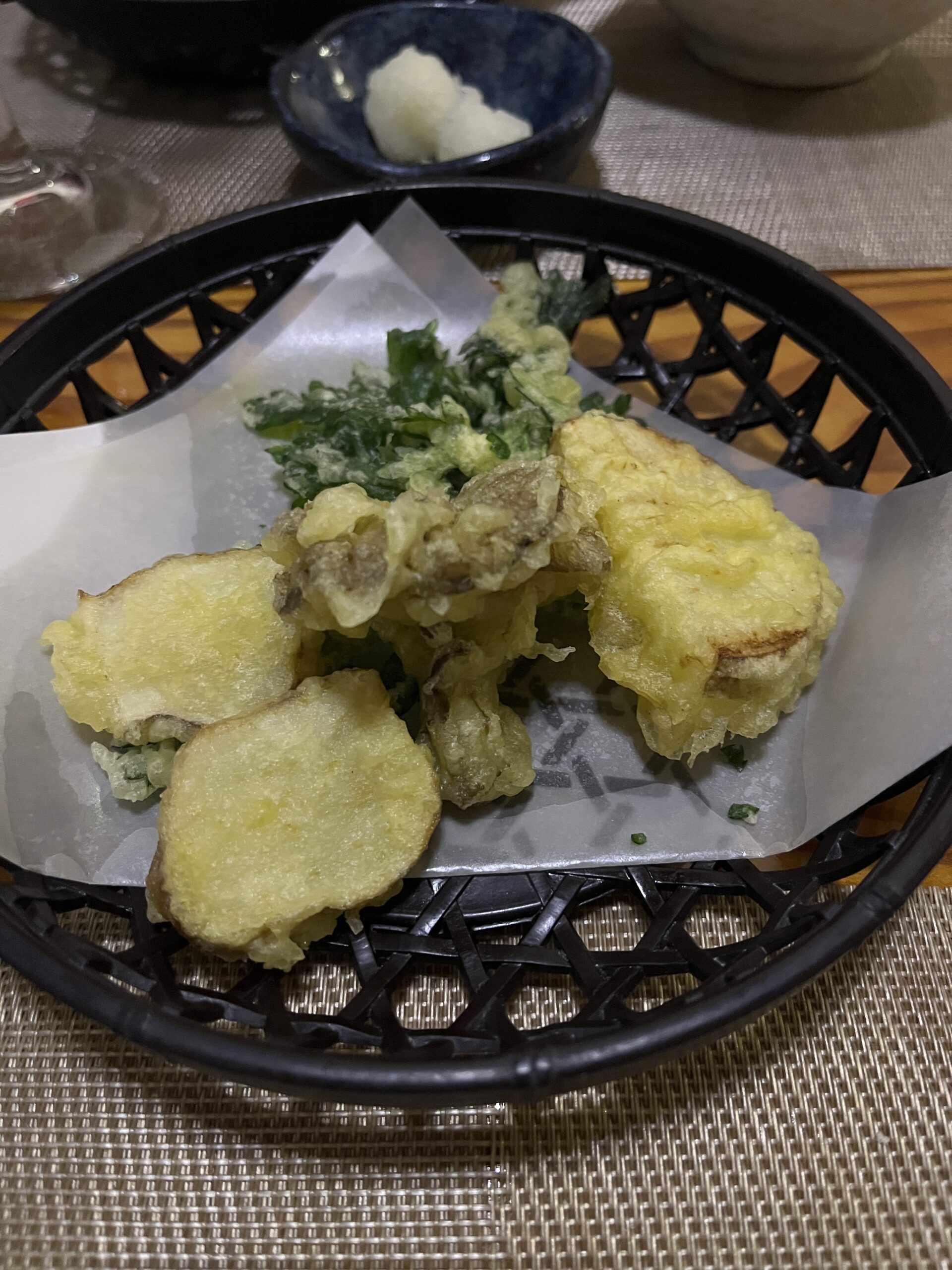
The dinner spread — local Nagano ingredients, served one course at a time while everything is still hot.
Dinner is a multi-course meal with a distinctly Nagano character: Shinshu pork mizore nabe (a light daikon radish hot pot), freshwater iwana fish, soba, and crispy tempura — all served in sequence, each dish arriving warm. Locally grown apple for dessert, and nozawana pickles — a Nagano staple — on the side. Healthy, refined, and well-suited to the mountain setting.
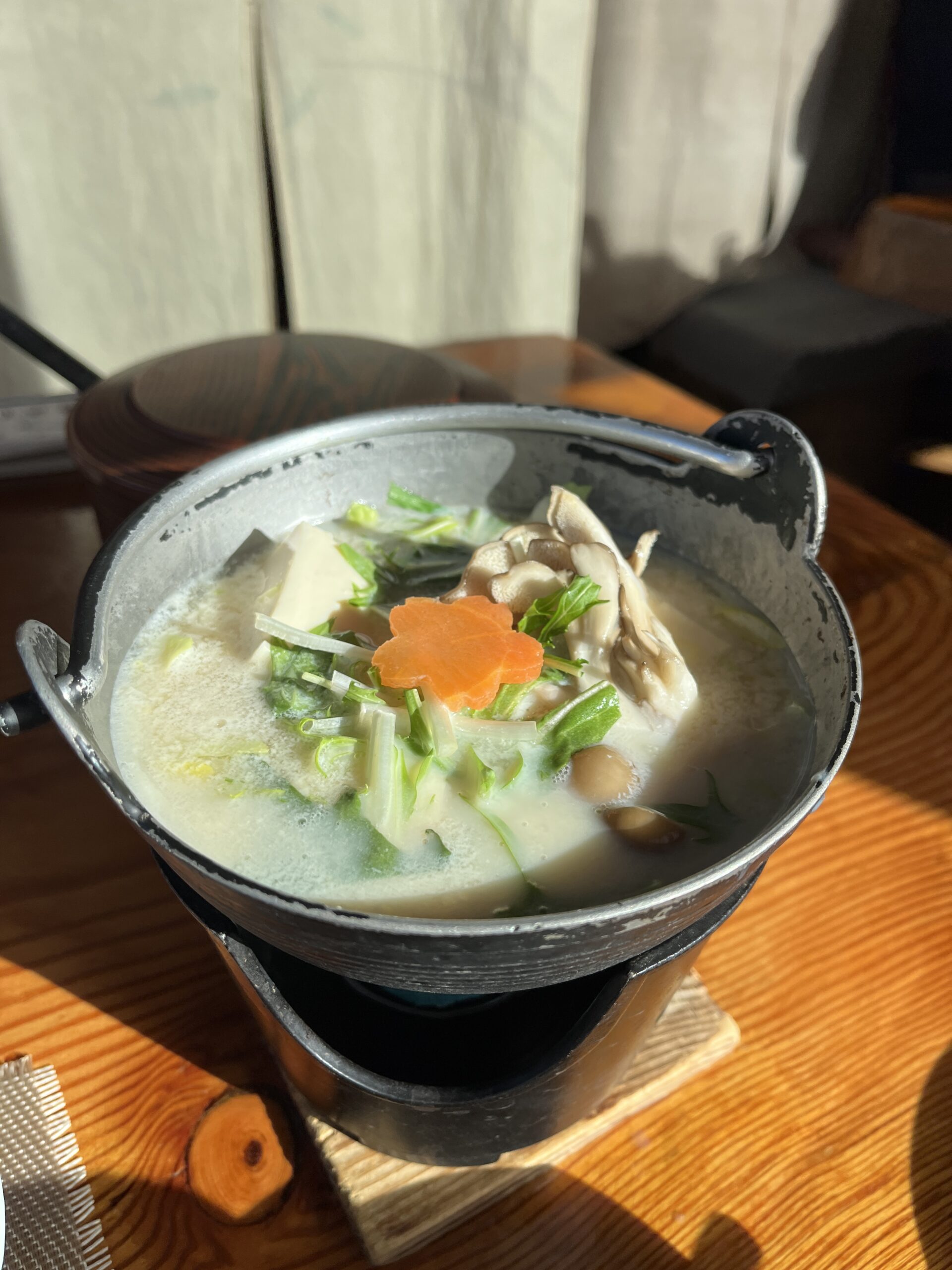
Breakfast includes the classic Japanese set plus a soy milk hot pot loaded with vegetables and mushrooms — exactly what you want on a cold mountain morning before heading back out to the baths.
Final Thoughts
Takamine Onsen is one of those places that’s hard to categorize. It’s a hot spring inn, yes — but it’s also a wildlife sanctuary, a mountain retreat, and one of the most visually striking bathing experiences in Japan. The open-air bath alone justifies the journey.
At approximately ¥20,800 per person including meals, it sits at a reasonable price point for what’s on offer. The snowcat access adds a layer of adventure that most onsen trips simply don’t have.
This stay is a great fit if you:
- Want a truly remote, off-the-beaten-path onsen experience
- Are visiting in winter for snow scenery and alpine atmosphere
- Are curious about lukewarm spring water and alternating bathing
- Love nature — wildlife, mountain views, and fresh alpine air
Go in winter if you can. The snowcat ride, the frozen landscape, and that open-air bath above the clouds — it’s unlike anything else.
▼Book your stay▼